
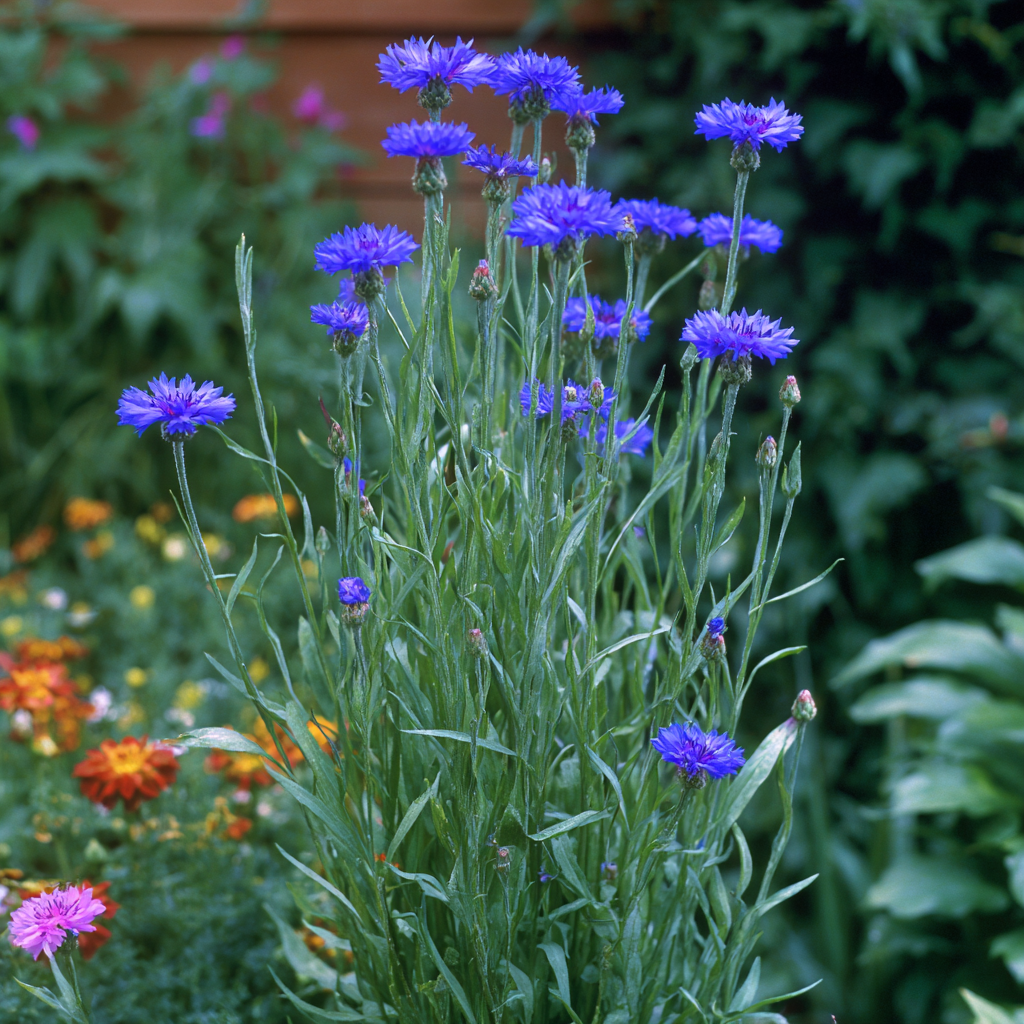
Tall Blue Bachelor Button (Centaurea cyanus) is a cool-season annual cornflower grown for its vivid blue flowers atop upright stems that reach 30 to 36 inches or more at maturity. This tall form is a different growing experience from compact bachelor button types: the long, sturdy stems make it an excellent cut flower, but the height also means that plants in open or windy spots benefit from support, such as a simple stake, ring support, or grow-through netting placed early in the season. Direct sowing in cool weather is the standard approach, and succession sowings extend the cutting season well into summer.
Quick How-to
Sow Tall Blue Bachelor Button seeds directly in the garden in early spring as soon as the soil can be worked, or in fall where winters are mild enough for overwintering annuals. Cover seeds about 1/4 inch deep and keep the surface evenly moist until germination, which typically takes 7 to 14 days at 60 to 65 F. Thin plants to 8 to 12 inches apart to allow strong vertical growth. Provide support stakes or netting early before stems lean, and cut flowers regularly to extend bloom.
Quick Guide
| Fact | Recommendation |
|---|---|
| Best method | Direct sow in cool conditions; indoor start possible 4 to 6 weeks before planting |
| Sowing depth | About 1/4 inch |
| Germination temperature | 60 to 65 F |
| Days to germination | About 7 to 14 days |
| Light for germination | Cover lightly; does not need light exposure |
| Spacing | Thin to 8 to 12 inches apart |
| Sun | Full sun |
| Water | Keep evenly moist until established; tolerates some dryness once growing |
| Bloom timing | Often 65 to 80 days from sowing |
| Plant size | Tall form, typically 30 to 36 inches or more; may need support in exposed spots |
Tall Habit: What to Expect
Tall Blue Bachelor Button grows substantially taller than the compact or dwarf forms of Centaurea cyanus. Where a dwarf bachelor button might top out at 12 inches, this tall cornflower regularly reaches 30 to 36 inches, producing long, elegant stems well-suited to cutting. That height is the point: the extra stem length is what makes it useful for arrangements.
The trade-off is that taller plants are more susceptible to leaning or lodging in wind and rain, particularly if they were grown a little close together or in soil that is overly rich and produced soft, fast growth. Supporting plants with stakes, grow-through rings, or a simple horizontal netting system installed at the seedling stage makes a noticeable difference in stem quality at harvest.
This guide is specific to the tall form. If you are looking for a compact, lower-growing bachelor button for beds and borders, the Dwarf Blue Bachelor Button guide covers that type.
Before You Sow
Choose a sunny, well-drained bed that can accommodate the mature plant height. If you plan to use grow-through netting or horizontal rings, set the support system in place early, ideally before or shortly after the seedlings emerge, so stems grow up through it rather than requiring you to tie them to stakes after they have already leaned.
Bachelor button does not need rich soil. Ordinary well-drained garden soil suits it well. Heavy fertilization, particularly with nitrogen, pushes soft leafy growth that makes tall stems more prone to collapse. Keep soil in the moderate range.
Label the planting area clearly. Young bachelor button seedlings, especially in the early true-leaf stage, can look similar to some weeds and to other cool-season seedlings.
Direct Sowing
Direct sowing is the preferred method. Sow seeds in early spring as soon as the ground has thawed and soil can be worked. Soil temperatures around 60 to 65 F support steady germination. The seeds can tolerate a light frost after sowing, making early spring planting practical without waiting for frost-free conditions.
Place seeds about 1/4 inch deep, space them several inches apart, and firm the soil gently for good contact. Water with a gentle spray to avoid washing seeds around. Keep the surface consistently moist until sprouts appear; a surface that dries and crusts can prevent emergence.
Once seedlings have developed their first true leaves, thin to 8 to 12 inches apart. This spacing is important for the tall form because crowded stems compete and lean against each other rather than growing upright. Thinning early also improves airflow and reduces the risk of mildew on lower leaves.
For a longer cutting season, make a second sowing 3 to 4 weeks after the first.
Indoor Starting
Tall Blue Bachelor Button can be started indoors 4 to 6 weeks before planting, though it generally prefers to be direct sown. If starting indoors, use individual cells to minimize root disturbance at transplant. Sow at 1/4 inch depth, keep the mix cool and bright rather than warm and shaded, and transplant after hardening off before seedlings become rootbound.
Avoid starting too far in advance; tall cornflower seedlings kept inside too long can become lanky and may perform less vigorously than direct-sown plants. A 4-week indoor start is usually the limit for best results.
Soil, Sun, and Water
Full sun gives the strongest, most upright stems. Partial shade causes the tall plants to lean toward light and weakens stem quality significantly, which defeats the purpose of growing the tall form for cutting. Site plants in the sunniest location available.
Well-drained soil of moderate fertility is ideal. Waterlogged conditions, especially in cool spring weather, can cause root problems and yellowing. Once plants are established and actively growing, they tolerate periods of dry weather reasonably well.
Water when the top inch of soil dries out. The goal is even moisture through the flowering period rather than constant saturation. Mulching around established plants helps stabilize soil moisture and keeps roots cooler in warmer weather.
Supporting Tall Stems
Unlike compact bachelor button, the tall form benefits from physical support in most garden situations. Options include:
- Horizontal netting: Set up a grid of garden netting at 12 to 18 inches above the soil before plants grow tall. Stems grow through the squares and are held upright without individual staking.
- Individual stakes: Bamboo or metal stakes at 24 to 30 inches with soft ties can support individual plants, particularly in a cutting patch.
- Ring supports: Wire peony rings set over young plants early in the season allow growth to fill the ring naturally.
The key is to install support early, before plants need it. Propping up already-leaning stems is much harder and less effective than providing structure for upright growth from the start.
Top Mistakes
- Not providing support in time: Waiting until stems are already flopping to add stakes is too late for best results. Set up netting or stakes while plants are still short, letting them grow into the support system.
- Sowing too late in the season: Tall bachelor button is a cool-season annual that performs best when it establishes in spring cool. Late sowings into warm weather produce smaller plants with shorter bloom windows.
- Thinning too little: At 30 to 36 inches, crowded tall cornflowers lean badly and produce narrower stems with smaller flowers. Generous thinning to 8 to 12 inches is more important here than with shorter forms.
- Growing in partial shade: Long stems grown in shade lean toward any available light source and become too weak to stand upright. Full sun is not optional for the tall form.
- Using overly rich soil: Excess nitrogen from fresh manure or heavy compost amendment pushes rank, soft growth that collapses in rain or wind. Moderate fertility keeps stem quality high.
Troubleshooting by Symptom
| Symptom | Likely causes | What to do next |
|---|---|---|
| No sprouts after 14 days | Surface dried out, seeds too deep, soil too cold, or soil crusted | Keep surface evenly moist, resow at 1/4 inch depth, ensure soil temperature is at least 55 F |
| Seedlings are pale and stretched | Too little light, too much warmth indoors, or overcrowding | Move to brighter spot, thin promptly, and reduce any supplemental heat |
| Stems lean or lodge | Not enough support, overcrowding, too much shade, or overly soft growth from rich soil | Install support immediately; thin nearby plants; reduce nitrogen inputs next season |
| Few or small flowers | Heat stress, too much shade, overcrowding, or plants sown too late into warm weather | Ensure full sun, thin well, and time future sowings to cool weather |
| Powdery mildew on lower leaves | Crowded plants, humid conditions, poor airflow, or inconsistent watering | Thin plants, improve airflow, remove affected leaves, and avoid overhead watering in the evening |
| Patchy germination | Uneven sowing depth, seed washed by watering, inconsistent surface moisture | Smooth the bed before sowing, water gently with a fine spray, and maintain consistent surface moisture |
Bloom Care and Cutting
Tall Blue Bachelor Button is most valuable as a cut flower. For arrangements, harvest stems when the buds are just beginning to open or when the outermost petals are fully open but the center is still developing. Stems cut at full bloom still last in a vase but do not continue to develop as elegantly.
Recut stems under water or at an angle before placing in a clean vase with fresh, cool water. Change the water every 1 to 2 days for best vase life. Regular cutting is also the most effective deadheading technique for this plant: every stem removed prompts the plant to send up new buds, extending the productive cutting window by several weeks.
Seed Saving
Allow selected stems to remain on the plant until the seed heads are fully mature and dry. The seeds are elongated with a small tuft at one end, similar to other members of the Centaurea family. Collect on a dry day, finish drying indoors in a paper bag, and store in a cool, dark, sealed container.
If multiple Centaurea cyanus varieties grow nearby, crossing is possible, and seedlings from saved seed may vary slightly from the parent. For a pure tall blue form, isolate from other Centaurea plantings during bloom, or accept that saved seed may produce a range of heights and colors over time.
Storing Leftover Seed
Keep unused Tall Blue Bachelor Button seed in its labeled packet inside a sealed container in a cool, dry, dark indoor location. Avoid garages, sheds, greenhouses, and sunny windowsills, where temperature and humidity swing sharply. Label home-saved seed with the variety and harvest year before storing it.
FAQ
How is Tall Blue Bachelor Button different from Dwarf Blue Bachelor Button?
The most important difference is plant height. Tall Blue Bachelor Button reaches 30 to 36 inches and is grown primarily for long-stemmed cut flowers. Dwarf forms stay much more compact, typically 12 inches or less, and are better suited to low borders, containers, and small-space beds. Both are Centaurea cyanus, but the tall form is a distinct growing experience. See the Dwarf Blue Bachelor Button guide for that variety.
Does Tall Blue Bachelor Button need full sun?
Yes. Full sun is essential for upright stem growth. Partial shade causes plants to lean strongly toward the light, producing weak, unusable stems. This is more critical for the tall form than for compact types because there is simply more stem that can bend.
Can I grow this cornflower in a container?
The tall form is not the best choice for containers because of its height and the support it requires. Compact or dwarf bachelor button varieties are better suited to container culture.
Will Tall Blue Bachelor Button self-sow?
Yes, bachelor button self-sows reliably in many climates. Seedlings may emerge from dropped seed the following spring. They are generally smaller in the first few weeks but grow quickly once conditions warm.