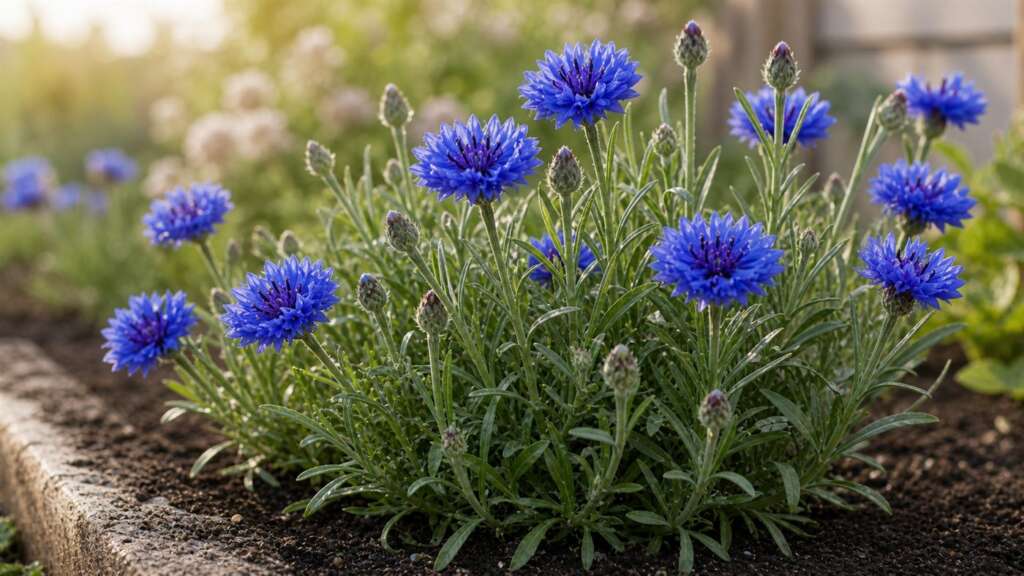
Dwarf Blue Bachelor Button, also called cornflower, is a cool-season annual flower grown for clear blue blooms, cut flowers, and pollinator interest. It is usually easiest when direct sown shallowly in cool weather, then kept evenly moist until seedlings are established.
Quick How-to
Sow Dwarf Blue Bachelor Button in early spring as soon as the soil can be worked, or in fall where mild winters allow overwintering annuals. Cover seed lightly, about 1/8 to 1/4 inch deep, and keep the surface evenly moist until germination. Expect sprouts in about 7 to 14 days in cool soil around 60 to 65 F. Thin seedlings early so the plants have light, airflow, and enough room to make strong stems.
Quick Guide
| Fact | Recommendation |
|---|---|
| Best method | Direct sow preferred; indoor start is possible 3 to 4 weeks before transplanting |
| Sowing depth | Cover lightly, about 1/8 to 1/4 inch |
| Germination temperature | About 60 to 65 F is ideal for steady emergence |
| Days to germination | About 7 to 14 days |
| Light for germination | Cover lightly rather than leaving exposed; avoid burying deeply |
| Spacing | Thin to about 6 to 9 inches apart |
| Sun | Full sun |
| Water | Keep the seedbed evenly moist, not saturated, until established |
| Bloom timing | Often about 65 to 90 days from sowing, depending on temperature and planting season |
| Plant size | Compact plants commonly reach about 12 to 24 inches, distinctly shorter than tall cornflower strains |
Before You Sow
Choose a sunny bed or container with good drainage. Bachelor button tolerates ordinary garden soil and does not need rich feeding to perform well. For a cleaner stand, rake the surface smooth, break up clods, and water the bed before sowing so tiny seed is not washed too deep afterward.
If you are sowing into a container, use a pot with drainage holes and a light potting mix. Avoid heavy, wet soil that stays soggy around the seed. Label the row or container when you plant; bachelor button seedlings can be easy to confuse with other young annuals.
Direct Sowing
Direct sowing is the most natural method for bachelor button because the plant establishes quickly in cool conditions. Scatter or place seed thinly, cover lightly with fine soil or seed-starting mix, and press gently for soil contact. Water with a gentle spray so the seed does not float or sink unevenly.
Keep the top layer consistently moist until emergence. If the surface dries and crusts, seedlings may struggle to break through. Once plants have true leaves, thin to roughly 6 to 9 inches apart. Crowded plants may flower, but they are more likely to stretch, lean, or develop weak stems.
Indoor Starting
Indoor starting is optional. If spring weather is unpredictable or you want a small number of placed plants, sow 3 to 4 weeks before transplanting. Use individual cells, cover lightly, and provide bright light as soon as seedlings emerge. Keep them cool and bright rather than warm and shaded; overly warm indoor conditions can make flower seedlings stretch.
Transplant after hardening off, before seedlings become rootbound. Bachelor button generally prefers not to sit indoors too long. A short indoor start is useful; a late, crowded tray is usually not.
Soil, Sun, and Water
Full sun gives the strongest plants and best bloom. In hot climates, a little afternoon relief may help, but too much shade leads to lanky growth. Soil should drain well. High fertility is not necessary; excess nitrogen can push soft leafy growth at the expense of sturdy stems and blooms.
Until germination, think “evenly moist surface.” After plants establish, water when the top inch begins to dry. Avoid keeping the bed constantly wet, especially in cool weather.
Top Mistakes
- Sowing too deeply: Bachelor button seed should be covered lightly. Deep planting delays emergence and can produce weak sprouts.
- Letting the surface dry out: The seedbed can look damp underneath while the top layer dries. Keep the surface evenly moist until seedlings are visible.
- Starting too late into heat: Bachelor button performs best when it can establish in cool conditions. Late hot sowings may germinate unevenly or produce smaller plants.
- Leaving seedlings crowded: Thin early. Crowding reduces airflow and creates tall, weak stems.
Troubleshooting by Symptom
| Symptom | Likely causes | What to do next |
|---|---|---|
| No sprouts after 14 days | Seed was buried too deep, soil surface dried, soil crusted, or weather turned hot | Gently check the top layer, resow shallowly if needed, and keep the surface evenly moist during cool weather |
| Patchy germination | Uneven watering, seed washed into low spots, cloddy soil, or inconsistent depth | Smooth the bed before sowing, water gently, and cover seed with a thin, even layer |
| Seedlings are tall and weak | Too little light, too much warmth indoors, overcrowding, or overly rich soil | Move into stronger light, thin promptly, and avoid heavy feeding |
| Seedlings collapse at the soil line | Overly wet mix, poor airflow, or damping-off conditions | Improve airflow, water less often, use fresh seed-starting mix for indoor sowing, and avoid saturated trays |
| Plants grow leaves but few flowers | Too much shade, excess nitrogen, or heat stress | Give full sun, avoid high-nitrogen fertilizer, and sow earlier in the cool season |
Bloom Care
Cut flowers when they are partly open for arrangements. Regular cutting or deadheading helps keep plants blooming longer. If you want reseeding or seed saving, leave some flowers on the plant until seed heads mature and dry.
Seed Saving
Bachelor button can reseed readily where conditions suit it. To save seed intentionally, let selected flower heads dry on the plant, then collect on a dry day and finish drying indoors before storage. Label seed with the variety and year. If several bachelor button colors or varieties grow nearby, seedlings may not all match the parent type.
Storing Leftover Seed
Keep unused Dwarf Blue Bachelor Button seed in its labeled packet inside a sealed container in a cool, dry, dark indoor location. Avoid garages, sheds, greenhouses, and sunny windowsills, where temperature and humidity swing sharply. Label home-saved seed with the variety and harvest year before storing it.
FAQ
Can I grow Dwarf Blue Bachelor Button in containers?
Yes. Use a container with drainage, full sun, and enough room for airflow. Thin seedlings instead of letting the whole packet grow in one tight clump.
Should I soak bachelor button seed before planting?
Soaking is usually not necessary. Better results usually come from shallow sowing, good soil contact, and steady surface moisture.
Is bachelor button better direct sown or transplanted?
Direct sowing is preferred for simple home-garden success. Transplants can work when started briefly in cells and moved out before they become crowded or rootbound.