
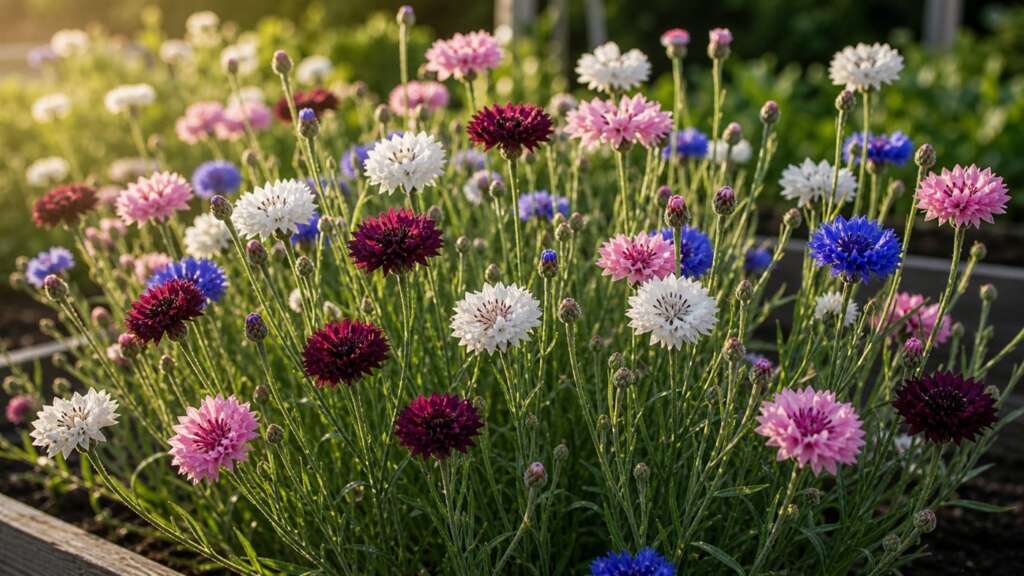
Polka Dot Bachelor Button Mix is a cool-season annual cornflower (Centaurea cyanus) grown for its blend of purple, pink, blue, white, and rose blooms. Like other bachelor buttons, it establishes most easily when direct sown shallowly in cool weather and kept evenly moist until the seedlings find their feet. The mix is grown the same way as a single color; the only real difference is that a single sowing gives you a meadow of shades rather than one tone.
Quick How-to
Sow Polka Dot Bachelor Button Mix outdoors as soon as the soil can be worked in spring, or in fall where mild winters allow overwintering annuals. Cover seed lightly, about 1/8 to 1/4 inch deep, and keep the surface evenly moist until germination. Sprouts usually appear in about 7 to 14 days in cool soil around 60 to 65 F. Thin seedlings early to roughly 6 to 9 inches apart so each plant gets the light, airflow, and root room it needs to make a sturdy stem and the full range of mix colors.
Quick Guide
| Fact | Recommendation |
|---|---|
| Best method | Direct sow preferred; a short indoor start is possible 3 to 4 weeks before transplanting |
| Sowing depth | Cover lightly, about 1/8 to 1/4 inch |
| Germination temperature | About 60 to 65 F is ideal for steady, even emergence |
| Days to germination | About 7 to 14 days |
| Light for germination | Cover lightly rather than leaving exposed; avoid burying deeply |
| Spacing | Thin to about 6 to 9 inches apart |
| Sun | Full sun |
| Water | Keep the seedbed evenly moist, not saturated, until established |
| Bloom timing | Often begins about 60 to 70 days after sowing and continues while weather stays mild |
| Plant size | Dwarf mix, commonly about 16 to 24 inches tall |
Before You Sow
Choose a sunny spot with light, well-drained soil. Bachelor button does not need a rich bed to flower well; ordinary garden soil with decent drainage is usually a better starting point than a heavily amended vegetable bed. Excess fertility tends to push soft leafy growth at the expense of strong stems and full bloom.
Smooth the surface with a rake, break up clods, and remove rocks or large debris. A fine, level seedbed helps you place tiny cornflower seed at a consistent depth, which is one of the easiest ways to get an even stand. Watering the bed lightly before sowing means seeds settle in damp soil rather than being pushed too deep by the first watering after.
If you are working with containers, choose pots with drainage holes and a light potting mix. Avoid heavy, water-holding soils that stay soggy around small seed. Label the row or container at planting; bachelor button seedlings are slim and grassy at first and can be easy to confuse with weed seedlings or other young annuals in the same bed.
Direct Sowing
Direct sowing is the most natural way to grow bachelor button because the plant establishes quickly in cool conditions and dislikes long indoor stints. Scatter or place seed thinly across the prepared surface, cover with about 1/8 to 1/4 inch of fine soil or seed-starting mix, and press gently for good soil contact. Water with a gentle spray rather than a hard stream so seed is not floated into clumps or rinsed too deep.
Keep the top layer consistently moist until you see emergence. The seedbed can look damp an inch down while the surface dries and crusts, which is a common reason new sowings stall. A light second covering with sieved compost or vermiculite can help hold surface moisture and reduce crusting. Once true leaves appear, thin to roughly 6 to 9 inches apart. Crowded plants will still try to flower, but they tend to stretch, lean, and produce thinner stems with smaller blooms.
For a longer show, try small succession sowings every two to three weeks while temperatures remain cool. In most climates, bachelor button sown into reliable heat tends to germinate unevenly and bloom briefly before fading.
Indoor Starting
Indoor starting is optional and works best as a short, deliberate head start rather than a long nursery stage. If spring weather is unpredictable or you want to place a small number of plants precisely, sow 3 to 4 weeks before your intended transplant date. Use individual cells, cover seed lightly, and move seedlings under strong overhead light as soon as they emerge.
Keep indoor seedlings cool and bright. Warm, dim conditions are a common reason cornflower starts come out tall and floppy. A heat mat is generally not necessary for this crop; ordinary indoor room temperatures are usually plenty.
Bachelor button has a fine taproot and resents long confinement in small cells. Transplant after hardening off and before seedlings become rootbound. A short, well-lit start usually outperforms a longer, crowded one.
Hardening Off and Transplanting
Harden off indoor-started seedlings over 7 to 10 days before planting them out. Begin with sheltered shade and short outdoor visits, then gradually increase sun, breeze, and time outside. Cornflower is reasonably hardy and tolerates cool nights, so the hardening window can lean toward earlier outdoor exposure rather than waiting for summery weather.
Transplant on a calm, overcast day if possible, or in the late afternoon. Set plants at the same depth they grew in the cell, firm the soil gently, and water in. Avoid disturbing the root ball more than necessary. If you are planting a mix and want a natural look, vary spacing slightly within the 6 to 9 inch range rather than planting on a strict grid; the bloom display reads more like a meadow that way.
Soil, Sun, and Water
Full sun gives the strongest plants, the sturdiest stems, and the fullest bloom. In hot inland climates a little afternoon relief can extend the show, but deep shade leads to lanky growth and sparse flowering. Soil should drain well; cornflower dislikes wet feet, especially in cool weather when waterlogged soil can stall roots.
Hold back on heavy feeding. A modest amount of compost worked into the bed before sowing is plenty for most gardens. High-nitrogen fertilizer pushes leafy growth and tends to reduce both stem strength and bloom count.
Until germination, aim for “evenly moist surface.” After plants establish, water when the top inch of soil begins to dry. Once they are blooming, consistent moisture supports a longer flowering window, but standing water or constantly soggy soil invites root and stem problems.
Top Mistakes
- Sowing too deeply: Cornflower seed should be covered lightly. Deep planting delays emergence and produces weak, leggy sprouts that may never catch up.
- Letting the surface dry out: The seedbed can look damp underneath while the top layer dries and crusts. Check the top half-inch daily during germination and mist as needed.
- Sowing into heat: Bachelor button performs best when it can establish in cool weather. Late, hot sowings often germinate unevenly, bloom briefly, and fade before they fill in.
- Leaving seedlings crowded: Thin early, before leaves overlap. Crowding reduces airflow, encourages stretchy stems, and tends to suppress the smaller-percentage colors in a mix.
- Overfeeding: Cornflower is a lean-soil plant. Rich beds and nitrogen-heavy fertilizers usually mean more leaves and fewer flowers.
Troubleshooting by Symptom
| Symptom | Likely causes | What to do next |
|---|---|---|
| No sprouts after 14 days | Seed buried too deep, surface dried, soil crusted, or weather turned hot | Gently check the top layer, resow shallowly if needed, and keep the surface evenly moist during cool weather |
| Patchy germination | Uneven watering, seed washed into low spots, cloddy soil, or inconsistent depth | Smooth the bed before sowing, water with a gentle spray, and cover seed with a thin, even layer |
| Seedlings are tall and weak | Too little light, too much indoor warmth, overcrowding, or overly rich soil | Move into stronger light, thin promptly, hold back on fertilizer, and increase airflow |
| Seedlings collapse at the soil line | Overly wet mix, poor airflow, or damping-off conditions | Water less often, improve airflow, use fresh seed-starting mix for indoor sowings, and avoid saturated trays |
| Plants grow leaves but few flowers | Too much shade, excess nitrogen, late sowing into heat | Give full sun, avoid high-nitrogen feed, and sow earlier in the cool season next time |
| Stems flop or lean | Crowding, shade, wind exposure on rich soil | Thin to recommended spacing, give full sun, and consider light support such as twiggy brush for taller forms |
| Mix looks dominated by one color | Natural seedling vigor differences, crowding favoring stronger seedlings | Thin evenly across the row rather than only at the edges; expect color ratios to vary year to year |
Germination Diagnostics
If a sowing is slow to come up, work through the seed environment in order before changing everything at once. Start with depth. Bachelor button seed buried much past 1/4 inch may have moisture but not enough stored energy to push through to light. If you suspect deep sowing, scratch the surface gently to check, and resow shallowly in a fresh patch rather than digging up the original row.
Check temperature next. This crop prefers cool to mild conditions; soil above roughly 75 F often reduces germination and stresses any seedlings that do emerge. A soil thermometer is more reliable than air temperature, especially in spring when the air can swing warm but the bed is still cold.
Moisture is the third checkpoint. The seed zone should feel like a wrung-out sponge: damp but not shiny wet, never dusty dry. Crusted surfaces are a common quiet failure mode. Finally, check light and airflow after emergence. Seedlings that sprout well but then stretch, pale, or topple usually need stronger light, more space, or a less saturated mix rather than a different seed source.
Timing and Climate Notes
Treat Polka Dot Bachelor Button Mix as a cool-window crop. In most U.S. climates, an early-spring sowing into workable soil gives the best stand. In USDA zones with mild winters, a fall sowing can overwinter and bloom earlier the following spring. In hot summer regions, expect bloom to wind down once daytime temperatures stay high; a fall sowing or a shadier afternoon location can extend the season.
Successions of small sowings every two to three weeks during the cool window keep fresh flowers coming. Once the weather turns reliably hot, pause sowings and pick up again in late summer for fall bloom where the season allows.
Container and Small-Space Notes
Polka Dot Bachelor Button Mix adapts well to large containers, raised beds, and small cutting patches. Choose a pot with drainage and enough soil volume to buffer moisture swings; small shallow pots dry quickly and exaggerate heat stress. A 10 to 14 inch pot can support a small clump; a half-barrel-sized container can hold a generous handful of plants thinned to spacing.
Water container plants more attentively than in-ground plantings, but still allow the top inch to dry between waterings. Place containers where they get full sun and reasonable airflow; tight corners on hot patios can shorten the bloom window.
Bloom Care and Cut Flowers
Bachelor button is a useful cut flower. Cut stems in the morning when blooms are partly open, recut underwater, and place in clean water with a small amount of floral preservative if you have it. Regular cutting or deadheading keeps the plant pushing new flowers; once seed heads form across most of the plant, bloom slows.
If you want a reseeding patch or plan to save seed, leave some heads on the plants late in the season to mature and dry naturally.
Seed Saving
Bachelor button can reseed readily where conditions suit it, and seed is straightforward to save. Let selected flower heads dry on the plant, then collect on a dry day and finish drying indoors on paper or a screen before storage. Rub seed free of chaff, label with the variety and year, and store cool, dry, and sealed.
Because Polka Dot is a mix, expect color ratios to shift over generations of home-saved seed. Bees and other pollinators move pollen between plants, so seedlings from your saved seed may favor whichever colors set the most seed in your garden. If you also grow other bachelor button varieties nearby, cross-pollination can shift the next generation further.
Storing Leftover Seed
Keep unused Polka Dot Bachelor Button Mix seed in its labeled packet inside a sealed container in a cool, dry, dark indoor location. Avoid garages, sheds, greenhouses, and sunny windowsills, where temperature and humidity swing sharply. Label home-saved seed with the variety and harvest year before storing it.
FAQ
Is Polka Dot Bachelor Button Mix better direct sown or transplanted?
Direct sowing is the simpler, more reliable choice for most home gardens. Transplants can work for placed plantings or short-season climates, but only as a brief indoor start; long indoor stays tend to produce weaker plants.
Can I grow this mix in containers?
Yes. Use a roomy container with drainage, full sun, and a watering routine that prevents repeated wilting. Thin to spacing rather than leaving the whole packet in one tight clump.
Should I soak the seed before planting?
Soaking is usually unnecessary. Better results come from shallow sowing, good soil contact, and steady surface moisture during germination.
Will every color show up in my patch?
Color ratios in a mix vary by sowing, weather, and which seedlings establish best. A larger sowing gives a wider range; thin evenly so smaller-percentage colors are not crowded out early.
Does bachelor button reseed?
It can reseed freely where conditions suit it. To encourage this, leave some flower heads to mature; to limit it, deadhead consistently.
Is this plant pollinator friendly?
Yes. Cornflowers are commonly visited by bees and other pollinators, which is one reason home growers tuck them into vegetable and cutting beds.