
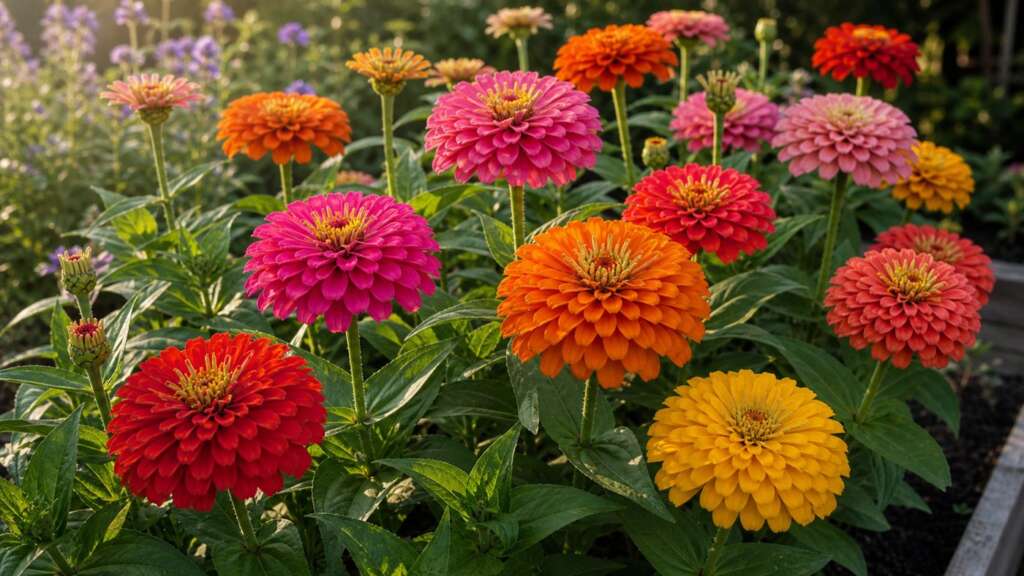
California Giants Zinnia is a tall, warm-season annual flower grown for big, fully double blooms in a mix of reds, oranges, yellows, whites, pinks, and purples. Plants are a favorite for the back of the bed, cutting gardens, and pollinator strips because the broad flower heads draw butterflies and the long, sturdy stems hold up beautifully in a vase. Like most zinnias, this is a heat-loving crop that rewards warm soil, full sun, generous spacing, and a watering habit that keeps the leaves dry.
Quick How-to
Direct sow California Giants Zinnia outdoors after the last spring frost, once the soil has warmed and nights stay mild. Cover seed about 1/4 inch deep, press for good soil contact, and keep the surface evenly moist until sprouts appear in about 5 to 10 days at soil temperatures near 70 to 80 F. Thin seedlings early to roughly 9 to 18 inches apart so plants get the light and airflow they need to grow tall, branched, and disease-resistant. An optional short indoor start, 3 to 4 weeks before transplanting, can give a small head start in cool-summer regions.
Quick Guide
| Fact | Recommendation |
|---|---|
| Best method | Direct sow after frost; brief indoor start is optional |
| Sowing depth | About 1/4 inch |
| Germination temperature | About 70 to 80 F soil for steady emergence |
| Days to germination | About 5 to 10 days under warm conditions |
| Light for germination | Cover lightly rather than leaving exposed |
| Spacing | Thin to about 12 to 18 inches apart |
| Sun | Full sun, ideally 6 or more hours |
| Water | Even soil moisture; water at the base, keep leaves dry |
| Bloom timing | About 60 to 75 days from sowing |
| Plant size | Tall, branching habit commonly around 3 to 4 feet |
Before You Sow
Pick the sunniest spot you have. California Giants are tall, so place them where they will not shade out shorter plants, and give yourself room to walk in and cut without trampling neighbors. A west-facing fence line, the back of a mixed border, or a dedicated cutting row all work well.
Loosen the top few inches of soil and break up clods so tiny seedlings can push through cleanly. Zinnias are not heavy feeders and perform well in average garden soil. If your bed is already rich from compost, skip extra fertilizer at sowing time; lush, soft growth from too much nitrogen is more prone to lean, flop, and develop leaf spots.
Water the bed the day before sowing so seed is not chasing dry soil from the start. If you are planting into a container, choose a pot large enough for the mature plant, with drainage holes, and use a light potting mix rather than dense garden soil. Label rows or pots as you plant; young zinnia seedlings can look similar to other warm-season annuals, especially in a mixed bed.
Direct Sowing
Direct sowing is the most natural way to grow California Giants because the plants germinate quickly in warm soil and resent root disturbance. Wait until the last frost date has passed and daytime temperatures are reliably warm. If you are in a hurry, a soil thermometer reading near 70 F at planting depth is a good green light.
Make a shallow furrow or simply press seeds onto a smooth, pre-watered bed. Space seeds about 4 to 6 inches apart in the row, knowing you will thin to wider spacing later. Cover with about 1/4 inch of fine soil or seed-starting mix, press gently for contact, and water in with a soft spray so the seed is not washed sideways or buried deeper than intended.
Keep the top layer evenly moist until you see seedlings. If the surface dries out and forms a crust, sprouts can fail at the very last step. Once the first true leaves appear, thin to roughly 9 to 18 inches apart depending on how tall you expect plants to get. Skipping the thin is one of the most common mistakes with zinnias.
Indoor Starting
Indoor starting is optional, and short is better than long. In cool-summer or short-season areas, sow 3 to 4 weeks before your intended transplant date, in individual cells so roots are not torn apart at planting time. Use fresh seed-starting mix, sow about 1/4 inch deep, and pre-moisten the mix so seed placement stays even.
Warmth speeds germination; a seedling heat mat near 70 to 80 F can help. Remove the heat mat as soon as sprouts appear and move trays under strong overhead light immediately. Weak light plus warmth is the fastest way to grow tall, pale, floppy seedlings that struggle after transplant. Aim for short, stocky plants with closely spaced leaves.
Pot up only if roots fill the cell before your transplant window. Zinnias do not love being held in small containers for long; once they are crowded or rootbound, growth often stalls outdoors no matter how much you baby them.
Hardening Off and Transplanting
Harden off indoor-started seedlings over 7 to 10 days before they go into the garden. Begin with an hour or two of sheltered shade, then add direct sun and gentle breeze gradually. The point is to toughen the leaves and stems so sudden full sun does not scorch the plant.
Transplant on a calm, mild day, ideally in the late afternoon or under light overcast. Set seedlings at the same depth they grew in the cell, water in well, and space them 12 to 18 inches apart. California Giants quickly fill in, and crowded rows are where powdery mildew and leaf-spot problems start.
Soil, Sun, and Water
Full sun and free-draining soil are the two non-negotiables. Six hours is a minimum; more is better, especially in cooler or hazier climates. Heavy clay that stays soggy will slow plants and invite root and leaf trouble, so amend with compost ahead of planting if drainage is poor.
Water at the base of the plant whenever possible. Drip lines, soaker hose, or a careful watering wand all beat overhead sprinklers, because dry foliage is the single best defense against the leaf spotting and powdery mildew that affect zinnias in humid weather. Water deeply and less often once plants are established; the goal is steady soil moisture, not a constantly damp surface. A light mulch after the soil has warmed helps even out moisture and keeps mud from splashing up onto lower leaves.
Top Mistakes
- Sowing into cold soil: Zinnia seed can rot or germinate poorly when soil is still cool. Wait until frost danger has passed and the bed feels warm to the touch.
- Crowding plants: Seedlings look tiny at first, so it is easy to leave them too close together. Thin early to your final spacing for stronger stems, better airflow, and fewer leaf problems.
- Watering from overhead: Wet leaves and dense foliage are the main setup for powdery mildew and leaf spotting. Water at the soil level whenever possible.
- Skipping the cut or deadhead: California Giants bloom hardest when you keep cutting. Letting old flowers go to seed signals the plant to slow down new bud production.
Troubleshooting by Symptom
| Symptom | Likely causes | What to do next |
|---|---|---|
| No sprouts after 10 to 14 days | Soil too cold, seed buried too deep, dry surface, or crusted soil | Check soil warmth, keep the surface evenly moist, and resow shallowly once conditions are warm |
| Patchy stand | Uneven sowing depth, seed washed by hard watering, or cloddy seedbed | Smooth the bed before sowing, water with a soft spray, and cover seed with a thin, even layer |
| Seedlings are tall, pale, and weak | Not enough light, too warm indoors, or crowded trays | Move under stronger light, reduce heat after germination, and thin to one plant per cell |
| Seedlings collapse at the soil line | Overly wet mix, poor airflow, or damping-off conditions | Water less often, increase airflow, and use fresh seed-starting mix for indoor restarts |
| White powdery coating on leaves | Powdery mildew, often tied to crowding, overhead watering, or humid still air | Increase spacing, water at the base, remove badly affected lower leaves, and avoid wetting foliage in the evening |
| Brown or purple leaf spots | Common leaf-spot diseases worsened by wet leaves and dense foliage | Remove affected leaves, improve airflow, water at soil level, and avoid composting infected material |
| Plants grow tall but few flowers | Too much shade, excess nitrogen, or no cutting back | Give full sun, ease off high-nitrogen feeds, and cut or deadhead regularly to push new buds |
| Stems lean or flop | Wind exposure, very rich soil, or crowding | Plant in a less exposed spot, avoid extra fertilizer, and consider light staking for the tallest stems |
Germination Diagnostics
If California Giants Zinnia is slow to come up, check one thing at a time before changing the whole setup. Start with temperature. This is a warm-season crop, and cool spring soil is the most common reason indoor and outdoor sowings stall. A soil thermometer is the fastest way to settle the question.
Next, check depth. Seed pressed in but only lightly covered tends to sprout reliably; seed buried under more than about a half inch of soil can run out of energy before it reaches daylight. Moisture is the third checkpoint. The seed zone should feel like a wrung-out sponge: evenly damp throughout, never shiny wet, never dusty dry. A crusted surface after heavy watering can stop sprouts at the last step even when seed underneath is alive.
Finally, look at what happens right after emergence. Seedlings that sprout cleanly but then stretch, pale, or fall over are usually telling you they need stronger light, better airflow, less crowding, or a less saturated mix.
Timing and Climate Notes
California Giants Zinnia is a warm-season flower; treat your last frost date as the earliest planting trigger, not your planting day. In short-season or cool-summer regions, a brief indoor start can help you reach full bloom before fall cool-down. In long, hot growing seasons, you can sow successions every 3 to 4 weeks from late spring through midsummer to keep fresh stems coming for cutting.
Zinnias often slow down or look tired by late summer in humid areas as leaf diseases catch up with them. A second sowing about midseason can give you a fresh, clean wave of plants to carry color into fall.
Container and Small-Space Notes
California Giants are tall and will look out of proportion in small pots, but they can do well in larger containers with at least 3 to 5 gallons of soil volume, full sun, and a steady watering routine. Use a quality potting mix, not garden soil, and check moisture daily during hot weather; small pots dry out faster and repeated wilting will shorten the bloom run. If you want zinnias mainly for a patio, a more compact zinnia type may be a better fit than this back-of-the-border variety.
Bloom Care and Cutting
For long stems, cut when the bloom is fully open and the stem just below it feels firm when you wiggle it gently. A floppy stem means the flower is not ready and will likely droop in the vase. Cut deep into the plant, just above a pair of side shoots, to encourage longer replacement stems rather than short bushy regrowth.
Strip the lower leaves before placing stems in clean water. Regular cutting and deadheading are the single best way to keep California Giants producing right up to frost. If you stop cutting, the plant gets the message that the season is over.
Seed Saving
California Giants is typically sold as an open-pollinated mix, so saved seed will usually produce zinnias of the same general type and color range, though individual plants may vary. To save seed, let your best flower heads dry fully on the plant until petals are crisp and the center feels papery. Cut on a dry day, finish drying indoors out of direct sun, and rub the heads apart to separate seed from chaff.
Label saved seed with the variety and year. If you grow other zinnia varieties nearby, expect some natural crossing; seedlings from saved seed may not match the parent plant exactly.
Storing Leftover Seed
Keep unused California Giants Zinnia seed in its labeled packet inside a sealed container in a cool, dry, dark indoor location. Avoid garages, sheds, greenhouses, and sunny windowsills, where temperature and humidity swing sharply. Label home-saved seed with the variety and harvest year before storing it.
FAQ
Can I direct sow California Giants Zinnia?
Yes, and it is the preferred method. Wait until after your last frost and until the soil has warmed; zinnias germinate quickly and grow fast once conditions suit them.
Do I need to soak the seed first?
No. Shallow sowing into warm, evenly moist soil works better than soaking, which can make the small seeds awkward to handle.
Why do my zinnia leaves get white powder or spots?
Powdery mildew and leaf-spot diseases thrive on wet foliage, crowded plants, and still humid air. Space plants generously, water at the base of the plant, and remove affected lower leaves to slow the spread.
Should I pinch young zinnias?
Pinching the growing tip when the plant is about 8 to 12 inches tall encourages branching and more cuttable stems. It is optional, but cutting gardeners often find it pays off.
How long will California Giants keep blooming?
With regular cutting or deadheading, full sun, and even moisture, plants typically bloom from early summer until the first hard frost.