
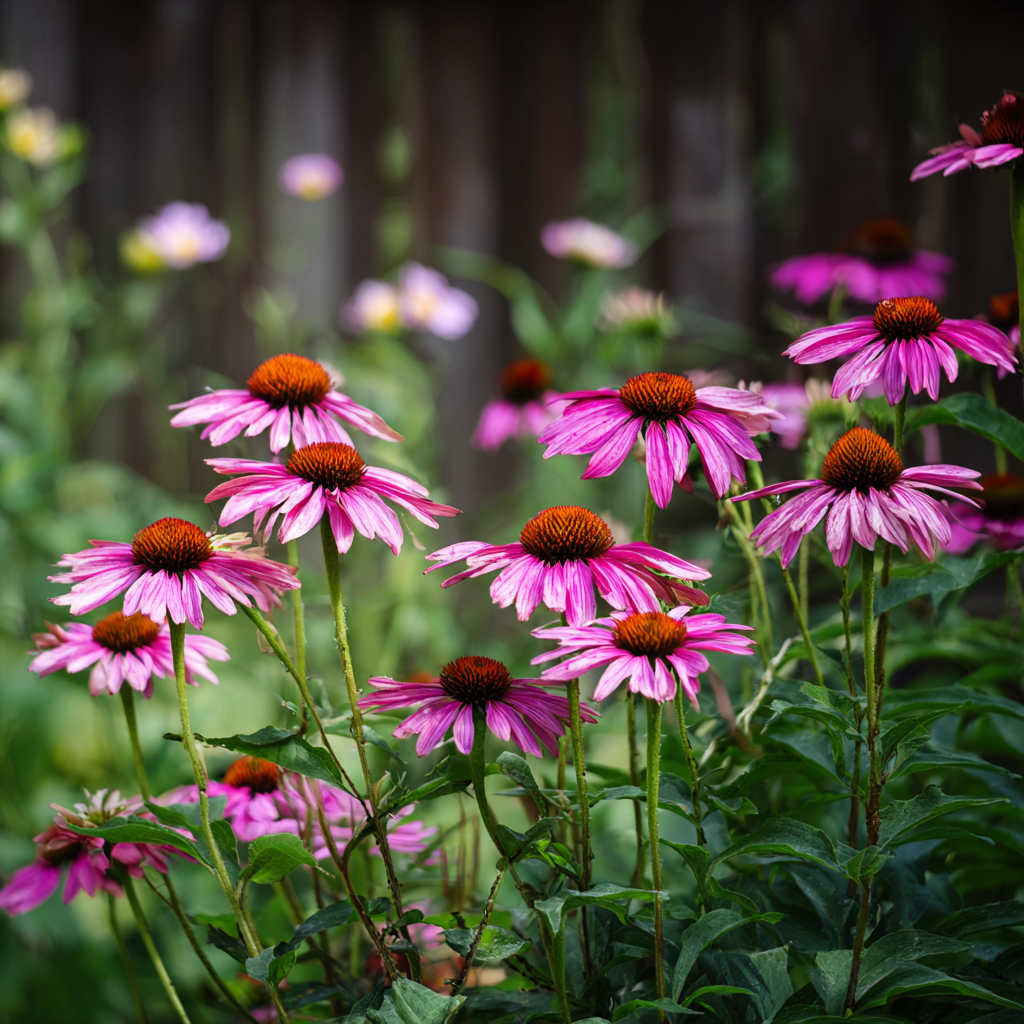
Echinacea, better known as Purple Coneflower, is a North American native perennial grown for rose-purple daisy-form flowers with raised coppery-orange centers. From seed, it takes a little patience: germination can be uneven, and the strongest bloom often arrives in the second year once the deep taproot is established. The payoff is a long-lived, drought-tolerant clump that draws bees, butterflies, and finches for years.
Quick How-to
Start Purple Coneflower indoors 8 to 10 weeks before your last spring frost, or direct sow into a prepared bed in fall or early spring. Sow about 1/8 to 1/4 inch deep and cover lightly so the seed stays moist without being buried deeply. A 30 to 60 day moist cold period in the refrigerator is optional but can improve germination and make emergence more uniform. Expect sprouts in roughly 10 to 20 days at 65 to 75 F, and do not be surprised if the tray emerges in waves. Thin or transplant to 18 to 24 inches apart in full sun, and water consistently through the first growing season while the roots reach down.
Quick Guide
| Fact | Recommendation |
|---|---|
| Best method | Indoor start with optional cold stratification; fall direct sow also works |
| Sowing depth | 1/8 to 1/4 inch, with light soil cover or surface pressed in |
| Germination temperature | About 65 to 75 F after any chill period |
| Days to germination | About 10 to 20 days, often uneven across a tray |
| Seed covering | Cover lightly with about 1/8 to 1/4 inch of mix; do not bury deeply |
| Cold stratification | Optional but helpful; 30 to 60 days moist at refrigerator temperature |
| Spacing | About 18 to 24 inches between mature plants |
| Sun | Full sun for the strongest plants and bloom |
| Water | Even moisture year one; drought-tolerant once established |
| Bloom timing | Often light or absent in year one; reliable bloom from year two onward |
| Plant size | Typically 2 to 4 feet tall, forming an upright perennial clump about 18 to 24 inches wide |
Before You Sow
Purple Coneflower rewards a small amount of planning. Because it is a perennial, the spot you choose now will likely host the same plant for several seasons. Pick a permanent home in full sun with soil that drains freely after rain. Heavy, soggy ground is the single most common reason coneflowers fail to return; the crown is more sensitive to winter wet than the foliage suggests.
Avoid rich, heavily amended beds. Coneflower evolved on lean prairies and tends to flop, stretch, or skimp on bloom when pushed with nitrogen. Average garden soil, with maybe a light scratch of compost worked into the top inch, is plenty. If you are sowing into a container for later transplant, use a clean seed-starting mix in cells that are at least 2 to 3 inches deep; the seedling’s first move is downward, and shallow cells force the taproot to coil.
Label your sowings carefully. Coneflower seedlings look generic for weeks and are easy to mistake for stray weeds during the slow first stage.
Cold Stratification (Optional but Useful)
A moist chill mimics the winter Purple Coneflower would experience in the wild and can wake stubborn seed. There are two simple ways to do it.
- In the refrigerator: Mix seed with a small amount of damp (not wet) sand, vermiculite, or seed-starting mix in a labeled zip bag. Refrigerate 30 to 60 days, then sow normally. Do not freeze.
- In the garden: Direct sow in fall or late winter and let nature handle the chill. Mulch lightly to protect the surface from washout.
Stratification is not always required, but it tends to improve the overall germination percentage and tighten the sprout window. If you sowed without chilling and the tray is patchy after three weeks, leave it in place and keep it moist; late stragglers are common with this species.
Indoor Starting
After any chill period, surface-sow or barely cover seed with 1/8 inch of fine mix. Press gently for soil contact and mist until the surface is evenly damp. Cover the tray with a humidity dome or loose plastic until you see emergence, then vent it to improve airflow.
Keep the mix around 65 to 75 F. A heat mat helps with stubborn batches but is rarely required. Strong overhead light matters more than warmth once sprouts appear; a sunny window alone often is not enough, and weak light is the fastest way to grow tall, floppy seedlings that struggle later.
When seedlings show two sets of true leaves, pot up if roots are filling the cell. Echinacea sends a strong taproot early, so move it before the root spirals. Keep watering steady and avoid letting the mix swing between bone-dry and saturated.
Direct Sowing
Direct sowing works well if you can give the seed cool, settled conditions and a tidy seedbed. Two windows tend to perform best:
- Fall sowing, four to six weeks before hard freezes, lets winter chill the seed for you. Sprouts appear the following spring.
- Early spring sowing, as soon as the soil can be raked, is the simpler choice in colder zones.
Rake the bed smooth, remove clods, and water it before sowing so tiny seed is not washed off the surface afterward. Scatter or space seed thinly, cover with no more than 1/4 inch of fine soil, and tamp gently. Keep the top half inch consistently moist until you see seedlings, then ease back as plants establish. Mark the row clearly; first-true-leaf coneflower seedlings are easy to weed out by accident.
Transplanting and Spacing
Harden seedlings off over 7 to 10 days, starting in dappled shade and building up to full sun and outdoor wind. Transplant after the last hard frost, ideally on an overcast day or in the evening, and water in deeply.
Set crowns at the same depth they grew in their pots. Planting too deep can rot the crown; planting too shallow can expose roots. Space 18 to 24 inches apart; coneflowers fill in faster than they look like they will, and crowded plantings invite mildew on the lower leaves later in summer.
The first season is mostly about roots. Even if a plant produces a bloom or two, do not expect a full show. Year two and beyond is when the clump hits its stride.
Soil, Sun, and Water
Full sun (ideally 6 or more hours of direct light) produces the sturdiest stems and best bloom. Plants tolerate light afternoon shade in hot climates, but heavier shade leads to legginess and weaker flowering.
Soil should drain freely. Heavy clay can work if amended with grit or coarse compost to open it up; raised beds or berms are a good answer where winter wet is unavoidable. Once established, Purple Coneflower is genuinely drought tolerant and prefers being left alone over being pampered. During year one, water deeply about once a week in the absence of rain so the taproot follows moisture downward rather than staying shallow.
Skip routine fertilizer. A thin top-dressing of compost in early spring is plenty.
Top Mistakes
- Treating it like an annual. Coneflower trades early-season speed for long-term durability. A modest first year is normal, not a failure.
- Burying the seed. Purple Coneflower seed is small and should be covered only lightly. A thin layer of mix holds moisture while avoiding the slow, uneven emergence caused by deep sowing.
- Pulling the tray too early. Germination often arrives in waves over two to three weeks. Patchy trays at day 10 are not finished sprouting.
- Planting into wet ground. Crown rot in winter or early spring is the most common way established coneflowers disappear. Drainage is more important than soil richness.
- Overfeeding. Rich beds produce tall, floppy stems with fewer, weaker flowers. Lean and sunny beats lush and shaded.
Troubleshooting by Symptom
| Symptom | Likely causes | What to do next |
|---|---|---|
| Tray still bare after 14 to 20 days | Seed buried too deep, mix dried at the surface, no chill period, or cold soil | Mist the surface back to even moisture, hold conditions steady, and give the tray another two weeks; consider a refrigerator chill for the next sowing |
| Seedlings emerge in scattered waves | Natural for this species; germination is rarely uniform | Keep moisture steady and resist the urge to disturb the tray; late sprouters often catch up within a few weeks |
| Seedlings stretch tall and thin | Weak light, too much warmth indoors, or crowded cells | Move lights closer, lengthen the photoperiod to 14 to 16 hours, thin to one plant per cell, and reduce heat-mat time after emergence |
| Seedlings collapse at the soil line | Wet mix, poor airflow, or damping-off | Water from below, vent the dome, remove affected seedlings, and use fresh sterile mix for any restarts |
| First-year plant produces few or no flowers | Normal perennial pace; the plant is building roots | Keep watering steady through the first season and expect a stronger show next year |
| Established clump fails to return in spring | Winter wet, crown rot, or heaving in freeze-thaw soil | Improve drainage with grit or a raised bed, mulch lightly after the ground freezes (not before), and avoid planting in low spots that pool water |
| Powdery white film on lower leaves in late summer | Powdery mildew, often from crowding or overhead watering | Thin crowded clumps, water at the soil level, and improve airflow; cut affected stems back hard after bloom |
| Stems flop or lean badly | Too much shade, too much fertility, or wind exposure | Give full sun, skip nitrogen feeding, and consider planting in groups so plants support one another |
| Petals droop or look ragged shortly after opening | Normal habit; coneflower petals reflex (sweep back) as they age | No action needed; this is the species’ signature look, not damage |
Bloom Care and Cutting
Purple Coneflower typically blooms from early or midsummer into early fall, especially when spent flowers are removed regularly. For arrangements, cut stems just as petals start to reflex and the central cone is still firm; coneflower holds up well in a vase for about a week.
Deadheading encourages a longer parade of flowers, but the seed heads also have real value. Left standing, the spiky cones feed goldfinches in late summer and fall, add winter structure, and self-sow modestly if conditions suit. A common middle path is to deadhead the first flush for repeat bloom and then let later flowers ripen into seed heads for wildlife and winter interest.
In late fall or early spring, cut stems back to a few inches above the crown. Divide mature clumps every 3 to 4 years if the center begins to thin.
Container Notes
Coneflower can be grown in containers, but it is happiest in large, deep pots that respect its taproot. Choose a container at least 12 inches deep with strong drainage, use a free-draining potting mix, and place it in full sun. Water more attentively than in-ground plants, especially in summer, and feed only sparingly. In cold climates, move pots to a sheltered spot for winter or sink them into the ground to protect roots from repeated freeze-thaw cycles.
Seed Saving
Purple Coneflower is straightforward to save seed from, though plants grown near other Echinacea species or cultivars may produce mixed offspring. Let selected seed heads dry on the plant until the cone is brown, brittle, and the seeds release easily when rubbed. Wear gloves; the cones are genuinely prickly.
Break the cones apart over a bowl, separate seed from chaff, and finish drying on a paper plate for a week or two indoors. Store in a labeled, sealed container with the variety and year. Seedlings from saved seed may show some variation in color and form, which is part of the fun.
Storing Leftover Seed
Keep unused Echinacea / Purple Coneflower seed in its labeled packet inside a sealed container in a cool, dry, dark indoor location. Avoid garages, sheds, greenhouses, and sunny windowsills, where temperature and humidity swing sharply. Label home-saved seed with the variety and harvest year before storing it.
FAQ
Will Purple Coneflower bloom the first year from seed?
Sometimes, particularly if seed is started indoors early and transplanted into warm soil, but a quiet first season is normal. Reliable, full-sized bloom usually arrives in year two once the root system is established.
Does Echinacea seed really need cold stratification?
Not always, but a 30 to 60 day moist chill in the refrigerator tends to improve germination percentages and tighten the sprout window. It is especially useful when you want a more synchronized indoor tray or when winter weather will not provide a reliable chill outdoors.
How deep should I plant the seed?
Shallow. Cover with no more than 1/8 to 1/4 inch of fine mix. Deep burial slows emergence and makes it harder to keep the seed zone evenly moist.
Is Purple Coneflower good for pollinators?
Yes, and it is one of the more dependable choices. Bees and butterflies work the flowers through summer, and finches strip the seed heads in late summer and fall when the cones are left standing.
Can I grow it in a container?
Yes, in a large, deep pot with full sun and strong drainage. Treat container plants as slightly more thirsty than in-ground plants and protect pots from hard winter freezes in cold climates.
Should I cut it back in fall or leave it standing?
Either works. Leaving stems standing through winter provides seed for birds and structure in the garden, while a fall cutback gives a tidier bed. Many gardeners split the difference: leave some stems standing for wildlife and tidy the rest.