
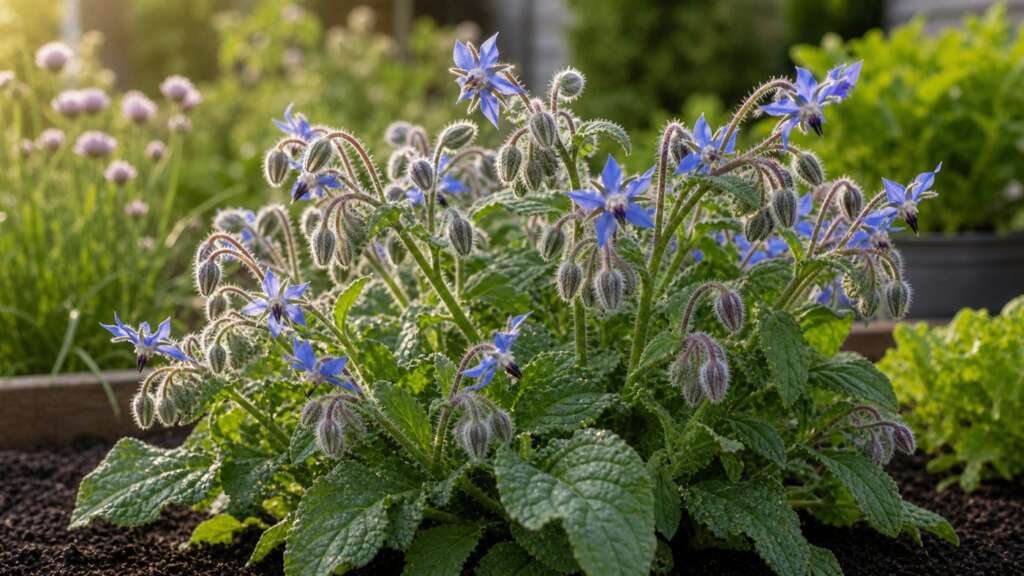
Borage, also called starflower, is a fast-growing annual herb known for fuzzy gray-green leaves, sprays of star-shaped blue flowers, and a strong pull on bees and other pollinators. It is one of the easier herbs to start from seed because it germinates readily in mild weather, prefers to be direct sown, and reseeds itself in beds it likes.
Quick How-to
Direct sow borage after the last frost, once the soil has warmed and nights are settling. Cover seed about 1/4 to 1/2 inch deep, firm the soil for good contact, and keep the seedbed evenly moist. Expect germination in roughly 7 to 14 days when soil temperatures sit near 65 to 75 F. Thin seedlings to give each plant 12 to 24 inches of room, because borage grows into a broad, branching herb and resents being crowded or moved once its taproot is established.
Quick Guide
| Fact | Recommendation |
|---|---|
| Best method | Direct sow; indoor start only if needed, in deep cells, transplanted young |
| Sowing depth | About 1/4 to 1/2 inch |
| Germination temperature | About 65 to 75 F is reliable; will sprout cooler but more slowly |
| Days to germination | About 7 to 14 days |
| Light for germination | Cover seed; bright light needed immediately after sprouting |
| Spacing | Thin to about 12 to 24 inches apart |
| Sun | Full sun preferred; tolerates light afternoon shade |
| Water | Even moisture until established; tolerates moderate dryness once mature |
| Harvest or bloom | Young leaves and freshly open flowers; first blooms often within 6 to 8 weeks |
| Plant size | Commonly about 18 to 36 inches tall and nearly as wide |
Before You Sow
Borage is a generous, slightly unruly herb, so choose its spot with that in mind. A mature plant can easily reach 2 feet across, with hollow stems that lean under wind or rain. Edges of vegetable beds, herb gardens, and pollinator borders all suit it well. It also pairs comfortably near tomatoes, squash, and strawberries, where its flowers help draw pollinators to nearby crops.
The plant develops a taproot fairly quickly, so the easiest path to a strong stand is to sow seed where you want it to grow. Loosen the top few inches of soil, rake the surface smooth, and remove larger stones or clumps so seed sits at an even depth. Pre-water the bed before sowing if the soil is dry; this keeps the seed from drifting and helps the first roots find moisture without you needing to flood the surface afterward.
Borage tolerates ordinary garden soil and does not need rich feeding to perform. Heavy compost is usually unnecessary, and too much nitrogen can produce soft, sprawling growth at the expense of flowers. A bed with good drainage and average fertility is generally plenty.
Direct Sowing
Sow borage seed shallowly, about 1/4 to 1/2 inch deep. Place seeds every few inches along the row or scatter thinly across a small patch, then cover with fine soil and press lightly so each seed makes solid contact with the moist layer below. Water with a gentle spray rather than a strong stream so seeds are not dislodged or washed into deeper pockets.
Keep the seedbed evenly moist until sprouts appear. Borage germinates well in cool to mild conditions and does not require heat to start, but it will sprout faster and more evenly once soil has warmed into the 60s F. If a late cold snap is forecast, hold off a few days rather than sow into cold, wet ground; the seed can sit longer than expected in chilled mud, and slow starts invite damping-off.
Once seedlings have a couple of true leaves, thin them to the final spacing. This is the step beginners most often skip, and it is the one that pays off the most. Crowded borage gets tall and floppy, blooms less generously, and traps humidity that encourages mildew on lower leaves.
Indoor Starting
Indoor starting is possible but rarely necessary. If you choose to start indoors, use deep cells or 3 to 4 inch pots rather than shallow trays, because the taproot grows quickly and resents being cut short. Sow one or two seeds per cell about 1/4 inch deep, keep the mix evenly moist, and place seedlings under strong overhead light as soon as they emerge.
Transplant out while plants are still young, ideally before the first true leaves grow large. Older borage seedlings move poorly. Harden off over several days, water in gently after planting, and expect a short pause before new growth begins. Direct sowing, if you have the option, almost always produces a stronger plant.
Soil, Sun, and Water
Borage performs best in full sun and well-drained soil. In very hot summer regions, a little afternoon shade can keep leaves from wilting in the worst of the day. Soil that drains freely is more important than soil that is rich. Heavy clay that holds water against the roots is the most common cause of weak, short-lived plants.
Water consistently while seedlings establish, then ease back. Mature borage is moderately drought-tolerant thanks to its taproot, and overwatering tends to encourage soft growth and mildew rather than more flowers. A finger test works well: if the top inch of soil is dry, water deeply; if it still feels damp, wait. Skip high-nitrogen feeding, especially once flowering begins.
Top Mistakes
- Transplanting older seedlings. Borage develops a taproot early and dislikes being moved. Direct sow when possible, or transplant indoor starts while they are still small.
- Crowding the row. Plants look fine bunched up while they are small, then crash into one another as they mature. Thin to 12 to 24 inches before leaves overlap.
- Overwatering. Constantly damp soil weakens borage and encourages mildew on the lower leaves. Water deeply, then let the surface dry between waterings once plants are established.
- Pushing fertility. Heavy compost or nitrogen-rich feed produces lush leaves and floppy stems at the expense of flowers. Average garden soil is plenty.
- Ignoring self-sowing. Borage drops seed enthusiastically, and a single plant can repopulate a corner of the garden the following year. Decide early whether you want volunteers or whether you would rather clip seed heads before they shatter.
Troubleshooting by Symptom
| Symptom | Likely causes | What to do next |
|---|---|---|
| No sprouts after 14 days | Cold soil, seed buried too deeply, dry pockets, or saturated mix | Check soil temperature and moisture, resow shallowly into warmer ground, and water gently to maintain even surface moisture |
| Patchy germination | Uneven sowing depth, seed washed by heavy watering, or cloddy soil | Smooth the bed before sowing, press seed into firm contact, and water with a fine spray rather than a strong stream |
| Seedlings tall and pale | Insufficient light after sprouting or excess warmth indoors | Move lights closer or shift outdoors to full sun, reduce supplemental heat, and avoid crowded trays |
| Seedlings collapse at the soil line | Damping-off in wet, still air | Improve airflow, water less often and from below where possible, and use fresh mix for any indoor restart |
| Plants flop or sprawl | Too much shade, overcrowding, rich soil, or heavy rain on tall stems | Thin to proper spacing, hold off on extra feeding, and stake or support taller plants if the bed is exposed to wind |
| White powdery coating on leaves | Powdery mildew encouraged by humid, crowded, or shaded conditions | Improve airflow with thinning and pruning, water at the base of the plant, and remove the worst-affected leaves |
| Few flowers despite leafy growth | Excess nitrogen or too much shade | Stop feeding, give plants more sun, and wait for the next flush of blooms |
| Plants fade by midsummer | Borage is a short-lived annual; heat and flowering naturally wind it down | Allow self-sowing for a second flush, or sow a fresh succession in early summer for fall flowers |
Germination Diagnostics
If borage is slow to start, walk through the seedbed in order rather than changing everything at once. First, check depth. Seed pushed deeper than half an inch can struggle to break the surface, especially if the soil crusts after watering. Next, check temperature. Borage will germinate in cooler weather, but soil that sits below the low 60s F draws germination out and increases the chance of seeds rotting before they sprout.
Moisture is the next variable. The seed zone should feel like a wrung-out sponge: damp throughout, not shiny wet on top, not dusty underneath. Light, frequent watering keeps the surface from crusting in the first week. After germination, shift toward deeper, less frequent watering so roots reach down rather than staying near the surface.
Finally, look at light and airflow. Sprouts that emerge but stretch, pale, or topple over usually need brighter light, more space, or a drier surface between waterings. If indoor seedlings are involved, move lights within a few inches of the leaf tops and run a small fan briefly each day; the air movement strengthens stems and reduces damping-off.
Timing and Climate Notes
Borage is most often grown as a spring-into-summer crop, but it adapts well to mild cool weather on both ends of the season. In areas with mild winters, an early fall sowing can carry plants through to a long bloom in spring. In short-season regions, sow as soon as the last frost has passed and soil is workable; the plant grows quickly enough to flower within a couple of months.
Hot, dry midsummer often signals the plant to set seed and decline. If you want flowers from spring through fall, plan a small second sowing about 6 to 8 weeks after the first. Volunteer seedlings from earlier plants frequently fill in the late-season slot on their own, especially in mulched beds where seed lands softly.
Container and Small-Space Notes
Borage grows well in containers if the pot is large enough to support the taproot and the plant’s broad top growth. Aim for a container at least 10 to 12 inches deep and 12 inches across for a single plant, with drainage holes and a quality potting mix. Smaller pots dry out quickly and produce stunted plants that flower briefly before fading.
Container plants depend on you for consistent moisture, so check them daily during warm weather. A thin layer of mulch on the soil surface helps retain water and keeps the root zone steadier. Avoid sitting the pot in a saucer of standing water, which can rot the taproot from below.
Bloom and Garden Use
Borage is best treated here as an ornamental and pollinator plant. Leave flowering stems in place for bees, or cut a few star-shaped blooms for non-food floral arrangements. Harvest stems in the morning after dew has dried, and wear gloves if the bristly foliage irritates your skin.
Borage can contain pyrrolizidine alkaloids, naturally occurring compounds associated with liver toxicity and long-term health concerns. UK government food-safety guidance specifically advises against drinking infusions made from borage leaves. Because recommendations and regulations differ by location, this guide does not recommend eating home-grown borage leaves or flowers or brewing them as tea. Consult current local public-health guidance before considering any culinary use.
For pollinator value, leave a portion of the plant unharvested. Bees work borage flowers heavily, and the plant earns its old nickname of bee bush by blooming continuously from late spring through summer.
Seed Saving
Borage saves seed easily. Let some flower heads remain on the plant until the small black seeds form and begin to dry. The plant drops seed quickly once ripe, so check every few days as flowers fade. To collect intentionally, slip a small paper bag over a drying stem and shake gently, or clip whole stems and finish drying them indoors over a sheet of paper.
Store seed cool, dry, dark, and sealed, with a label noting variety and year. Self-sown volunteers usually appear in the same beds the following spring; thin them like any other seedling so the strongest plants have space to develop.
Borage flowers attract insects and can cross with other flowering borage plants of the same species. If preserving a named strain matters, grow only one Borago officinalis strain for seed or separate flowering strains and cover selected flower clusters with insect-excluding bags. Seed from an isolated open-pollinated planting should remain true to type.
Storing Leftover Seed
Keep unused Borage / Starflower seed in its labeled packet inside a sealed container in a cool, dry, dark indoor location. Avoid garages, sheds, greenhouses, and sunny windowsills, where temperature and humidity swing sharply. Label home-saved seed with the variety and harvest year before storing it.
FAQ
Is borage a good pollinator plant?
Yes. Borage flowers are widely recognized as one of the strongest bee attractants in the herb garden and also draw hoverflies and other beneficial insects. A few plants tucked near vegetables can noticeably increase pollinator traffic.
Can borage be transplanted?
It can, but only while plants are young and the taproot is still short. Older borage moves poorly and often sulks for weeks. Direct sowing is the easier path.
Does borage reseed itself?
Readily. In suitable conditions, a single plant can produce volunteer seedlings the following spring. If you do not want self-sowing, clip flower heads before seed matures.
Can I grow borage in a container?
Yes, in a pot at least 10 to 12 inches deep with good drainage. Expect to water more often than in-ground plants and to feed lightly during the season.
Are borage flowers and leaves safe to eat?
Borage has a history of culinary use, but it can contain pyrrolizidine alkaloids. UK government guidance advises against borage-leaf infusions because of potentially high levels of these compounds. This guide therefore does not recommend consuming home-grown borage. Check current advice from your local food-safety authority before using any part of the plant as food.