
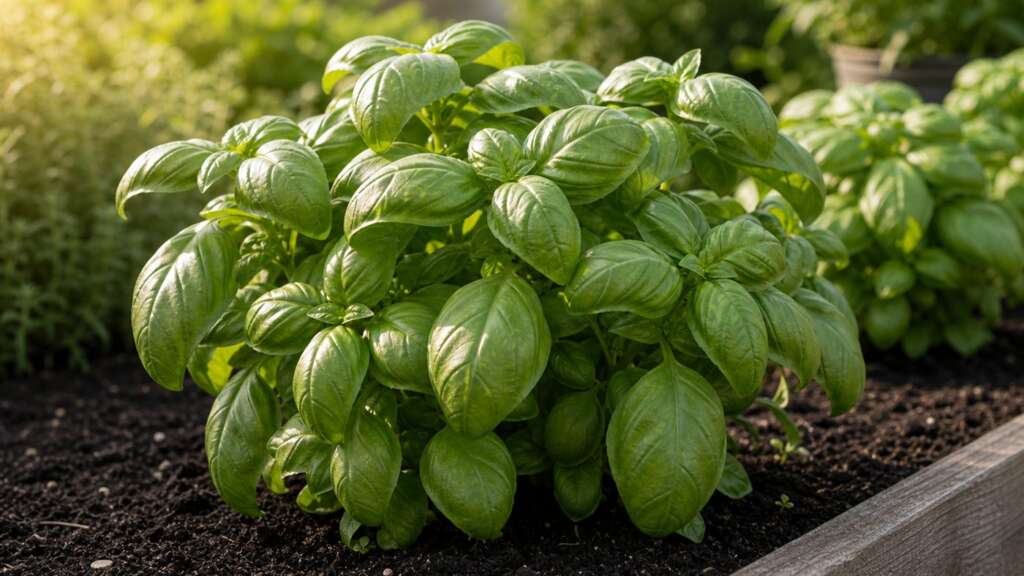
Genovese Basil is the classic Italian sweet basil grown for large, fragrant green leaves, pesto, and fresh kitchen use. It is a warm-season annual herb, and almost everything that goes wrong with basil at the seedling stage comes back to one root cause: it was asked to grow in conditions that were too cold, too dim, or too wet. Give it warmth, light, and steady moisture, and Genovese will reward you with months of harvest from a small handful of seed.
Quick How-to
Start Genovese Basil indoors about 4 to 6 weeks before your last expected spring frost, or direct sow outdoors only after the soil has warmed and nights are reliably mild. Sow about 1/4 inch deep in a warm seed-starting mix, keep the surface evenly moist, and aim for soil temperatures around 70 to 80 F. Expect sprouts in about 5 to 10 days, and move seedlings under strong overhead light the moment they emerge. Transplant outdoors after frost danger has passed; basil sulks or blackens in cold soil and cold nights.
Quick Guide
| Fact | Recommendation |
|---|---|
| Best method | Start indoors and transplant; direct sow once the garden is genuinely warm |
| Sowing depth | About 1/4 inch, lightly covered |
| Germination temperature | About 70 to 80 F is ideal; cooler soil slows or stalls germination |
| Days to germination | About 5 to 10 days under warm conditions |
| Light for germination | Cover seed lightly; provide strong overhead light immediately after sprouting |
| Spacing | Thin or transplant to about 8 to 12 inches apart |
| Sun | Full sun, ideally 6 or more hours |
| Water | Even moisture; never bone-dry, never waterlogged |
| First harvest | Often about 60 to 75 days from sowing, with light tip harvests possible once plants have several leaf pairs |
| Plant size | Bushy upright herb; pinching encourages branching and bigger overall yield |
Before You Sow
Basil is unforgiving about cold and forgiving about almost everything else. A clean start indoors gives you the warmth and light control basil needs, especially in regions with short or unpredictable springs. Use fresh seed-starting mix rather than dense potting soil, clean cells or shallow trays, and label everything; basil seedlings can look generic next to other young herbs.
Pre-moisten the mix until it holds together when squeezed but does not drip. This keeps tiny seed from washing into corners when you water. If you are direct sowing later in the season, prepare the bed in advance: rake the surface smooth, work in a little compost if the soil is lean, and avoid spots where water collects after rain. Basil resents soggy feet far more than it resents lean soil.
A small detail worth knowing: basil seed develops a slight gel coating when it gets wet. This is normal and helps the seed stick to soil. It is not a sign of mold or damage.
Indoor Starting
Sow seed about 1/4 inch deep into pre-moistened mix, then cover lightly. Press gently to make good seed-to-soil contact, and water with a fine spray rather than a hard stream. A humidity dome or loose plastic cover helps hold surface moisture during germination, but plan to remove it as soon as the first sprouts appear.
Warmth is the single most important variable at this stage. A seedling heat mat set under the tray makes a real difference, especially if your indoor space runs cool at night. Aim for a mix temperature in the 70 to 80 F range until germination, then ease off the bottom heat so seedlings do not stretch.
The moment cotyledons appear, give Genovese the strongest overhead light you can offer. A sunny windowsill alone is usually not enough in late winter or early spring. Grow lights set within a few inches of the seedlings, on a 14 to 16 hour daily cycle, produce stocky young plants with short internodes. Pot up into a slightly larger cell or 3 to 4 inch pot once true leaves appear and roots begin to fill the starter cell. Unlike tomatoes, basil should not be buried deeper when potting up; keep it at the same soil level.
Direct Sowing
Direct sowing works well once outdoor conditions match what basil wants indoors. Wait until the danger of frost has passed, the soil at sowing depth feels warm to the back of your hand, and nighttime temperatures are reliably above the low 50s F. In many regions this is two to four weeks after the last frost date, not the same week.
Scatter or place seed thinly along a shallow furrow, cover with about 1/4 inch of fine soil, and firm gently. Keep the surface evenly moist until sprouts appear. Once seedlings show their first true leaves, thin to about 8 to 12 inches apart. Thinning feels wasteful but produces dramatically better plants than a crowded row.
Transplanting and Spacing
Harden off indoor-started seedlings over 7 to 10 days before planting out. Start with an hour or two in a sheltered, shaded spot, then gradually increase exposure to sun and breeze. Basil that goes straight from a warm grow tent into full afternoon sun can scorch within an afternoon.
Transplant after nights are reliably mild and the soil has warmed. Set plants at the same depth they grew in the cell, water in gently, and space about 8 to 12 inches apart for full bushy growth. Closer spacing is possible for cut-and-come-again harvests, but airflow drops and disease pressure rises. In containers, give each plant roughly a one-gallon volume or more for steady summer performance.
Soil, Sun, and Water
Genovese Basil prefers full sun, fertile well-drained soil, and consistent moisture. Work a moderate amount of compost into the bed before planting if the soil is lean. Avoid pushing high-nitrogen fertilizer, especially as plants mature; lush soft growth can dilute the essential oils that give Genovese its characteristic aroma and flavor.
Water at the soil level when possible. Drip irrigation or careful hand watering at the base keeps leaves dry, which reduces fungal problems. Aim for steady moisture rather than dramatic dry-then-flood cycles. A light mulch after the soil has warmed helps stabilize moisture and keeps soil from splashing onto lower leaves during rain.
Pinching and Encouraging Branching
This is where Genovese turns from a thin little plant into a productive bush. Once a seedling has three or four sets of true leaves, pinch out the top growing tip just above a leaf pair. Two new shoots will emerge from the leaf axils below the pinch, and the plant doubles its branch count. Repeat this every couple of weeks throughout the season.
Just as importantly, pinch off flower buds as soon as you see them forming, unless you are deliberately saving seed. Once basil bolts to flower, leaf production slows and the flavor of new leaves shifts. Regular pinching keeps the plant in leaf-production mode for far longer than it would manage on its own.
Hydroponic Growing
Genovese Basil grows well hydroponically when warmth, light, and airflow are steady. Its large tender leaves and strong branching response make it one of the most productive hydroponic herbs. NFT and deep-water culture are both suitable; allow enough channel and reservoir capacity for a long-running root system. Start seed in a clean inert plug and transfer once roots reach the outside and the seedling has two sets of true leaves. Keep the plug moist but leave the stem base above the solution so the crown does not remain waterlogged.
Use a complete hydroponic nutrient formulated for herbs or leafy crops. Basil performs well around EC 1.0 to 1.6 mS/cm and pH 5.5 to 6.0. Check EC before pH, top up with plain water as plants drink, and refresh the reservoir on a regular schedule. Basil dislikes a cold root zone: hold the solution near the upper 60s to low 70s F when possible, while keeping it shaded and well aerated.
Space plants 8 to 10 inches apart. When the plant has three or four leaf pairs, cut just above a node and repeat that pattern on new branches. This creates a broad harvestable canopy instead of one tall stem. Provide strong overhead light and gentle air movement. A stretched plant with long gaps between leaves needs more light; pale new growth can come from pH drift rather than a shortage of fertilizer. Do not respond by sharply increasing nutrient strength until both pH and EC have been checked.
Cupped or brittle leaves can follow excessive light, heat, or high EC. Blackened leaves after a cold draft are temperature injury, not nutrient deficiency; keep Genovese warm and away from chilled windows. Healthy roots are light colored and smell fresh. Dark, slippery roots, sudden wilt in a full reservoir, or a sour smell call for cooler water, more oxygen, and a clean system. Remove flower buds promptly unless seed is the goal, because flowering shifts energy away from tender leaf production and changes flavor.
Top Mistakes
- Planting into cold soil: This is the single biggest cause of basil failure. Cold soil slows germination, encourages damping-off, and can blacken young transplants overnight. Wait for genuine warmth, indoors or out.
- Weak light after sprouting: Seedlings that germinate fine but then stretch tall and pale are almost always under-lit. Bring lights closer and lengthen the day rather than adding heat.
- Never pinching: Unpinched basil grows tall, narrow, and bolts early. Regular tip pinching is not optional if you want a productive plant.
- Overwatering small seedlings: Saturated mix starves roots of oxygen and invites damping-off. Aim for evenly moist, not shiny wet.
- Letting basil flower unchecked: Once it bolts, leaf quality declines. Pinch flower spikes as soon as they appear unless you are saving seed.
Troubleshooting by Symptom
| Symptom | Likely causes | What to do next |
|---|---|---|
| No sprouts after 10 to 14 days | Mix too cold, seed buried too deep, dry pockets, or saturated tray | Confirm soil temperature is in the 70 to 80 F range, keep surface evenly moist, and resow shallowly if needed |
| Seedlings are tall, pale, and floppy | Insufficient light, too much warmth without matching light, or crowded cells | Move lights closer, extend the light period, thin to one strong seedling per cell, and ease off bottom heat |
| Seedlings collapse at the soil line | Damping-off from overly wet mix and poor airflow | Improve airflow, water from below, use fresh sterile mix for restarts, and avoid keeping trays covered after germination |
| Leaves blacken or look water-soaked after transplant | Cold air or cold soil exposure | Cover with a row cover on cool nights, and replant or replace if damage is severe; basil rarely recovers fully from a cold hit |
| Lower leaves yellow during the season | Excess moisture, compacted soil, or nitrogen shortage in lean soil | Check drainage, water less often but more deeply, and add a balanced organic feed if growth is slow |
| Plants bolt early and leaves taste different | Heat stress, drought stress, or under-pinching | Pinch flower buds promptly, keep moisture steady, and start succession sowings to replace older plants |
| Holes chewed in leaves | Slugs, snails, Japanese beetles, or grasshoppers depending on region | Inspect at dawn or dusk, hand-pick where practical, and use barriers like collars or row cover for severe pressure |
| Dark spots or fuzzy growth on leaves | Fungal pressure from wet leaves and crowded planting | Improve spacing and airflow, water at soil level, and remove affected leaves to slow spread |
Germination Diagnostics
When basil is slow to sprout, check variables in this order before assuming something dramatic is wrong. First, temperature: cool wet soil is by far the most common reason. Slide a finger into the tray, or use a soil thermometer; if the mix feels cool, add bottom heat. Second, depth: seed buried much deeper than 1/4 inch can run out of stored energy before reaching the surface. Third, moisture: the seed zone should feel like a wrung-out sponge, not dusty dry and not glistening wet. A crusted surface can trap sprouts even when conditions below look fine; mist gently to soften it.
After temperature, depth, and moisture are checked, inspect the tray for crusting and damping-off. A sealed surface can block emergence, while saturated mix can damage seedlings before they appear. Correct the seed-zone conditions and resow only after the mix drains freely.
Container and Small-Space Notes
Genovese Basil adapts well to containers, windowsills, and small balconies. Choose a pot at least 6 to 8 inches deep with drainage holes, and use a quality potting mix rather than garden soil. One plant per 1 to 2 gallon container produces well; a 12 inch pot can comfortably hold two or three plants for a bushier display.
Container plants depend on you for moisture. Check daily in hot weather; small pots can dry out by midafternoon and stress basil quickly. Indoors year-round, the limiting factor is almost always light. A south-facing window helps, but a small LED grow light running 12 to 14 hours a day produces noticeably better plants through fall and winter.
Harvest and Kitchen Use
Begin harvesting once plants have at least four to six sets of true leaves and stand 6 inches or taller. Cut whole stem tips just above a leaf pair rather than picking individual leaves from the side; this triggers branching at the cut and keeps the plant compact. Frequent light harvests beat occasional heavy ones.
For pesto and other dishes, pick in the morning after the dew has dried but before the heat of the day; essential oil content tends to be highest then. Genovese leaves bruise easily, so handle gently and use soon after cutting. Stems can be rooted in water within a few days, giving you free clones for late-summer succession plantings.
Seed Saving
Genovese is open-pollinated, which means seed saved from a single isolated planting will generally come true. Let a few selected plants flower and form seed spikes; harvest when the spikes have dried to a tan or brown color on the plant. Strip the dry calyxes into a bowl, rub gently, and winnow chaff away with a light breath of air. Store in a labeled paper envelope.
If other basil varieties grow nearby, expect some crossing. Bees move readily between basil flowers, and seedlings from mixed plantings may show variation in leaf size, color, or aroma the following year.
Storing Leftover Seed
Keep unused Genovese Basil seed in its labeled packet inside a sealed container in a cool, dry, dark indoor location. Avoid garages, sheds, greenhouses, and sunny windowsills, where temperature and humidity swing sharply. Label home-saved seed with the variety and harvest year before storing it.
FAQ
Should I pinch Genovese Basil?
Yes. Pinch the growing tip above a leaf pair once the plant has three or four sets of true leaves, and repeat every couple of weeks. Pinching is what transforms a tall, thin seedling into a productive bushy plant.
Can Genovese Basil grow indoors year-round?
Yes, with strong light and consistent warmth. A grow light on a 12 to 14 hour cycle is usually more important than the size of the pot. Keep indoor plants away from cold window glass and drafts.
Why did my basil turn black after planting out?
Cold injury. Basil leaves blacken or look water-soaked when exposed to temperatures in the low 40s F or below, even briefly. Wait for nights to settle in the 50s before transplanting, and cover plants if a late chill is forecast.
Can I let Genovese Basil flower?
Flowers feed pollinators and can be left for seed saving, but leaf production slows and flavor shifts once a plant bolts. For continuous harvest, pinch flower buds as soon as you see them.
Do basil seedlings need to be hardened off?
Yes. Move seedlings outdoors gradually over a week or more, starting in shade and short visits, then increasing sun and time. Skipping this step is a common cause of sunscald and transplant shock.