
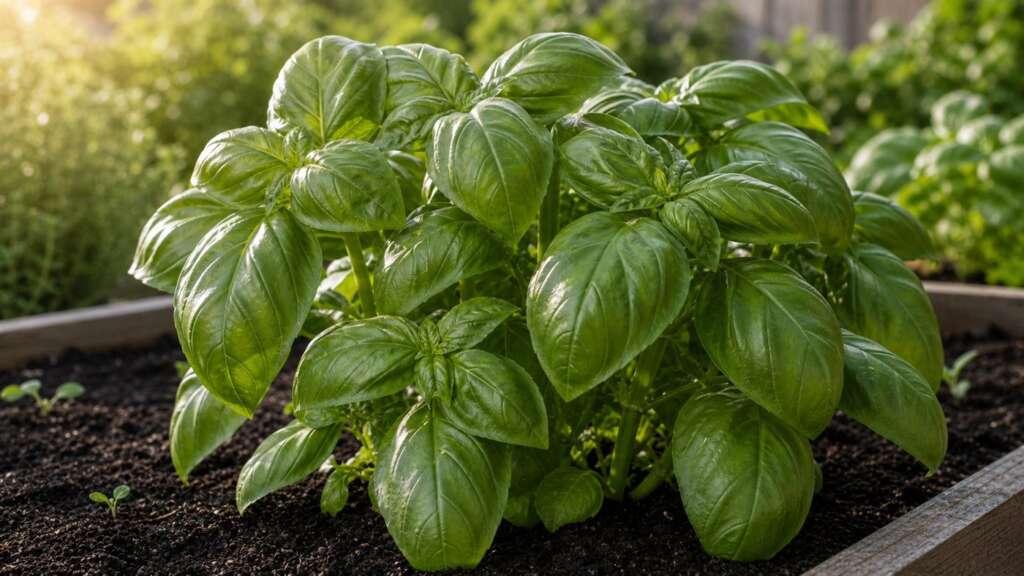
Large Leaf Basil is a tender, warm-season Italian-type basil grown for big, broad green leaves that are well suited to pesto, fresh sauces, salads, and cut-and-come-again kitchen harvests. Like all sweet basil, it dislikes cold soil and cold nights, so timing and warmth matter more than any other single factor. With steady warmth, shallow sowing, and strong light, it is one of the easier herbs to grow from seed.
Quick How-to
Start Large Leaf Basil indoors about 4 to 6 weeks before your last expected spring frost, or direct sow outdoors only after frost danger has passed and nights are reliably mild. Sow about 1/4 inch deep, keep the mix warm and evenly moist, and expect germination in roughly 5 to 10 days when soil is around 70 to 80 F. Move seedlings into strong overhead light as soon as they sprout, and begin pinching tips once plants have several sets of true leaves to encourage bushy growth.
Quick Guide
| Fact | Recommendation |
|---|---|
| Best method | Start indoors for an earlier harvest; direct sow once the garden is warm |
| Sowing depth | About 1/4 inch; do not bury deeply |
| Germination temperature | Best around 70 to 80 F; steady warmth is key |
| Days to germination | Often 5 to 10 days under warm conditions |
| Light for germination | Cover seed lightly; provide strong overhead light immediately after sprouting |
| Spacing | Thin or transplant to about 8 to 12 inches apart |
| Sun | Full sun, ideally 6 or more hours |
| Water | Even moisture; avoid soggy roots and avoid letting plants wilt repeatedly |
| First harvest | Begin light cutting once plants are well branched, often about 60 to 75 days from sowing |
| Plant size | Bushy upright herb with broad leaves; pinch to encourage branching |
Before You Sow
Basil is a tropical herb at heart, and Large Leaf Basil is no exception. Plan around warmth rather than the calendar. If your last frost is in mid-spring, count back 4 to 6 weeks for an indoor start; if you prefer direct sowing, wait until the bed is warm to the touch and overnight lows are settling into the 50s F or higher.
Choose a sunny spot with fertile, well-drained soil. Heavy clay that stays wet through spring is the wrong home for tender basil seedlings. For containers, pick a pot with drainage holes and a light, fresh potting mix; small pots dry out quickly and can stress basil into early flowering.
Pre-moisten your seed-starting mix or the surface of the outdoor bed before sowing. Even moisture from the moment seed touches soil gives steadier germination than watering heavily after the fact, which can wash tiny seeds into clumps or push them too deep.
Indoor Starting
Fill clean cells or a shallow tray with fresh seed-starting mix. Sow 2 to 3 seeds per cell about 1/4 inch deep, cover lightly, and press gently for good contact. A humidity dome can hold in moisture and warmth during germination, but plan to remove it as soon as sprouts appear so airflow improves and seedlings do not stay damp.
Warmth is the most important variable. A seedling heat mat set in the low 70s F is a reliable way to get even germination; without one, place trays in the warmest part of the house. Once seedlings emerge, reduce or remove bottom heat. Continued warmth without strong light is the fastest way to get tall, pale, weak basil seedlings.
Give sprouts bright overhead light immediately. A grow light positioned a few inches above the canopy for 14 to 16 hours per day produces sturdier plants than a sunny window in most homes. When seedlings have one or two sets of true leaves, thin to the strongest plant per cell with scissors rather than pulling, which protects the remaining roots. Pot up if roots begin filling the cell before transplant weather arrives.
Direct Sowing
In warm climates and after the danger of frost has clearly passed, Large Leaf Basil also does well direct sown. Rake the bed smooth, water it the day before, and sow seed about 1/4 inch deep in rows or small clusters. Press the soil gently and water with a fine spray so seeds are not displaced.
Keep the top half inch of soil consistently moist until sprouts appear. A light row cover can help hold warmth and moisture during cool nights and protect emerging seedlings from heavy rain. Thin gradually as plants grow, ending at roughly 8 to 12 inches apart.
Hardening Off and Transplanting
Indoor-grown basil should be hardened off over 7 to 10 days before going into the garden. Begin with an hour or two in sheltered shade and gradually increase sun exposure and time outdoors. Skipping this step is one of the most common reasons healthy-looking seedlings stall, scorch, or turn black after planting out.
Transplant only when overnight lows are reliably above 50 F and soil feels warm to the hand. Set plants at the same depth they grew in their cells, water in well, and give them a few days of gentle conditions before expecting fast new growth.
Soil, Sun, and Water
Basil thrives in fertile, well-drained soil with moderate organic matter. A light feeding of balanced compost worked into the bed before planting is usually enough; heavy nitrogen pushes soft, fast leaf growth that can taste flat and is more prone to disease.
Full sun produces the strongest flavor and the most compact plants. In very hot summer climates, some afternoon shade can reduce wilting stress, but deep shade leads to lanky stems and small leaves.
Water at the base of the plant rather than overhead when possible. Aim for steady moisture: a deep soak when the top inch of soil begins to dry, rather than light daily sprinkles. Wet leaves overnight encourage fungal problems, especially in humid climates.
Pinching, Pruning, and Harvesting
Pinching is what separates an average basil plant from a generous one. Once seedlings have three to four sets of true leaves, pinch out the top growing tip just above a leaf pair. Each cut signals the plant to send out two new branches, and repeated pinching over the season turns a single stem into a bushy, productive plant.
Harvest by cutting stems just above a leaf pair rather than stripping individual leaves. Take up to about one-third of the plant at a time, and harvest in the morning when essential oils are highest. If flower buds appear, pinch them off promptly. A plant in full flower will slow or stop producing the broad, tender leaves Large Leaf Basil is grown for.
Hydroponic Growing
Large Leaf Basil grows well hydroponically when warmth, light, and airflow are steady. Its oversized leaves make a wide, thirsty canopy that outgrows tightly spaced countertop openings. Use deep-water culture or a wide NFT channel with ample reservoir volume rather than a small passive cup. Start seed in a clean inert plug and transfer once roots reach the outside and the seedling has two sets of true leaves. Keep the plug moist but leave the stem base above the solution so the crown does not remain waterlogged.
Use a complete hydroponic nutrient formulated for herbs or leafy crops. Basil performs well around EC 1.0 to 1.6 mS/cm and pH 5.5 to 6.0. Check EC before pH, top up with plain water as plants drink, and refresh the reservoir on a regular schedule. Basil dislikes a cold root zone: hold the solution near the upper 60s to low 70s F when possible, while keeping it shaded and well aerated.
Give plants 10 to 12 inches and pinch above nodes early so branches can support the large leaves. Harvest often enough that older foliage does not shade the center or drop into the system. Provide strong overhead light and gentle air movement. A stretched plant with long gaps between leaves needs more light; pale new growth can come from pH drift rather than a shortage of fertilizer. Do not respond by sharply increasing nutrient strength until both pH and EC have been checked.
Small new leaves usually mean weak light, root restriction, or a depleted reservoir. Torn or folded leaves may simply be crowding damage; widen spacing before diagnosing a disease. Healthy roots are light colored and smell fresh. Dark, slippery roots, sudden wilt in a full reservoir, or a sour smell call for cooler water, more oxygen, and a clean system. Remove flower buds promptly unless seed is the goal, because flowering shifts energy away from tender leaf production and changes flavor.
Top Mistakes
- Sowing into cold soil. Basil seed in 55 F mix often sits and rots rather than sprouts. Wait for warmth, or use a heat mat indoors.
- Weak light after germination. Seedlings that sprout warm but grow under a dim windowsill stretch fast. Give strong overhead light from day one of emergence.
- Transplanting too early. A cold night in the 40s F can blacken tender basil leaves overnight. Wait for settled warm weather.
- Never pinching. Unpinched plants grow up rather than out, flower sooner, and produce less leaf for the kitchen.
- Letting plants flower unchecked. Once a basil plant sets flower buds, it shifts energy away from leaves. Pinch buds as soon as you see them if leaf harvest is the goal.
- Inconsistent moisture. Repeated wilting stresses plants and can trigger early bolting; constant sogginess invites root and stem rot.
Troubleshooting by Symptom
| Symptom | Likely causes | What to do next |
|---|---|---|
| No sprouts after 10 to 14 days | Mix too cold, seed buried too deep, surface dried out, or media stayed saturated | Confirm soil warmth, keep mix evenly moist, and resow shallowly at 1/4 inch if needed |
| Seedlings are tall, thin, and pale | Not enough light after germination, too much warmth, or crowded trays | Lower the grow light closer to the canopy, extend light hours, thin to one plant per cell, and remove extra bottom heat |
| Seedlings collapse at the soil line | Overly wet mix, poor airflow, or damping-off conditions | Improve airflow, water from below, use fresh seed-starting mix for any restarts, and avoid saturated trays |
| Leaves turn black or translucent after transplant | Cold damage from a chilly night or unhardened seedlings | Cover with a frost cloth or cloche during cool spells and wait for mild nights before planting more |
| Lower leaves yellow on established plants | Overwatering, poor drainage, or nutrient depletion in containers | Let the top inch of soil dry between deep waterings and side-dress lightly with compost or a balanced feed |
| Plants bolt and flower quickly | Heat stress, root crowding in small pots, or skipping early pinching | Pinch flower buds, mulch to keep roots cool, pot up container plants, and harvest more often |
| Yellow leaves with brown or gray fuzzy patches underneath | Possible downy mildew, especially in warm humid weather | Improve airflow, avoid wetting leaves at night, remove affected leaves, and consider resistant varieties next season |
| Holes chewed in leaves | Slugs, snails, Japanese beetles, or caterpillars | Inspect at dawn or dusk, hand-pick pests, and protect young plants with a barrier or row cover as needed |
Container and Small-Space Notes
Large Leaf Basil grows well in containers when the pot holds enough soil to buffer moisture and temperature. A pot at least 8 to 10 inches across and equally deep per plant is a reasonable starting point; larger is better in hot summer climates. Use a light potting mix, not garden soil, and make sure drainage holes are clear.
Container plants depend on you for steady moisture. Check daily in hot weather and water deeply when the top inch begins to dry. A mulch of fine bark or compost on the soil surface slows evaporation and helps keep roots cool.
Seed Saving
Large Leaf Basil is generally an open-pollinated heirloom-style basil, and seed can be saved at home. To save seed, let a few of your healthiest plants flower and form seed heads at the end of the season. Allow the seed heads to dry on the plant until they turn brown and brittle, then cut and finish drying indoors on a tray.
Crush the dry calyxes gently and separate the small dark seeds from the chaff. Label with variety and year. Note that basil varieties cross-pollinate readily; if other basils are flowering nearby, saved seed may not come fully true to type the following year.
Storing Leftover Seed
Keep unused Large Leaf Basil seed in its labeled packet inside a sealed container in a cool, dry, dark indoor location. Avoid garages, sheds, greenhouses, and sunny windowsills, where temperature and humidity swing sharply. Label home-saved seed with the variety and harvest year before storing it.
FAQ
Should I pinch Large Leaf Basil?
Yes. Pinch the growing tip above a leaf pair once plants have three to four sets of true leaves, and continue pinching every couple of weeks. Pinching produces fuller, more productive plants and delays flowering.
Can I grow Large Leaf Basil indoors year round?
Yes, with strong overhead light and warmth. A south-facing window alone is rarely enough in winter; a grow light running 12 to 14 hours per day produces much sturdier plants. Keep indoor basil away from cold drafts and chilly windowpanes.
Why did my basil turn black soon after planting out?
Cold damage is the most common cause. Basil leaves can blacken after a single night in the 40s F. Wait for nights consistently above 50 F and harden off seedlings gradually before transplanting.
Can I let basil flower?
The flowers are pretty and attract pollinators, but once a plant flowers, leaf production slows and flavor can shift. If you want a long leaf harvest, pinch off flower buds as soon as they appear. You can always let one or two plants flower late in the season for pollinators and for seed saving.
How is Large Leaf Basil different from Genovese?
Both are Italian sweet basils with a classic basil flavor. Large Leaf types are selected for especially broad leaves that are convenient for fresh use and wrapping, while Genovese is the traditional pesto standard. In the garden they are grown almost identically.