
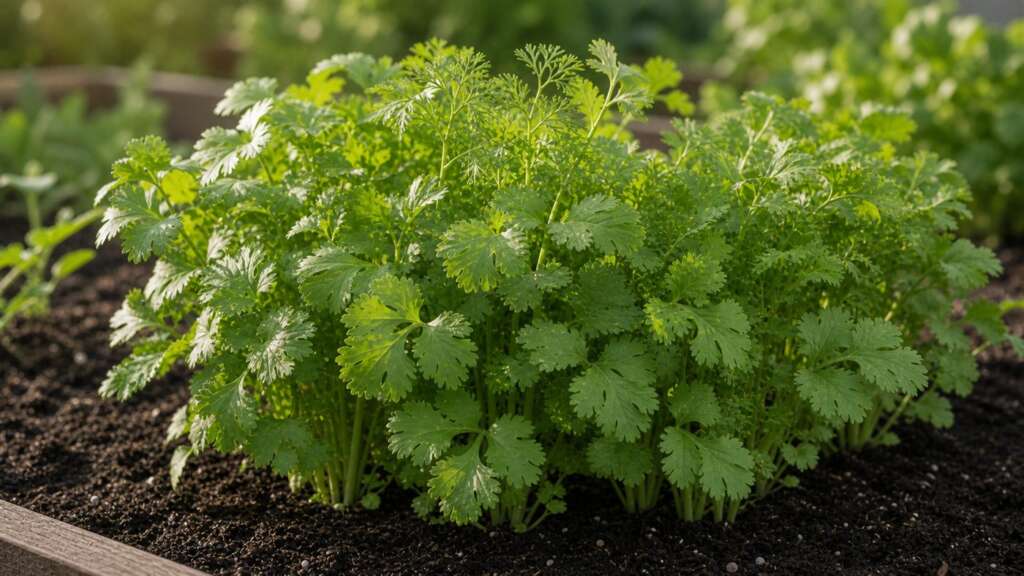
Cilantro, also known as coriander or Chinese parsley, is a cool-season annual herb grown for fresh leaves, ripe seed (coriander), and pollinator-friendly flowers. The same plant gives both crops: tender leafy growth in the cool stretches of spring and fall, then rounded seed once heat or long days push it into flowering. Most home-garden success comes down to sowing at the right time, sowing shallowly, and resowing on a regular schedule rather than expecting one planting to last all season.
Quick How-to
Direct sow cilantro in cool weather, about 1/4 to 1/2 inch deep, and keep the seedbed evenly moist until seedlings appear in roughly 7 to 14 days. Sow a fresh patch every 2 to 3 weeks while temperatures stay mild. Once heat arrives, cilantro will bolt and flower; at that point either let plants finish to harvest coriander seed, or wait for cooler weather and resume sowing for leaf harvest.
Quick Guide
| Fact | Recommendation |
|---|---|
| Best method | Direct sow; cilantro forms a taproot and dislikes transplanting |
| Sowing depth | About 1/4 to 1/2 inch |
| Germination temperature | Best around 55 to 70 F; emergence slows above about 80 F |
| Days to germination | About 7 to 14 days; sometimes longer in cool soil |
| Light for germination | Cover lightly; do not bury deeply |
| Spacing | Thin to about 2 to 4 inches for leaf harvest; wider if growing for coriander seed |
| Sun | Full sun in cool weather; afternoon shade helps in warm spells |
| Water | Consistent, even moisture for tender leaves |
| Leaf harvest | Often about 3 to 4 weeks from sowing for young leaves |
| Coriander seed | About 90 to 120 days from sowing to mature, dry seed |
| Plant size | Compact annual herb, typically knee-high or shorter once flowering |
Before You Sow
Cilantro is a fast crop with a short useful window per planting, so the most important decision is when to sow rather than how. The plant thrives when nights are cool and days are mild, and it begins to flower (bolt) when heat and long days arrive. In most climates that means a spring planting window and a fall planting window, with a pause through the hottest weeks of summer in between.
Pick a sunny bed with loose, well-drained soil. Cilantro is not heavy-feeding; a bed with average garden fertility usually produces better-tasting leaves than one pushed with lots of nitrogen. Rake the surface smooth and break up clods so the small seed sits at an even depth. If the bed is dry, water it the day before sowing and let the surface settle so seed is not washed into low spots later.
Cilantro seed is actually a small dry fruit containing two seeds. Some gardeners gently press the husks to split them before sowing, on the theory that it speeds germination. This is optional. Even-depth sowing and steady moisture matter more than splitting the seed.
Plan a succession schedule before you sow the first patch. Cilantro that is sown all at once tends to bolt all at once. A small handful of seed every 2 to 3 weeks, while conditions stay cool, gives a much steadier harvest than one large early planting.
Direct Sowing
Direct sowing is the preferred method because cilantro produces a taproot and resents being moved. Pull a shallow furrow, sprinkle seed thinly, and cover with about 1/4 to 1/2 inch of fine soil or seed-starting mix. Press the soil gently for good seed-to-soil contact, then water with a gentle spray so the seed is not washed away or pushed too deep.
Keep the top layer consistently moist until you see seedlings. The seedbed can look damp underneath while the surface dries; check by lightly touching the soil rather than going by appearance alone. If the surface crusts, tiny seedlings may not be able to push through; a light surface rake or a fine layer of compost can help prevent that.
Once seedlings have a true leaf or two, thin to about 2 to 4 inches apart for leafy harvest. If you are growing primarily for coriander seed, give plants a little more room, closer to 6 inches, so each plant has light and airflow when it flowers and sets seed.
Indoor Starting
Indoor starting is generally not recommended for cilantro because the taproot dislikes being disturbed. If you want a head start, use deep individual cells or peat pots that can be planted directly into the soil, sow shallowly, and transplant very young, before the root reaches the bottom of the cell. Plants started in shallow cell trays and held too long often bolt soon after transplanting.
A more practical use of indoor space is growing cilantro as a windowsill or grow-light herb for cut-and-come-again kitchen harvests. For this approach, use a wide, shallow container with drainage, sow seed across the surface, cover lightly, and keep the soil evenly moist. Provide strong overhead light; a sunny windowsill alone is often not enough in winter. Indoor cilantro will eventually bolt or thin out, so resowing every few weeks keeps fresh leaves available.
Soil, Sun, and Water
Cilantro likes loose, well-drained soil with moderate fertility. Heavy, soggy soil keeps roots cold and slows germination; very rich, high-nitrogen soil can produce floppy leaves with less flavor. A bed amended lightly with finished compost is usually plenty.
Give cilantro full sun during cool weather. As temperatures climb, a spot with morning sun and afternoon shade can extend the leafy phase by reducing heat stress. Containers can be moved into partial shade once afternoons grow warm.
Water steadily. The biggest moisture mistake is letting the soil swing from bone dry to soaked. Even moisture supports tender leaves and slows the heat-and-drought signals that push the plant into flowering. Once seedlings establish, a light mulch helps hold moisture and keep the soil surface cool.
Hydroponic Growing
Cilantro works hydroponically, but its taproot and tendency to bolt reward a fast succession system rather than a long-lived mother plant. Sow two or three seeds directly in a deep inert plug and avoid unnecessary transplant handling. NFT, deep-water culture, and flood-and-drain systems are suitable when the plug has firm support and the crown remains dry.
Use a complete leafy-herb nutrient around EC 1.2 to 1.8 mS/cm and pH 5.8 to 6.2. Keep the reservoir shaded, clean, and well aerated. Cilantro prefers a cool root zone and cool air; prolonged warmth produces thin leaves and a flower stalk regardless of how much nutrient is supplied.
Space clumps about 6 inches apart and provide strong overhead light with gentle airflow. Harvest outer stems or cut the clump while leaves are tender, then replace it from a new sowing. Start a fresh group every two to three weeks so one batch is ready as the previous one begins to bolt.
Seedlings that collapse usually have saturated plugs and weak airflow. Pale stretched leaves need more light, while finely divided leaves on an elongating center indicate bolting. Once bolting begins, harvest promptly and correct temperature for the next succession instead of trying to reverse it with fertilizer.
Top Mistakes
- Sowing too deeply: Cilantro seed should be lightly covered, not buried. Deep sowing delays emergence and can produce weak, uneven stands.
- Planting only once in early spring: A single large sowing bolts as a group when heat arrives. Small, repeated sowings every 2 to 3 weeks give a much longer leaf harvest.
- Sowing into hot soil: Above roughly 80 F, germination becomes uneven and seedlings often bolt almost as soon as they establish. Wait for cooler weather or sow in a shaded bed.
- Trying to transplant older seedlings: Cilantro’s taproot does not appreciate being disturbed. Transplants held too long usually bolt soon after planting out.
- Letting the soil dry between waterings: Drought stress shortens the leafy window and triggers bolting. Aim for steady moisture, not flooding.
Troubleshooting by Symptom
| Symptom | Likely causes | What to do next |
|---|---|---|
| No sprouts after 14 days | Seed buried too deep, soil too warm, surface dried out, or soil crusted | Resow shallowly, water gently, shade the bed in warm weather, and keep the surface evenly moist |
| Patchy or uneven germination | Inconsistent depth, dry pockets, or seed washed into low spots | Smooth the bed before sowing, water with a fine spray, and cover with a thin, even layer of soil |
| Seedlings tall, pale, and floppy | Weak light indoors, too much warmth, or crowded trays | Move under stronger light, lower the temperature, and thin promptly |
| Plants bolt almost immediately | Heat, long days, transplant shock, drought stress, or holding indoor starts too long | Sow earlier in the cool season, resow in fall, transplant very young, and keep moisture steady |
| Leaves taste bitter or harsh | Heat, drought, or plants flowering | Harvest younger leaves, water more evenly, and shift the sowing window to cooler weeks |
| Lower leaves yellow while plant flowers | Natural transition to seed production | Decide whether to harvest the remaining leaves now or let the plant finish for coriander seed |
| Seedlings collapse at the soil line | Overly wet soil, poor airflow, or damping-off conditions | Improve drainage, reduce watering frequency, increase airflow, and use fresh seed-starting mix for indoor sowings |
| Plants flower but seed never matures | Late-season sowing, cool finish, or insufficient sun | Sow earlier when growing for coriander, give full sun, and leave umbels on the plant until tan and dry |
Timing and Succession
Cilantro is one of the crops that rewards a calendar more than a single big planting day. In spring, begin sowing as soon as the soil can be worked and resow every 2 to 3 weeks until warm weather settles in. Skip the hottest stretch of summer, then begin again in late summer for a fall crop. In mild winter regions, cilantro often grows happily through winter and bolts in spring; in cold regions, fall sowings finish before hard frost.
Two helpful rules of thumb: sow a smaller patch more often than feels necessary, and start a new patch as soon as the previous one has true leaves. By the time the older patch begins to flower, the next one is ready to take over.
Container and Small-Space Notes
Cilantro grows well in containers as long as the pot is deep enough for its taproot. Aim for a pot at least 6 to 8 inches deep with drainage holes, and use a light potting mix rather than heavy garden soil. Wider, shallower bowls also work for cut-and-come-again leafy patches if you resow regularly.
Container plants depend on you for steady moisture. Small pots dry out quickly in sun and wind, and repeated drying often triggers bolting. Group containers together, mulch the surface with a thin layer of compost, and check soil moisture daily in warm weather. Move pots to a cooler spot in mid-afternoon when summer arrives, then back into full sun for fall.
Harvest Notes
For leafy harvest, snip outer stems once plants have several sets of true leaves and are at least 4 to 6 inches tall, leaving the central crown to keep producing. Cutting whole young plants at the base also works and resets that patch; meanwhile your next succession sowing fills in. Use cilantro leaves quickly after cutting; they wilt fast and lose flavor when stored too long.
When plants begin sending up a center stalk with finer, ferny leaves, flowering is close. At that point you can either harvest the remaining usable leaves and pull the plant, or let it continue toward coriander seed.
Coriander (Seed) Harvest
To harvest coriander seed, let plants flower and set umbels of green, round seed. Leave the umbels on the plant until they turn from green to tan and feel dry. If wet weather threatens, clip whole stems just before full dryness, hang them upside down inside paper bags in a warm, airy spot, and let the seed finish drying off the plant.
Once seed is fully dry, rub the umbels between your hands over a bowl or sheet, then winnow out the chaff. Store finished coriander in a sealed jar, cool and dark, for kitchen use or for replanting next season.
Seed Saving
Cilantro is mostly self-pollinated but also visited by bees, so plants of different varieties grown close together can cross. To save seed true to type, grow one variety at a time, or separate varieties by distance. Save seed from healthy, well-grown plants rather than the first one or two that bolted early.
Let the seed mature and dry on the plant as described above, finish drying indoors if needed, and store in a labeled, sealed container away from heat and humidity. Mark the container with the variety and harvest year.
Storing Leftover Seed
Keep unused Cilantro / Coriander seed in its labeled packet inside a sealed container in a cool, dry, dark indoor location. Avoid garages, sheds, greenhouses, and sunny windowsills, where temperature and humidity swing sharply. Label home-saved seed with the variety and harvest year before storing it.
FAQ
Why does my cilantro bolt so quickly?
Heat and long summer days are the main triggers, with drought stress as a secondary push. Cilantro is wired to flower and produce seed once those signals arrive, so the most reliable fix is to sow earlier in spring, again in fall, and to keep moisture steady in between.
Do I need to crush or soak cilantro seed before planting?
Neither is required. Some gardeners gently press the round husks to split them, but even-depth shallow sowing and steady moisture do more for germination than any pretreatment.
Can I grow cilantro indoors year-round?
Yes, with realistic expectations. Use a deep enough pot, give it strong overhead light, keep temperatures on the cool side of comfortable, and resow every few weeks. Even well-grown indoor cilantro eventually bolts; the answer is fresh sowings, not trying to keep one plant going forever.
Is coriander the same plant as cilantro?
Yes. “Cilantro” refers to the fresh leaves and “coriander” usually refers to the dried seed of the same plant, Coriandrum sativum. The same packet can give you both crops depending on when you harvest.
Can I let cilantro reseed itself in the garden?
In many gardens, yes. If you leave a few plants to drop seed, you may see volunteer cilantro the following cool season. Volunteers can be a low-effort way to keep a patch going, though they may show up at slightly different times than a planned sowing.