
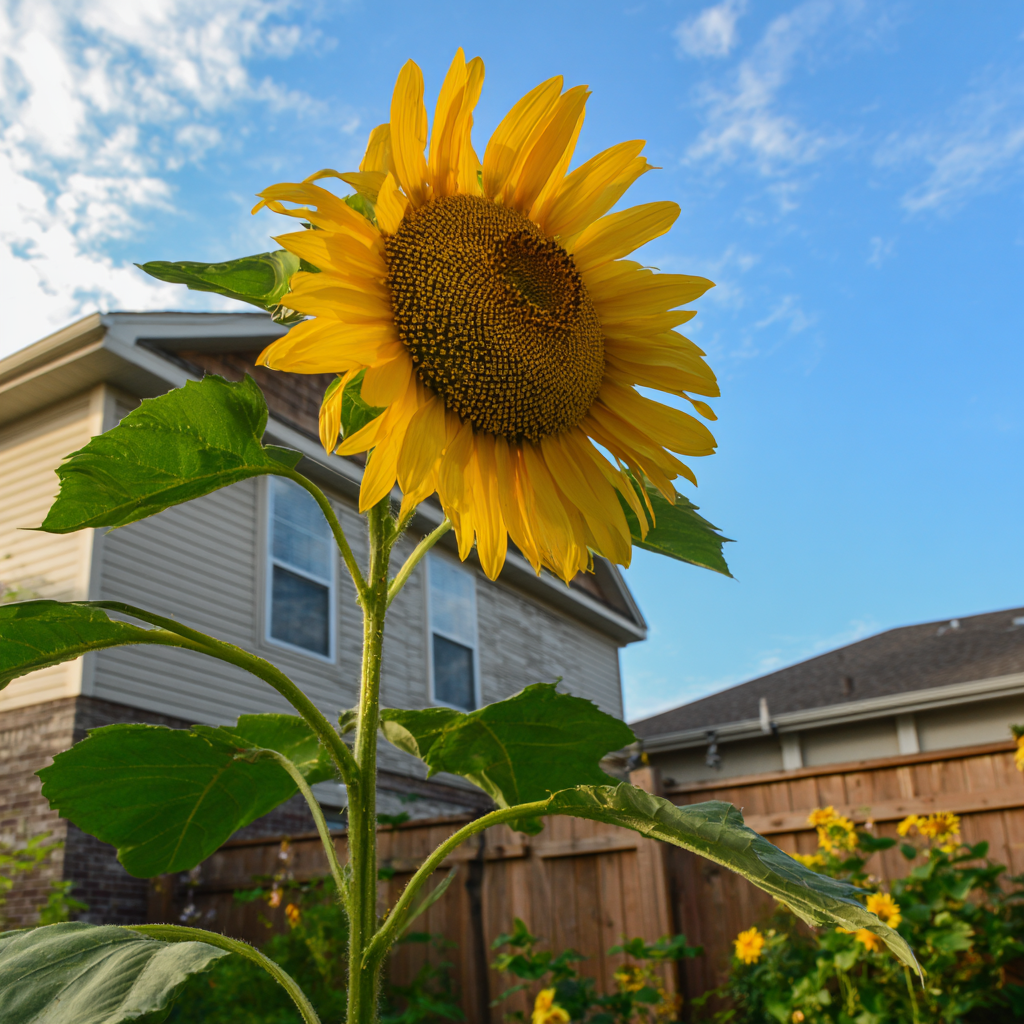
Mammoth Grey Stripe Sunflower is a classic open-pollinated giant that can reach 8 to 12 feet tall and produce a single enormous head packed with large, edible grey-striped seeds. It is a direct-sow annual that thrives when seed goes into warm soil after the last spring frost, with plenty of sun, good drainage, and room to stretch upward. The plant is striking in the garden through summer and rewarding at harvest when the heavy head is full of oil-rich seeds for roasting or for the birds.
Quick How-to
Wait until after the last spring frost and soil has warmed to at least 55 to 60 F. Sow seed about 1 inch deep, press for firm soil contact, and water gently. Expect germination in 7 to 14 days. Thin or space plants to 18 to 24 inches apart so each plant has enough room to develop a strong stem. Stake tall plants when stems reach knee height to prevent wind damage later.
Quick Guide
| Fact | Recommendation |
|---|---|
| Best method | Direct sow after last frost |
| Sowing depth | About 1 inch |
| Germination temperature | 65 to 75 F soil temperature; below 55 F slows emergence |
| Days to germination | About 7 to 14 days |
| Light for germination | Not required underground; cover seed at correct depth |
| Spacing | 18 to 24 inches between plants; giant varieties benefit from 24 inches |
| Sun | Full sun, 6 or more hours daily |
| Water | Regular moisture during stem elongation; tolerates some drought once established but drought stunts growth |
| Bloom and seed maturity | About 90 to 120 days from sowing to mature seed head |
| Plant size | Typically 8 to 12 feet tall; large single head per stem |
Before You Sow
Choose the sunniest, most open spot in the garden. Mammoth sunflowers cast significant shade as they grow, so plan for their height relative to neighboring plants. Loose, well-drained soil with moderate fertility gives the best results. Heavily compacted or waterlogged soil can limit root development and cause the stem to lean.
Work the top several inches of soil before planting, break up any large clods, and remove debris that would obstruct the long taproot. Adding a moderate amount of compost is fine, but very high nitrogen at planting can push leafy growth over sturdy stem development. Sunflowers are generally unfussy about soil pH but prefer a range of about 6.0 to 7.5.
Mark where you plan to sow. Sunflower taproots do not like disturbance, which is one reason direct sowing outperforms transplanting for this crop.
Direct Sowing
Sow seed after the last frost date when soil temperature has reached at least 55 F; 65 to 75 F is ideal for strong, quick germination. Plant about 1 inch deep. The University of Georgia Extension notes that in sandy soil the seed can go slightly deeper; in heavier soil, keep to 1 inch. Press soil down gently after covering to ensure good seed-to-soil contact.
Water the seedbed immediately after sowing with a gentle spray that does not dislodge the seed. Keep the surface moist until germination. Seeds can sit in cold, wet soil without germinating and are at risk of rotting if the soil temperature is consistently below 50 F, so resist sowing too early.
If you want an extended display rather than a single flush, sow a second round of seed 2 to 3 weeks after the first.
Thinning
Once seedlings have their first set of true leaves, thin to one plant per 18 to 24 inches. Crowded mammoth sunflowers compete for light and nutrients and often produce shorter, weaker stems with smaller heads. Cut unwanted seedlings at the soil line rather than pulling, to avoid disturbing neighbors.
Staking and Wind Support
Stake plants when they are about 18 to 24 inches tall, before the stem becomes difficult to handle. Drive a sturdy stake or bamboo pole several inches into the ground beside the stem and tie loosely with soft twine, leaving room for the stem to thicken. As the plant grows and the head becomes heavier, check and add ties higher on the stake. In consistently windy locations a second stake can help.
Giant sunflower heads can be surprisingly heavy when full of seeds. A head that falls under its own weight or snaps in wind will not finish maturing properly.
Soil, Sun, and Water
Full sun is non-negotiable for mammoth sunflowers. Even a few hours of shade each day will cause the plant to lean toward better light and weaken stem structure.
Soil moisture matters most during the 20 days before and after flowering, when the plant is developing the flower and filling seed. During that window, water deeply and regularly. Outside of that critical period, established plants tolerate modest drought, though drought at any stage reduces plant height and final head size.
Avoid overhead watering of the head once seeds are filling, as persistent moisture around the head can encourage mold. Water at the base of the plant instead.
Top Mistakes
- Planting before soil warms: Seed sown in cold, wet soil often sits without sprouting for weeks and is vulnerable to rot. Wait until soil is consistently above 55 F.
- Forgetting to stake early: By the time a mammoth sunflower is 4 to 5 feet tall with a developing head, staking becomes clumsy and may damage roots. Stake at knee height, early.
- Crowding plants: Giant sunflowers need genuine space. Plants left too close compete for nutrients and light, producing shorter stems and smaller heads than the variety is capable of.
- Overfeeding with nitrogen: High-nitrogen fertilizers can produce lush, leafy growth but thin, weak stems that are prone to lodging. Moderate fertility is enough for this vigorous grower.
- Letting the head dry on a vulnerable stem: Once the back of the head turns yellow to brown, the seeds are near mature. Leaving the head exposed too long risks birds, squirrels, or mold finishing it off before you can harvest.
Troubleshooting by Symptom
| Symptom | Likely causes | What to do next |
|---|---|---|
| No germination after 14 days | Soil too cold, seed buried too deep, soil surface crusted, or very dry seedbed | Check soil temperature; resow at 1 inch if the soil is now warm and moist |
| Seedling fell over at the base | Damping-off from wet, cool conditions; overcrowding and poor airflow | Improve drainage, allow soil to dry slightly between waterings, thin seedlings |
| Plant leans dramatically toward one side | Insufficient light on one side, uneven wind exposure | Rotate containers or reposition in-ground plantings cannot be moved; stake to correct lean early |
| Stem snapped or split | Heavy head weight in wind without support, or mechanical damage | If partially attached, splint loosely with soft ties and stake; prevent by staking early |
| Head develops grey or white fuzzy patches | Mold from persistent overhead moisture, crowded air circulation | Improve airflow, water at the base only; remove severely affected heads to avoid spread |
| Seeds shriveled or hollow in the head | Pollination failure (no pollinators present), extreme heat during flowering, or drought | Plant near other sunflower varieties to attract pollinators; maintain even moisture during flowering |
| Birds strip seeds before harvest | Normal bird attraction once seed begins filling | After pollination is complete and the ray petals have withered, cover the maturing head with breathable mesh or a paper bag tied loosely around the stem |
Harvesting Edible Seeds
Harvest when the back of the flower head has turned yellow to brown and the seeds feel firm. Cut the head with 12 to 18 inches of stem attached and hang upside down in a dry, ventilated space, or lay on a screen. Finish drying for 1 to 4 weeks, depending on humidity.
When fully dry, rub seeds out of the head by hand or with a stiff brush. Rinse, then roast if desired, or store raw in a cool, dry place. Unshelled seeds keep for several months; shelled seeds go rancid more quickly.
Seed Saving
Mammoth Grey Stripe is open-pollinated, but bees move sunflower pollen readily among plants and varieties. For ordinary garden seed, let the flowers remain fully accessible to pollinators and place breathable protection over selected heads only after the disk flowers have finished and the outer petals are fading. Covering a head through bloom without hand-pollinating can prevent good seed set. For controlled seed purity, grow one sunflower variety at a time or bag selected heads before bloom and hand-transfer pollen among several Mammoth Grey Stripe plants inside the protected group. Save from multiple healthy, sturdy plants rather than a single oversized head.
Storing Leftover Seed
Keep unused Mammoth Sunflower seed in its labeled packet inside a sealed container in a cool, dry, dark indoor location. Avoid garages, sheds, greenhouses, and sunny windowsills, where temperature and humidity swing sharply. Label home-saved seed with the variety and harvest year before storing it.
FAQ
Can I start Mammoth Sunflower seeds indoors?
It is possible but not ideal. Sunflowers develop a long taproot quickly and dislike transplant disturbance. If you start indoors, use large individual pots or peat-based containers that can go directly in the ground, sow no more than 3 to 4 weeks before the outdoor planting date, and transplant carefully with minimal root disturbance.
How do I know when the seeds are ready to harvest?
The back of the head turns from green to yellow and then to brown or tan. The bracts dry and curl inward. Press a seed with your thumbnail; if it feels firm and does not squash, it is close to ready. Seeds that are still pale and soft need more drying time on the plant.
Do Mammoth Sunflowers need fertilizer?
Moderate compost worked in before planting is usually enough. If the soil is very poor, a balanced fertilizer at planting can help. Avoid heavy nitrogen applications after the stem is growing; the plant should be building a strong structure, not racing to put on leaves.
Will one plant produce seeds for multiple people?
A single healthy head can contain several hundred seeds, which is a meaningful snack harvest or a generous supply for replanting. For a real eating quantity, plant a short row of 4 to 6 plants.