
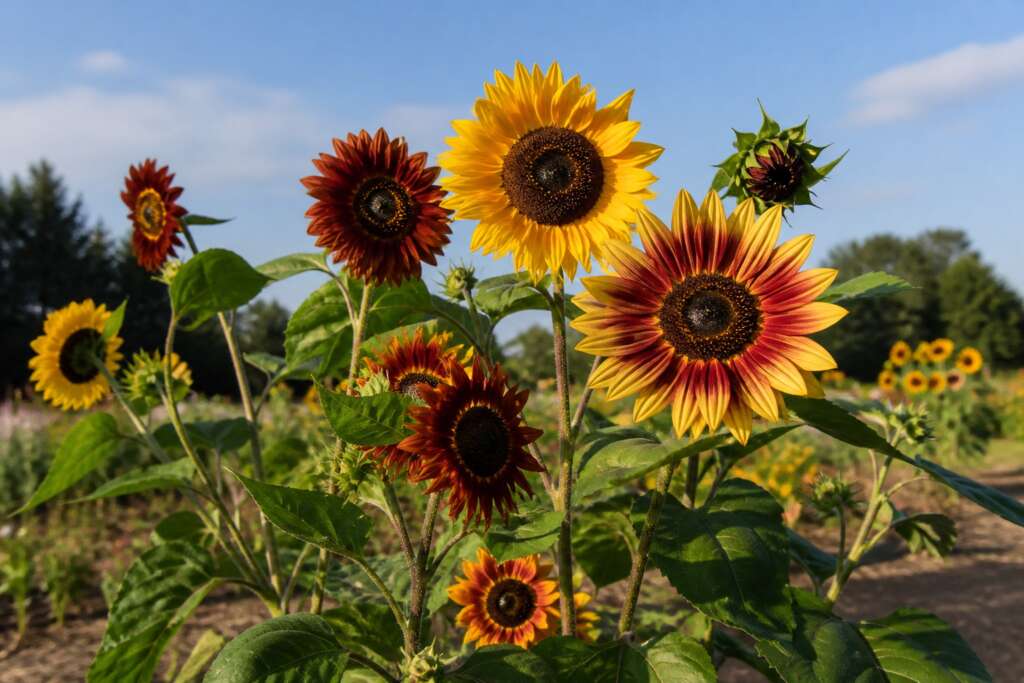
Super Nova Mix Sunflower is a branching, multi-stem sunflower blend grown for a long season of cut flowers in typical sunflower tones: golds, warm bronzes, russet reds, and bicolors. Unlike a single-stem giant that yields one spectacular head, branching sunflowers send up multiple side shoots after the main stem flowers, giving you a succession of blooms from a single planting. They are direct-sown annuals that thrive in full sun after frost, and they make excellent cutting-garden plants through summer into early fall.
Because this is a mix, individual plants will vary in color, height, and head size. That natural variation is part of the appeal: no two vases look identical, and the planting as a whole has a relaxed, abundant character that works well in both garden beds and informal cutting rows.
Quick How-to
Sow directly into warm soil after the last spring frost, about 1 inch deep, once soil temperature has reached at least 55 F. Space plants 18 to 24 inches apart to encourage branching side shoots rather than a tight, crowded stand. Begin cutting flowers when petals are just opening. Regular cutting signals the plant to produce more side-shoot blooms, extending the season. For the longest total display, sow a second round of seed 2 to 3 weeks after the first.
Quick Guide
| Fact | Recommendation |
|---|---|
| Best method | Direct sow after last frost |
| Sowing depth | About 1 inch |
| Germination temperature | 65 to 75 F; germination slows below 55 F |
| Days to germination | About 7 to 14 days |
| Light for germination | Cover seed; no light needed underground |
| Spacing | 18 to 24 inches; generous spacing promotes branching |
| Sun | Full sun, 6 or more hours daily |
| Water | Even moisture during establishment and flowering; moderate once established |
| Bloom timing | Approximately 60 to 80 days from sowing; branching extends season several weeks beyond first bloom |
| Plant size | Varies by mix; branching types typically 3 to 6 feet tall |
Before You Sow
Select a bed with full sun and good drainage. Branching sunflowers produce multiple stems and can spread wider than single-stem varieties, so allow genuine space between plants rather than sowing in a tight row. Soil does not need to be rich; moderate fertility is ideal. Very high nitrogen can push leafy growth over flower production.
Loosen the top several inches of soil and remove debris that could block root development. Water the bed before sowing if it is dry. Label rows or sections when you sow a mix, so you remember what is planted where when seedlings emerge as plain green plants.
Direct Sowing
Wait until after the last frost date and soil has warmed. Cold soil slows germination and can cause seed to sit without sprouting for long periods. Sow seed at about 1 inch depth, cover, press gently, and water with a gentle spray.
Keep the seedbed evenly moist until germination. If the surface crusts between waterings, seedlings may have difficulty pushing through. Once plants are a few inches tall and established, you can transition to deeper, less frequent watering that encourages roots to go down.
For a cutting garden, sow a short row every 2 to 3 weeks from the last frost date through midsummer. This succession approach staggers the main bloom flush and gives you fresh stems across a longer window.
Thinning and Spacing
Thin to one plant every 18 to 24 inches when seedlings have 2 to 4 true leaves. Branching sunflowers need that room to develop the multiple side shoots that produce the cutting-garden harvest. Crowded plants often produce a single main stem with few branches, reducing the total number of cut flowers per plant.
Cut unwanted seedlings at soil level rather than pulling them; pulling can disturb the roots of the plants you are keeping.
Soil, Sun, and Water
Full sun produces the strongest stem growth and the most prolific flowering. In partial shade, branching sunflowers stretch toward the light, produce fewer side shoots, and bloom later. Soil that drains well but retains enough moisture between waterings is ideal.
Consistent moisture matters most during active stem elongation and while the plant is in flower. Once plants are established and roots have gone deep, they tolerate modest dry spells, though persistent drought at any stage reduces stem length and bloom count.
Avoid frequent shallow watering, which keeps roots near the surface and makes plants more susceptible to drought stress. Water deeply and let the top inch dry before watering again.
Encouraging Branching and Cutting
Cut stems when flower petals are just starting to unfurl, before the center opens fully. For longest vase life, cut in the morning, recut stem ends under water, and put blooms directly in a vase of clean water. Change water every day or two.
Regular cutting is the most effective way to promote continued side-shoot production. When a stem is harvested rather than left to go to seed, the plant redirects energy into developing the next lateral shoot. If you want some plants to go to seed for saving or bird interest, leave a few heads uncleaned at the end of the season.
Top Mistakes
- Sowing too early in cold soil: Seed sitting in cold, wet soil can fail to germinate and is at risk of rotting. Wait for consistently warm soil before sowing.
- Planting too close together: A branching mix performs much better with generous spacing. Crowded plants skip the branching habit and produce a single, smaller bloom.
- Letting blooms fully open before cutting: Cutting at the right stage (petals just opening) significantly extends vase life. Fully open blooms are already past their best for arrangements.
- Watering only the surface: Shallow, frequent watering produces shallow roots. Water deeply and allow the top inch to dry between sessions so roots grow down and the plant is more resilient.
- Expecting identical colors across the mix: This is a blend, and individual plants will vary. Part of growing a mix is embracing variation rather than expecting uniformity.
Troubleshooting by Symptom
| Symptom | Likely causes | What to do next |
|---|---|---|
| Poor or patchy germination | Cold soil, crusted surface, dry seedbed, or seed sown too deep | Check soil temperature; water gently and consistently; resow at 1 inch in warm conditions |
| Seedlings are tall, thin, and leaning | Insufficient light, overcrowding, or overly warm indoor starting conditions | Move to full sun; thin promptly to recommended spacing |
| Few or no side shoots developing | Plants too closely spaced; early flowering allowed to go to seed without cutting | Thin to 18-24 inches; cut spent heads promptly to redirect energy to laterals |
| Vase life very short after cutting | Stems cut too late (fully open blooms), not recut under water, or old water in vase | Cut at petal-opening stage; recut and place in fresh water immediately; change water daily |
| Leaves yellowing from base upward | Normal on mature plants; also possible from waterlogged soil or nitrogen deficiency | Confirm drainage is adequate; a light balanced feeding mid-season can help if soil is poor |
| Powdery white coating on leaves | Powdery mildew, common in late season or when airflow is limited | Increase plant spacing; remove badly affected leaves; plants often continue blooming despite mildew |
Seed Saving with a Mix
Because Super Nova Mix is a blend of colors and likely of multiple lines, seeds saved from the mix will not produce a predictable color ratio the following year. Cross-pollination between plants in the mix is virtually certain, since bees move freely from plant to plant. Save seed if you want to grow sunflowers from the harvest, accepting that offspring will be variable. Let a few heads dry completely on the plant, collect when the seeds feel firm, and dry indoors before storage.
If you want seeds from a particular color or form, isolate that plant from others during flowering, which is not practical in a home garden. For stable results year over year, choose a named single variety rather than a mix for seed saving.
Storing Leftover Seed
Keep unused Super Nova Mix Sunflower seed in its labeled packet inside a sealed container in a cool, dry, dark indoor location. Avoid garages, sheds, greenhouses, and sunny windowsills, where temperature and humidity swing sharply. Label home-saved seed with the variety and harvest year before storing it.
FAQ
How many blooms will I get from one plant?
A well-spaced branching sunflower plant can produce a dozen or more stems over the course of the season, though the exact count varies by growing conditions, how frequently you cut, and the specific plants in the mix. More generous spacing and regular cutting generally produce more stems per plant.
Can I grow Super Nova Mix in a large container?
Branching sunflowers can work in very large containers with excellent drainage and consistent watering. A minimum container depth of 12 inches and a diameter that allows stable footing for a plant that can grow several feet tall is important. Container-grown sunflowers dry out faster than in-ground plants and require more frequent watering.
Will the mix include pollenless types?
Mix composition varies by seed lot. Some branching sunflower mixes include pollenless selections that are useful for arrangements because they do not shed pollen on table surfaces; others include standard pollen-bearing plants. If pollen-free blooms are a priority for arrangements, check the mix composition before purchasing.
When should I stop sowing for a fall display?
Count backward from the first expected fall frost in your area using the days-to-bloom figure for the mix, typically 60 to 80 days. In most U.S. climates, the last practical sowing window falls in early to midsummer. Later sowings risk frost killing the plants before they can flower.