
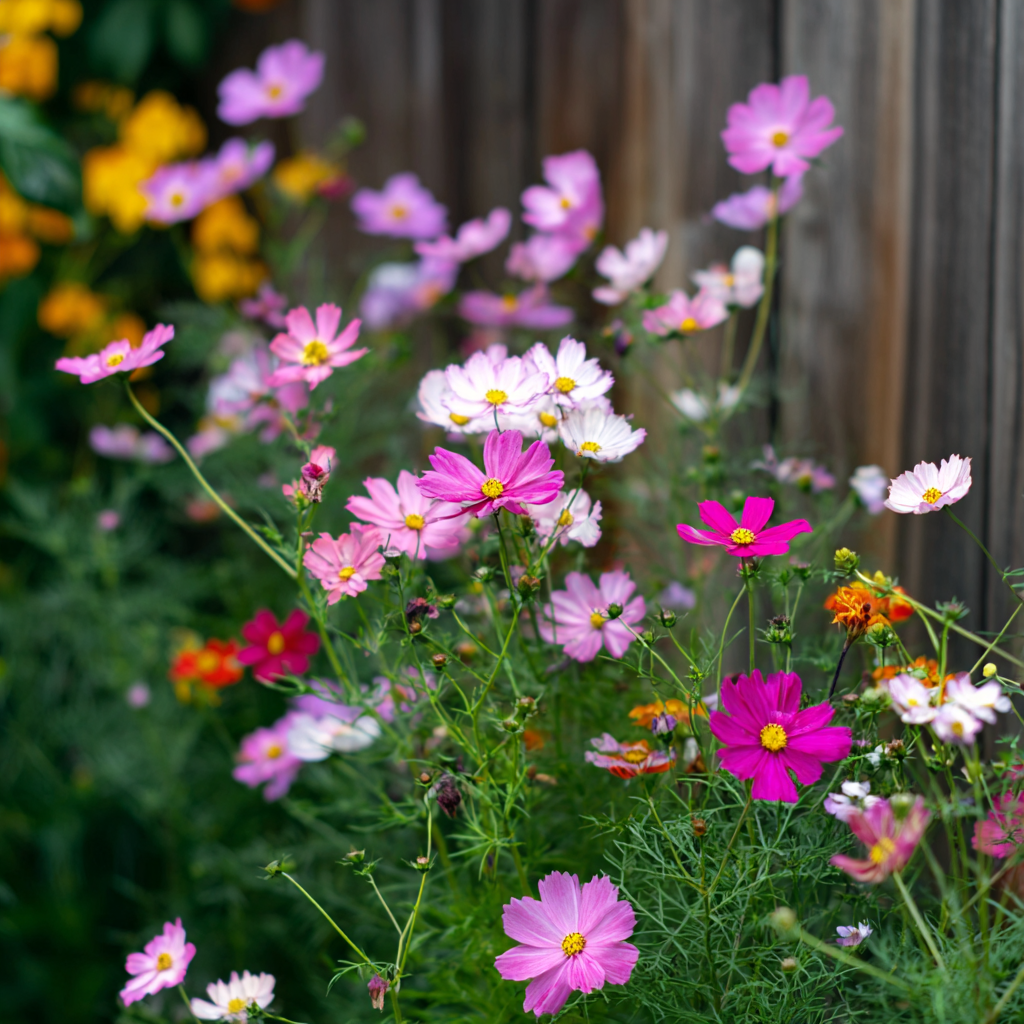
Dwarf Mix Cosmos is a warm-season annual grown for airy, fern-like foliage and a steady run of daisy-shaped blooms in shades of white, pink, and rose. The dwarf strains of Cosmos bipinnatus keep the same loose, romantic look as classic tall cosmos but stay shorter and sturdier, which makes them friendlier for front borders, mixed beds, and full-sun containers. Because this is a color and stature mix rather than a single cloned cultivar, individual plants can differ modestly in height, shade, and bloom timing while remaining true to the dwarf mixed-cosmos type. They are easy to direct sow, tolerant of lean soil, and most generous with flowers when they are given sun and left a little bit hungry.
Quick How-to
Direct sow Dwarf Mix Cosmos outdoors after the last spring frost, once soil has warmed and nights are mild. Cover seed about 1/4 inch deep, firm the soil for good contact, and keep the surface evenly moist until seedlings emerge in roughly 7 to 14 days at soil temperatures near 70 to 75 F. Thin to about 9 to 12 inches apart, grow in full sun, and skip heavy feeding. Deadhead or cut flowers regularly and the planting should bloom from early summer until frost.
Quick Guide
| Fact | Recommendation |
|---|---|
| Best method | Direct sow after frost; short indoor start optional |
| Sowing depth | About 1/4 inch (1/8 to 1/4 inch is fine) |
| Germination temperature | Around 70 to 75 F soil for steady emergence |
| Days to germination | About 7 to 14 days under warm conditions |
| Light for germination | Cover seed lightly; full sun once seedlings are up |
| Spacing | About 9 to 12 inches apart for dwarf types |
| Sun | Full sun, ideally 6 or more hours |
| Water | Steady moisture until established; drought tolerant after |
| Bloom timing | Often about 50 to 70 days from sowing in warm weather and full sun |
| Plant size | Dwarf mixes commonly finish around 18 to 36 inches tall, with some variation among plants |
Before You Sow
Cosmos rewards a light hand. The plants evolved in warm, sunny conditions on lean soils, so they often perform better in an ordinary garden bed than in a heavily amended, high-nitrogen one. Pick the sunniest spot you have, ideally with good air movement, and skip the rich fertilizer mix you might use for tomatoes or leafy crops.
A few minutes of bed preparation pays off. Rake the soil smooth, break up any large clods, and remove rocks or debris that could cause uneven germination. If the surface is dusty, water the bed the day before sowing so the seedbed is moist but not muddy when you plant. This keeps tiny cosmos seed from drifting and helps with consistent depth.
If you are sowing into a container, choose a pot of at least 8 to 10 inches across with drainage holes, and use a light, free-draining potting mix rather than dense garden soil. Label rows or pots at planting time; young cosmos seedlings are slender and easy to mistake for weeds during the first couple of weeks.
Direct Sowing
Direct sowing is the simplest path with cosmos. The plant resents being held too long in a small cell and tends to grow off cleanly when its first true roots can run straight into garden soil. Wait until your last spring frost has passed and the soil feels warm to the touch in the morning, not just at midday.
Scatter or place seed thinly along a shallow row or pocket, cover with about 1/4 inch of fine soil, and press the surface gently to give the seed firm contact. Water in with a gentle spray so you do not float the seed out of place. Keep the top layer evenly moist for the next one to two weeks. If a crust forms after heavy rain or aggressive watering, break it up lightly with your fingertips so the seedlings can emerge.
For a longer show, make a second sowing about three to four weeks after the first. Cosmos blooms most heavily for several weeks and then slows; a staggered sowing keeps fresh plants moving into peak bloom as the earliest ones taper off.
Indoor Starting
Indoor starting is optional and best kept short. If you want a small number of placed plants for a border edge or container, sow 3 to 4 weeks before your transplant date. Use individual cells with fresh seed-starting mix, cover seed lightly, and move seedlings under strong overhead light as soon as they sprout. A bright window alone is often not enough; weak light is the most common reason flower seedlings stretch tall and floppy.
Keep indoor conditions cool and bright rather than warm and shaded once seedlings are up. Heat plus dim light pushes soft, lanky growth that does not transplant well. Transplant before plants become tall and tangled in the cell, and never let an indoor cosmos sit until it tries to flower in the tray; an early indoor bloom is a sign the plant was held too long.
Transplanting and Thinning
If you started indoors, harden off seedlings over 7 to 10 days before planting out. Begin with a sheltered shady spot for an hour or two and gradually add sun, wind, and time outside until they are spending a full day outdoors. Transplant on a calm, cloudy day or in the late afternoon, water in, and shade with a bit of row cover or an overturned pot for the first day if the sun is intense.
For direct-sown plants, thin once seedlings have a set or two of true leaves. Aim for roughly 9 to 12 inches between plants. It feels harsh the first time, but crowded cosmos almost always grow into a tangled mass with thinner stems, more mildew pressure, and fewer clean blooms for cutting. You can transplant some of the thinnings to fill gaps if you move them while small and water them in carefully.
Soil, Sun, and Water
Cosmos is genuinely a full-sun plant. Six hours is a working minimum; eight or more produces the sturdiest, most flower-heavy plants. In light shade or against a tall fence, dwarf cosmos still grows, but it tends to lean toward the light, produce more foliage than blooms, and flop after summer storms.
Soil should drain well. Heavy clay that stays wet for days is the toughest situation. Mixing in compost helps with structure, but avoid loading the bed with high-nitrogen fertilizer or fresh manure. Lush green growth with no flowers is the classic sign of overfeeding cosmos.
Water young plants regularly while roots are establishing. Once plants are several inches tall and growing actively, they handle dry spells well and usually look better with deep, occasional watering than with frequent shallow sprinkles. In containers, water more often than in the ground; pots dry out faster, and dwarf cosmos in a hot container will wilt visibly before the bed does.
Top Mistakes
- Sowing into cold soil. Cosmos seed sits and sulks when the ground is still chilly. Waiting an extra week for warm soil usually pays back in faster, more even germination.
- Overfeeding the bed. Rich, nitrogen-heavy soil turns dwarf cosmos into a leafy bush with sparse flowers. Treat it like a sun-loving plant that prefers a simple bed.
- Leaving seedlings crowded. A thick stand of cosmos looks promising at first and then collapses into a tangle. Thin early to give each plant room to branch.
- Growing in too much shade. Even part-day shade pushes cosmos to stretch toward the light. Reserve your sunniest spot for this plant.
- Skipping deadheading. Once cosmos sets seed heavily, the plant slows its bloom production. Cutting flowers for bouquets is a working substitute for deadheading.
Troubleshooting by Symptom
| Symptom | Likely causes | What to do next |
|---|---|---|
| No sprouts after 14 days | Soil too cold, seed buried too deep, surface dried out, or a hard crust formed | Confirm soil warmth (around 70 F), keep the top layer evenly moist, break up any crust, and resow shallowly if needed |
| Patchy or uneven germination | Inconsistent depth, water washing seed into low spots, or cloddy soil | Smooth the bed before resowing, place seed at a steadier depth, and water with a gentle spray rather than a strong stream |
| Seedlings are tall, pale, and floppy | Too little light, too much warmth indoors, crowding, or shade outdoors | Move into stronger light, thin promptly, and choose a sunnier site for the next sowing |
| Lots of foliage, very few flowers | Overly rich or nitrogen-heavy soil, or not enough direct sun | Stop fertilizing, water less often, and plan future plantings for a leaner, sunnier spot |
| Plants flop or break after wind and rain | Crowding, partial shade, or overly rich soil producing soft stems | Thin or stake, improve airflow, and choose a sunnier, leaner site next season |
| Powdery white film on leaves late in season | Powdery mildew, encouraged by crowding, shade, and humid nights | Thin plants for airflow, water at the soil rather than overhead, and remove the worst-affected leaves |
| Blooms fade and plant slows | Seed set has shifted the plant out of flower production | Deadhead spent blooms or cut flowers regularly to keep new buds forming |
| Leaves chewed or skeletonized | Common garden pests such as caterpillars, earwigs, or slugs | Inspect at dusk, handpick where possible, and protect young transplants until they outgrow early damage |
Bloom Care and Cutting
Dwarf cosmos is a generous cut flower for short bouquets and mixed posies. Cut stems in the cool of the morning, choosing flowers that are just opening rather than fully blown, and place them straight into clean water. Strip any foliage that would sit below the waterline. Each cut you take is also a form of deadheading, and the plant typically responds by sending out fresh side shoots and more buds.
If you are not cutting flowers, snip or pinch off spent blooms before they form seed. Once a cosmos plant decides it has set enough seed, it eases off on producing new flowers. Regular deadheading or cutting can extend the bloom season from a few good weeks into a true summer-to-frost performance in many climates.
In hot, humid weather, you may notice older lower leaves yellow or develop some powdery film. Removing those leaves and improving airflow with light thinning or pruning is usually enough to keep the planting looking clean.
Container and Small-Space Notes
Dwarf cosmos suits containers better than tall cosmos because its lower height keeps it from toppling in summer storms. Use a pot at least 8 to 10 inches across, with drainage holes and a light potting mix. Group three to five seedlings in a larger pot for a fuller look, but still leave enough spacing for airflow.
Place the container where it will get most of the day in sun. Skip heavy fertilizer; if you feel the planting needs anything, a half-strength general fertilizer applied occasionally is plenty. Water when the top inch of mix begins to dry, and expect to water more often during heat waves. Containers in dark colors can heat the root zone, so a lighter pot is often kinder in summer.
Seed Saving
Cosmos seed is easy to collect at home, with one fair caveat. Cosmos bipinnatus varieties cross-pollinate freely with help from bees and other insects, so seed saved from a Dwarf Mix grown near other C. bipinnatus colors or types may not produce identical offspring. The seedlings will still be cosmos, and often charming, but exact color and height can drift.
To save seed, let some of the best-looking flowers stay on the plant after their petals drop. The center will swell and form a small cluster of slender, dark seeds. When the seed head feels dry and the seeds release easily, snip the head into a paper bag or bowl. Finish drying indoors for a few days, separate seed from chaff, and store in a labeled paper envelope with the variety and year.
Storing Leftover Seed
Keep unused Dwarf Mix Cosmos seed in its labeled packet inside a sealed container in a cool, dry, dark indoor location. Avoid garages, sheds, greenhouses, and sunny windowsills, where temperature and humidity swing sharply. Label home-saved seed with the variety and harvest year before storing it.
FAQ
Is Dwarf Mix Cosmos a good choice for containers?
Yes. The compact habit handles pots much more gracefully than tall cosmos, which can topple in wind once it reaches full height. Give the container full sun, water as the top inch of mix dries, and avoid heavy feeding.
Why are my cosmos all leaves and no flowers?
Two causes account for most of these cases: soil that is too rich in nitrogen and a spot that does not get enough direct sun. Stop any fertilizer, and if the site is shadier than you thought, plan the next sowing for a sunnier place.
Can I direct sow cosmos, or do I need transplants?
Direct sowing after frost is the simplest and most reliable approach for cosmos. Transplants work when you want a few placed plants, but only if the seedlings are moved out before they become tall, crowded, or rootbound in the cell.
Will dwarf cosmos attract pollinators?
Yes. The open daisy-style flowers are easy for bees, hoverflies, and small butterflies to land on, which makes a sunny patch of cosmos a useful companion to vegetable and herb beds.
Do dwarf cosmos need staking?
Usually no. That is one of the practical advantages of a dwarf mix over taller cosmos types. In very rich soil, exposed sites, or crowded plantings, individual plants may still lean and benefit from a light support.