
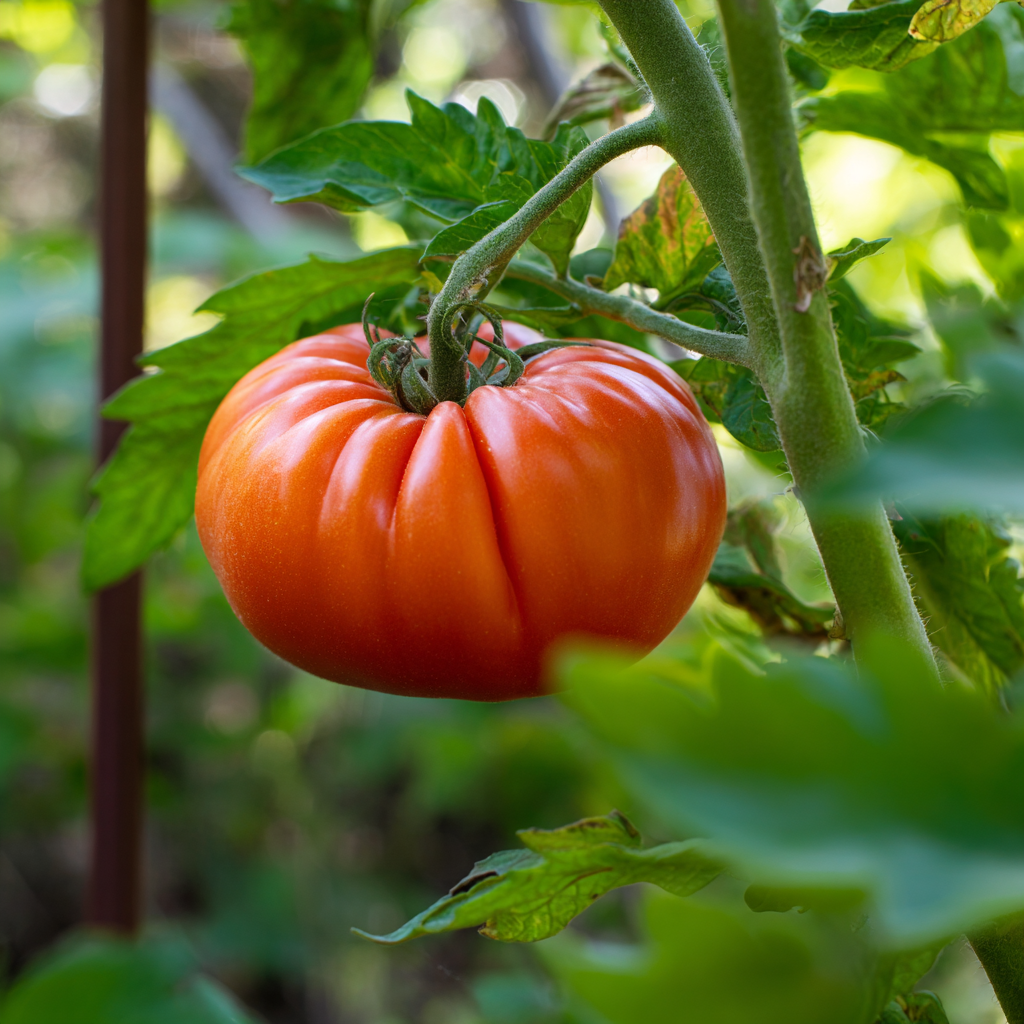
A determinate beefsteak tomato delivers the large, meaty slices home gardeners want for sandwiches and summer salads, with the added advantage of a more compact, manageable plant that focuses its energy on ripening a concentrated crop. Determinate varieties stop growing taller once the main stem sets a terminal flower cluster, so their fruiting is concentrated into a several-week window rather than continuing all season. That habit makes them especially useful for gardeners with limited space, for those who want a predictable harvest for canning or preserving, or for anyone who prefers a plant that does not require constant tying and training.
Quick How-to
Start seeds indoors 6 to 8 weeks before your last expected spring frost. Sow about 1/4 inch deep in warm, moist seed-starting mix and move seedlings into strong light as soon as they sprout. After hardening off, transplant when frost danger is past and soil is warm. Set a cage or stake at planting. Determinate beefsteaks do not need aggressive suckering, but they still benefit from support under the weight of large fruit.
Quick Guide
| Fact | Recommendation |
|---|---|
| Best method | Start indoors, then transplant |
| Sowing depth | About 1/4 inch |
| Germination temperature | 75 to 85 F; heat mat recommended |
| Days to germination | About 5 to 10 days at 80 F |
| Light for germination | Cover seed; strong overhead light immediately after sprouting |
| Spacing | 18 to 24 inches apart; allow 3 to 4 feet between rows |
| Sun | Full sun, at least 8 hours daily |
| Water | Even moisture throughout; about 1 inch per week |
| Harvest | Typically 70 to 85 days from transplant, depending on strain and season |
| Plant size | Determinate; more compact than indeterminate beefsteaks; cage or stake still needed |
Before You Sow
Beefsteak-type tomatoes need a long warm season to develop and ripen their large fruit. Starting on time indoors is the most important step in most climates. Count back 6 to 8 weeks from your last expected frost date to find your sowing window. Use pre-moistened seed-starting mix, not garden soil, and clean containers to reduce the chance of fungal issues early on.
A heat mat kept at 75 to 85 F under the seed tray speeds and evens germination. Once seedlings emerge, remove or reduce the bottom heat and focus on getting them under strong light immediately — tomatoes that germinate warm but grow in low light quickly become leggy and difficult to recover.
Indoor Starting
Sow seed about 1/4 inch deep and cover lightly. A humidity dome helps keep the surface from drying during the wait for germination, but open it slightly for airflow and remove it completely as soon as seedlings break through the mix.
Under grow lights or a bright south window, keep seedlings well-lit for 14 to 16 hours per day. When the first true leaves (not the initial seed leaves) appear, pot up into a 3- to 4-inch container. Tomatoes develop extra roots along buried stem sections, so planting a little deeper when transplanting to larger containers is a useful practice throughout the indoor growing phase.
Water carefully, allowing the surface to dry slightly between waterings to encourage roots to grow downward. Begin light fertilizing once true leaves appear; excess nitrogen at this stage pushes leaf growth rather than the compact, sturdy stems that perform best outdoors.
Hardening Off and Transplanting
Harden off over 7 to 10 days before moving plants outdoors permanently. Begin with short, sheltered exposures and build up to full sun over the course of the week. Wind and direct sun both stress plants that have been under controlled indoor conditions.
Transplant when nighttime temperatures are consistently above 50 F and soil has warmed above 60 F. Determinate beefsteaks planted into cold soil often stall for weeks, showing little visible growth even though frost is not an immediate threat. Warmth — both air and soil — drives root establishment and early growth.
Plant with the stem buried to the lowest set of leaves if the plant is tall. Water in well. Set up a cage or stake at planting to avoid disturbing roots later. Determinate plants are more self-contained than indeterminate types, but beefsteak-size fruit on heavy clusters still needs support.
Soil, Sun, and Water
Soil should be fertile and well-drained with a pH around 6.0 to 6.8. Work in compost before planting. Once plants are in the ground, avoid high-nitrogen fertilizers that push leafy growth; switch to a balanced or slightly phosphorus-heavy fertilizer when first flowers appear.
Determinate beefsteaks need full sun — at least 8 hours — for strong plant health and ripe fruit. In partial shade, plants produce fewer flowers and take longer to ripen what they do set.
Water at the base of the plant, targeting about 1 inch per week from rain plus irrigation. Overhead watering on leaves increases disease pressure, particularly in humid climates. Even moisture through flowering and fruit fill is important: dry-to-wet swings can cause fruit cracking and blossom end rot symptoms, both more likely in large-fruited types where any stress on the plant shows up in the fruit.
Mulch after the soil warms to retain moisture and regulate root-zone temperature.
Top Mistakes
- Transplanting when soil is still cold: Determinate tomatoes that go out too early into cold soil often sit motionless for weeks. The result is a delayed crop and a longer exposure to early-season disease pressure. Wait for consistently warm nights and soil that is genuinely warm to the touch.
- Skipping support because the plant looks compact: Determinate does not mean no-support. Beefsteak-size tomatoes on a bushy plant still pull branches to the ground and reduce airflow. Set a cage at planting.
- Irregular watering through fruit fill: Once fruit is sizing up, the worst time to let the soil dry out is right before a heavy rain. That cycle is the most reliable trigger for cracking and blossom end rot in large-fruited varieties.
- Removing too many suckers: On determinate tomatoes, moderate sucker removal is useful for airflow, but heavy pruning can reduce the fruit set because some of those shoots would have become fruiting branches.
- Planting too deep without removing lower leaves: Burying the stem is helpful, but any leaves or leaflets that end up at or below soil level should be removed first to reduce early-season disease spread to the soil.
Troubleshooting by Symptom
| Symptom | Likely causes | What to do next |
|---|---|---|
| No germination after 10 to 14 days | Mix temperature below 70 F, seed sown too deep, dry pocket in mix, or overly saturated conditions | Confirm soil warmth with a thermometer; aim for 75-85 F; keep mix evenly moist at 1/4 inch depth |
| Pale, stretched seedlings | Insufficient light, excess heat with inadequate light, or overcrowded tray | Increase light intensity and duration; thin to one plant per cell; reduce bottom heat once sprouting begins |
| Seedling stems collapse near soil line | Damping-off (fungal): wet mix, poor airflow, or crowded conditions | Improve airflow, water less frequently, remove affected seedlings, and use clean fresh mix for resowing |
| Plants look stalled after transplanting | Cold soil, root disturbance during transplanting, or insufficient hardening | Protect from cool nights, water deeply but not constantly, and allow 1 to 2 weeks for roots to establish in warm soil |
| Blossom clusters drop | Temperature extremes below 55 F or above 90 F at night, drought stress, or insufficient pollination | Maintain even moisture; flowers will resume setting when temperatures moderate |
| Large dark-bottomed spots on fruit | Blossom end rot: calcium uptake disrupted by irregular moisture | Mulch, water consistently, avoid root damage, and do not over-apply nitrogen |
| Fruit cracks radially from stem end | Rapid moisture uptake after dry period, heavy rain during fruit fill | Maintain steady soil moisture with mulch; water small amounts more frequently during dry stretches |
Harvest and Kitchen Use
Determinate beefsteak tomatoes ripen their fruit over a concentrated several-week period. Check plants daily once the first fruit begins to color up — the harvest window moves quickly and fruit left too long will crack, especially after summer rains.
Harvest when fruit is fully colored, slightly firm, and gives gently to pressure. For slicing, pick at peak ripeness. If an early frost is threatening and fruit is nearly ripe, bring tomatoes indoors to a countertop out of direct sun — they will continue to color and ripen at room temperature. Do not refrigerate ripe tomatoes, as cold damages texture and flavor.
The large slices are well-suited to sandwiches, bruschetta, and fresh salads. A concentrated harvest also works well for simple slow-cooked sauces if the quantity warrants it.
Seed Saving
Beefsteak-type tomatoes are open-pollinated, and determinate strains can be saved true to type with appropriate care. Tomatoes are primarily self-pollinating, but insect cross-pollination does occur when multiple varieties are present. For reliable true-to-type seed, isolate by at least 25 feet from other tomato varieties, or use bagging or caging of selected flowers before they open.
Save seed from fully ripe, healthy fruit. Ferment seed pulp in a small amount of water for 2 to 3 days, then rinse when the gel separates and the plump seeds settle. Dry thoroughly on a non-stick surface, label clearly with the variety description and year, and store cool, dry, and dark.
Storing Leftover Seed
Keep unused Determinate Beefsteak Tomato seed in its labeled packet inside a sealed container in a cool, dry, dark indoor location. Avoid garages, sheds, greenhouses, and sunny windowsills, where temperature and humidity swing sharply. Label home-saved seed with the variety and harvest year before storing it.
FAQ
What is the difference between a determinate and indeterminate beefsteak tomato?
Determinate plants stop growing taller once the main stem forms a terminal flower cluster and ripen most of their fruit over a concentrated period. Indeterminate plants keep growing taller and producing flowers until frost kills them. Determinate types are more manageable in small spaces and produce a more predictable harvest window; indeterminate types produce over a longer season but require more active support and training.
Do determinate tomatoes need staking?
Yes. Even though determinate plants are more compact, the weight of large beefsteak fruit on heavy clusters pulls branches down and reduces airflow. A cage or stakes at planting protects the plant throughout its fruiting period.
Why are my beefsteak tomatoes slow to ripen?
Large-fruited tomatoes take longer to fully develop and ripen than cherry or medium-sized types. Season length, soil warmth, and consistent moisture all affect timing. If fruit is sizing up but slow to color, maintain good sun exposure and avoid over-fertilizing with nitrogen late in the season.
Can I save seeds from this season’s fruit to plant next year?
Yes, for open-pollinated strains. Ferment, rinse, dry, and store seeds cool and dry. Keep in mind that cross-pollination with nearby tomato varieties can affect seed-saved results; some isolation between varieties improves true-to-type outcomes.