
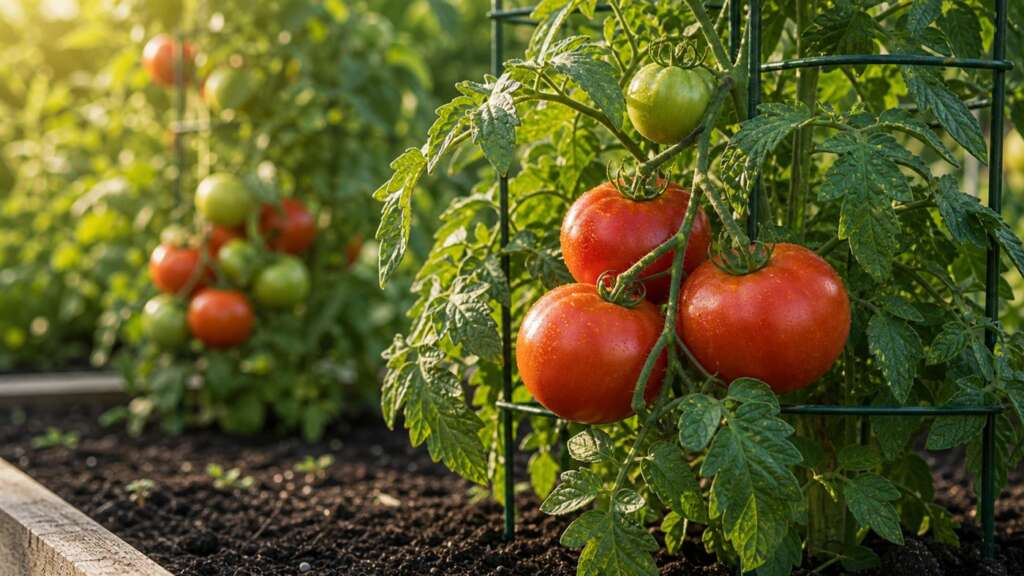
Delicious Tomato is a heirloom beefsteak grown for unusually large, meaty fruit and old-fashioned slicing-tomato flavor. Like other big beefsteaks, it is a warm-season crop that does best when started indoors under strong light, hardened off carefully, and transplanted into warm soil with sturdy support already in place. The plants are vigorous and the fruit can be heavy, so a little patience at the start pays off all season.
Quick How-to
Start Delicious Tomato seeds indoors about 6 to 8 weeks before your last expected spring frost. Sow about 1/4 inch deep in fresh seed-starting mix, keep the mix warm (ideally 75 to 90 F) and evenly moist, and move seedlings under strong overhead light the moment they sprout. Harden off for 7 to 10 days, then transplant after frost danger has passed, nights are mild, and the soil has warmed. Stake or cage at planting so heavy beefsteak fruit has support from day one.
Quick Guide
| Fact | Recommendation |
|---|---|
| Best method | Start indoors, then transplant after soil warms |
| Sowing depth | About 1/4 inch |
| Germination temperature | Around 75 to 90 F is ideal; steady warmth helps |
| Days to germination | Often 5 to 10 days under warm conditions |
| Light for germination | Cover seed; provide strong overhead light immediately after sprouting |
| Spacing | About 24 to 36 inches apart, with wider spacing for plants trained less tightly |
| Sun | Full sun, ideally 8 or more hours |
| Water | Even moisture; avoid cycles of bone-dry soil and sudden saturation |
| Harvest | Often around 77 days from transplant in favorable warm-season conditions |
| Plant size | Indeterminate vines need tall, sturdy support and continue growing until frost or disease ends the season |
Before You Sow
Delicious Tomato rewards a calm, well-timed indoor start. Big beefsteaks need a long warm season to flower, set fruit, and finish ripening, so most gardeners get more consistent results from transplants than from direct sowing. Plan backward from your last frost date and aim for a sturdy young plant with a thick stem at transplant time, not the tallest plant in the tray.
Gather fresh seed-starting mix, clean cells or small pots, and labels. Pre-moisten the mix so seed placement stays even and the first watering does not push seed to one side of the cell. A heat mat helps germination, but plan to remove or reduce the extra warmth as soon as seedlings appear; warmth without strong light is the fastest way to a tray of leggy seedlings.
If your last frost date is uncertain, lean a few days later rather than earlier. An oversized indoor tomato that has been waiting in a small cell often stalls after transplanting, while a smaller, well-hardened transplant set into warm soil typically catches up quickly.
Indoor Starting
Fill cells with pre-moistened mix and sow one or two seeds per cell about 1/4 inch deep. Press gently for soil contact, water in lightly, and cover with a humidity dome if you have one. Aim for steady warmth in the 75 to 90 F range. Most home seed-starting kits germinate Delicious Tomato within about 5 to 10 days under those conditions.
The moment sprouts appear, remove the dome and get the seedlings under strong overhead light. A bright window is usually not enough by itself, especially in early spring; weak light is the leading cause of pale, stretched tomato seedlings. Keep lights close, run long days, and rotate trays if light coverage is uneven.
When seedlings show their first set of true leaves, thin to one plant per cell using scissors at the soil line rather than pulling, which can disturb the neighbor’s roots. Pot up to a larger container once roots fill the cell. Tomatoes can form additional roots along a buried stem, so when potting up, you can set the seedling a little deeper than it was, burying the lower portion of the stem to encourage a stronger root system.
Feed lightly with a balanced seedling fertilizer once true leaves are well developed. Keep the mix evenly moist, like a wrung-out sponge, never soggy.
Direct Sowing
Direct sowing a large beefsteak like Delicious is practical only in long, warm-season regions. If you do try it, wait until soil is reliably warm, nights are mild, and you have enough frost-free weeks left for the plant to flower, set fruit, and finish ripening. Sow 1/4 inch deep, keep the surface evenly moist, and protect young seedlings from late cold snaps. For most gardeners, indoor-started transplants are the more dependable path.
Hardening Off and Transplanting
About 7 to 10 days before transplanting, begin hardening off. Start with an hour or two in sheltered, dappled shade and bring plants in at night. Each day, increase sun exposure, wind, and time outdoors. Skipping this step is one of the most common causes of stalled or sunburned transplants.
Transplant only after frost danger has passed and the soil has warmed. Cold soil slows root activity, and a tomato planted into chilly ground can sit and sulk even when daytime air feels comfortable. If the season is dragging, use a black plastic mulch or row cover to warm the bed for a week before planting.
At transplanting, set plants deep. Bury the stem up to the first set of healthy leaves; the buried portion will form additional roots and give the plant a stronger base. Remove any lower leaves that would end up underground. Water in thoroughly and install the cage, stake, or trellis at the same time so the root zone is not disturbed later, when the plant is heavy with fruit. Space plants roughly 24 to 36 inches apart, with enough room between rows for airflow and easy picking.
Soil, Sun, and Water
Delicious Tomato wants full sun, fertile soil, and steady moisture. Work compost into the bed before planting if the soil is tired, but go easy on high-nitrogen fertilizer once plants are growing well; excess nitrogen drives leafy growth at the expense of flowers and fruit.
Aim for consistent moisture from flowering through fruit fill. Big swings from bone-dry to saturated soil are a common trigger for fruit cracking, uneven ripening, and blossom end rot symptoms because the plant cannot move water and calcium steadily into developing fruit. Water deeply at the soil level rather than wetting foliage, and mulch once the soil has warmed to even out moisture and reduce soil splash on lower leaves.
Top Mistakes
- Starting too late for the season. Big beefsteaks need a long warm window. In short-season areas, start indoors on time so the plant has enough warm weeks to ripen heavy fruit.
- Keeping seedlings warm after germination without enough light. Warmth helps seeds sprout, but heat plus weak light makes seedlings stretch. Cut the heat back after emergence and move lights closer immediately.
- Transplanting into cold soil. Tomatoes survive cool conditions but often stall. Wait for mild nights and warm soil, even if it means planting a week later than neighbors.
- Skipping support at planting. Beefsteak fruit is heavy. Cages or stakes installed weeks later can damage roots and leave branches splayed and shaded.
- Irregular watering. Inconsistent moisture contributes to cracking, blossom end rot symptoms, and uneven ripening. Steady is better than heavy.
Troubleshooting by Symptom
| Symptom | Likely causes | What to do next |
|---|---|---|
| No sprouts after 10 to 14 days | Mix too cold, seed buried too deep, dry pockets, or saturated mix | Hold the mix around 75 to 90 F, keep it evenly moist, and resow at about 1/4 inch if needed |
| Seedlings tall, pale, or leaning | Not enough overhead light, too much warmth after germination, or crowded trays | Lower lights, extend day length, thin to one plant per cell, and reduce heat once sprouts appear |
| Seedlings collapse at the soil line | Overly wet mix, poor airflow, or damping-off conditions | Improve airflow, water more carefully from below, and use fresh clean mix for any restarts |
| Plants stall after transplant | Cold soil, insufficient hardening off, root disturbance, or dry root ball | Protect from cold nights, water in deeply, mulch lightly, and give the plant time once soil warms |
| Blossoms drop without setting fruit | Heat above the mid-90s F, cold nights, drought stress, or excess nitrogen | Keep moisture even, hold off on heavy feeding, and wait for temperatures to settle |
| Blossom end rot on bottom of fruit | Irregular moisture interfering with calcium movement into developing fruit | Maintain even soil moisture, mulch after soil warms, and avoid root damage near plants |
| Cracking on ripening fruit | Heavy rain or watering after a dry stretch, especially as fruit ripens | Water steadily through ripening, mulch, and pick ripe fruit promptly during wet weather |
| Few large fruit but lots of leaves | Too much nitrogen, too much shade, or aggressive pruning | Reduce nitrogen, confirm full sun, and prune lightly rather than stripping foliage |
Timing and Climate Notes
Treat Delicious Tomato as a warm-window crop. Frost-free air is not the whole test; soil warmth and nighttime temperatures matter as much. If spring is erratic, wait a few extra days for stable warmth instead of planting into a cold, wet bed. In short-season areas, indoor starting is essential for a beefsteak this size, but keep the indoor period from running long; potting up once or twice is better than letting a plant become rootbound while it waits for the weather to cooperate.
In hot-summer regions, fruit set can pause when daytime highs sit in the mid-90s F for stretches. This is normal beefsteak behavior, not a problem to fix. Keep watering steady, and flowering usually picks back up when temperatures ease.
Container and Small-Space Notes
Beefsteak tomatoes can be grown in containers, but they need real volume to thrive. Aim for a pot of at least 10 to 15 gallons per plant with strong drainage, and plan for daily watering once plants are mature, since container soil dries quickly in summer. Cage or stake at planting; a heavy fruit cluster on a tall, unsupported container plant will tip the whole pot.
If space is tight, focus on one well-fed, well-supported plant rather than crowding two into a marginal container. Beefsteaks reward room.
Harvest and Kitchen Use
Pick Delicious Tomato when fruit is fully colored and yields slightly to gentle pressure. Beefsteaks are slicing tomatoes: meaty, juicy, and ideal for sandwiches, fresh salads, and thick tomato slices on the plate. They also work well roasted or in chunky sauces, though pure paste-tomato sauces are usually thicker.
Pick regularly once ripening begins. Leaving very ripe fruit on the plant slows new flower production and invites cracking during wet weather. If frost threatens before late fruit is ready, harvest mature green tomatoes and ripen them indoors at room temperature, away from direct sun.
Seed Saving
Delicious is an open-pollinated heirloom, which makes it a strong candidate for seed saving when grown true to type. Save seed from fully ripe, healthy fruit. Scoop the seeds and pulp into a small jar, add a splash of water, and let the mixture ferment at room temperature for two to four days, stirring once or twice a day. The brief fermentation breaks down the gel coating around each seed.
Rinse the seed well in a fine sieve, spread on a plate or screen to dry fully (not paper towels, which stick), then store in a labeled envelope with the variety and year. If different tomato varieties bloom near each other, expect some crossing; isolate or bag flowers if you want strict purity.
Storing Leftover Seed
Keep unused Delicious Tomato seed in its labeled packet inside a sealed container in a cool, dry, dark indoor location. Avoid garages, sheds, greenhouses, and sunny windowsills, where temperature and humidity swing sharply. Label home-saved seed with the variety and harvest year before storing it.
FAQ
Is Delicious Tomato determinate or indeterminate?
Delicious is an indeterminate beefsteak tomato, meaning its vines keep growing, flowering, and setting fruit through the season. Install a tall cage, trellis, or staking system at transplanting so the root zone is not disturbed later.
Can I grow Delicious Tomato in a container?
Yes, with a generous container. Use at least 10 to 15 gallons of soil volume per plant, full sun, and a steady watering routine. Smaller pots will produce smaller, more stressed plants.
Why are my tomato seedlings leggy so fast?
Warmth without strong overhead light is almost always the reason. Move the lights closer as soon as sprouts appear, run long days, and ease off the heat mat once seedlings emerge.
When should I transplant outside?
After frost danger has passed, nights are reliably mild, and the soil has warmed. Harden off for 7 to 10 days first.
Do beefsteak tomatoes really need support?
Yes. Heavy fruit will pull unsupported branches to the ground, increasing disease pressure and breakage. Install cages, stakes, or a trellis at planting.