
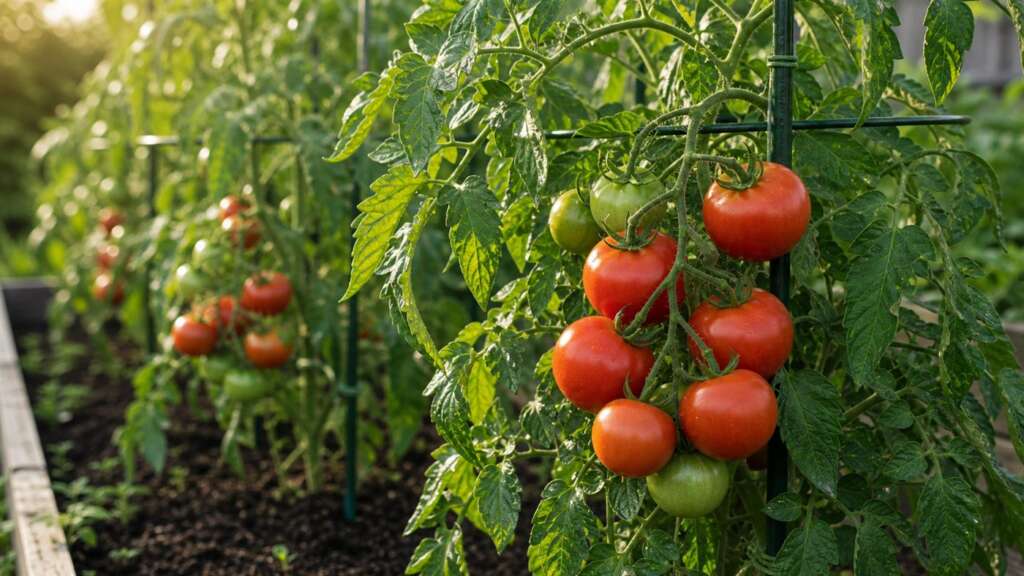
Moneymaker is a classic English heirloom slicing tomato grown for smooth, round, medium-sized red fruit that ripens evenly along the truss. It is an indeterminate, open-pollinated variety, which means the plant keeps growing and setting fruit through the season and the seed can be saved true-to-type from one year to the next. Like most tomatoes, it does best when started indoors under strong light, hardened off carefully, and transplanted only after frost danger has passed and soil has warmed.
Quick How-to
Start Moneymaker tomato seeds indoors about 6 to 8 weeks before your last expected spring frost. Sow about 1/4 inch deep in fresh seed-starting mix, keep the mix warm and evenly moist until sprouts appear, then move the seedlings into strong overhead light right away. Harden off over a week to ten days and transplant outdoors after nights are mild and the soil has warmed. Because Moneymaker is indeterminate, plan on a sturdy cage, stake, or trellis at planting time, not as an afterthought once vines are flopping.
Quick Guide
| Fact | Recommendation |
|---|---|
| Best method | Start indoors, harden off, then transplant |
| Sowing depth | About 1/4 inch |
| Germination temperature | Best around 75 to 90 F; steady warmth helps |
| Days to germination | Often 5 to 10 days under warm conditions |
| Light for germination | Cover seed; strong light is needed immediately after sprouting |
| Spacing | About 24 to 36 inches apart for supported indeterminate plants |
| Sun | Full sun, ideally 8 or more hours |
| Water | Even moisture; avoid swings from bone-dry soil to sudden saturation |
| Harvest | Often about 75 to 80 days from transplant; weather and pruning affect timing |
| Plant size | Indeterminate; tall, vining habit that benefits from strong staking or caging |
Before You Sow
Tomatoes reward a calm, well-timed indoor start. Use clean cells, fresh seed-starting mix, and labels you can read after a few waterings. Pre-moisten the mix in a tub before filling cells so the seed sits in evenly damp medium rather than dry pockets. A heat mat under the tray can shorten the time to sprout, but plan to remove or reduce extra heat once seedlings emerge so they do not stretch.
Plan backward from your transplant date rather than your sowing date. The goal is a sturdy young plant with a thick stem and a few sets of true leaves at planting time, not the tallest plant in the tray. Oversized, rootbound indoor tomatoes often stall outdoors and lose a week or more catching back up, especially if they were crowded, underlit, or rushed into cold ground. A smaller, hardened-off transplant in warm soil almost always outperforms an oversized one set out too early.
It also helps to think about variety habit before you sow. Moneymaker is indeterminate, so it will keep growing taller and producing new flower clusters through the season. That changes how you space, support, and prune compared with compact determinate types, and it is worth deciding now whether you will run a single-leader stake-and-string system, a tall sturdy cage, or a row trellis.
Indoor Starting
Sow Moneymaker seed about 1/4 inch deep in pre-moistened mix and firm the surface gently for good seed-to-soil contact. Cover the tray with a humidity dome or loose plastic to hold moisture during germination, and keep the mix warm. Tomato seed germinates fastest when the mix itself sits in the warm range, which usually means a heat mat in cool rooms rather than relying on room air alone.
As soon as sprouts show, take three actions in quick succession: vent or remove the dome, lower or remove the heat mat, and get the seedlings under strong overhead light. A bright window is usually not enough by itself for tomato seedlings, especially in early spring. Weak light is the most common reason home-grown tomato starts become tall and thin in the first two weeks. Aim for long, bright days with the light source close to the canopy, and raise the light as plants grow.
When seedlings have their first set of true leaves and roots are filling the cell, pot up into a larger container. Tomatoes can form additional roots along a buried stem, so when potting up you can bury more of the stem than you would for most plants. This is also the right moment to correct mild legginess: a slightly deeper transplant into a deeper pot encourages a stronger root system rather than a long, weak stem.
Hardening Off and Transplanting
Harden off seedlings over 7 to 10 days before planting out. Start with an hour or two in dappled shade out of direct wind, then gradually increase sun exposure, breeze, and total time outside. Skip the next step rather than rushing if a cold front, hard rain, or hot dry wind comes through; tomato seedlings dislike sudden shocks. By the end of hardening off, plants should tolerate a full day outside in their final light conditions without wilting.
Transplant after frost danger has passed and the soil has warmed enough for active tomato growth, not just enough to dig. Cold soil slows root activity, and a tomato sitting in chilly ground often looks healthy above ground while doing little below. If late cold nights are likely, hold plants back another week or use row cover, wall-of-water style protectors, or a warm sheltered microclimate against a south-facing wall.
At planting time, set the seedling deeper than it sat in the pot, removing the lowest leaves so they do not sit on or under the soil. Roots will form along the buried stem and improve the plant’s anchor and water access. Water in thoroughly so the root ball makes contact with surrounding soil rather than sitting in an air pocket. Install the cage, stake, or string support at planting; driving stakes through an established root system later disturbs feeder roots right when the plant needs them.
Soil, Sun, and Water
Moneymaker needs full sun and fertile, well-drained soil. Work compost into the bed before planting if your soil is thin or compacted, but do not push high-nitrogen fertilizer once plants are growing well. Tomato plants given too much nitrogen produce lush leaves at the expense of balanced flowering and fruit set, and tall indeterminate vines like Moneymaker are especially prone to running to leaf if overfed.
Water at soil level when possible rather than overhead. The goal is steady, even moisture through flowering and fruit fill, with a slight drying of the surface between waterings rather than constant wetness. Big swings from dry to soaking are the single most common cause of cracked fruit and blossom end rot symptoms, because the plant takes up water and calcium irregularly. Once the soil has fully warmed, a mulch layer of straw, shredded leaves, or finished compost helps even out moisture and keeps soil splash off lower leaves.
Pay attention to airflow as the plant grows. Indeterminate tomatoes can become dense by midseason, and crowded foliage near the soil holds humidity that can encourage leaf problems. Many gardeners prune the lowest leaves up to the first fruit cluster once vines are established, then continue removing yellow or shaded leaves through the season.
Top Mistakes
- Starting too late for your season: Indeterminate tomatoes need a long warm window to ripen heavily. Sow indoors on the schedule that fits your last-frost date rather than waiting until spring feels comfortable.
- Leaving seedlings warm but underlit: Heat without strong light is the fastest way to produce tall, weak seedlings. Move trays into bright overhead light the moment sprouts appear and reduce extra heat.
- Planting into cold soil: Tomatoes can survive cool conditions but often stall and sulk for weeks. Wait for mild nights and warm soil instead of rushing transplants outside on the first warm afternoon.
- Putting up support after vines flop: Moneymaker is indeterminate and will keep getting taller. Cages and stakes at planting are simple; trying to wrestle a leaning, fruiting vine onto a stake later usually damages roots and breaks stems.
- Inconsistent watering: Erratic moisture is a common trigger for cracking, blossom end rot symptoms, and uneven ripening. Steady moisture matters more than total volume.
Troubleshooting by Symptom
| Symptom | Likely causes | What to do next |
|---|---|---|
| No sprouts after 10 to 14 days | Mix too cold, seed buried too deep, dry pockets, or saturated mix | Confirm warmth at the seed zone, keep the mix evenly moist like a wrung-out sponge, and resow about 1/4 inch deep if needed |
| Seedlings are tall, thin, and pale | Not enough overhead light, too much warmth after sprouting, or crowded trays | Move lights closer, lengthen the bright period, thin to one plant per cell, and remove extra heat |
| Seedlings collapse at the soil line | Overly wet mix, poor airflow, or damping-off conditions | Discard affected seedlings, increase airflow, water more carefully from below, and start fresh batches in clean mix |
| Plants stall after transplant | Cold soil, insufficient hardening off, root disturbance, or a dry root ball | Protect from cold nights, water deeply at the base, and give plants time to recover once soil warms |
| Blossoms drop without setting fruit | Heat above the plant’s set range, cold nights, drought stress, or heavy nitrogen | Keep watering even, ease off nitrogen, and wait for temperatures to settle into the mild range |
| Blossom end rot on the first fruits | Irregular moisture interfering with calcium movement, especially during rapid early growth | Maintain even soil moisture, mulch after soil warms, and avoid root damage near the base of the plant |
| Lower leaves yellowing and spotting from the soil up | Soil splash, crowded foliage, and humidity around the base | Remove the lowest affected leaves, mulch the soil surface, and improve airflow by pruning suckers below the first fruit cluster |
| Fruit cracks at the top after rain or watering | Sudden uptake of water after a dry stretch | Smooth out the watering schedule, mulch heavily, and pick ripe fruit promptly when wet weather is forecast |
Harvest and Kitchen Use
Pick Moneymaker tomatoes when fruit is fully colored and slightly firm, with a little give but no softness. Smooth, round, medium-sized fruit slices cleanly for sandwiches and salads and holds together well in fresh use. Harvest regularly once ripening starts; leaving fruit on the plant past peak can attract splitting, pests, and animal damage, and it slows the plant’s tendency to keep setting new clusters above. If a cold front is coming late in the season, mature green fruit can be picked and ripened indoors on the counter out of direct sun.
Seed Saving
Moneymaker is an open-pollinated heirloom, which makes it a friendly variety for beginners interested in saving seed. Choose fully ripe fruit from healthy, productive plants that show the traits you want next year. Squeeze the seed and surrounding gel into a small jar with a little water, stir once a day, and let the mixture ferment for two to four days until a layer forms on top. Pour off pulp and floating seed, rinse the heavy seed at the bottom in a fine strainer, and spread it on a plate or paper to dry thoroughly. Once seed is fully dry and snaps rather than bends, label by variety and year and store cool, dry, and sealed. Tomatoes are largely self-pollinating, so isolation between varieties is usually less critical than with cross-pollinated crops, but planting different tomatoes a few feet apart helps protect type purity.
Storing Leftover Seed
Keep unused Moneymaker Tomato seed in its labeled packet inside a sealed container in a cool, dry, dark indoor location. Avoid garages, sheds, greenhouses, and sunny windowsills, where temperature and humidity swing sharply. Label home-saved seed with the variety and harvest year before storing it.
FAQ
Is Moneymaker determinate or indeterminate?
Moneymaker is indeterminate. The vines keep growing and producing through the season rather than ripening one large flush at once, so plan on tall support and ongoing harvest.
Can I direct sow Moneymaker tomato seeds outdoors?
In long, warm seasons it can work, but indoor starting is more reliable for most gardeners. Direct-sown tomatoes lose several weeks of head start, which often costs late-season ripening.
Why did my Moneymaker seedlings get leggy so quickly?
Tomatoes stretch fast when they germinate in warmth without strong overhead light. Move them into bright light the moment sprouts appear, lower the heat, and consider potting up deeper to correct mild legginess.
How much support does Moneymaker need?
A tall, sturdy support is worth setting up at planting. A 5 to 6 foot stake with regular tying, a tall heavy-gauge cage, or a string-trellis system all work well. Light cages designed for compact varieties will likely topple under a mature plant.
Do I need to prune the suckers?
Pruning is optional but helpful for indeterminate varieties like Moneymaker. Removing some suckers below the first fruit cluster, and thinning crowded growth later, improves airflow and helps fruit ripen more evenly.