
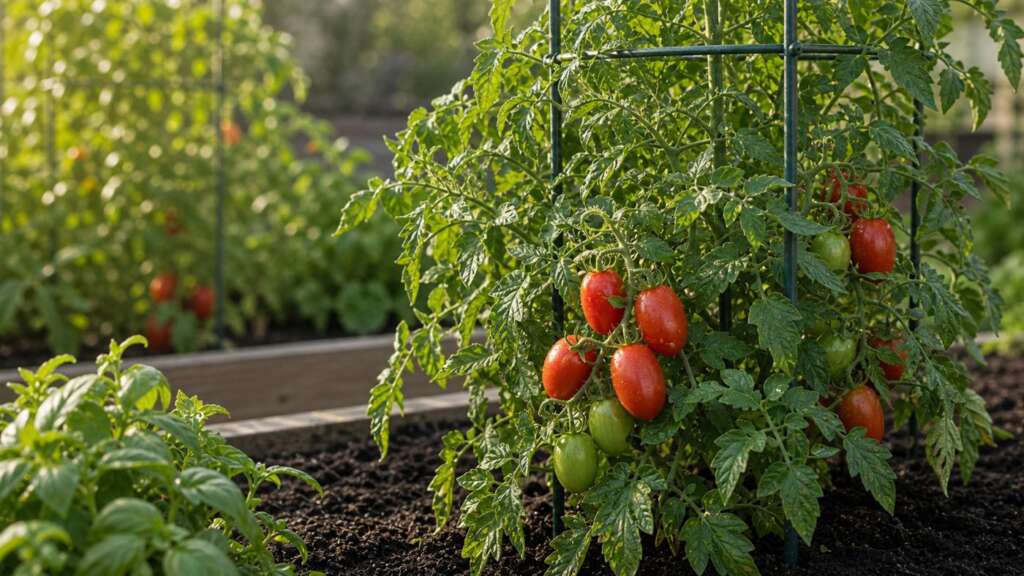
Roma tomato is a paste-type tomato grown for meaty fruit, sauce, and canning-style kitchen use. Like most tomatoes, it is a warm-season crop that usually performs best when started indoors, grown under strong light, hardened off, and transplanted only after frost risk has passed and soil has warmed.
Quick How-to
Start Roma tomato seeds indoors about 6 to 8 weeks before your last expected spring frost. Sow about 1/4 inch deep in seed-starting mix, keep the mix warm and evenly moist, and move seedlings into bright light as soon as they sprout. Transplant outdoors after hardening off, when nights are mild and soil is warm enough for active tomato growth.
Quick Guide
| Fact | Recommendation |
|---|---|
| Best method | Start indoors, then transplant |
| Sowing depth | About 1/4 inch |
| Germination temperature | Best around 75 to 90 F; steady warmth helps |
| Days to germination | Often 5 to 10 days under warm conditions |
| Light for germination | Cover seed; strong light is needed immediately after sprouting |
| Spacing | 18 to 24 inches apart; cage or stake each determinate plant |
| Sun | Full sun, ideally 8 or more hours |
| Water | Even moisture; avoid cycles of bone-dry soil and sudden saturation |
| Harvest | Often about 75 to 80 days from transplant, depending on strain and weather |
| Plant size | Usually determinate and compact compared with slicing tomatoes; support still helps |
Before You Sow
Tomatoes are worth starting indoors in most climates because they need a long, warm season. Use fresh seed-starting mix, clean cells, and labels. Pre-moisten the mix before sowing so seed placement stays even. A heat mat can speed germination, but remove or reduce extra heat after sprouts appear so seedlings do not stretch.
Plan backward from your transplant date. The goal is a sturdy young plant with a strong stem, not the biggest possible plant in the tray. Oversized indoor tomatoes can stall after transplanting, especially if they were crowded, underlit, or not hardened off.
Indoor Starting
Sow Roma tomato seed about 1/4 inch deep. Keep the mix evenly moist, like a wrung-out sponge, and warm enough for steady germination. A humidity dome can help for germination, but remove it once seedlings emerge to improve airflow.
As soon as sprouts show, give them strong overhead light for long days. A bright window is often not enough by itself; weak light is the most common reason tomato seedlings become tall and thin. When seedlings have true leaves, pot up if roots fill the cell. Burying part of the stem when potting up can help tomatoes form additional roots along the buried stem.
Hardening Off and Transplanting
Harden off seedlings over 7 to 10 days before planting out. Start with sheltered shade and short outdoor visits, then gradually increase sun, breeze, and time outside. Transplant after frost danger has passed and the soil is warm. Cold soil can slow root growth and make plants look stalled even when daytime air feels mild.
Plant deeply enough to support the stem, remove lower leaves if needed, and water in well. Add a cage or stake at planting time so roots are not disturbed later.
Soil, Sun, and Water
Roma tomatoes need full sun, fertile well-drained soil, and consistent moisture. Work compost into the bed before planting if needed, but avoid pushing too much nitrogen after transplanting; lush leaves without balanced flowering do not help sauce production.
Water at the soil level when possible. The goal is even moisture through flowering and fruit fill. Big swings from dry soil to heavy watering can contribute to cracking and blossom end rot symptoms because the plant is taking up water irregularly.
Top Mistakes
- Starting too late: Roma needs enough warm season to flower, set fruit, and ripen. Start indoors on time for short-season areas.
- Keeping seedlings too warm after germination: Warmth helps seeds sprout, but heat plus weak light makes seedlings stretch.
- Transplanting before soil warms: Tomatoes can survive cool conditions but may stall. Wait for mild nights and warm soil.
- Irregular watering: Inconsistent moisture is a common trigger for fruit cracking, blossom end rot symptoms, and uneven ripening.
Troubleshooting by Symptom
| Symptom | Likely causes | What to do next |
|---|---|---|
| No sprouts after 10 to 14 days | Mix too cold, seed too deep, dry pockets, or saturated mix | Check soil warmth, keep the mix evenly moist, and resow about 1/4 inch deep if needed |
| Seedlings are tall and pale | Not enough light, too much warmth, or crowded trays | Move lights closer, increase light duration, thin to one plant per cell, and reduce excess heat |
| Seedlings collapse at soil line | Overly wet mix, poor airflow, or damping-off conditions | Remove affected seedlings, increase airflow, water from below carefully, and use clean mix for restarts |
| Plants stall after transplant | Cold soil, insufficient hardening off, root stress, or dry root ball | Protect from cold nights, water deeply, and give plants time once soil warms |
| Blossoms drop without fruit | Heat, cold, drought stress, or inconsistent moisture | Keep watering even, avoid heavy feeding, and wait for temperatures to settle |
| Blossom end rot symptoms | Irregular moisture interfering with calcium movement in the plant | Maintain even soil moisture, mulch after soil warms, and avoid root damage or big dry-wet swings |
Harvest and Kitchen Use
Harvest Roma tomatoes when fruit is fully colored and slightly firm. Paste tomatoes are useful for sauces because they are meaty and less watery than many slicers. Pick regularly as fruit ripens to keep the plant productive and to reduce splitting after storms.
Seed Saving
Roma is a determinate, open-pollinated paste tomato, so carefully isolated seed can reproduce the cultivar. Save from healthy, fully ripe fruit on several productive plants. Ferment the seed and pulp in a small jar for two to three days, add water, pour off floating debris, and rinse the sound seed that sinks. Dry it thoroughly in a single layer, label it with the cultivar and year, and store it away from heat and humidity. Nearby tomato varieties rarely cross, but bagging selected unopened flower clusters gives the highest confidence in true-to-type seed.
Storing Leftover Seed
Keep unused Roma Tomato seed in its labeled packet inside a sealed container in a cool, dry, dark indoor location. Avoid garages, sheds, greenhouses, and sunny windowsills, where temperature and humidity swing sharply. Label home-saved seed with the variety and harvest year before storing it.
FAQ
Can I direct sow Roma tomato seeds outdoors?
In long, warm seasons it can work, but indoor starting is more reliable for most gardeners because Roma needs time to grow transplants and ripen fruit before fall cool-down.
Why did my Roma seedlings get leggy so quickly?
Tomatoes can stretch fast when they germinate in warmth but do not get strong overhead light immediately. Move them under bright light as soon as sprouts appear and avoid leaving them on extra heat longer than needed.
Should Roma tomatoes be caged?
Yes. Even determinate Roma plants benefit from a cage or stake because fruit clusters can weigh down branches and reduce airflow near the soil.