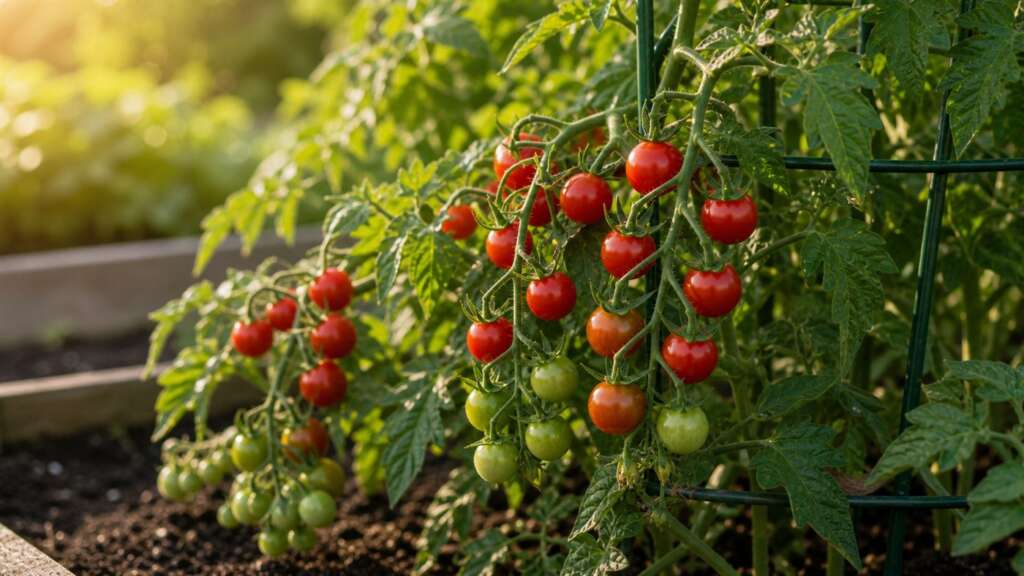
Small Red Cherry Tomato is a warm-season fruiting crop grown for clusters of sweet, bite-size red fruit on a vining, indeterminate plant. Like most tomatoes, it usually rewards an indoor start under strong light, careful hardening off, and transplanting only after frost risk has passed and the soil has truly warmed up.
Quick How-to
Start Small Red Cherry Tomato seeds indoors about 6 to 8 weeks before your last expected spring frost. Sow about 1/4 inch deep in fresh seed-starting mix, keep the mix warm and evenly moist, and move seedlings under strong overhead light the moment they sprout. Expect germination in roughly 5 to 10 days under warm conditions. Transplant outside after hardening off, once nights are mild and soil feels genuinely warm to the touch.
Quick Guide
| Fact | Recommendation |
|---|---|
| Best method | Start indoors, then transplant |
| Sowing depth | About 1/4 inch |
| Germination temperature | About 75 to 90 F is ideal for steady emergence |
| Days to germination | About 5 to 10 days under warm conditions |
| Light for germination | Cover the seed; strong light is needed immediately after sprouting |
| Spacing | About 24 to 36 inches apart, with sturdy support installed at planting |
| Sun | Full sun, ideally 8 or more hours |
| Water | Even moisture; avoid swings between bone dry and saturated |
| Harvest | About 65 to 75 days from transplant under warm growing conditions |
| Plant size | Typically indeterminate and vining; sturdy support strongly recommended |
Before You Sow
Tomatoes reward a calm, well-timed indoor start. Gather fresh seed-starting mix, clean cells or small pots, plant labels, and a tray with drainage. Pre-moisten the mix until it feels like a wrung-out sponge so seed placement stays even and the surface does not dry out the moment you finish sowing.
A heat mat is helpful for getting tomato seed up quickly, but it is only part of the setup. Strong overhead light matters as much, if not more, once seedlings emerge. The goal is not the tallest plant in the tray; it is a sturdy young tomato with a thick stem, good color, and a healthy root system ready to move outside. Plan backward from your local transplant date so seedlings are not stranded indoors for weeks past their best window.
Indoor Starting
Sow Small Red Cherry Tomato seed about 1/4 inch deep. Firm the mix gently for good seed-to-soil contact, then water with a fine spray or from below so seed does not float to the surface. Cover the tray with a clear humidity dome if you have one, and keep the mix warm and evenly moist.
As soon as the first sprouts appear, remove the dome and move seedlings under strong overhead light for long days. A sunny window alone is often not enough; weak light is the most common reason young tomatoes turn tall, thin, and pale. Keep lights close, raising them as plants grow, and aim for steady airflow rather than warm, still air.
When seedlings have a set or two of true leaves and roots begin to fill the cell, pot up into a larger container. Tomatoes can form additional roots along a buried stem, so a slightly deeper pot-up is one of the few situations where it is fine to bury part of the stem. This trick can also help correct mild legginess before transplant.
Direct Sowing
Direct sowing tomatoes outdoors is realistic only in long, warm growing seasons. If you try it, wait until soil is genuinely warm, nights are mild, and the season is clearly long enough for fruit to set and ripen before fall cool-down. For most gardeners, indoor-grown transplants give a more reliable head start and better cherry harvest than direct sowing.
Hardening Off and Transplanting
Harden off seedlings over about 7 to 10 days before planting out. Start with a sheltered, shady spot and short outdoor visits, then gradually increase sunlight, breeze, and time outside. Skipping this step is one of the easiest ways to lose a strong indoor seedling to sunburn or wind shock.
Transplant after frost danger has passed and the soil feels warm, not just the air. Cold soil slows root activity and can leave a tomato sitting in place for weeks even when daytime temperatures look fine. Set plants deep enough to support the stem, removing the lowest set of leaves if needed so the stem is buried up to the next leaf node. Water thoroughly at planting, then add a cage, stake, or trellis right away so roots are not disturbed later.
For indeterminate cherry tomatoes, give each plant generous space — commonly about 24 to 36 inches — and choose support that can handle a tall, vining plant heavy with fruit clusters.
Soil, Sun, and Water
Small Red Cherry Tomato wants full sun, fertile well-drained soil, and consistent moisture. Work finished compost into the bed before planting if your soil is lean, but go easy on high-nitrogen fertilizer once plants are actively growing. Excess nitrogen pushes lush leafy growth at the expense of flowering and fruit set.
Water at the soil level whenever possible to keep foliage drier. Aim for steady moisture through flowering and fruit fill rather than alternating between bone-dry soil and heavy soakings. Big swings in moisture are a common trigger for cracking, blossom end rot symptoms, and uneven ripening because the plant takes up water irregularly. Mulch after the soil warms to even out moisture, moderate soil temperature, and reduce splashing during summer storms.
Top Mistakes
- Starting too late or too early: Tomatoes need a long enough warm window to flower, set fruit, and ripen. Start indoors on time for your area, but resist sowing so early that seedlings become rootbound or stretched before the weather catches up.
- Keeping seedlings warm without enough light after germination: Warmth helps seeds sprout, but heat plus weak light produces tall, thin, pale seedlings. Move plants under strong overhead light the moment sprouts appear and reduce extra heat.
- Transplanting into cold soil: Tomatoes can survive a cool spell but they will stall. Wait for mild nights and warm soil rather than forcing an early planting and watching plants sit still for weeks.
- Irregular watering through fruit set: Inconsistent moisture is a leading cause of cracking, blossom end rot symptoms, and split fruit. Aim for steady, even watering, especially once flowers and small fruit appear.
- Skipping support: Indeterminate cherry tomatoes get tall, heavy, and tangled. A cage or stake at planting time keeps fruit cleaner, airflow better, and harvest easier.
Troubleshooting by Symptom
| Symptom | Likely causes | What to do next |
|---|---|---|
| No sprouts after 10 to 14 days | Mix too cold, seed buried too deep, dry pockets, or saturated mix | Hold the seed zone near 75 to 90 F, keep the mix evenly moist, and resow about 1/4 inch deep if needed |
| Seedlings are tall, thin, or pale | Not enough overhead light, too much warmth, or crowded trays | Move lights closer, lengthen the bright day, thin to one plant per cell, and reduce extra heat |
| Seedlings collapse at the soil line | Overly wet mix, poor airflow, or damping-off conditions | Increase airflow, water less often and from below, use fresh clean mix, and avoid saturated trays |
| Plants stall after transplant | Cold soil, insufficient hardening off, root stress, or a dry root ball at planting | Protect from cold nights, water deeply at the base, and give plants time once soil warms |
| Lots of leaves but few flowers | Too much nitrogen, too much shade, or heat stress | Ease off feeding, confirm full sun, and wait for temperatures to settle |
| Blossoms drop without setting fruit | Heat, cold, drought stress, or inconsistent moisture | Keep watering even, hold off on heavy feeding, and wait out temperature extremes |
| Blossom end rot on the first fruit | Irregular moisture interfering with calcium movement in the plant | Maintain even soil moisture, mulch after the soil warms, and avoid root damage near the plant base |
| Fruit cracks after storms | Sudden uptake of water in already-ripening fruit | Water more steadily before storms, mulch, and pick ripe fruit promptly when wet weather is coming |
Germination Diagnostics
If Small Red Cherry Tomato is slow to sprout, work through the seed environment in order before changing everything at once.
First, check depth. Seed buried much deeper than 1/4 inch may have enough moisture but not enough energy to reach the surface. Next, check warmth. Tomato seed is a warm-season responder; cool wet soil is one of the most common reasons it sits still even when it looks like nothing is wrong. A seedling heat mat or a warmer spot in the house can be the difference between sprouts in a week and sprouts in three.
Moisture is the next checkpoint. The seed zone should feel evenly damp, like a wrung-out sponge, not shiny wet and not dusty dry. If the surface crusts as it dries, tiny seedlings can fail to break through even when seed underneath has started to grow. Finally, look at light and airflow after emergence. Seedlings that germinate well but stretch, pale, or topple usually need stronger overhead light, more airflow between trays, fewer plants per cell, or a less saturated mix.
Container and Small-Space Notes
Small Red Cherry Tomato can adapt to large containers when the pot has drainage, generous soil volume, full sun, and a watering routine that prevents repeated wilting. As an indeterminate type, it appreciates a tall sturdy cage or trellis even in a pot, and a fabric grow bag or large container in the 7 to 10 gallon range is a more forgiving choice than a small patio pot. Container plants depend entirely on you for steady moisture; small pots exaggerate heat, drought, and feeding swings.
Harvest and Kitchen Use
Pick Small Red Cherry Tomato when fruit is fully red, slightly soft, and easily releases from the cluster with a gentle twist. Cherry tomatoes are most flavorful at peak ripeness, and frequent picking encourages the plant to keep flowering and setting new fruit. Check vines every couple of days during peak season, since ripe cherries can split if left too long after wet weather.
Bite-size red cherries are a kitchen-friendly tomato: good fresh off the vine, in salads, roasted whole, dropped into pasta, or slow-blistered in a skillet. They hold up to handling better than many salad slicers and are forgiving for new growers who want a steady, snackable harvest.
Seed Saving
Small Red Cherry Tomato is often grown as an open-pollinated heirloom, which makes it a reasonable candidate for seed saving when you know the source. Save seed from healthy, fully ripe fruit on plants you would want to grow again. Scoop seed and pulp into a small jar, add a little water, and let it ferment at room temperature for two to three days, stirring once or twice a day. As the gel coat breaks down, filled seed usually settles to the bottom.
Rinse the seed thoroughly, spread it in a single layer on a plate or paper, and let it dry fully in a cool, airy spot away from direct sun. Label by variety and year before storing. If you are not certain the planting was open-pollinated and isolated from other tomatoes, treat saved seed as experimental rather than guaranteed true-to-type.
Storing Leftover Seed
Keep unused Small Red Cherry Tomato seed in its labeled packet inside a sealed container in a cool, dry, dark indoor location. Avoid garages, sheds, greenhouses, and sunny windowsills, where temperature and humidity swing sharply. Label home-saved seed with the variety and harvest year before storing it.
FAQ
Can I grow Small Red Cherry Tomato in a container?
Yes. Choose a large container, ideally around 7 to 10 gallons or larger, with good drainage and full sun. Plan on steady watering and sturdy support since indeterminate cherry plants get tall and heavy with fruit.
Why are my tomato seedlings tall and leggy?
Warmth without enough overhead light is the usual cause. Move lights closer right after sprouts appear, lengthen the bright day, and ease off extra heat once germination is done.
Can I plant tomato seedlings outside if days are warm but nights are still cool?
It is better to wait. Cold soil and chilly nights make tomatoes stall, even when daytime air feels mild. A slightly later transplant date into warm soil usually outperforms an early planting that sits and sulks.
Do cherry tomatoes really need a cage or stake?
For indeterminate cherry types, yes. Without support, vines sprawl, fruit ends up on the soil, airflow drops, and harvest becomes a tangle. Add support at planting time so the roots are not disturbed later.
How often should I pick the fruit?
Every couple of days during peak season. Frequent picking keeps the plant productive and reduces splitting from missed, overripe cherries.