
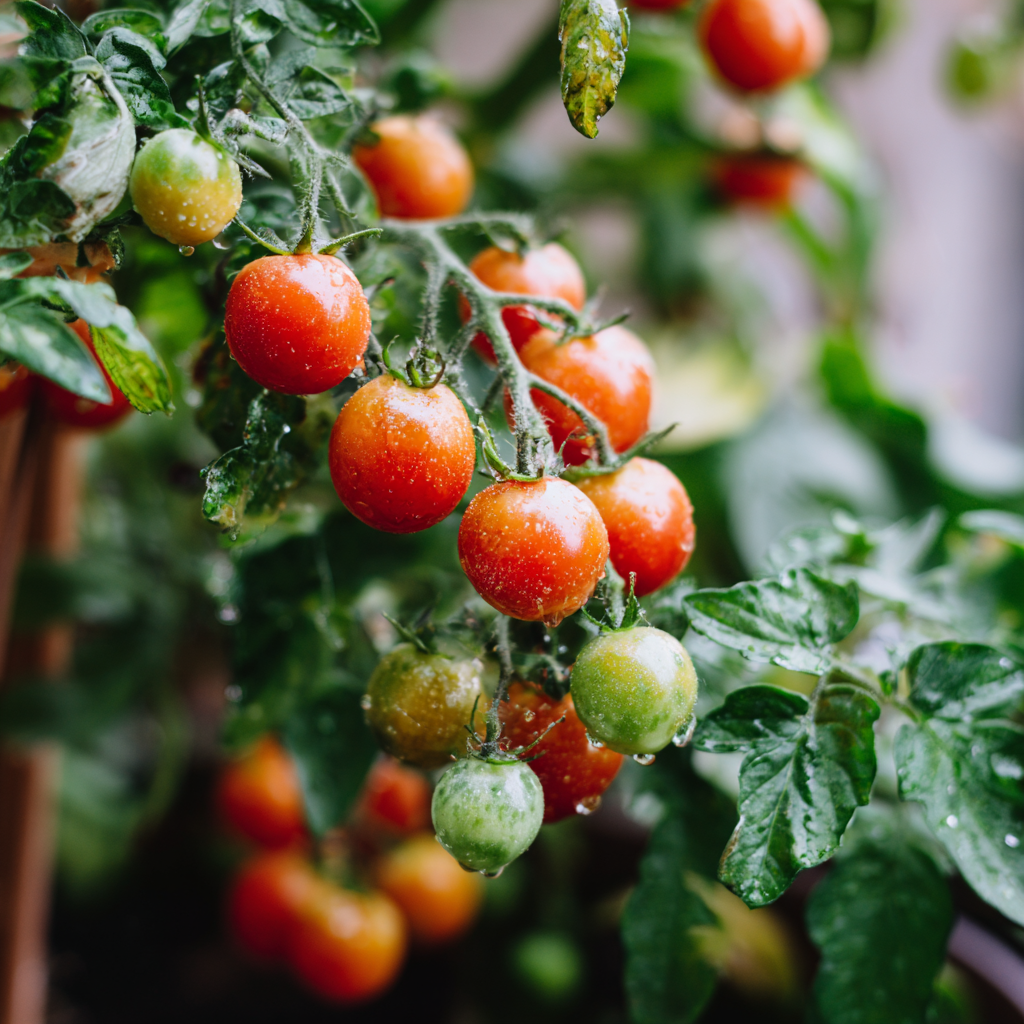
Large Red Cherry tomato is an indeterminate heirloom that produces abundantly from midsummer until frost, delivering clusters of bright red, bite-sized fruit around 1 to 1-1/4 inches across. The flavor is sweet and classic, and the plants are vigorous enough to cover a cage or trellis by late summer. Unlike small cherry types grown mainly for containers, this one grows tall — often 6 to 8 feet — and produces enough fruit in a single season to keep a household well-supplied for fresh eating, snacking, and sharing. Starting seeds indoors on schedule and providing strong support from the outset are the two habits that make the biggest difference.
Quick How-to
Start seeds indoors 6 to 8 weeks before your last expected frost. Sow about 1/4 inch deep in warm seed-starting mix. Move seedlings into strong light immediately after they emerge. Harden off for 7 to 10 days and transplant after frost risk has passed and soil is warm. Install a sturdy stake or tall cage at planting — this plant will need it.
Quick Guide
| Fact | Recommendation |
|---|---|
| Best method | Start indoors, then transplant |
| Sowing depth | About 1/4 inch |
| Germination temperature | 75 to 85 F; heat mat helpful |
| Days to germination | About 5 to 10 days at 80 F |
| Light for germination | Cover seed; bright light needed immediately after sprouting |
| Spacing | 24 to 36 inches apart; rows 4 feet apart |
| Sun | Full sun, 8 or more hours daily |
| Water | Consistent moisture; about 1 inch per week |
| Harvest | About 65 to 75 days from transplant; continues until frost |
| Plant size | Indeterminate; vines reach 6 to 8 feet — tall sturdy stake or cage required |
Before You Sow
Large Red Cherry is an indeterminate variety that produces all season, so it rewards a timely indoor start. Count back 6 to 8 weeks from your last expected frost date. Use pre-moistened seed-starting mix in clean cells or small pots. Label everything — cherry and beefsteak seedlings are indistinguishable at the cotyledon stage.
A heat mat at 75 to 85 F speeds germination, but switch focus to light as soon as sprouts appear. Indoor tomato seedlings that germinate warm and then wait for insufficient light become pale and spindly very quickly. Having your grow light or a bright south-facing window ready before sowing is one of the most useful preparations you can make.
Indoor Starting
Sow seed about 1/4 inch deep. Keep the mix evenly moist — like a well-wrung sponge — and warm. A humidity dome speeds germination but should be vented daily and removed completely once seedlings emerge to improve airflow and prevent damping-off.
As soon as sprouts are visible, get them under strong overhead light for 14 to 16 hours per day. When true leaves appear and roots begin filling the cell, pot up to a 3- to 4-inch container. Bury a portion of the stem when potting up — tomatoes root along buried stem tissue. Water consistently but allow the mix surface to dry slightly between waterings to encourage strong root development.
Avoid high-nitrogen feeding at this stage. Light, balanced fertilizing once true leaves appear is sufficient for healthy indoor growth.
Hardening Off and Transplanting
Expose seedlings to outdoor conditions gradually over 7 to 10 days before transplanting. Start with brief sheltered sessions and build toward full sun and wind over the week. Skipping this step is one of the common reasons transplanted tomatoes drop leaves and stall.
Transplant when nighttime temperatures are reliably above 50 F and soil has warmed. Cold soil delays root establishment even when air temperatures feel mild. Set up a tall, sturdy stake or cage — at minimum 5 to 6 feet — at planting time. This variety produces vigorously and will reward you with a support system that can handle real weight by late summer.
Plant deeply, burying the stem to the lowest set of leaves, and water in well. Mulch after planting to retain soil moisture and keep roots from heating up during summer.
Soil, Sun, and Water
Well-drained, fertile soil with a pH around 6.0 to 6.8 suits this tomato well. Work in compost before planting. During the growing season, a balanced fertilizer applied at first flower supports fruit production without pushing excessive leafy growth.
Full sun — at least 8 hours daily — drives the prolific production this variety is known for. In shadier conditions, plants grow but produce less fruit and take longer to ripen what they do set.
Water at the base of the plant, not overhead. Target about 1 inch per week from rain and irrigation combined, and maintain that consistency through flowering and fruiting. Large Red Cherry is generally less prone to cracking than large-fruited beefsteaks, but uneven watering still increases the risk. Mulch after the soil warms to moderate moisture and soil temperature.
Top Mistakes
- Underestimating plant height: Large Red Cherry is not a patio or container cherry variety. It grows vigorously tall. A short cage will be overwhelmed by midsummer. Use a tall stake, a Florida-weave trellis, or a 5- to 6-foot cage anchored so it does not tip.
- Starting too late indoors: Even though cherry tomatoes ripen somewhat faster than beefsteaks, Large Red Cherry benefits from a full growing season. A late start translates to fewer weeks of production before fall.
- Letting fruit overripen on the vine: Ripe cherry tomatoes that remain on the plant in hot or wet weather split readily and attract birds and insects. Check plants every 2 to 3 days during peak production.
- Overhead irrigation: Wet foliage on vigorous indeterminate vines invites early blight and other fungal diseases that can defoliate lower sections of the plant by late summer. Water at the base.
- Crowding plants: At 24 to 36 inches apart, these plants have room for airflow. Closer planting creates conditions where disease spreads faster and fruit development is less even.
Troubleshooting by Symptom
| Symptom | Likely causes | What to do next |
|---|---|---|
| No sprouts after 10 to 14 days | Mix too cold, sown too deep, surface dried out, or overly wet conditions | Verify mix temperature at 75-85 F; keep evenly moist and resow at 1/4 inch if needed |
| Seedlings tall and thin with pale color | Insufficient light after germination, heat mat left on too long, or overcrowding | Increase light intensity and duration; thin to one plant per cell; reduce excess bottom heat |
| Seedlings fall over at soil level | Damping-off: wet mix, poor airflow, crowded trays | Remove affected plants, improve airflow, water only at base, use fresh mix for resowing |
| Plants slow to establish after transplant | Cold soil, transplant shock, or inadequate hardening-off | Protect from cool nights, water deeply, and allow 1 to 2 weeks for root establishment in warm soil |
| Heavy vine with few fruit clusters | Too much shade, excess nitrogen, or insufficient pollinator activity | Move to full sun if possible; reduce high-nitrogen feeding; encourage pollinator visits |
| Cherry fruit splits and cracks | Rapid water uptake after dry period, particularly from rain | Water more consistently; mulch to buffer moisture; harvest ripe fruit promptly before rain events |
| Lower leaves yellowing and dropping | Early blight or septoria leaf spot spreading up from soil | Remove affected leaves, water at base, improve airflow, and mulch to prevent soil splash on foliage |
Harvest and Kitchen Use
Large Red Cherry tomatoes begin ripening at around 65 to 75 days from transplant and continue producing until frost kills the plant. Ripe fruit is deep red and pulls cleanly from the stem with a gentle tug; underripe fruit resists and partially-ripe fruit is slightly firm.
Check plants every 2 to 3 days during peak season. Prolific producers can go from ripe to overripe quickly in summer heat. Carry a bowl or bucket through the garden and harvest generously — taking ripe fruit keeps the plant focused on new flower and fruit development rather than ripening clusters that are already past their peak.
Large Red Cherry tomatoes are excellent for fresh snacking, salads, roasting whole, and skewering for grilling. Because the fruit is larger than most cherry types, they also hold up well halved in warm pasta dishes and sauces.
Seed Saving
Large Red Cherry is an open-pollinated heirloom variety. Tomatoes are primarily self-pollinating, but cross-pollination by insects can occur in gardens with multiple varieties. For reliable true-to-type seed, grow with 25 to 50 feet of separation from other tomato varieties, or cage selected plants or bag individual flowers before they open.
Save seed from fully ripe, unblemished fruit. Scoop seed and gel into a small jar of water, ferment for 2 to 3 days while stirring once daily, then rinse when the gel separates and the plump seeds settle. Spread the seeds on a non-stick surface to dry completely, label with the variety name and harvest year, and store cool, dry, and dark.
Storing Leftover Seed
Keep unused Large Red Cherry Tomato seed in its labeled packet inside a sealed container in a cool, dry, dark indoor location. Avoid garages, sheds, greenhouses, and sunny windowsills, where temperature and humidity swing sharply. Label home-saved seed with the variety and harvest year before storing it.
FAQ
How is Large Red Cherry different from Small Red Cherry tomato?
Both are indeterminate heirloom cherry types, but Large Red Cherry produces larger fruit — around 1 to 1-1/4 inches across — compared to the smaller, more bite-sized Small Red Cherry. Flavor is similar, but the larger fruit size makes Large Red Cherry a little more versatile in cooked preparations.
Can I grow Large Red Cherry in a large container?
It is possible in a very large container — 15 gallons or more — with excellent drainage, a tall stake, and frequent watering and fertilizing. However, this is a genuinely large indeterminate plant and it performs most reliably in the ground where the root system can grow freely.
When should I start harvesting?
Begin picking when fruit is fully colored, deep red, and releases with a light twist. Do not wait until it looks overripe. Cherry tomatoes in summer heat move quickly from perfect to cracking. Regular harvesting also encourages the plant to set new fruit.
Does Large Red Cherry need suckering?
Indeterminate tomatoes can be managed with selective sucker removal, which improves airflow and keeps the plant from becoming a dense tangle. Removing the suckers that grow in the crotch between the main stem and a leaf branch focuses the plant’s energy. This is optional but useful on vigorous plants in humid climates.