
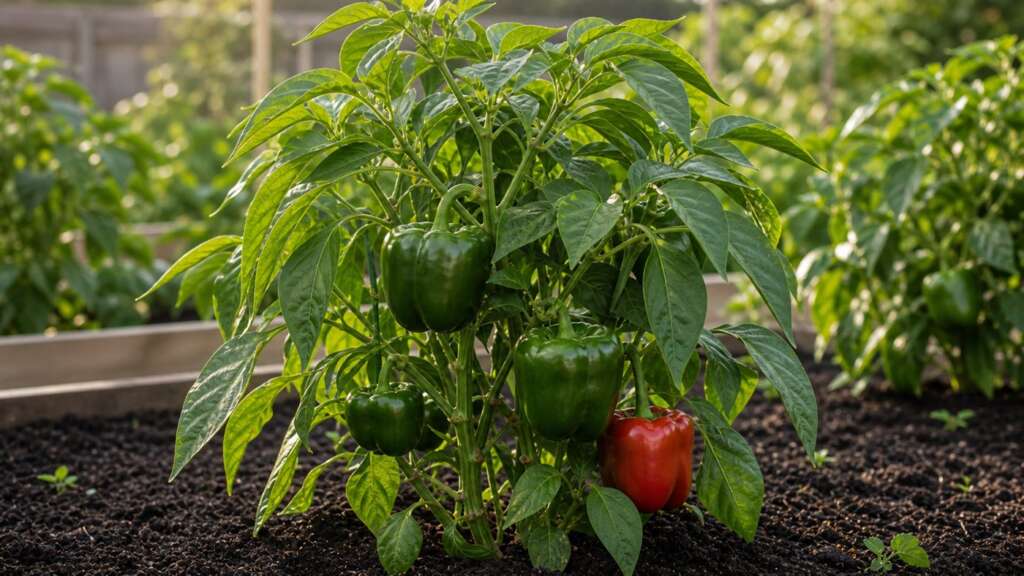
California Wonder is a classic heirloom bell pepper grown for sweet, blocky four-lobed fruit that ripens from glossy green to deep red. Like most peppers, it is a warm-season crop that almost always performs best when started indoors under steady warmth, grown under strong overhead light, hardened off gradually, and transplanted only after frost has passed and nights have settled.
Quick How-to
Start California Wonder seed indoors about 8 to 10 weeks before your last expected spring frost. Sow about 1/4 inch deep in fresh seed-starting mix, keep the mix warm (around 75 to 85 F) and evenly moist, and expect germination in roughly 7 to 21 days. Move seedlings under strong overhead light as soon as they emerge, harden them off over a week or so, and transplant outdoors once nights are reliably mild and the soil has warmed.
Quick Guide
| Fact | Recommendation |
|---|---|
| Best method | Start indoors, then transplant |
| Sowing depth | About 1/4 inch |
| Germination temperature | About 75 to 85 F; steady warmth helps |
| Days to germination | Often 7 to 21 days; warm conditions speed emergence |
| Light for germination | Cover seed; provide strong overhead light immediately after sprouting |
| Spacing | About 18 to 24 inches apart in the garden |
| Sun | Full sun, ideally 8 or more hours |
| Water | Even moisture; avoid swings between bone-dry and saturated |
| Harvest | About 75 days from transplanting for green fruit; allow additional time for full red color |
| Plant size | Compact, upright, bushy heirloom habit, commonly about 24 to 30 inches tall |
Before You Sow
Peppers reward patience. They germinate more slowly than tomatoes, dislike cold mix, and stretch quickly under weak light. Plan backward from your transplant date so seedlings spend the right amount of time in trays, not the longest possible time. An overgrown, rootbound pepper start can stall for weeks after transplanting and rarely catches up to a stockier seedling sown later.
Use fresh seed-starting mix, clean cells with drainage, and clear labels. Pre-moisten the mix before sowing so it feels evenly damp like a wrung-out sponge; this keeps seed placement consistent and prevents dry pockets near the seed. A seedling heat mat is one of the most useful tools for pepper starts because it holds the mix steady around 80 F regardless of room temperature. Reduce or remove the extra bottom heat once sprouts appear so seedlings do not stretch.
Before sowing, pre-moisten the mix thoroughly and confirm that the seed zone can hold about 80 to 85 F. Those two checks address the most common causes of slow or patchy pepper emergence before the tray is filled.
Indoor Starting
Sow California Wonder about 1/4 inch deep, gently firm the mix, and water with a fine spray so seed is not washed out of place. Cover the tray with a humidity dome to hold moisture steady, and place the tray on a heat mat or in the warmest room in the house. Pepper seed often takes 7 to 14 days to sprout under good conditions and can stretch closer to 21 days when temperatures are uneven.
As soon as sprouts appear, remove the dome and move trays under strong overhead light. Weak windowsill light is the single most common reason pepper seedlings get tall, pale, and floppy in the first two weeks. Fluorescent or LED grow lights placed close to the seedlings, on long days, produce stockier plants than even a sunny south-facing window in early spring.
When seedlings show their first true leaves, thin to one strong plant per cell using scissors rather than pulling, which can disturb the roots of the keeper. Pot up into a larger cell or small pot once roots fill the original container. Unlike tomatoes, peppers do not form new roots along a buried stem, so set them at the same depth when potting up rather than burying any of the stem.
Hardening Off and Transplanting
Harden off seedlings over 7 to 10 days before transplanting. Start with an hour or two in dappled shade on a mild day, then add time, sun, and breeze gradually. Skipping or rushing this step is a frequent cause of sunscalded leaves and stalled plants the first week outdoors.
Transplant after the last frost has passed and night temperatures are reliably in the 50s F or warmer. Cold soil is the quieter culprit behind slow starts; the air can feel warm at noon while the root zone is still chilly. A simple soil thermometer helps, or you can wait one to two weeks past your usual tomato transplant date for a margin of safety.
Set California Wonder transplants at the same depth they grew in their pots, water them in well, and mulch lightly once the soil has warmed. A short stake or small cage at planting time supports the plant later when it is loaded with fruit and avoids disturbing roots from staking after the fact.
Soil, Sun, and Water
California Wonder needs full sun, fertile well-drained soil, and steady moisture to perform well. Work compost into the bed before planting if your soil is lean, but avoid pushing high-nitrogen fertilizer once flowering begins; lush leaves at the expense of fruit set is a common result of heavy feeding.
Water at the soil level when possible, aiming for evenly moist soil rather than alternating drought and flood. Mulch helps moderate soil temperature and moisture once the bed has warmed. Even watering through flowering and fruit fill reduces the risk of blossom end rot symptoms and fruit-wall splitting later in the season.
In hot climates, light afternoon shade during the most intense weeks can help peppers continue setting fruit. Pepper flowers often drop when daytime temperatures climb above the upper 80s F or nights stay warm and humid; the plant typically resumes setting fruit once weather moderates.
Top Mistakes
- Sowing into cold mix: Pepper seed sits and sulks in cool soil. Use a heat mat or the warmest room in the house to hold the mix around 80 F until sprouts appear.
- Weak light after germination: Seedlings stretch fast when warmth outpaces light. Move sprouts under strong overhead light immediately, not after they have already gotten leggy.
- Transplanting too early: Frost-free air is not the whole picture. Wait for warm soil and mild nights, even if it means transplanting a week or two later than neighbors.
- Heavy nitrogen at fruit set: Rich feeding once flowers appear pushes leafy growth at the cost of fruit. Use balanced amendments and let the plant settle into its own rhythm.
- Pulling fruit by hand: Bell peppers attach with sturdy stems that can snap whole branches. Cut fruit free with scissors or pruners.
Troubleshooting by Symptom
| Symptom | Likely causes | What to do next |
|---|---|---|
| No sprouts after 21 days | Mix too cold, seed buried too deep, dry pockets, or saturated mix | Add bottom heat, keep the mix evenly moist but not soggy, and resow at about 1/4 inch if needed |
| Seedlings tall, pale, and floppy | Not enough light, too much warmth after germination, or crowded trays | Move lights closer, extend day length to 14 to 16 hours, thin to one per cell, and ease back on extra heat |
| Seedlings collapse at the soil line | Overly wet mix, poor airflow, or damping-off conditions | Improve airflow, water from below carefully, use fresh clean mix for restarts, and avoid saturated trays |
| Plants stall after transplant | Cold soil, rushed hardening off, root disturbance, or a dry root ball at planting | Protect from cold nights with row cover, water deeply at planting, and give plants a week or two once soil warms |
| Flowers drop without setting fruit | Heat above the upper 80s F, cold nights, drought stress, or sudden moisture swings | Maintain even watering, mulch the bed, and wait for weather to moderate; flower set usually resumes |
| Blossom end rot symptoms | Irregular moisture interfering with calcium movement to developing fruit | Water evenly, mulch after soil warms, and avoid root damage or large dry-wet swings |
| Sunscald on exposed fruit | Sudden intense sun on fruit that lost its leaf cover | Avoid heavy pruning, keep plants healthy and full, and use light shade cloth during heat waves if needed |
| Thick walls but small fruit | Plant stress, crowding, or insufficient light | Space plants to recommended distance, give full sun, and feed lightly with a balanced fertilizer |
Germination Diagnostics
When California Wonder is slow to emerge, check four things in order before changing the whole setup. First, depth: a 1/4 inch cover is enough; deeper sowing wastes the seed’s stored energy on a long climb to the surface. Second, temperature: cool mix is the most common reason pepper seed sits without moving, so a heat mat or warmer room usually solves it. Third, moisture: the seed zone should feel evenly damp, not shiny wet and not dusty. Fourth, surface crusting: if the top layer dries and hardens between waterings, even healthy sprouts may not break through. Misting the surface gently or keeping a humidity dome in place until emergence helps.
Container and Small-Space Notes
California Wonder adapts well to large containers when the basics are met. Use a pot of at least 3 to 5 gallons with drainage holes, a quality potting mix, and a sunny location. Container peppers depend on the gardener for steady moisture because pots dry out faster than garden beds, especially in midsummer heat. Check container plants daily once warm weather arrives, and feed lightly with a balanced fertilizer through the season. A small stake or tomato cage keeps the plant upright once fruit begins to weigh down branches.
Harvest and Kitchen Use
California Wonder can be picked green when fruit is firm and full-sized, or left on the plant to ripen through yellow and orange to a deep red. Red peppers are sweeter and higher in vitamin C; green peppers are crisper and more savory. Cut fruit from the plant with scissors or pruners to avoid breaking branches. Regular harvesting can encourage continued flower set, so picking the first few green peppers sometimes leads to a heavier overall yield even if you prefer red fruit later in the season.
Store harvested peppers unwashed in the crisper drawer for one to two weeks. For longer storage, peppers freeze well; wash, slice, and freeze on a tray before transferring to bags. California Wonder’s blocky shape and thick, sweet walls make it a traditional choice for stuffing.
Seed Saving
California Wonder is a stable open-pollinated heirloom, so seed from fully ripe (red) fruit will generally produce plants true to type as long as cross-pollination with other peppers is limited. Peppers self-pollinate readily, but bees can move pollen between varieties planted close together. For seed saving, separate pepper varieties by a reasonable distance or bag a few flowers before they open if you are growing more than one type nearby.
Scoop seed from a healthy, fully ripe red pepper, spread it on a paper plate or screen, and dry it out of direct sun for one to two weeks until it snaps rather than bends. Label with variety and year, then store in a cool, dry, dark place. Seed from green fruit is generally not mature enough to save reliably.
Storing Leftover Seed
Keep unused California Wonder Bell Pepper seed in its labeled packet inside a sealed container in a cool, dry, dark indoor location. Avoid garages, sheds, greenhouses, and sunny windowsills, where temperature and humidity swing sharply. Label home-saved seed with the variety and harvest year before storing it.
FAQ
Why are pepper seeds slower to germinate than tomato seeds?
Peppers prefer noticeably warmer soil than tomatoes and have tougher seed coats. Steady warmth around 80 F, even moisture, and patience are the keys. Bottom heat from a seedling mat usually shaves several days off the germination window.
Can I harvest California Wonder peppers green, or should I wait for red?
Both work. Green peppers are crisp and ready when fruit reaches full size with firm walls, often around 75 days from transplant. Leaving fruit on the plant another two to four weeks allows it to ripen through yellow and orange to a sweet, deep red.
Do California Wonder peppers need a cage or stake?
Most well-grown plants benefit from at least a short stake or small cage. Branches can crack under the weight of multiple bell-sized fruits, especially after wind or heavy rain. Installing support at transplant avoids disturbing roots later in the season.
Can I direct sow California Wonder outdoors?
Direct sowing rarely works outside long, hot-summer regions. Peppers need a long warm season to flower, set fruit, and ripen, so indoor starting is the reliable approach for most gardeners.
Why are my pepper plants flowering but not setting fruit?
Most often this is temperature. Pepper blossoms drop in extended heat above the upper 80s F or in cold snaps. Keep watering even, avoid heavy fertilizer, and wait; fruit set usually resumes when weather moderates.