
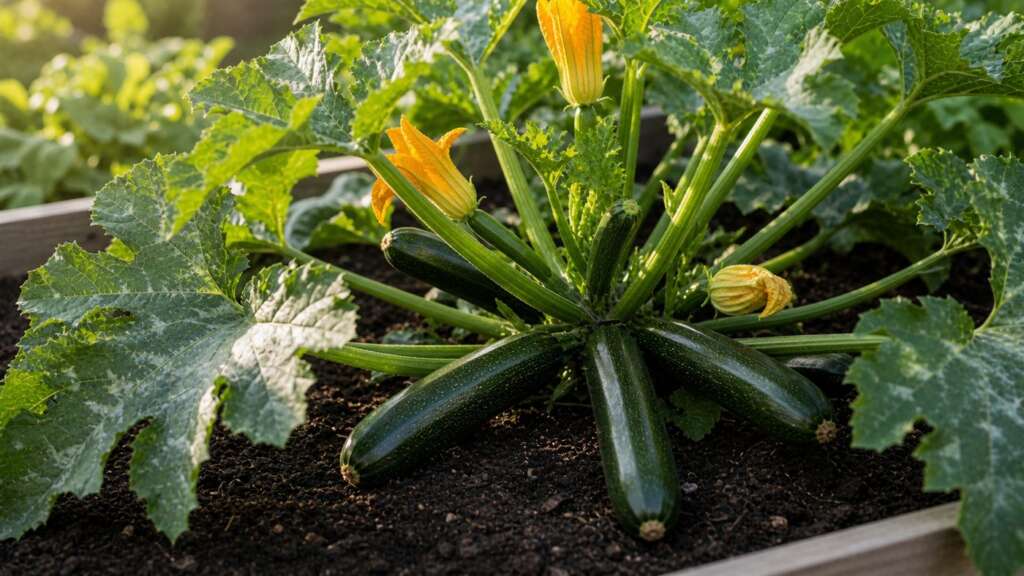
Black Beauty is a classic open-pollinated heirloom summer squash grown for its glossy, near-black fruit and reliable bush habit. It is a warm-season vegetable that prefers to be planted only after the soil has fully warmed, then watered steadily, picked young, and given enough room for its big leaves to breathe.
Quick How-to
Plant Black Beauty Zucchini once the danger of frost has passed and soil is at least about 65 to 70 F. Sow seed 1/2 to 1 inch deep, two or three seeds per spot, and thin to the strongest seedling. Germination is usually quick, often around 5 to 10 days in warm soil. Give plants full sun, deep and even watering, and 24 to 36 inches of space so leaves and airflow have room to develop. Begin harvesting fruit young, at about 6 to 8 inches long, to keep the plant producing.
Quick Guide
| Fact | Recommendation |
|---|---|
| Best method | Direct sow after soil warms; brief indoor start (2 to 3 weeks) is optional for short seasons |
| Sowing depth | 1/2 to 1 inch |
| Soil temperature | About 65 to 70 F minimum; 70 to 95 F is ideal for fast germination |
| Days to germination | Often 5 to 10 days in warm soil |
| Light for germination | Cover seed; provide strong light immediately after sprouting |
| Spacing | About 24 to 36 inches between bush plants; 3 to 4 feet between rows |
| Sun | Full sun, ideally 6 to 8 or more hours |
| Water | About 1 inch per week, applied deeply and evenly; avoid wetting leaves |
| Harvest | About 50 to 60 days from sowing |
| Plant size | Compact bush habit, commonly 2 to 3 feet wide |
Before You Sow
Zucchini is a hungry, fast-growing crop. The site you choose makes more difference than almost anything else. Pick a sunny spot with loose, fertile, well-drained soil and good airflow. Work compost or well-rotted manure into the bed before planting if your soil is thin or compacted.
Black Beauty is a bush-type summer squash, so it stays more contained than vining winter squash, but the plants still spread wider than people expect. Give each plant a clear circle of ground rather than tucking it against a fence or between taller crops that will shade it.
If you have battled squash bugs, vine borers, or powdery mildew in the same bed in previous years, rotate to a fresh location if possible. Cucurbits do better when they are not grown in the same soil year after year.
Direct Sowing
Direct sowing is the most reliable method for zucchini. Wait until nights are mild and the soil has warmed; planting into cold wet ground is the most common reason seed rots instead of sprouting.
Form a small mound or “hill” about 12 inches across, or simply mark a planting spot at the spacing you want. Place two or three seeds about 2 to 3 inches apart in each spot, cover with 1/2 to 1 inch of fine soil, and firm gently so the seed has good contact. Water with a slow soak rather than a hard spray that can dislodge or bury the seed further.
Once seedlings have one or two true leaves, thin to the single strongest plant per hill by snipping the extras at the soil line. Pulling them can disturb the roots of the keeper. Crowded zucchini plants compete for light and air, and the weaker stems tend to attract problems first.
Indoor Starting
Indoor starting is optional. It can give you a small head start in cool, short-season climates, but zucchini does not love being transplanted. The shorter the indoor stay, the better.
Sow seed in roomy 3 or 4 inch pots about 2 to 3 weeks before your intended transplant date. Use fresh seed-starting mix, keep the mix warm and evenly moist, and move seedlings under bright overhead light as soon as they emerge. A sunny windowsill alone is usually not enough; weak light produces tall, pale seedlings that struggle outdoors.
Transplant before roots circle the pot. Harden plants off over about a week, starting with sheltered shade and gradually adding direct sun and breeze. Set transplants at the same depth they grew in the pot and water them in well.
Soil, Sun, and Water
Zucchini wants full sun, fertile soil, and steady moisture. A general target is about 1 inch of water per week from rain or irrigation, applied deeply rather than as frequent shallow sprinkles. Drip irrigation or a soaker hose at the base of the plant is ideal because it keeps the big leaves dry and reduces mildew pressure.
Mulch with straw, shredded leaves, or compost once the soil is warm. Mulch holds moisture, moderates soil temperature, keeps fruit cleaner, and suppresses weeds that would otherwise compete with shallow squash roots.
Zucchini responds to feeding, but balance matters. A heavy push of nitrogen produces enormous leaves and few fruit. A balanced vegetable fertilizer at planting, with a light feeding once fruit begins to form, is usually plenty for a home-garden crop.
Pollination Basics
Like all squash, zucchini produces separate male and female flowers on the same plant. Male flowers usually open first, on slender stems, with no swelling behind the bloom. Female flowers appear a little later and carry a tiny zucchini-shaped fruit at the base. Bees and other pollinators move pollen from male to female flowers, and that visit is what allows fruit to develop normally.
If small fruit form and then shrivel, the cause is almost always poor pollination rather than a problem with the plant. This is common in the first week or two of bloom, in cool weather, in heavy rain, or where pollinator activity is low. Hand pollination is a simple fix: in the morning, pick a fresh male flower, peel back the petals, and brush its pollen-loaded center directly onto the center of an open female flower.
Top Mistakes
- Planting too early. Zucchini seed planted into cold, wet soil often rots before it sprouts. Wait for warm soil and stable nights rather than chasing the calendar.
- Crowding the plants. Young seedlings look small, so it is tempting to leave extras. Once those leaves spread, crowded plants stretch, shade each other, and develop mildew faster. Thin early.
- Letting fruit get oversized. Zucchini are tastiest when picked young. Allowing one fruit to grow into a baseball bat signals the plant to slow production. Pick often, even daily at peak season.
- Inconsistent watering. Deep, even moisture is what fills fruit smoothly. Sharp swings between bone-dry and saturated soil contribute to blossom end rot, misshapen fruit, and stressed plants.
- Overhead watering late in the day. Wet leaves overnight invite powdery mildew. Water at the soil level and earlier in the day when possible.
Troubleshooting by Symptom
| Symptom | Likely causes | What to do next |
|---|---|---|
| Seed fails to sprout in 10 to 14 days | Soil too cold, soil saturated, seed buried too deep, or surface crusted | Wait for warmer soil, sow at 1/2 to 1 inch, keep the bed evenly moist not soggy, and gently break any crust |
| Seedlings collapse at the soil line | Damping-off in cold or overly wet conditions | Improve drainage and airflow, water less often, and use fresh mix for indoor restarts |
| Small fruit yellow and shrivel at the tip | Poor pollination, especially early in the season or in cool wet weather | Wait for both flower types and pollinator activity, or hand pollinate in the morning |
| Dark, sunken patch on the blossom end of fruit | Blossom end rot from uneven moisture interfering with calcium uptake | Water deeply and consistently, mulch the bed, and avoid root damage from hoeing close to the plant |
| White powdery patches on leaves | Powdery mildew, often worse with crowding, shade, or overhead watering | Improve spacing and airflow, water at the base, and remove the worst leaves; verify a current treatment with your local Extension if needed |
| Plants wilt suddenly even in moist soil | Possible squash vine borer damage at the stem base, or root stress | Inspect the lower stem for entry holes and frass; check local Extension guidance for vine borer management in your region |
| Plenty of leaves, few or no fruit | Too much nitrogen, too much shade, or pollination issues | Ease off high-nitrogen feeding, confirm full-sun exposure, and check pollinator activity |
| Misshapen, curled, or pinched fruit | Incomplete pollination or uneven watering during fruit fill | Hand pollinate and keep soil moisture even through the picking window |
Harvest
Black Beauty is at its best picked young, when the skin is glossy and the fruit is roughly 6 to 8 inches long and still tender enough to nick with a thumbnail. At that stage the seeds inside are barely formed, the flesh is sweet, and the plant keeps setting more fruit. Use clean garden snips or a sharp knife and cut, rather than twisting, to avoid tearing the stem.
Check plants every day or two during peak season. Zucchini grow startlingly fast in warm weather, and a fruit you measured yesterday can double overnight. Oversized fruit are still edible, just seedier and more watery, and they often work well grated for baking. Removing them promptly tells the plant to keep producing.
The blossoms are also edible. Male flowers can be harvested for stuffing or frying without affecting fruit set, as long as some are left for pollination.
Seed Saving
Black Beauty is an open-pollinated heirloom, so seed saved from a true-to-type fruit can grow into similar plants the next season. The complication is that zucchini crosses freely with other Cucurbita pepo varieties grown nearby, including many summer squash, acorn squash, delicata, pumpkins like Jack O’Lantern types, and ornamental gourds. Without isolation or hand pollination, saved seed can produce unpredictable crosses.
To save seed intentionally, let one or two healthy fruit grow well past eating size, until the skin is hard and dull and the stem begins to dry. Scoop the seed from the mature fruit, rinse off the pulp, dry the seed on a screen or paper plate out of direct sun until it is brittle, and store in a labeled envelope with the variety and year.
Storing Leftover Seed
Keep unused Black Beauty Zucchini seed in its labeled packet inside a sealed container in a cool, dry, dark indoor location. Avoid garages, sheds, greenhouses, and sunny windowsills, where temperature and humidity swing sharply. Label home-saved seed with the variety and harvest year before storing it.
FAQ
How many Black Beauty Zucchini plants do I need?
For most households, two plants are plenty and three are generous. A single healthy bush in peak season can produce more zucchini than people expect.
Should I start Black Beauty Zucchini indoors or direct sow?
Direct sowing is usually easier and faster because zucchini does not love being transplanted. A short indoor start of 2 to 3 weeks is helpful in short-season areas, but a long indoor stay tends to stall the plant after transplanting.
Why are my first zucchini fruits shriveling?
Almost always pollination. The first wave of flowers is often all male, and early female flowers may not get enough pollinator visits. Give it a week or two, or hand pollinate in the morning.
Can I grow Black Beauty Zucchini in a container?
Yes, if the container is large. Aim for at least 5 to 7 gallons of soil volume per plant, with drainage holes and a sunny location, and plan to water more often than an in-ground bed.
Do bush zucchini need support?
A cage or simple stake is not required, but a single short stake to keep the main stem upright can improve airflow and slow mildew in humid climates.