
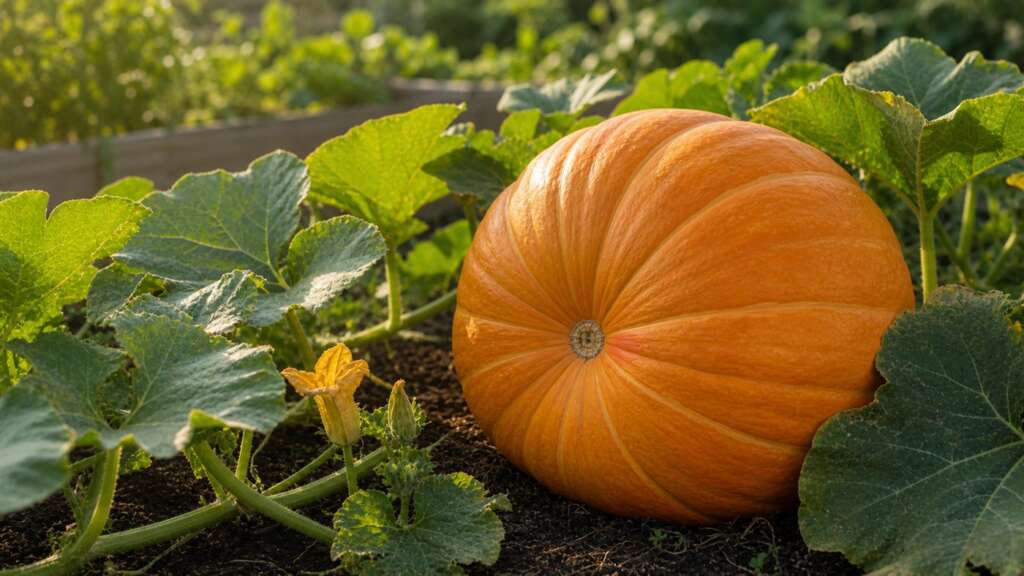
Big Max is an heirloom pumpkin variety grown for large, deep-orange fruit suited to pies, fall decoration, and classic jack-o’-lanterns. It is a vigorous warm-season vine that needs heat, room, steady moisture, and a long, frost-free growing window to reach its full size.
Quick How-to
Sow Big Max Pumpkin seed outdoors after your last frost, once the soil has warmed and night temperatures stay reliably mild. Plant 1/2 to 1 inch deep in hills or rows in full sun, keep the soil evenly moist, and expect germination in about 7 to 10 days when soil is 70 to 95 F. Thin to the strongest seedlings, give vines plenty of room to run, and water consistently through flowering and fruit fill. Big Max needs a long season, so in short-summer areas start seeds indoors 3 to 4 weeks before transplanting.
Quick Guide
| Fact | Recommendation |
|---|---|
| Best method | Direct sow once soil is warm; start indoors briefly in short-season areas |
| Sowing depth | About 1/2 to 1 inch |
| Germination temperature | Best around 70 to 95 F soil temperature |
| Days to germination | Often about 7 to 10 days in warm soil |
| Light for germination | Cover seed; bright light needed immediately after sprouting |
| Spacing | Hills 6 to 8 feet apart, with rows 8 to 12 feet apart |
| Sun | Full sun, ideally 8 or more hours |
| Water | Deep, even moisture; avoid wetting foliage when possible |
| Days to harvest | About 110 to 120 days from sowing |
| Fruit size | Commonly 50 to 100 pounds under good conditions, with larger fruit possible when vines carry only one or two pumpkins |
| Plant habit | Large vining plant; needs significant garden space |
Before You Sow
Big Max is a heavy feeder on a long timeline, so site selection matters more than for a quick summer crop. Choose a full-sun area with deep, fertile, well-drained soil. A bed enriched with compost ahead of planting gives vines the steady supply they need to size up fruit without burning out late in the season.
Plan the footprint honestly. A single Big Max vine can sprawl well beyond what its little seedling suggests, and crowded pumpkin patches mildew earlier, set fewer fruit, and produce smaller pumpkins. If garden space is tight, allow vines to run into a lawn edge, a path you can mow around, or a sturdy area where leaves can spread.
Big Max dislikes cold, wet seedbeds. If your spring is cool or your soil is heavy, consider mounding hills slightly above grade. Raised hills warm faster, drain better, and give seed the warm pocket it wants to germinate quickly.
Direct Sowing
Direct sowing is the most natural method for Big Max because pumpkins resent root disturbance and start fast once soil is genuinely warm. Wait until daytime temperatures are settled, nights are mild, and the top few inches of soil feel warm to the back of your hand.
Form hills about 6 to 8 feet apart, or sow in rows with generous spacing. Place 3 to 4 seeds per hill, 1/2 to 1 inch deep, and water gently so seed is not floated to the surface. Once seedlings have one or two true leaves, thin to the strongest 1 or 2 plants per hill. Use scissors at soil level rather than pulling, which can disturb neighboring roots.
Keep the surface evenly moist until emergence. After plants establish, shift to deeper, less frequent watering that wets the root zone rather than just the top inch.
Indoor Starting
Indoor starting is optional and only useful if your season is short or spring weather is unreliable. Sow 3 to 4 weeks before your planned transplant date. Use individual 3 to 4 inch pots rather than small cells; pumpkin seedlings grow quickly and resent crowded roots.
Sow 1 to 2 seeds per pot, 1/2 to 1 inch deep, in pre-moistened seed-starting mix. Keep the mix warm for germination, then move seedlings into strong overhead light as soon as they sprout. A bright window is rarely enough on its own; weak light is the most common reason indoor pumpkin starts go thin and pale.
Do not let indoor starts overgrow. A short, sturdy seedling transplants far better than a leggy plant trying to climb its own stem. Harden off gradually over 7 to 10 days, then transplant on a calm, mild day after the soil has warmed.
Transplanting and Spacing
Move seedlings out only after the last frost and once soil is warm. Cold soil stalls pumpkin transplants even when the air feels pleasant, and a stalled vine rarely fully catches up.
Set plants at the same depth they grew in the pot, water in well, and shelter the seedlings from wind and cold for the first few days. For Big Max, treat spacing as a floor, not a ceiling: 6 to 8 feet between hills and 8 to 12 feet between rows is a reasonable starting range. Vines that have room to run produce larger, cleaner fruit and dry foliage faster after rain.
Soil, Sun, and Water
Big Max wants full sun and fertile, well-drained soil with good moisture-holding capacity. A bed amended with compost before planting, plus a balanced feeding when vines begin to run, generally outperforms a bare-soil bed pushed with heavy nitrogen later. Excess nitrogen produces lush leaves and few fruit.
Water deeply rather than frequently. The goal is even soil moisture from flowering through fruit fill. Drip lines or soaker hoses at the base of the plant are ideal because they keep leaves dry and reduce mildew pressure. Once vines cover the ground, mulch around the base to conserve moisture and moderate soil temperature.
Pollination
Pumpkins carry separate male and female flowers on the same plant. Male flowers usually appear first on slender stems; female flowers follow, identifiable by the tiny pumpkin-shaped swelling at the base. Fruit set depends on bees and other pollinators moving pollen between the two within a short morning window when the flower is open.
If early female flowers shrivel and drop, the most common cause is simply that pollinators have not arrived yet or male flowers are not yet open. This usually resolves on its own as the patch matures. If pollinator activity is poor, you can hand-pollinate in the morning by touching a freshly opened male flower’s center to the inside of a freshly opened female flower.
Top Mistakes
- Planting before soil warms. Big Max seed sits unhappily in cold, wet soil and is more likely to rot than germinate. Wait for warm soil rather than chasing the calendar.
- Underestimating space. A single vine can outgrow the area gardeners initially plan for. Crowding leads to early mildew, weaker fruit set, and smaller pumpkins.
- Inconsistent watering. Big Max swings between dry and saturated more visibly than smaller crops. Deep, even moisture supports fruit fill; sudden flushes after drought can crack rinds.
- Heavy nitrogen feeding. Pushing leafy growth at the expense of flowers is a common pumpkin mistake. Balanced feeding through fruit set produces better results than late nitrogen.
- Harvesting too early. A pumpkin picked before the rind hardens and the stem corks does not store well. Wait for full color and a firm rind.
Troubleshooting by Symptom
| Symptom | Likely causes | What to do next |
|---|---|---|
| Seed fails to sprout | Cold wet soil, planted too deep, surface dried out, or saturated bed | Wait for warmer soil, resow at 1/2 to 1 inch, and keep the surface evenly moist without saturating |
| Seedlings collapse at the soil line | Damping-off conditions, overly wet mix, poor airflow | Use fresh seed-starting mix indoors, improve airflow, water less often, and avoid saturated trays |
| Small fruit yellows and drops | Normal early-season pollination shortfall, missing female flowers, or cool weather | Wait for pollinators and both flower sexes; consider hand-pollination if activity is poor |
| Leaves develop white powdery patches | Powdery mildew from crowding, shade, or wet foliage | Improve spacing, water at the soil level, and remove the worst-affected leaves to improve airflow |
| Vines wilt during hot afternoons | Heat stress, shallow watering, or root disturbance | Check soil moisture below the surface; water deeply and mulch once the soil warms |
| Vines wilt and do not recover overnight | Possible squash vine borer or root damage; verify locally | Inspect stems near the soil line for entry holes or frass; remove damaged stems and consult local extension guidance |
| Fruit rots on the underside | Continuous soil contact in wet conditions | Slide a board, shingle, or straw pad under each fruit once it begins to size up |
| Fruit cracks during fill | Sudden swings between dry and wet conditions | Water more steadily; mulch to buffer soil moisture |
| Pumpkins stay small | Crowding, late planting, poor pollination, or cool late summer | Improve spacing next season, start on time, and limit to 1 to 2 fruit per vine if size is the priority |
Germination Diagnostics
If Big Max is slow to sprout, walk through the seed environment in order before assuming anything else. Check depth first; a seed buried more than an inch in heavy soil may use up its energy reaching the surface. Check soil temperature next, ideally with a probe thermometer rather than by feel. Pumpkin seed wants real warmth, not just frost-free air.
Look at moisture third. The seed zone should feel evenly damp, like a wrung-out sponge, not muddy and not dusty. A crusted surface after a hard rain can trap seedlings even when the seed below has started to grow. Loosen surface crusts gently if you see them. Finally, after emergence, check light, airflow, and crowding. Seedlings that sprout well but stretch, pale, or fall over almost always need stronger light, better spacing, or a less saturated mix.
Container and Small-Space Notes
Big Max is not a natural container crop. A vine that can produce a 50 to 100 lb fruit needs more root volume, more soil moisture, and more leaf area than a pot can comfortably support. If garden space is tight, smaller pie-pumpkin or sugar-pumpkin types are usually a better fit for containers and trellised setups.
If you must grow Big Max in a confined space, plan for a very large container, fertile soil, drip irrigation, and a single fruit per plant. Expect smaller pumpkins than a well-spaced in-ground vine would produce.
Harvest and Storage
Harvest Big Max when the rind is fully colored, hard enough to resist a thumbnail, and the stem begins to dry and cork. Cut, do not pull, leaving several inches of stem attached. A pumpkin without its stem stores poorly and rots earlier.
Cure harvested fruit for about 10 days in a warm, dry, well-ventilated spot out of direct rain. Curing hardens the rind, heals small surface nicks, and improves storage life. Keep cured pumpkins cool and dry, off bare concrete or damp wood, and check periodically for soft spots.
Seed Saving
Cucurbita maxima varieties cross readily with one another, so saved seed from a mixed pumpkin and squash patch may not grow true to type the next year. To save true Big Max seed, grow it without other C. maxima varieties nearby, or use hand-pollination and bagging techniques to control crosses.
Save seed only from fully ripe, healthy fruit. Scoop the seed, wash off the pulp, drain, and dry on a screen out of direct sun until the seed snaps cleanly rather than bending. Label with the variety and year before storing.
Storing Leftover Seed
Keep unused Big Max Pumpkin seed in its labeled packet inside a sealed container in a cool, dry, dark indoor location. Avoid garages, sheds, greenhouses, and sunny windowsills, where temperature and humidity swing sharply. Label home-saved seed with the variety and harvest year before storing it.
FAQ
How big do Big Max pumpkins actually get?
Big Max is a giant heirloom commonly capable of 50-to-100-pound fruit under good conditions with adequate spacing, full sun, steady water, and a long, warm season. Average home-garden fruit is often smaller, especially when a vine matures several pumpkins or grows through a short or cool summer.
Should I start Big Max indoors or direct sow?
Direct sowing is preferred wherever the season is long enough. Pumpkins resent root disturbance, and a vigorous direct-sown plant often outpaces a transplant. In short-season areas, a brief indoor start of 3 to 4 weeks helps secure a harvest before fall cool-down.
How much space does a single Big Max vine need?
Plan generously. Hills 6 to 8 feet apart and rows 8 to 12 feet apart is a reasonable starting range. If you want maximum fruit size, give vines more room rather than less.
Why are my early female flowers dropping without setting fruit?
This is most often a pollination issue, not a plant health issue. Early in the season, male flowers may open before females, or pollinator activity may be light. Fruit set usually improves once the patch matures and bees are active.
Can I grow Big Max in a raised bed?
Yes, if the bed is fertile, well-drained, and the vine has space to run beyond the bed itself. The roots stay in the rich bed soil while the vine sprawls onto surrounding ground.