
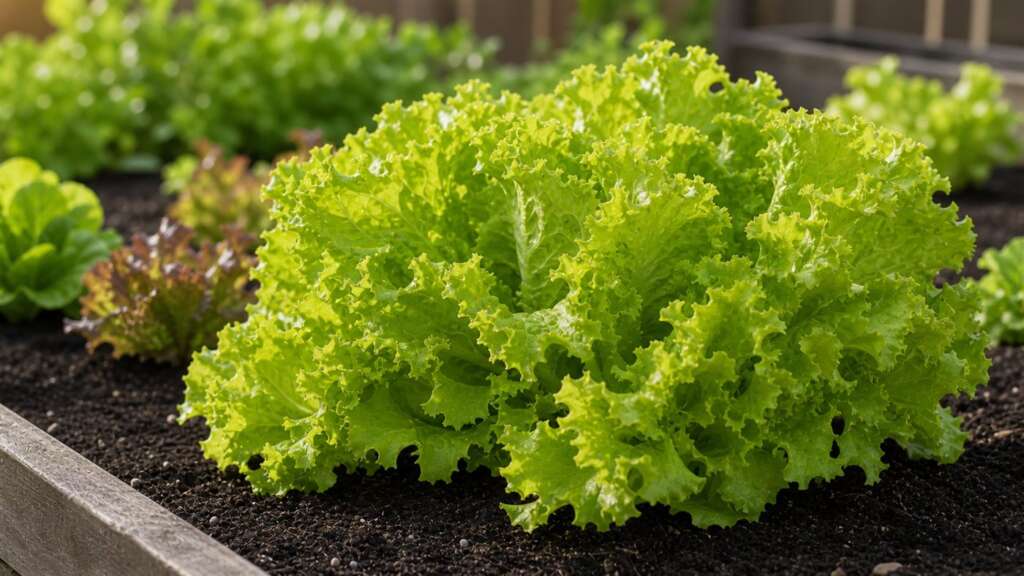
Black Seeded Simpson is a classic American heirloom loose-leaf lettuce grown for its bright, frilly, light-green leaves and reliable cool-season performance. It is one of the easier lettuces for beginners because the seed is quick to sprout, the leaves taste mild and tender, and the plant offers a long cut-and-come-again harvest before summer heat finally pushes it to bolt.
Quick How-to
Sow Black Seeded Simpson in cool weather: early spring as soon as the soil can be worked, and again in late summer or early fall as temperatures begin to drop. Press seed onto a finely raked surface and cover only lightly, about 1/8 inch. Keep the surface evenly moist and cool, ideally around 55 to 70 F, and expect sprouts in about 7 to 14 days. Thin early, water steadily, and start harvesting outer leaves once plants have several true leaves.
Quick Guide
| Fact | Recommendation |
|---|---|
| Best method | Direct sow preferred; indoor start works 3 to 4 weeks before transplanting |
| Sowing depth | Cover lightly, about 1/8 inch; do not bury deeply |
| Germination temperature | About 55 to 70 F is ideal; germination drops sharply above roughly 80 F |
| Days to germination | About 7 to 14 days in cool soil; faster in optimal conditions |
| Light for germination | Lettuce seed often responds to light, so a very thin cover or pressing onto the surface works well |
| Spacing | Thin to about 4 to 6 inches for leaf harvest, or 8 to 12 inches for fuller, looser heads |
| Sun | Full sun in cool weather; light afternoon shade once temperatures climb |
| Water | Even moisture; avoid letting the bed dry out and rewetting heavily |
| Harvest | Baby leaves in about 25 to 30 days; full loose heads in about 40 to 50 days |
| Plant size | Loose-leaf habit, typically reaching about 10 to 12 inches before bolting |
Before You Sow
Lettuce rewards a careful seedbed. Because the seed is small and shallow, the difference between a thin, even stand and a patchy one usually comes down to surface preparation. Rake the bed smooth, break up clods, and remove sticks and stones from the top inch. Water the bed before sowing so the seed lands on already-moist soil rather than washing into low spots after the first watering.
For containers, choose a pot with drainage holes and at least 6 to 8 inches of soil depth. Use a light potting mix rather than heavy garden soil; lettuce roots are shallow but they dislike soggy, compacted media. Label the row or container at sowing time. Young lettuce seedlings look similar to other tender greens, and Black Seeded Simpson in particular can be hard to tell apart from other loose-leaf types until true leaves appear.
Heat is the variable to plan around. Lettuce germination becomes unreliable as soil temperature climbs, and warm soil can shut down germination almost entirely even when air temperatures still feel comfortable. If you are sowing late in the season, sow in the cooler hours, water deeply beforehand, and consider shading the bed lightly until sprouts appear.
Direct Sowing
Direct sowing is quick and convenient for Black Seeded Simpson, but this lettuce also transplants readily when seedlings are kept cool and moved while young. For direct sowing, sprinkle seed thinly along a shallow furrow or scatter it across a wide band. Cover with a fine dusting of soil or seed-starting mix, no more than about 1/8 inch, and press gently for soil contact. A light pressing is better than a deeper cover because lettuce seed is small and germinates best near the surface.
Water with a gentle spray so the seed is not floated out of place. Keep the top half inch evenly moist until emergence. If the surface dries and forms a crust, fragile seedlings may not push through; a thin mulch of fine compost or a piece of shade cloth can help retain moisture during warm or windy weather.
Once seedlings show their first true leaves, begin thinning. For a cut-and-come-again leaf harvest, thin to about 4 to 6 inches apart. If you want larger, looser heads of Black Seeded Simpson, thin to roughly 8 to 12 inches. Crowded plants will still grow, but they tend to stretch, stay small, and bolt earlier when stressed.
Indoor Starting
Indoor starting is a useful option when you want a head start in early spring or a clean stand for transplanting into a tight bed. Sow about 3 to 4 weeks before your intended transplant date. Use individual cells or a shallow tray of seed-starting mix, press seed onto the surface, and cover only lightly.
Keep the mix cool and bright. Warm trays and weak light are the most common cause of leggy lettuce seedlings: warmth pushes fast germination and stretching, while weak light leaves the stems unable to support the leaves. A position under bright overhead light, with cooler ambient temperatures, produces sturdier transplants than a warm windowsill alone.
Harden off seedlings for about 5 to 7 days before transplanting. Start with sheltered shade and short outdoor visits, then gradually increase sun and time outside. Transplant before plants become crowded in their cells; lettuce that has been held too long indoors often stalls or bolts prematurely once it hits warm garden soil.
Transplanting and Spacing
Move seedlings into the garden on a cool, overcast day or in the late afternoon to reduce transplant shock. Keep the root ball intact and moist through the move, set plants at the same depth they grew in their cells, and water in gently. Avoid burying the crown; the growing point should sit at or just above the soil surface.
Space transplants at the final spacing you want for the harvest you have planned. For loose-leaf harvest, 4 to 6 inches gives a quick, productive bed. For fuller loose heads of Black Seeded Simpson, 8 to 12 inches allows each plant to fill out before neighbors compete for light and water.
Soil, Sun, and Water
Lettuce prefers fertile, well-drained soil with steady moisture. Work in compost before planting if the bed is lean, but avoid heavy nitrogen pushes that produce soft, floppy leaves prone to disease. A balanced soil with consistent moisture produces the tender, mild flavor Black Seeded Simpson is known for.
Full sun is best in cool weather. Once temperatures climb into the upper 70s and 80s, light afternoon shade can extend the harvest by reducing heat stress on the leaves. Mulching lightly with straw or fine compost once seedlings are established helps stabilize soil moisture and keeps roots cool.
Water at the soil level when possible, aiming for even moisture rather than alternating dry spells and floods. Lettuce roots are shallow, so the top few inches matter most. A bed that swings between dry and saturated is a common trigger for bitterness, tipburn, and early bolting.
Hydroponic Growing
Black Seeded Simpson is a strong hydroponic candidate because its loose-leaf habit matures quickly and does not need to form a dense head. It is especially easy in NFT channels or deep-water culture and can also finish in a passive reservoir sized for one mature plant. Start one seed in a clean inert plug, keep the plug damp rather than submerged, and move it into the system when roots show at the plug edge and the first true leaves are opening. Keep the crown above the nutrient solution; a constantly wet stem invites rot even when the roots look healthy.
Use a complete hydroponic nutrient made for leafy greens. A practical target is EC 1.2 to 1.8 mS/cm and pH 6.0 to 7.0. Check both at a consistent time, correct nutrient strength before adjusting pH, and replace the solution periodically instead of endlessly adding concentrate. Keep the reservoir shaded, clean, and well oxygenated. Lettuce roots perform best when the solution stays in the 60s to low 70s F; warmer water holds less oxygen and increases the chance of slimy roots and premature bolting.
Space plants about 6 to 8 inches apart for full rosettes, or grow slightly closer when harvesting young outer leaves often. Thin, ruffled foliage traps less moisture than a tight head but still needs room for air to cross the canopy. Pick outer leaves regularly or cut the whole rosette while it is tender; frequent harvest keeps plants compact and makes better use of a small system. Give the canopy steady airflow without aiming a hard fan directly at tender leaves. Under lights, keep the fixture close enough to prevent stretching while preserving a dark period each day. Raise or dim the light if leaf edges bleach or curl upward.
If leaves become long, pale, and floppy, increase light before increasing nutrients. A bitter taste or a rising center signals heat and bolting, so cool the root zone and harvest promptly. Pale, firm roots with a fresh smell are normal. Brown slime, sour odor, or wilting while roots are wet points to warm solution, weak aeration, light entering the reservoir, or poor sanitation. Brown inner leaf edges are often tipburn caused by fast growth and weak calcium movement; improve airflow, moderate the temperature, and verify EC before adding more fertilizer.
Top Mistakes
- Sowing too deeply. Lettuce seed is small and needs to be near the surface to sprout reliably. Cover with no more than 1/8 inch of soil, or simply press into the surface.
- Sowing into warm soil. Germination falls off sharply when soil warms past roughly 75 to 80 F. Sow in the cool shoulders of the season, or shade and pre-cool the bed if sowing in summer.
- Letting the surface dry and crust. Seedlings can fail to emerge through a hard crust even when there is moisture below. Keep the top layer evenly moist until plants are visible.
- Leaving plants crowded. Thin early. Crowded lettuce stays small, bolts faster under stress, and develops weaker airflow at the base of the plant.
- Waiting too long to harvest. Black Seeded Simpson is most tender and mild when harvested young. Leaves left on past their prime become coarse and can turn bitter as the plant prepares to bolt.
Troubleshooting by Symptom
| Symptom | Likely causes | What to do next |
|---|---|---|
| No sprouts after 10 to 14 days | Seed buried too deep, soil warmed above the lettuce germination window, surface dried, or seedbed crusted | Resow shallowly into cool, freshly raked soil; keep the surface evenly moist; consider light shade during warm spells |
| Patchy germination | Uneven watering, seed washed into low spots, cloddy soil, or inconsistent depth | Smooth the bed before sowing, water gently from above, and sow at an even, light cover |
| Seedlings tall, pale, and floppy | Weak light, warm indoor conditions, or crowding | Move under stronger overhead light, lower ambient temperature, and thin promptly |
| Seedlings collapse at the soil line | Overly wet mix, poor airflow, or damping-off conditions | Improve airflow, water less often and from below if possible, and use fresh seed-starting mix for indoor restarts |
| Leaves taste bitter | Heat stress, drought, age of the planting, or approaching bolt | Harvest in the morning when leaves are cool, water more consistently, and start a fresh succession |
| Plants bolting early | Heat, lengthening days, or stress from transplant shock or dry soil | Sow earlier or later in the cool season, mulch to stabilize moisture, and provide afternoon shade |
| Brown crisp edges on leaves (tipburn) | Rapid growth combined with irregular moisture | Even out watering, mulch, and avoid heavy nitrogen during heat |
| Heads stay small or loose | Crowding, inconsistent moisture, or low fertility | Thin to final spacing, water evenly, and side-dress lightly with compost |
Germination Diagnostics
If Black Seeded Simpson is slow to sprout, work through the variables one at a time before assuming a sowing was unsuccessful. Start with depth. Seed buried more than about 1/4 inch may have enough moisture but not enough energy reserve to break through, especially in heavier soils. If you suspect this, resow shallowly into a freshly prepared section of the bed rather than digging up the original sowing.
Next, check temperature. Lettuce germinates best in cool to mild conditions. A soil thermometer is helpful: readings consistently above the upper 70s F can suppress germination even when the air feels pleasant. A simple fix during warm weather is to sow in late afternoon, water deeply, and shade the bed with light cloth or a board until sprouts appear, then remove the cover.
Moisture is the next checkpoint. The seed zone should feel evenly damp, like a wrung-out sponge, not shiny wet and not dusty dry. Brief but frequent gentle waterings work better for surface-sown lettuce than one heavy soak per day.
Finally, look at light and airflow after emergence. Seedlings that sprout well but stretch, pale, or topple usually need stronger overhead light, more airflow, less crowding, or a less saturated mix. Adjusting these conditions early often saves a sowing that looks marginal at the cotyledon stage.
Timing and Climate Notes
Treat Black Seeded Simpson as a cool-window crop. Spring and fall sowings are more forgiving than summer sowings in most regions. In mild-winter climates, fall and winter sowings can produce excellent harvests through the cool months. In hot summer regions, the practical approach is to sow small successions every 10 to 14 days during the cool shoulders of the season, then pause through the hottest weeks and resume as temperatures drop in late summer.
If you must sow during marginal weather, provide a temporary shade structure, water more often, and harvest more frequently to keep leaves young. Black Seeded Simpson is considered slow to bolt for a loose-leaf lettuce, but no lettuce is fully heatproof.
Container and Small-Space Notes
Black Seeded Simpson adapts well to containers, raised beds, and balcony gardens. Choose a container at least 6 to 8 inches deep with drainage holes, and use a light potting mix. A wide, shallow container often outperforms a tall, narrow one for leaf lettuce because it gives more surface area for plants and shallow roots.
Container plants depend on you for consistent moisture. Small pots dry out quickly in sun and wind, and a single dry-out can stress lettuce enough to change the flavor of the next harvest. In hot weather, move containers into morning sun and afternoon shade, or group them together so they shade one another’s soil.
Harvest and Kitchen Use
There are two natural ways to harvest Black Seeded Simpson, and both can be used on the same planting. For a continuous baby-leaf harvest, snip outer leaves above the growing point once they are 3 to 4 inches long. The plant will continue to produce new leaves from the center as long as conditions stay cool and moist.
For a fuller harvest, let plants size up into loose heads and cut the whole plant at the base. The leaves are mild and tender and hold their texture well in salads, sandwiches, and quick wraps. Harvest in the morning when leaves are cool and crisp, rinse, dry thoroughly, and store loosely wrapped in the refrigerator for the best shelf life.
Seed Saving
Lettuce is largely self-pollinating, though low levels of crossing can happen between varieties grown close together. To save seed, allow a few healthy, well-shaped plants to bolt, flower, and dry naturally. The flowering stalks become tall and branched, and seed ripens unevenly over a couple of weeks.
Collect seed heads as they dry, rub them gently to release the seed, and winnow away the fluff and chaff. Finish drying indoors for several days before storage, then label with the variety name and the year. If you are growing multiple lettuce varieties for seed, separate them by distance or stagger their flowering to keep types true.
Storing Leftover Seed
Keep unused Black Seeded Simpson Lettuce seed in its labeled packet inside a sealed container in a cool, dry, dark indoor location. Avoid garages, sheds, greenhouses, and sunny windowsills, where temperature and humidity swing sharply. Label home-saved seed with the variety and harvest year before storing it.
FAQ
Can I grow Black Seeded Simpson in summer?
It is possible in mild summer climates or with afternoon shade, but germination and flavor both suffer in heat. In most regions, focus on spring and fall sowings and use small succession plantings rather than one large sowing.
Why did my lettuce sprout fine but then turn bitter?
Bitterness in lettuce usually comes from heat, drought stress, or age. Harvest more frequently, water consistently, mulch to keep roots cool, and start a fresh succession before the current planting peaks.
Should I soak lettuce seed before planting?
Soaking is generally not needed and can make the small seed harder to handle. Shallow sowing onto a moist, well-prepared bed produces good stands without pretreatment.
Is Black Seeded Simpson better direct sown or transplanted?
Both work. Direct sowing is the simplest method and matches the plant’s preference for undisturbed roots. Transplants are useful for getting an early start or filling specific spots in a tightly planned bed.
How many times can I harvest from one planting?
With careful cut-and-come-again harvesting, a single planting of Black Seeded Simpson can yield several rounds of leaves over a few weeks before heat or flowering ends the cycle.