
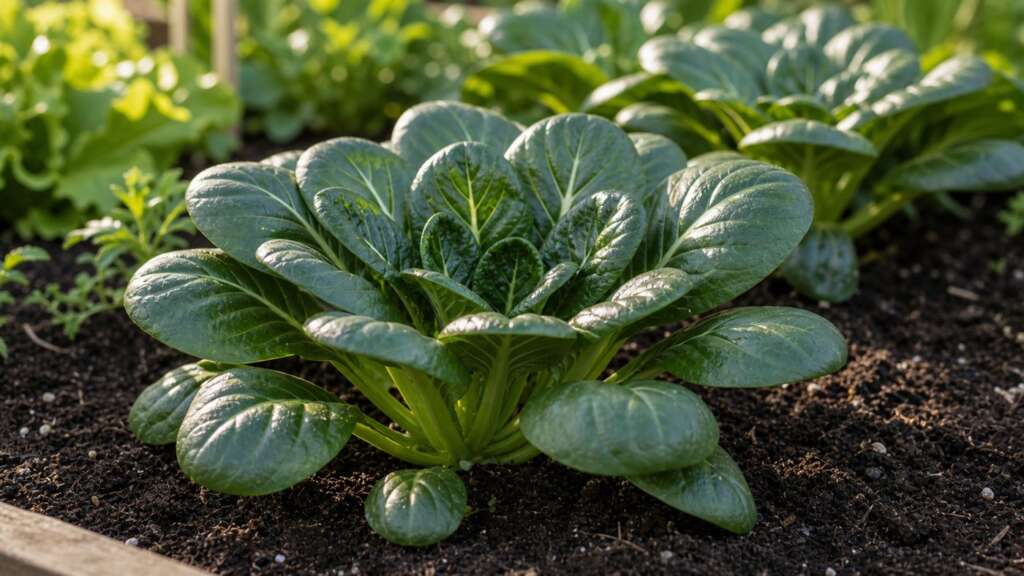
Black Knight Tatsoi is a cool-season Asian green grown for its dark, spoon-shaped leaves that form a flat, low rosette pressed close to the soil. It is one of the fastest, most cold-tolerant brassicas a home gardener can grow from seed, with a mild mustard flavor that turns sweeter after a light frost. Sow it shallow in cool weather, keep the soil evenly moist, and harvest before warm days push it toward bolting.
Quick How-to
Sow Black Knight Tatsoi directly into prepared garden soil about 1/4 inch deep in early spring as soon as the soil can be worked, or again in late summer to early fall for a fall and early winter harvest. Keep the seedbed evenly moist and expect germination in about 4 to 10 days when soil temperatures sit in the 50 to 70 F range. Thin seedlings early, water steadily, and begin harvesting baby leaves in roughly 21 days or full rosettes in about 40 to 45 days. Cool, bright conditions produce the most compact rosettes.
Quick Guide
| Fact | Recommendation |
|---|---|
| Best method | Direct sow preferred; indoor starting is optional for early or late plantings |
| Sowing depth | About 1/4 inch, covered lightly with fine soil |
| Germination temperature | Best around 50 to 70 F; will sprout in cooler soil than most brassicas |
| Days to germination | About 4 to 10 days, faster in warmer soil |
| Light for germination | Cover lightly; provide strong light immediately after emergence |
| Spacing | About 2 to 4 inches for baby greens, 6 to 10 inches for full rosettes |
| Sun | Full sun in cool weather; light afternoon shade as days warm |
| Water | Even moisture; never let plants dry out and rebound |
| Harvest | Baby leaves in about 21 days; full rosettes in about 40 to 45 days |
| Plant size | Compact rosette, often 6 to 10 inches across and only a few inches tall |
| Cold tolerance | Hardy through light to moderate frosts; flavor often sweetens with cold |
Before You Sow
Tatsoi rewards a small amount of bed preparation. Loosen the top few inches of soil, rake out clods, and incorporate finished compost if your soil is lean. The plant has a shallow, branching root system, so it does not need deep cultivation, but it does want steady moisture and decent fertility to push tender leaves quickly.
Choose a spot that gets full sun in spring and fall and partial afternoon shade if you are sowing close to summer. Because the rosette grows flat against the ground, the lower leaves can pick up soil splash during heavy rain. A light mulch of straw or fine leaf litter, kept slightly back from the crown, helps keep leaves cleaner and the root zone cooler.
This is a small-seeded brassica, so water the bed gently before sowing rather than after. Wet soil holds tiny seed in place and keeps you from washing it deeper than you intended.
Direct Sowing
Direct sowing is the most reliable method for tatsoi because the seedlings transplant well but rarely need to. Make a shallow furrow about 1/4 inch deep, drop seed every inch or so, and cover lightly with fine soil or sifted compost. Press the surface gently for good seed-to-soil contact and water with a gentle spray.
For baby greens, you can scatter seed thinly across a wide row or block and skip the careful spacing. Plan to harvest the whole patch young, before plants crowd. For full rosettes, sow in single rows about 12 to 18 inches apart and plan to thin in two passes: first to a few inches, then to the final 6 to 10 inches once you can tell which seedlings are strongest. The thinnings are an early salad harvest.
Succession sow every 10 to 14 days during the cool window. Tatsoi matures so quickly that one large planting can overwhelm the kitchen and then disappear all at once.
Indoor Starting
Indoor starting is optional. It is most useful when you want a head start for very early spring or want to set out clean transplants in fall while the previous summer crop is still occupying the bed. Sow 3 to 4 weeks before transplanting in individual cells, cover lightly, and keep the mix evenly moist.
Move seedlings under strong overhead light as soon as they sprout. Tatsoi seedlings stretch quickly under weak windowsill light, especially if the room is warm. Keep them cool and bright, with airflow from a small fan if possible, and pot up only if roots fill the cell before transplant day.
Transplanting and Spacing
Harden off seedlings over 5 to 7 days before setting them out. Start with a sheltered, partly shaded spot for a couple of hours and gradually increase sun and time outside. Transplant in the evening or on an overcast day, water in deeply, and protect with a light row cover if flea beetles are active in your area.
For full rosettes, space plants 6 to 10 inches apart in rows about 12 to 18 inches apart. Closer spacing gives smaller, more upright plants; wider spacing lets each rosette spread into its classic flat, dinner-plate shape. Tatsoi does not need staking, mounding, or pruning.
Soil, Sun, and Water
Tatsoi prefers fertile, well-drained soil with a near-neutral pH. Work in compost before planting if your soil is sandy or low in organic matter. Avoid heavy doses of high-nitrogen fertilizer after plants are established; lush, soft growth is more attractive to pests and more prone to bolting under stress.
Even moisture is the single most important growing factor. Tatsoi leaves are thin and water-rich, so the plant cannot recover gracefully from a hard wilt. Aim to water before the soil dries out, especially during warm or windy weather. A finger pushed an inch into the soil should feel cool and damp, not dusty and not muddy.
Full sun produces the most flavorful, deeply colored leaves in cool weather. As temperatures climb past about 75 F, plants benefit from light afternoon shade, which slows bolting and keeps texture tender.
Hydroponic Growing
Black Knight Tatsoi is a natural hydroponic crop because its compact spoon-shaped leaves mature quickly. NFT and deep-water culture both work, but the low rosette must sit high enough that the crown and lower petioles do not remain wet. Start one seed per plug and transplant when roots emerge and the first true leaves have opened.
Use a complete leafy-green nutrient around EC 1.2 to 1.8 mS/cm and pH 5.8 to 6.2. Keep the reservoir shaded, oxygenated, and in a cool to moderate range. Tatsoi tolerates cool air very well; excessive warmth creates an open rosette, sharper flavor, and early flowering.
Allow 6 to 8 inches for full rosettes or plant closer for baby leaves harvested young. Direct light from above keeps the plant flat and symmetrical. Provide gentle airflow across the low canopy, where condensation can otherwise sit between petioles.
Rot at the center almost always means the crown is too low, foliage is staying wet, or air is stagnant. A stretched upright rosette needs stronger overhead light. Bolting cannot be reversed; harvest immediately, cool the next crop, and move new plugs through the system without rootbound delays.
Top Mistakes
- Sowing into hot weather. Tatsoi is a cool-season crop. Summer sowings often germinate unevenly, bolt early, or produce small, bitter rosettes. Aim for early spring and late summer windows.
- Letting the seedbed dry out. The top half inch of soil can dry quickly in spring wind and sun. A crusted surface stops tiny seedlings from emerging cleanly. Check moisture daily until you see sprouts.
- Skipping the thinning step. Tatsoi seedlings look harmless and bushy when crowded, then suddenly compete for light and nutrients. Thin early and eat the thinnings; do not wait until plants are obviously stunted.
- Ignoring flea beetles. These tiny jumping beetles can riddle tatsoi leaves with pinholes within a few days of emergence. A floating row cover laid down at sowing prevents most of the damage and is far easier than treating an outbreak later.
- Harvesting too late. Once a center flower stalk starts to elongate, leaf flavor turns sharp and bitter quickly. Watch the plants daily once warm weather arrives and harvest at the first sign of stretching.
Troubleshooting by Symptom
| Symptom | Likely causes | What to do next |
|---|---|---|
| No sprouts after 10 days | Seed buried too deep, soil crusted, surface dried, or soil too cold | Gently check seed depth, smooth and re-water the surface, and resow shallowly if needed |
| Pinholes in young leaves | Flea beetles | Cover seedbed with floating row cover, secure the edges, and remove only to thin or harvest |
| Ragged holes and missing leaves | Cabbage worms, loopers, slugs, or snails | Inspect the underside of leaves, handpick caterpillars in the morning, and use bait or barriers for slugs |
| Seedlings tall, pale, and floppy | Weak light, too much warmth indoors, or crowded trays | Move under stronger overhead light, lower indoor temperature, and thin to one plant per cell |
| Seedlings collapse at the soil line | Overly wet mix, poor airflow, or damping-off conditions | Water from below, add airflow with a small fan, and use fresh seed-starting mix for indoor restarts |
| Plants bolt before forming a rosette | Heat, long daylight, drought, or transplant stress | Shift to cool-window sowings, water consistently, and provide afternoon shade in warm weather |
| Bitter, sharp flavor | Heat stress, drought, or overmature plants | Harvest earlier in the morning, water evenly, and pick whole rosettes before stalks elongate |
| Yellowing lower leaves | Nutrient depletion, cold-shock after transplant, or waterlogged soil | Side-dress with compost or balanced fertilizer, improve drainage, and protect from cold snaps |
Timing and Climate Notes
Tatsoi is one of the few greens that genuinely improves with cold. In spring, sow as soon as the soil can be worked and continue every couple of weeks until daytime highs settle above about 70 F. Stop sowing in summer in most climates; the plant will bolt before it forms a usable rosette.
Resume sowing in late summer, usually 6 to 10 weeks before your average first fall frost. Fall plantings are often the best of the year. Cool nights, shorter days, and the occasional light frost concentrate the sugars in the leaves and produce dense, glossy rosettes. In milder climates, fall-sown tatsoi can hold in the garden well into winter under a low tunnel or thick mulch.
Container and Small-Space Notes
Tatsoi is well suited to containers, raised beds, and shallow planters because its root system stays in the top several inches of soil. Use a pot at least 6 inches deep with drainage holes, fill with a quality potting mix, and water more frequently than you would in the ground. A wide, shallow bowl planted with three or four rosettes makes an attractive, productive patio crop.
Window boxes and balcony rails work well in spring and fall, especially in apartments where afternoon shade naturally limits heat stress. Watch for splash from rain or watering, since contained tatsoi can pick up soil on its lowest leaves.
Harvest and Kitchen Use
There are two natural harvest stages. For baby leaves, snip individual outer leaves once the rosette has at least 6 to 8 leaves, leaving the center to keep growing. A single plant can give several cut-and-come-again harvests if temperatures stay cool. For full rosettes, cut the entire plant at the soil line when it reaches the size you want, usually 6 to 10 inches across.
Tatsoi is excellent raw in salads, wilted into soups and noodle bowls, or stir-fried briefly with garlic and a little oil. The leaves cook in seconds, so add them at the end of a recipe rather than the beginning. Cold, fall-harvested tatsoi is noticeably sweeter than spring-harvested leaves.
Seed Saving
Tatsoi is a biennial Brassica rapa, the same species as turnip, bok choy, napa cabbage, and many Asian greens. It will cross readily with other B. rapa crops within roughly half a mile, so saving true-to-type seed at home is realistic only if you grow it in isolation or hand-pollinate. Plants must also overwinter or experience a cold period before they will flower the following spring.
For most home gardeners, it is more practical to grow Black Knight Tatsoi for harvest and let any volunteer flower stalks feed pollinators rather than manage a controlled seed crop.
Storing Leftover Seed
Keep unused Black Knight Tatsoi seed in its labeled packet inside a sealed container in a cool, dry, dark indoor location. Avoid garages, sheds, greenhouses, and sunny windowsills, where temperature and humidity swing sharply. Label home-saved seed with the variety and harvest year before storing it.
FAQ
Is tatsoi the same as bok choy?
They are close relatives within the same species but differ in habit. Bok choy grows upright with thick white or green stems, while tatsoi forms a flat rosette of small, spoon-shaped leaves. Growing requirements are similar.
Can I grow Black Knight Tatsoi in winter?
In mild climates, yes. Tatsoi tolerates light to moderate frost and often grows slowly through cool winter weather, especially under a low tunnel or row cover. In cold-winter regions, treat it as a fall crop and harvest before the ground freezes hard.
Should I soak the seed before planting?
No. Tatsoi seed is small and sprouts quickly on its own. Shallow sowing and steady surface moisture matter more than soaking.
How do I keep tatsoi from bolting?
Sow in cool windows, water consistently, provide afternoon shade as temperatures rise, and harvest at the first sign of a center stalk elongating. Stress of any kind, especially heat plus drought, is the main trigger.
Can I harvest leaves more than once?
Yes. Take outer leaves while leaving the growing center intact, and the plant will continue producing for several weeks in cool weather. For the cleanest second flush, avoid cutting more than about a third of the leaves at one time.