
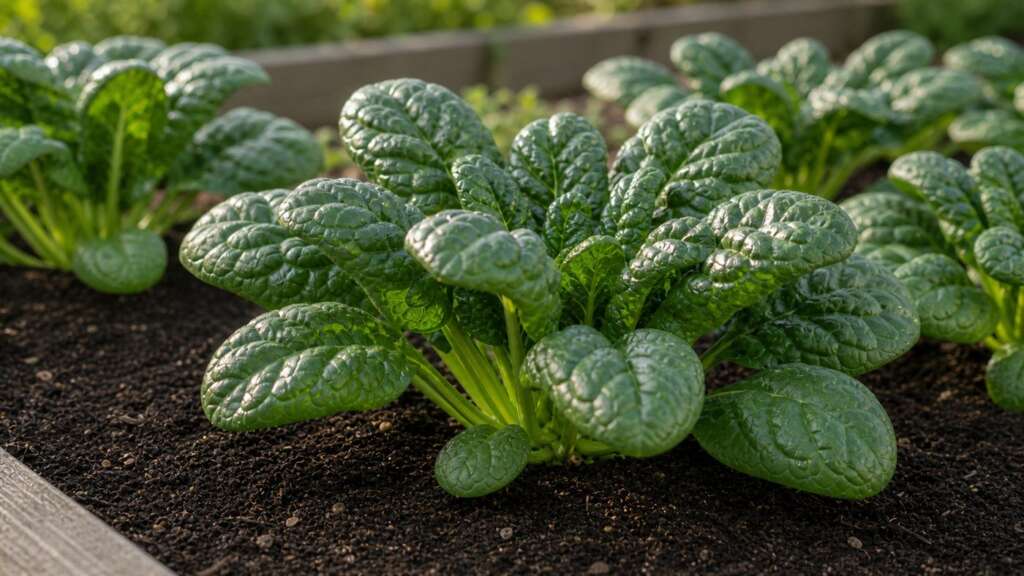
Bloomsdale Spinach is a heirloom savoy-leaf spinach grown for its dark green, deeply crinkled leaves and rich, full flavor. Like other spinach, it is a true cool-season crop that performs best when direct sown into cool soil in early spring or late summer, kept evenly moist, and harvested before heat triggers bolting.
Quick How-to
Direct sow Bloomsdale Spinach about 1/2 inch deep as soon as the soil can be worked in spring, or again in late summer for a fall crop. Aim for soil that has cooled below about 70 F; spinach germinates poorly when soil is hot. Keep the seedbed evenly moist and expect emergence in about 7 to 14 days in cool conditions. Thin promptly, water steadily, and harvest before days lengthen and warm into bolting weather.
Quick Guide
| Fact | Recommendation |
|---|---|
| Best method | Direct sow; spinach has a taproot and resents transplanting |
| Sowing depth | About 1/2 inch |
| Germination temperature | About 45 to 70 F; cool soil is far more reliable than warm soil |
| Days to germination | About 7 to 14 days in cool soil |
| Light for germination | Cover seed; spinach does not need light to sprout |
| Spacing | Thin to about 3 to 6 inches in the row |
| Sun | Full sun in cool weather; light afternoon shade in heat |
| Water | Even, consistent moisture for tender, full leaves |
| Harvest | Baby leaves in about 25 to 35 days; full-size leaves around 45 to 50 days |
| Plant size | Semi-upright savoy rosette, commonly 8 to 12 inches tall |
Before You Sow
Choose a bed in full sun with loose, well-drained soil that holds moisture without staying soggy. Spinach is a fast, leafy crop that responds to fertility, so working in a little finished compost before sowing pays off. Avoid beds where the surface tends to crust hard after watering; spinach seedlings can be slowed or stopped by a thick crust.
Plan your sowing window around soil temperature rather than the calendar. In spring, sow as soon as the bed is workable and the top inch of soil is consistently below about 70 F. In late summer, wait for the worst heat to break and sow for a fall crop that finishes in cool, shortening days. Fall-sown Bloomsdale often produces the best flavor because cool nights concentrate sugars in the leaves.
If you struggle with poor spring stands, pre-moisten the bed the day before sowing, then sow into evenly damp soil rather than dust. Mark the row clearly; spinach seedlings are easy to confuse with weeds at the cotyledon stage.
Direct Sowing
Direct sowing is the preferred method for Bloomsdale. Open a shallow furrow about 1/2 inch deep, drop seed every inch or so along the row, cover lightly with fine soil, and firm gently for soil contact. Water in with a gentle spray so the row is not washed out. If you are sowing wide rows or a small patch, scatter seed thinly and rake in lightly to the same depth.
Keep the surface evenly moist until emergence. In dry spring winds or warm late-summer weather, you may need to water lightly once or twice a day to keep the top half inch from drying. A thin layer of seed-starting mix or fine compost over the row helps prevent crusting and improves emergence in heavier soils.
Once seedlings show their first true leaves, thin in stages. Pull crowded seedlings to leave plants roughly 3 inches apart at first, then thin again to about 6 inches when leaves begin to touch. Eat the thinnings as baby greens.
Indoor Starting
Spinach is not the easiest crop to start indoors because its taproot dislikes disturbance, but a short indoor start can buy a few weeks in cold, slow springs. Sow 3 to 4 weeks before transplanting in deep cells or soil blocks so the root system stays intact at planting time. Keep the mix evenly moist and the trays in a cool, bright spot; warm windowsills push leggy seedlings that struggle outside.
Harden off over about a week and transplant before plants become rootbound. Set them at the same depth they grew in the cell, water in, and shelter from harsh sun for a day or two. Expect a brief check in growth as the roots settle.
For most home gardens, direct sowing into cool soil gives a sturdier crop with less effort.
Soil, Sun, and Water
Spinach likes fertile, friable soil with a near-neutral pH and steady moisture. Heavy clay that bakes hard and very acidic soils both tend to disappoint. If your soil is on the acidic side, a light surface dressing of finished compost helps, and longer-term amendment may be worth considering for repeat plantings.
Give full sun in spring and fall. In a late spring planting that may run into early heat, a spot with afternoon shade or shade from taller crops can extend the harvest by several days before bolting. Water deeply and evenly; spinach grown on dry-wet swings tends toward smaller, tougher, more bitter leaves. A light mulch once seedlings are up helps hold moisture and keeps soil cooler.
A modest side-dressing of a balanced fertilizer or compost partway through the crop supports tender, full leaves, especially in lighter soils.
Hydroponic Growing
Bloomsdale Spinach can be grown hydroponically, but it is less forgiving of warm, poorly oxygenated water than lettuce. Deep-water culture, nutrient-film technique, and flood-and-drain systems can work when the root zone stays cool and oxygen-rich. Germinate seed in a clean inert plug under cool conditions, keeping the plug damp but not saturated. Transfer after roots reach the outside of the plug and true leaves have begun to form, with the crown above the nutrient solution.
Use a complete hydroponic nutrient formulated for leafy greens. A practical spinach range is EC 1.8 to 2.3 mS/cm and pH 6.0 to 7.0. Test both at the same time each day and correct EC before pH. Replace water lost to plant use, and refresh the full nutrient solution periodically rather than endlessly topping up concentrate. Bloomsdale’s savoyed leaves can hide spray and debris, so keep the solution and growing area clean and avoid splashing nutrient water onto harvestable leaves.
Keep the reservoir shaded and well aerated. Aim for solution temperatures in the 60s to low 70s F, and avoid sustained warmth. Warm solution carries less dissolved oxygen, increases root-disease risk, and combines with long days to push spinach toward bolting. Healthy roots should be pale and firm. Brown slime, a sour odor, stalled growth, or wilting while roots are wet signal a root-zone problem rather than a need for more irrigation.
Provide strong, even light without overheating the canopy. Space plants so the crinkled leaves dry quickly and air can move through them. If plants are pale, first verify pH and EC instead of immediately increasing fertilizer; an out-of-range pH can make nutrients unavailable even when the reservoir contains enough. If plants stretch or make thin leaves, strengthen the light. If they form a central flower stalk, lower heat if possible and harvest promptly because bolting cannot be reversed.
Top Mistakes
- Sowing into warm soil: This is the single most common reason spinach germinates poorly. Wait for cool soil in spring, or sow in late summer for a fall crop, rather than fighting summer heat.
- Letting the seedbed dry between waterings: Spinach seed will start to imbibe water and then stall if the surface dries. Light, frequent watering until emergence is more reliable than one deep soak.
- Leaving seedlings crowded: Crowded spinach competes for light and water, produces smaller leaves, and bolts sooner. Thin in stages and eat the thinnings.
- Trying to grow through midsummer heat: As days lengthen and temperatures climb, spinach bolts. Plan the season around cool windows instead of pushing through summer.
- Over-watering established plants: Soil that stays soggy invites yellowing and root issues. Aim for steady moisture, not constant saturation.
Troubleshooting by Symptom
| Symptom | Likely causes | What to do next |
|---|---|---|
| No sprouts after 14 days | Soil too warm, seed buried too deep, surface dried out, or soil crusted | Resow shallowly into cool, evenly moist soil; cover with fine compost to prevent crusting |
| Patchy, uneven stand | Inconsistent moisture, hot spots in the bed, or seed washed during watering | Smooth the bed, water gently, and consider a thin compost mulch over the row |
| Pale, yellow seedlings | Low fertility, soggy soil, or cool weather slowing nutrient uptake | Side-dress lightly with compost or balanced fertilizer once soil warms; ease off water if soil is saturated |
| Leggy, stretched seedlings indoors | Weak light or too much warmth | Move under stronger overhead light and keep the growing area cooler |
| Plants send up a flower stalk | Warm temperatures, long days, drought stress, or crowding | Harvest the whole plant promptly; flavor declines fast once bolting begins. Plan the next sowing for cooler weather |
| Leaves are bitter or tough | Heat, drought, or harvest delayed past prime | Pick earlier in the day, water more evenly, and time future sowings for cool windows |
| Pale stippling or thin trails on leaves | Possible leafminer activity, especially in spring | Remove affected leaves, cover new sowings with floating row cover at planting, and rotate the planting area |
| Yellow leaves with dark spots | Possible downy mildew or related leaf disease, often in cool wet weather | Improve airflow by thinning, water at the soil level rather than overhead, and look for resistant varieties for future plantings |
Harvest
Bloomsdale can be harvested two ways. For baby spinach, snip outer leaves when they are 3 to 4 inches long, leaving the central crown intact so the plant keeps producing. For full-size leaves, wait until the plant has built a substantial rosette, then either pick outer leaves or cut the whole plant about an inch above the crown for one large harvest.
Harvest in the cool of the morning when leaves are crisp and full of water. Rinse, spin dry, and refrigerate promptly in a breathable bag or container; spinach holds best when it goes from garden to cool storage quickly.
Once a plant starts to send up a central flower stalk, leaves turn bitter within days. At the first sign of bolting, pull the whole plant for the kitchen rather than trying to keep picking.
Seed Saving
Saving Bloomsdale seed is possible but takes planning. Spinach is wind-pollinated and most plants are either male or female, so cross-pollination between varieties is easy at distance. To keep a strain reasonably true, grow only one spinach variety at a time, or separate varieties by a long distance. Let healthy plants bolt, flower, and form seed; female plants will carry the small, often spiny seed clusters along the upper stems.
Bloomsdale is open-pollinated, but spinach is wind-pollinated and crosses readily with other Spinacia oleracea varieties flowering nearby. Save seed from a healthy group of plants isolated from other flowering spinach, not from a single plant. Allow seed to dry on the female plants as long as weather permits, then cut the stalks, finish drying under cover, strip the seed by hand, and label it with the variety and year.
Storing Leftover Seed
Keep unused Bloomsdale Spinach seed in its labeled packet inside a sealed container in a cool, dry, dark indoor location. Avoid garages, sheds, greenhouses, and sunny windowsills, where temperature and humidity swing sharply. Label home-saved seed with the variety and harvest year before storing it.
FAQ
Why did my Bloomsdale Spinach not germinate?
The most common reasons are soil that was too warm, a seedbed that dried out between waterings, or seed buried too deeply. Spinach germinates best in cool, evenly moist soil at roughly 1/2 inch deep.
Can I plant Bloomsdale Spinach in the fall?
Yes, and fall is often the best season for it. Sow once the worst summer heat has passed and let plants mature into cool, shortening days. Cool nights tend to give fuller, sweeter leaves.
Can I harvest baby spinach from Bloomsdale?
Yes. Cut or pinch outer leaves when they are a few inches long, leaving the central growing point intact, and the plant will keep producing for several rounds before bolting.
Why did my spinach bolt so quickly?
Long days, warm temperatures, and drought stress all push spinach toward flowering. Crowded plants also bolt sooner. Time sowings for cool weather, thin promptly, and keep moisture steady.
Does Bloomsdale Spinach grow well in containers?
Yes, in a wide pot with drainage, good potting mix, and steady watering. Containers warm and dry faster than garden soil, so plan to water more often and move pots to afternoon shade as the season warms.
Should I soak spinach seed before planting?
It is usually not necessary. Sowing into cool, evenly moist soil at the correct depth gives reliable results without soaking. Some gardeners pre-soak when sowing into warmer late-summer soil; if you do, sow immediately and keep the bed consistently damp.