
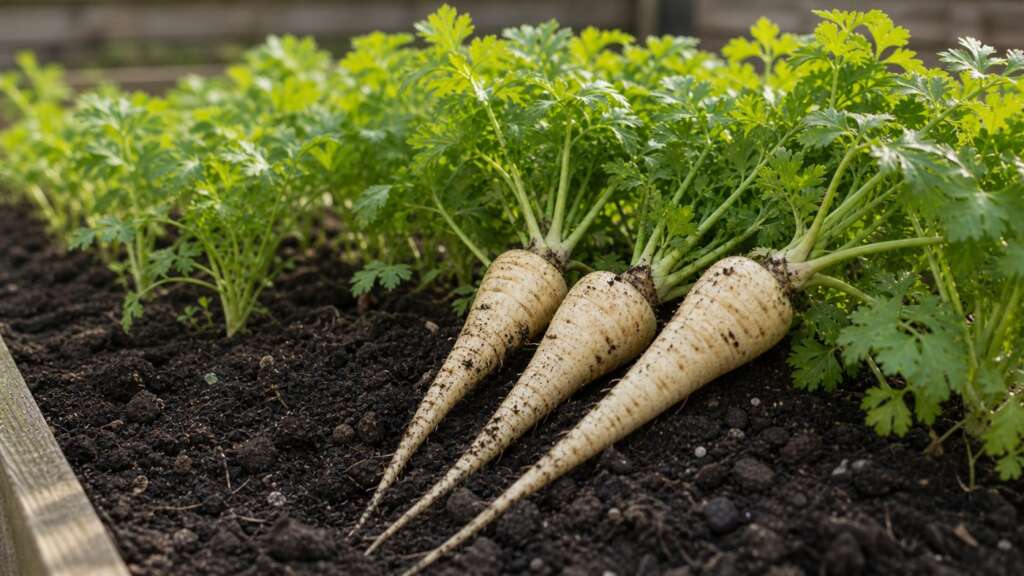
All American Parsnip is a cool-season root vegetable grown for long, cream-colored taproots with a sweet, nutty flavor that deepens after frost. Parsnips reward patience more than almost any other home-garden crop: germination is slow, the season is long, and the eating quality is at its best after cold weather has done its work. With loose soil, an evenly prepared seedbed, and steady surface moisture during germination, parsnips are well within reach for a beginner who is willing to wait.
Quick How-to
Direct sow All American Parsnip in spring as soon as the soil can be worked, or in mid- to late summer for a fall and winter harvest in milder regions. Work the bed deeply, sow about 1/4 to 1/2 inch deep into stone-free soil, and keep the surface evenly moist for the full germination window. Expect emergence in about 14 to 28 days, sometimes longer in cool soil. Thin early to give each root enough room, water consistently through the season, and plan to harvest after the first hard frosts for the sweetest flavor.
Quick Guide
| Fact | Recommendation |
|---|---|
| Best method | Direct sow only; parsnips resent transplanting |
| Sowing depth | About 1/4 to 1/2 inch in loose soil |
| Germination temperature | About 50 to 70 F is a reliable range |
| Days to germination | Often 14 to 28 days; sometimes longer |
| Light for germination | Cover lightly; do not leave seed exposed |
| Spacing | Thin to about 3 to 4 inches apart in rows 12 to 18 inches apart |
| Sun | Full sun; light afternoon shade is acceptable in hot summers |
| Water | Keep the seedbed evenly moist through the long germination window |
| Harvest timing | About 100 to 130 days from sowing; flavor improves after frost |
| Plant size | Tops grow 1 to 2 feet tall; root length depends on soil depth and variety |
Before You Sow
Parsnips do most of their work underground, so the bed matters more than almost anything else you can do later. Dig or fork the soil 12 inches deep where possible and break up clods, rocks, and compacted layers. A root that hits a stone at 4 inches will fork around it; a root that hits soft, even soil will run straight and long.
Avoid adding fresh manure or heavy nitrogen fertilizer to the bed before planting. Rich, raw amendments can encourage forking, hairy side roots, and lush leafy tops at the expense of clean root growth. A well-finished compost worked in the previous season, or a balanced base of organic matter, is plenty. If your soil is heavy clay or full of stones, consider building a raised bed or a deep container where you can control the texture.
Parsnip germination is naturally slow, so prepare for several weeks of moisture management before you sow. Level the furrow, break up clods, and have burlap, row cover, or a fine mulch ready to slow surface evaporation; remove any cover as soon as seedlings begin to appear.
A small safety note worth knowing before you start: parsnip foliage contains compounds that can cause a sunburn-like skin reaction (phytophotodermatitis) on some people, especially when leaves are wet and the sun is strong. It is not common in casual gardening, but long-sleeves and gloves are sensible when weeding or harvesting on a sunny day.
Direct Sowing
Direct sowing is the only reliable method for parsnips because the long taproot does not recover from being disturbed. Rake the prepared bed smooth, water it gently the day before sowing if it is dry, and mark out shallow furrows about 1/4 to 1/2 inch deep.
Sow seed thinly along the row, cover lightly with fine soil, seed-starting mix, or sifted compost, and firm gently for good soil contact. Water with a soft spray so the seed is not washed out of place. Many gardeners scatter a few quick radish seeds along the same row as living markers; the radishes sprout in days, hold the row visible while the parsnips take their time, and are pulled out before they crowd the slower crop.
The single most important task after sowing is keeping the surface evenly moist for the entire two-to-four-week germination window. Parsnip seed will not tolerate a row that dries out, crusts, and cracks. In warm or windy weather, that can mean a light watering twice a day. Some gardeners lay a board, damp burlap, or a strip of row cover over the seeded row to slow evaporation, and lift it the moment any green shows.
Expect uneven, drawn-out emergence. Parsnips do not pop up like radishes; they trickle out over a couple of weeks. Resist the urge to dig and check after a week of no sprouts.
Why Indoor Starting Is Not Recommended
Indoor starting is not recommended for parsnips. The taproot grows quickly and straight down, and any disturbance during transplanting tends to produce forked, twisted, or stunted roots. Even careful soil-block starting, which works for many other crops, usually gives mediocre parsnip results compared to direct sowing into well-prepared soil. Save the seed-starting space for tomatoes, peppers, and other crops that benefit from a head start, and sow parsnips where you intend to harvest them.
Thinning and Spacing
Thinning is not optional with parsnips. Crowded seedlings produce small, twisted, or interlocked roots no matter how good the soil is. Begin thinning when seedlings have one or two true leaves and you can see the row clearly. Pinch or snip unwanted seedlings at the soil line rather than pulling, so the roots of neighboring plants are not disturbed.
Aim for a final spacing of about 3 to 4 inches between plants, with rows 12 to 18 inches apart. Closer spacing produces smaller, more uniform roots; wider spacing gives heavier individual roots if your soil is deep and loose.
Soil, Sun, and Water
Parsnips want full sun, deep loose soil, and steady moisture. In very hot summer climates, a little afternoon shade can ease heat stress on the tops, but heavy shade slows the whole crop.
Once seedlings are established, deep, infrequent watering is better than light daily sprinkles. Aim for about an inch of water per week from rain or irrigation, more in hot or sandy conditions. A light mulch once plants are a few inches tall helps conserve moisture, moderate soil temperature, and keep the row weed-free without disturbing the developing roots.
Avoid heavy mid-season feeding. Parsnips do their best work slowly, and pushing them with nitrogen produces lush tops and disappointing roots.
Top Mistakes
- Sowing at uneven depths: Parsnip seed placed at mixed depths emerges in scattered waves, and deeply buried seed may never reach the surface. Make a level furrow and cover the row evenly.
- Letting the surface dry during germination: A single hot afternoon can crust the soil and end the row before it starts. Plan to keep the seedbed evenly moist for the full two to four weeks.
- Sowing into stony, compacted, or freshly manured soil: All three cause forked, hairy, or stunted roots. Prepare the bed deeply and avoid raw amendments.
- Skipping or delaying thinning: Crowding produces small, twisted roots. Thin early and to the recommended spacing, even though it feels wasteful.
- Harvesting too early: Parsnip flavor genuinely improves after cold weather. Pulling roots in late summer often gives a starchy, bland result compared to the same roots dug after frost.
Troubleshooting by Symptom
| Symptom | Likely causes | What to do next |
|---|---|---|
| No sprouts after three to four weeks | Dry or crusted surface, sowing too deep, or cold, waterlogged soil holding seed dormant | Check depth at several points, resow at 1/4 to 1/2 inch, and protect the row from drying with light mulch, burlap, or row cover |
| Patchy or uneven emergence | Uneven watering, irregular sowing depth, or seed washed by heavy spray | Water with a gentle rose or mist, cover seed with a thin even layer, and resow gaps within the first two weeks if seed is on hand |
| Forked or split roots | Rocks, clods, compacted layers, or fresh manure in the root zone | Improve the bed for next season by digging deeper and removing stones; do not add raw manure before planting parsnips |
| Hairy or whiskery roots | Inconsistent moisture, excess fertility, or compacted soil pockets | Water more evenly, ease back on nitrogen, and loosen the bed more deeply before the next sowing |
| Small or stunted roots | Crowding, drought stress, short season, or heavy shade | Thin earlier and to wider spacing, water consistently, and confirm the bed gets full sun for most of the day |
| Bolting (flower stalk in the first year) | Temperature stress, especially repeated cold snaps after early sowing | Sow at the recommended window rather than as early as possible, and pull bolting plants for the compost since their roots will be woody |
| Leaves yellowing or wilting in summer | Heat stress, dry soil, or pest pressure | Deep water, light mulch, and check the underside of leaves for aphids or leafminer trails |
Germination Diagnostics
Because parsnip germination is slow even when everything is right, work through the seed environment in order. Start with the surface: inspect for drying, crusting, or washouts, then check sowing depth and soil temperature before resowing.
Next, check depth and cover. Seed buried much deeper than half an inch can run out of energy before it reaches light. A thin, even cover of fine soil or sifted compost is more forgiving than a heavy layer of clumpy garden dirt.
Then check moisture. The top half-inch of the seedbed should feel like a wrung-out sponge for the full germination window. If you can see the surface dry and lighten in color between waterings, the seed underneath is probably drying with it.
Finally, check temperature. Parsnips germinate best in cool to mild soil. Very cold wet soil in early spring can hold seed dormant for weeks; very hot summer soil can dry the surface faster than you can water it. If you are sowing in the heat of summer for a fall crop, shade cloth or burlap over the row makes a real difference.
Harvest and Cold-Weather Sweetening
Begin checking for harvest size in late summer or early fall, depending on your sowing date. Pull one test root by loosening the soil with a fork before lifting; parsnips snap easily if you yank on the tops. Roots can be harvested as soon as they reach a usable size, but parsnips are one of the few crops where waiting is rewarded.
After the first hard frosts, the plant converts starches in the root to sugars, and flavor sweetens noticeably. Many gardeners leave parsnips in the ground through early winter and dig them as needed, even pushing into freezing weather under a mulch of straw or leaves. In regions with deep, prolonged freezes, harvest before the ground is solid and store roots cool and humid, like carrots.
For kitchen use, parsnips roast, mash, and braise beautifully, and they bring a sweet, slightly spiced note to soups and root-vegetable medleys.
Seed Saving
Parsnips are biennials. To save seed, leave selected roots in the ground over winter (or replant stored roots in spring) and allow them to flower in their second year. The plants produce tall umbels of small yellow flowers that ripen into flat, papery seeds.
A few notes worth knowing before you commit a bed to seed saving. Cultivated parsnips can cross with wild parsnip and other parsnip varieties grown nearby, which can affect the next generation. Wild parsnip is also the species most associated with the sap-and-sun skin reaction mentioned earlier, so handle flowering plants in long sleeves on sunny days. Collect seed when umbels are dry and brown, finish drying indoors, and store cool, dry, dark, and sealed.
Storing Leftover Seed
Keep unused All American Parsnip seed in its labeled packet inside a sealed container in a cool, dry, dark indoor location. Avoid garages, sheds, greenhouses, and sunny windowsills, where temperature and humidity swing sharply. Label home-saved seed with the variety and harvest year before storing it.
FAQ
Why is my parsnip row taking so long to sprout?
Parsnips are simply slow. Two to four weeks is normal, and cool soil can push it longer. As long as the surface has stayed evenly moist and the row was sown at a consistent shallow depth, patience is usually the right answer.
Can I soak parsnip seed before planting?
A short overnight soak in room-temperature water is a common trick to encourage faster, more even germination. It is not required, but many gardeners find it helpful. Sow the soaked seed promptly and keep the row moist.
Why did my parsnips fork?
Forking is almost always a soil issue: stones, clods, compacted layers, or fresh manure in the root zone. Deeper bed preparation and avoiding raw amendments are the long-term fixes.
Do I really need to wait for frost to harvest?
You can harvest earlier, but the eating quality is noticeably better after cold weather. If you have the patience, leave most of the row until after several hard frosts.
Can I grow parsnips in a container?
Yes, if the container is deep enough. Choose a pot at least 12 to 15 inches deep, use a loose, stone-free mix, and water more often than you would an in-ground row because containers dry faster, especially during the long germination window.