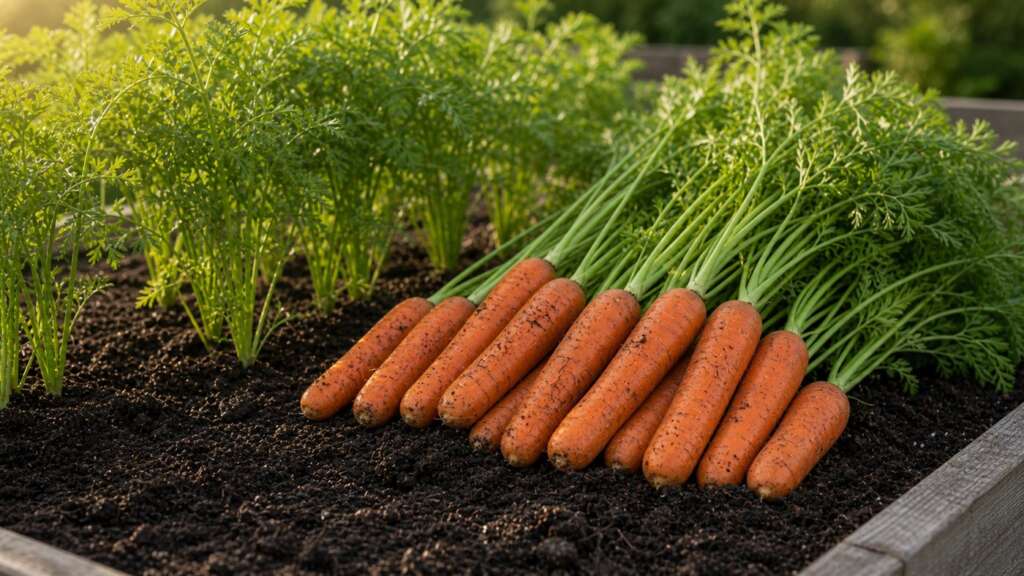
Scarlet Nantes is a classic Nantes-type heirloom carrot grown for sweet, tender, cylindrical orange roots with a small core. Like most carrots, it is a cool-season root crop that performs best when direct sown into loose, smooth soil and given patient, steady moisture through a slow germination window.
Quick How-to
Direct sow Scarlet Nantes Carrot where the roots will mature; do not start indoors and transplant. Sow seed about 1/4 inch deep in loose, stone-free soil and keep the surface evenly moist until seedlings appear. Germination is slow for a vegetable, often 10 to 21 days, and is steadier in cool to mild soil. Thin early so each root has room to size up without crowding.
Quick Guide
| Fact | Recommendation |
|---|---|
| Best method | Direct sow only; carrots do not transplant well |
| Sowing depth | About 1/4 inch |
| Germination temperature | About 55 to 75 F is reliable; carrots will germinate in a wider range but more slowly |
| Days to germination | About 10 to 21 days in consistently moist soil |
| Light for germination | Cover lightly with fine soil or vermiculite; keep the surface from crusting |
| Spacing | Thin to about 2 to 3 inches apart in rows about 12 to 18 inches apart |
| Sun | Full sun; light afternoon shade is acceptable in hot regions |
| Water | Steady, even moisture from sowing through root sizing |
| Harvest | About 65 to 75 days from sowing, depending on temperature and spacing |
| Plant size | Cylindrical roots commonly about 6 to 7 inches long at maturity |
Before You Sow
A good carrot row starts with the soil, not the seed. Loosen the bed to at least the depth you expect the mature root to reach, removing rocks, sticks, and large clods as you go. A smooth, fine seedbed lets seedlings push through cleanly and gives roots an unobstructed path downward, which is what produces the long, straight shape Nantes types are known for.
Carrots do not need rich feeding. In fact, they often do better in soil with moderate fertility than in heavily amended beds. Avoid fresh manure or high-nitrogen fertilizer before sowing; both can encourage hairy roots, branched roots, and lush tops at the expense of the root itself. If your soil is heavy clay or shallow, consider building a wide raised row or using a container deep enough for the variety rather than fighting the bed.
Water the prepared row before sowing so seed placement stays even and tiny seedlings do not get pulled too deep by their first irrigation. Label the row clearly. Carrot foliage is fine and slow to emerge, and it is easy to disturb the row while weeding if you cannot tell where it is.
Direct Sowing
Sow Scarlet Nantes seed thinly along a shallow furrow about 1/4 inch deep. Carrot seed is small, irregular, and easy to drop in clumps; a pinch-and-sprinkle motion or a small seeder helps keep spacing even. Cover lightly with fine soil, sifted compost, or vermiculite. A thin top layer of vermiculite is especially useful because it stays moist and resists crusting in the sun.
Water with a gentle spray so seed is not floated out of the row or pushed too deep. From this point on, the single most important job is keeping the top half inch of soil consistently damp. Carrots can take two to three weeks to come up, and a single hot afternoon that dries the surface can stop a row before it starts. In dry or windy weather, plan to mist the row lightly once or twice a day, or cover it with a board, burlap, or shade cloth until seedlings appear. Check daily and remove any cover at the first sign of green.
For a steady supply, sow small successions every two to three weeks while conditions stay cool. In short cool windows, sow as soon as the soil can be worked in spring and again in late summer for a fall crop.
Why Not Indoor Starting
Indoor starting is not recommended for carrots. The taproot begins forming almost immediately and does not recover well from being lifted and replanted. Transplanted carrots commonly fork, twist, or stunt, even when the seedling itself looks healthy. Direct sowing avoids the problem entirely. If you want the placement control of a transplant, sow into the final bed and thin to the spacing you want instead.
Thinning and Spacing
Thinning is non-negotiable for a good carrot crop. Begin the first thinning as soon as seedlings have one or two true leaves and you can tell them apart from weeds. Snip extras at the soil line with scissors rather than pulling, which can disturb the roots of neighbors. Thin in stages if you like: a first pass to about 1 inch, then a second pass to about 2 to 3 inches once you can see which seedlings are strongest.
Crowded carrots are the most common reason home rows produce only thin, twisted, or undersized roots. Each plant needs room for its shoulder to widen without pushing against its neighbors. Wider final spacing produces larger roots; tighter spacing produces a higher count of smaller roots.
Soil, Sun, and Water
Give carrots full sun in cool weather and at least most-day sun in warmer regions; a touch of afternoon shade can help during hot stretches. Soil should be loose, well drained, and free of rocks and large clods down to the depth your roots will reach. Sandy loam is ideal. Heavy or rocky soil reliably produces forked and stubby roots no matter how good the seed is.
Aim for steady, even moisture from sowing through harvest. The seed zone should feel like a wrung-out sponge during germination, never shiny wet and never dusty dry. Once plants are established, deeper, less frequent watering encourages roots to grow down rather than sideways. Sharp swings between drought and heavy watering are a common cause of cracked or split roots, especially as harvest approaches.
A light mulch between rows after seedlings are established helps hold moisture and moderates soil temperature. Keep mulch off the row itself until seedlings are well up.
Top Mistakes
- Letting the seed row dry out: Carrot germination is slow, and a single dry day during that window can end the planting. Keep the surface evenly moist for the full two to three weeks if needed.
- Skipping or delaying thinning: Carrots that look fine as seedlings will quietly stay small and twisted if left crowded. Thin early and thin again.
- Sowing into rocky, compacted, or freshly manured soil: Roots take the shape of the soil they grow in. Stones, clods, and high nitrogen reliably produce forked, hairy, or branched roots.
- Sowing too deep: Carrot seed is tiny. Anything much past 1/4 inch slows emergence and weakens the seedlings that do make it up.
- Sowing into peak summer heat: Hot, dry soil germinates carrots poorly and can stress young plants before they size up. In hot-summer regions, sow in early spring or late summer so germination and root growth occur during milder weather.
Troubleshooting by Symptom
| Symptom | Likely causes | What to do next |
|---|---|---|
| No sprouts after 21 days | Surface dried out, soil crusted, seed sown too deep, or row exposed to heat | Resow shallowly into a freshly prepared, pre-watered row; cover with vermiculite and keep the surface moist daily |
| Patchy, gappy rows | Uneven watering, seed washed into low spots, or inconsistent depth | Smooth the row before sowing, water with a fine spray, and consider sowing on a slightly raised, level bed |
| Forked or branched roots | Rocks, clods, fresh manure, compacted soil, or transplant disturbance | Loosen and de-rock the bed deeply before the next sowing; avoid fresh manure; direct sow only |
| Hairy or whiskery roots | Excess nitrogen, inconsistent moisture, or compacted soil | Skip nitrogen-heavy feeds, even out watering, and improve soil structure |
| Short, stubby roots | Shallow loose layer over hardpan, crowding, or premature harvest | Loosen soil deeper before sowing, thin earlier, and leave roots in the ground longer |
| Roots small and pale | Crowding, drought, low light, or harvest too early | Thin to wider spacing, water deeply, and give the row more time |
| Green shoulders on the root | Tops of roots exposed to sunlight | Hill a little soil or mulch over the shoulders as roots size up |
| Cracked or split roots | Heavy watering after a dry stretch, or overmature roots | Water more evenly, mulch the row, and harvest before roots oversize |
| Seedlings collapse at the soil line | Damping-off conditions from cool, wet, poorly drained soil | Improve drainage and airflow, water less often once seedlings are up, and avoid sowing into cold saturated ground |
Timing and Climate Notes
Treat Scarlet Nantes as a cool-window crop. In most regions the two reliable sowing windows are early spring, as soon as the soil can be worked, and late summer for a fall harvest that often tastes sweetest after a light frost. In mild-winter climates, you can sow into fall and even winter; in hot-summer climates, skip midsummer sowings or use shade cloth and irrigation to carry a planting through.
Use your local last and first frost dates to place the crop in a cool growing window. Days-to-harvest estimates assume steady moisture and active growth; cold soil, short days, crowding, and drought can extend them.
Container and Small-Space Notes
Carrots grow well in containers as long as the container is deep enough for the variety. For Scarlet Nantes, aim for a container at least 10 to 12 inches deep with drainage holes. Use a loose, well-drained potting mix rather than garden soil, which can compact and resist root growth.
Container surfaces dry quickly, so plan to check moisture daily, especially during germination. Thin seedlings as carefully in a pot as in a bed; one crowded container of carrots will produce a tangle of small roots rather than a usable harvest.
Harvest and Storage
Begin checking for harvest size by gently brushing soil away from a root shoulder. When shoulders look like a usable diameter for the variety, pull a test root before harvesting the row. Scarlet Nantes is at its best when pulled young to mid-size; oversized roots can turn fibrous or split.
Loosen the soil with a fork before pulling in heavy ground so you do not snap the root. Twist or cut the tops off shortly after harvest; leaving the greens on pulls moisture out of the root in storage. Brush off loose soil but do not wash roots you plan to store long-term. Store unwashed roots cold and humid, ideally just above freezing. Washed roots keep better in the refrigerator in a sealed container with a damp cloth.
A light frost generally improves flavor by encouraging the plant to convert starches to sugars. Carrots can be left in the ground past first frost in many regions, mulched heavily for protection, and pulled as needed.
Seed Saving
Carrots are biennials. To save seed, overwinter selected roots in place or in cold storage, then replant them so they flower the following season. The plant sends up an umbel of small white flowers, sets seed, and dries on the stalk.
Two cautions matter. First, carrots cross readily with other carrot varieties and with wild Queen Anne’s lace growing nearby, so saved seed may not stay true to type without isolation. Second, seed saving takes a full second year of garden space, which is a real commitment for a small bed. Most home growers choose to use that space for an annual root crop rather than a controlled seed project.
Storing Leftover Seed
Keep unused Scarlet Nantes Carrot seed in its labeled packet inside a sealed container in a cool, dry, dark indoor location. Avoid garages, sheds, greenhouses, and sunny windowsills, where temperature and humidity swing sharply. Label home-saved seed with the variety and harvest year before storing it.
FAQ
Why did my carrots fork or grow in odd shapes?
Almost always a soil issue. Rocks, hard clods, compaction, fresh manure, or a shallow loosened layer over hardpan all cause forking and twisting. Direct sowing into a smooth, deeply loosened, low-fertility bed is the most reliable fix.
Can I start carrots indoors to get a head start?
Not really. Carrots resent root disturbance and commonly fork or stunt after transplanting. Direct sow into the final bed instead. If your spring is short, sow as soon as the soil can be worked and consider a fall succession.
How long does carrot seed take to come up?
Often 10 to 21 days, sometimes longer in cool soil. The slow window is normal. Keep the surface evenly moist the whole time and resist the urge to dig and check.
When should I thin, and how much?
Begin thinning as soon as seedlings have one or two true leaves. Snip extras at the soil line rather than pulling. Aim for about 2 to 3 inches between final plants for full-size roots.
Do I need to peel the shoulders if they turn green?
Green shoulders are harmless but can taste bitter; trim or peel them off before eating. To prevent it, mulch or hill a little soil over the shoulders as roots size up.