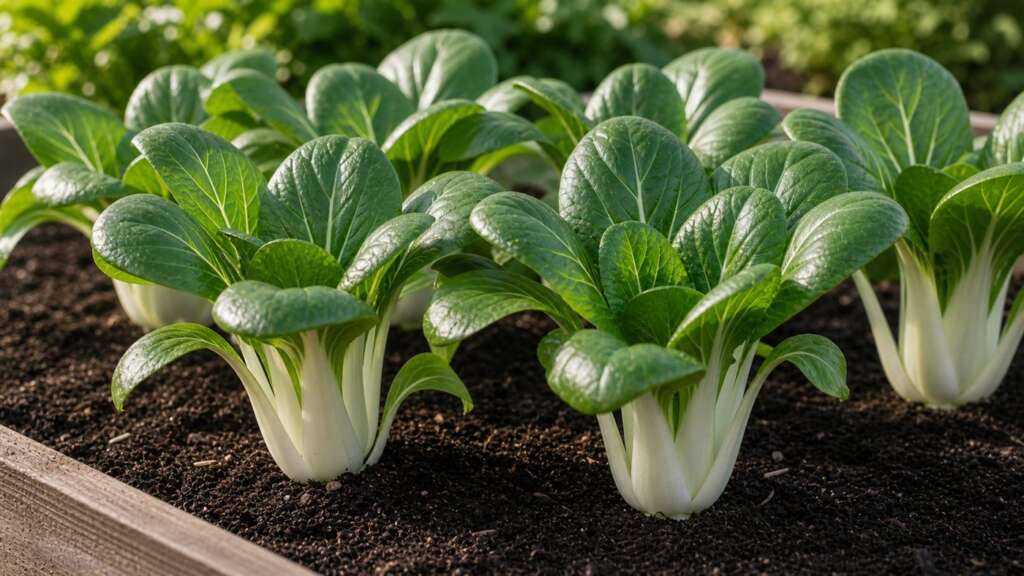
White Stem Pak Choi, often sold as bok choy, is a cool-season Asian green grown for its crisp white leaf stalks and tender dark green leaves. It is a fast crop that rewards steady moisture and cool weather, and it punishes any delay during heat by sending up a flower stalk instead of forming a usable bunch. Sown at the right time, it can move from seed to table in roughly a month for baby leaves and about six to eight weeks for full bunches.
Quick How-to
Sow White Stem Pak Choi in early spring as soon as the soil can be worked, or in late summer for a fall crop. Cover seed lightly, about 1/4 inch deep, and keep the surface evenly moist. Expect germination in about 4 to 10 days when soil is around 60 to 75 F. Thin promptly to give plants the room they need, and harvest before warm days and long daylight push the plants into bolting. Indoor starts work well for a head start in spring or for filling gaps after early harvests.
Quick Guide
| Fact | Recommendation |
|---|---|
| Best method | Direct sow in cool weather, or start indoors 3 to 4 weeks before transplanting |
| Sowing depth | About 1/4 inch |
| Germination temperature | About 60 to 75 F is ideal; cool soil is fine, hot soil reduces uniformity |
| Days to germination | About 4 to 10 days |
| Light for germination | Cover lightly; strong light needed immediately after sprouting |
| Spacing | About 4 to 6 inches for baby leaves, 8 to 12 inches for full bunches |
| Sun | Full sun in cool weather; light afternoon shade helps as temperatures rise |
| Water | Even, steady moisture throughout growth; avoid dry-wet swings |
| Harvest | Baby leaves in about 25 to 30 days; full bunches in about 45 to 60 days |
| Plant size | Upright, open heads commonly about 10 to 12 inches tall at full size |
Before You Sow
Pak choi is a brassica, so it shares the family’s preferences and the family’s vulnerabilities. The plants want fertile, well-drained soil that holds moisture without staying soggy. Work in finished compost before sowing if your soil is lean or sandy. Avoid fresh manure right before planting, which can push soft leafy growth that draws pests.
Choose your window with care. Spring sowings should go in early enough that plants size up before daytime temperatures climb into the upper 70s F and stay there. Fall sowings, timed about 6 to 8 weeks before your first expected frost, often produce the cleanest, sweetest bunches of the year because pak choi sweetens after cool nights.
Have row cover or insect netting on hand before you sow. Flea beetles and cabbage caterpillars often find young brassicas within days of emergence, and prevention is much easier than rescue. Label the row or container at planting; pak choi seedlings look similar to other young brassicas at the cotyledon stage.
Direct Sowing
Direct sowing is the most natural fit for pak choi because the plants resent root disturbance and grow quickly once underway. Rake the bed smooth, water it the day before, and sow seed about 1/4 inch deep in rows or shallow furrows. Firm the soil lightly so seed makes good contact, then water with a gentle spray to avoid washing seed into clumps.
Keep the seedbed evenly moist until germination. If the surface dries and crusts in spring wind, mist it daily or cover lightly with a board, burlap, or row cover until you see sprouts; remove any opaque cover the moment seedlings appear so they get light. Thin in two passes: a first pass to about 2 inches as soon as true leaves form, then a final thinning to your target spacing. The thinnings are a useful early salad and avoid the waste that bothers some new growers.
For a continuous supply, succession sow a short row every 10 to 14 days through the cool window rather than planting one large bed all at once.
Indoor Starting
Indoor starting is optional but useful in two situations: getting a jump on spring before the soil is workable, and starting a fall crop while summer beds are still occupied. Sow into individual cells or small pots about 3 to 4 weeks before you plan to transplant. Sowing in cells, rather than open flats, protects the taproot from disturbance at transplant time.
Cover seed lightly, keep the mix evenly moist, and move seedlings under strong overhead light the moment they sprout. Pak choi grown warm and dim stretches quickly. Keep the room on the cool side, around 60 to 70 F if possible, and provide steady airflow. Transplant before seedlings become rootbound; a brief, vigorous start outperforms a long, crowded one almost every time.
Transplanting and Spacing
Harden off transplants over about 7 days. Begin with an hour or two in sheltered shade and gradually increase sun, breeze, and outdoor time. Move plants out in cool, settled weather, water deeply at planting, and protect from sudden hot spells with shade cloth or row cover if needed.
For full bunches, space plants about 8 to 12 inches apart in rows about 12 to 18 inches apart. For baby leaf or small-head harvests, tighter spacing of 4 to 6 inches works well. Crowding looks fine at first but produces small, leaning plants with thin stalks instead of the plump white ribs that make this variety attractive.
Soil, Sun, and Water
Pak choi wants full sun during the cool months and tolerates some afternoon shade as days warm. Aim for steady, even moisture; the plant is mostly water by weight, and any check in growth shows up immediately as tougher leaves, stronger flavor, or premature bolting. A light mulch of straw or shredded leaves once seedlings are established helps buffer soil moisture and temperature.
Feed gently. A balanced organic fertilizer at planting and one mild side-dressing during rapid growth is usually enough. Heavy nitrogen produces lush, soft leaves that attract pests and store poorly.
Hydroponic Growing
White Stem Pak Choi can be grown hydroponically to full baby-head or larger bunch size. Its broad white petioles make a heavier plant than extra-dwarf types, so use deep-water culture or a well-supported NFT channel. Start one seed per plug, transplant while young, and keep the crown clearly above the nutrient line.
A complete leafy-green nutrient around EC 1.5 to 2.0 mS/cm and pH near 6.5 to 7.0 is a useful range. Keep the reservoir shaded and oxygenated, and avoid large swings caused by topping up with concentrate alone. Cool to moderate conditions produce crisp stems; warmth and root stress encourage bolting.
Give plants roughly 8 inches, more if growing full size. Bright overhead light builds stocky petioles, while gentle airflow prevents moisture from collecting deep in the head. Harvest when stems are firm and the center is still compact rather than waiting for maximum height.
Brown internal edges can be tipburn from fast growth, heat, or weak airflow. Soft tissue at the base points to a wet crown. If the center elongates into a flower stalk, harvest immediately and correct temperature, spacing, or transplant delay for the next crop.
Top Mistakes
- Sowing too late in spring: Pak choi runs out of cool weather quickly. Get seed in the ground as soon as the soil can be worked, or shift to a fall sowing instead.
- Letting soil dry between waterings: Even a single dry stretch can trigger bolting or bitterness. Aim for evenly moist soil from sowing through harvest.
- Ignoring flea beetles early: Tiny shotgun-pattern holes in cotyledons can defoliate a stand within days. Set row cover at sowing or transplant, before you see damage.
- Crowding plants: Thin in two passes. Heads and stalks need room and airflow to develop the crisp white ribs the variety is grown for.
- Transplanting rootbound seedlings: Pak choi started too early or held too long in cells often bolts soon after planting out. Start small and move plants while they are still young.
Troubleshooting by Symptom
| Symptom | Likely causes | What to do next |
|---|---|---|
| No sprouts after 10 to 14 days | Seed buried too deep, surface dried and crusted, soil too cold or too hot, or seed exposed to extended heat or humidity in storage | Smooth and remoisten the bed, resow shallowly at about 1/4 inch, and wait for soil in the 60 to 75 F range |
| Tiny round holes in young leaves | Flea beetles, especially in spring | Cover the planting with insect netting or row cover immediately; floating row cover at sowing prevents most damage |
| Ragged chewing on leaves | Cabbage worms, loopers, or slugs | Hand pick, use a labeled Bt product for caterpillars, and set slug bait or boards as traps in damp weather |
| Plants send up a flower stalk early | Heat, drought, long days, transplant shock, or seedlings held too long in cells | Sow earlier in spring or shift to fall, water consistently, and transplant while young |
| Bitter or stringy leaves | Drought stress, heat, or harvest delayed past prime | Keep moisture steady, provide afternoon shade in warm weather, and harvest at the proper stage |
| Loose, leaning heads with thin stalks | Crowding, low light, or low fertility | Thin to full spacing, give full sun in cool weather, and side-dress with a balanced fertilizer |
| Seedlings collapse at the soil line | Damping-off from saturated mix, poor airflow, or reused soil | Use fresh seed-starting mix, water from below, improve airflow, and avoid overwatering |
| Yellowing lower leaves on mature plants | Normal aging, nitrogen shortage, or waterlogging | Harvest promptly, side-dress lightly if growth is slow, and check drainage |
Germination Diagnostics
If pak choi is slow to emerge, work through the variables in order rather than changing everything at once. Start with depth: about 1/4 inch is the target, and seed buried half an inch or more may have moisture but not the energy to reach light. Next check temperature. Pak choi germinates across a wide range but is most uniform between about 60 and 75 F; very cold spring soil slows things down, while soil above 85 F suppresses germination outright.
Moisture is the third variable. The seed zone should feel like a wrung-out sponge, not glossy wet and not dusty dry. A surface crust after a hard rain or strong wind can stop emerging seedlings even when the seed below has germinated; break the crust gently with a rake or scratch it open by hand. Once seedlings are up, check light and airflow. Stretched, pale, or collapsing seedlings usually need stronger light, less heat, more space, or a less saturated mix.
Timing and Climate Notes
Think of pak choi as a spring-and-fall crop in most of the country. In USDA zones with hot summers, the fall window often produces the best quality because plants finish into cooling weather and shortening days. In mild coastal or high-elevation climates, summer sowings can work with afternoon shade and mulched soil. In the South, fall through early spring is the natural pak choi season; many growers there avoid spring sowings entirely because the heat arrives too fast.
Use your local average last spring frost and first fall frost dates when planning. In cold-winter regions, spring and late-summer sowings avoid both severe freezes and summer heat; in mild-winter climates, fall through early spring is often the most reliable window.
Container and Small-Space Notes
Pak choi grows well in containers as long as the pot has drainage and enough volume to hold steady moisture. A pot at least 8 inches deep and 10 inches wide will support one to three full-size plants depending on spacing. Use a quality potting mix, not garden soil, and check moisture daily once plants are growing actively; containers dry faster than beds and dry soil is the fastest route to a bolted plant.
A wide, shallow planter sown thickly for baby leaf harvest is another good option. Cut with scissors about an inch above the crown and let the plants regrow once or twice before they tire.
Harvest and Kitchen Use
You can begin harvesting outer leaves once plants have several true leaves and the stalks have started to plump up. Cut individual stalks from the outside with a sharp knife and let the center keep growing for a longer harvest. For a full bunch, cut the entire plant at the base just before stalks would otherwise begin to elongate for flowering. Harvest in the morning when leaves are crisp, then rinse and refrigerate promptly.
White Stem Pak Choi holds up well to stir-frying, quick steaming, and soups. The white ribs need a minute or two more cooking than the green leaves; many cooks slice the ribs and add them to the pan first, then add the chopped leaves at the end.
Seed Saving
Pak choi is biennial in most climates and crosses readily with other Brassica rapa types, including turnips and many Asian greens. Saving true-to-type seed at home requires either physical isolation of about half a mile from related flowering brassicas or careful caging with hand pollination, plus a cool overwintering period for the plant to flower. For most home gardeners, growing White Stem Pak Choi for harvest is more practical than managing an isolated seed crop.
Storing Leftover Seed
Keep unused White Stem Pak Choi seed in its labeled packet inside a sealed container in a cool, dry, dark indoor location. Avoid garages, sheds, greenhouses, and sunny windowsills, where temperature and humidity swing sharply. Label home-saved seed with the variety and harvest year before storing it.
FAQ
Is White Stem Pak Choi the same as bok choy?
Yes. Pak choi, bok choy, pok choi, and Chinese white cabbage all refer to the same general type of non-heading Brassica rapa subsp. chinensis. The white-stem form is the classic version with crisp white leaf stalks and dark green blades.
Why did my pak choi bolt so quickly?
The most common triggers are heat, drought, long daylight hours, transplant stress, and holding seedlings too long in cells. Sow earlier in spring or shift to a fall planting, keep moisture steady, and move transplants out while they are still young.
Can I harvest leaves without pulling the whole plant?
Yes. Cut outer stalks with a sharp knife and let the center continue growing. This works especially well for baby and mid-size plants. Once a plant begins to bolt, harvest the whole head right away; quality drops fast after that point.
Does pak choi need full sun?
Full sun in cool weather produces the sturdiest plants and crispest stalks. As temperatures rise, light afternoon shade can extend the harvest by buffering heat stress.
Do I really need row cover?
If you have ever seen flea beetles in your garden, yes. Floating row cover or fine insect netting put down at sowing and left on until harvest is the single most effective protection for spring brassicas. Remove it only if you need to thin or weed, and replace it immediately.