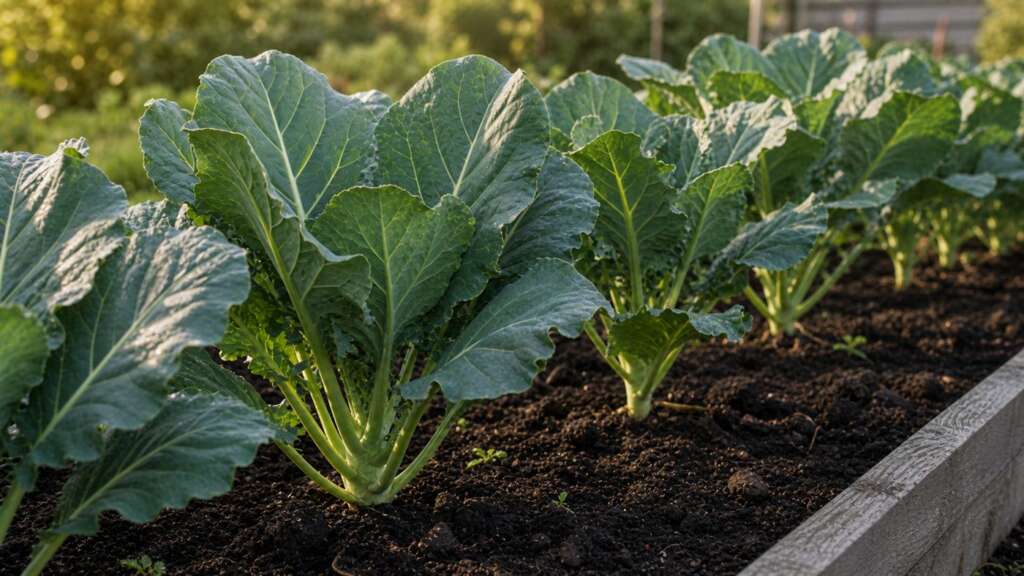
Collard greens are a hardy, cool-season leafy brassica grown for broad, smooth, blue-green leaves that hold up to long cooking, frost, and steady cut-and-come-again harvests. They are among the most forgiving members of the cabbage family for home growers because they do not need to form a head, tolerate light frost, and often taste sweeter after a cool snap. Most gardeners do best with a spring sowing for early summer harvest and a fall sowing for the main, sweetest crop.
Quick How-to
Direct sow collard greens about 1/4 to 1/2 inch deep in cool, fertile soil roughly 2 to 4 weeks before your last spring frost, or about 6 to 10 weeks before your first fall frost for the main harvest. You can also start seedlings indoors 4 to 6 weeks before transplanting if you want a head start. Keep the seedbed evenly moist and expect germination in about 4 to 10 days when soil is between 60 and 75 F. Thin or transplant to final spacing once seedlings have a couple of true leaves, and begin harvesting outer leaves once plants are well established.
Quick Guide
| Fact | Recommendation |
|---|---|
| Best method | Direct sow or transplant; both work well in cool weather |
| Sowing depth | About 1/4 to 1/2 inch |
| Germination temperature | About 60 to 75 F is ideal; cool soil is preferable to hot |
| Days to germination | About 4 to 10 days under good conditions |
| Light for germination | Cover lightly; strong light is needed promptly after emergence |
| Spacing | About 12 to 18 inches apart for full-size leaves; closer for baby-leaf harvests |
| Sun | Full sun in cool weather; light afternoon shade can help in heat |
| Water | Steady, even moisture; avoid drought and saturation cycles |
| Harvest | Baby leaves can be cut early; full-size plants commonly mature in about 70 to 90 days from seed |
| Plant size | Upright, non-heading plants commonly reach about 2 to 3 feet when allowed to mature |
Before You Sow
Collards do their best work in soil that is loose, fertile, and well drained, with steady access to moisture. Before sowing, work in compost or a balanced amendment if your soil is lean, and rake the bed smooth so small seed sits at an even depth. A pH near 6.5 to 7.0 generally suits brassicas; chronically acidic soil can encourage problems like club root over time.
Plan the season honestly. Spring sowings ride the cool window up into summer, and the trick is to start early enough that plants are well established before heat arrives. Fall sowings are usually the sweetest because cool nights and a touch of frost mellow the flavor. Where summers are very hot, skip a high-summer sowing entirely or grow under shade cloth.
If pests have been a problem in past seasons, have lightweight row cover ready before you sow. Flea beetles often find new brassica seedlings within days of emergence, and floating cover laid loosely over hoops can prevent most of that early damage without any spray.
Direct Sowing
Direct sowing is the simplest path for collards because seedlings transplant well but rarely need the head start. Water the bed lightly the day before to settle the surface, then make a shallow furrow about 1/4 to 1/2 inch deep. Sow seed thinly, roughly an inch apart, cover lightly with fine soil, and firm with the back of a rake or your hand for good seed-to-soil contact. Water with a gentle spray so seeds are not washed sideways or downward.
Keep the top inch of soil evenly moist until you see sprouts. In warm or windy weather the surface can dry quickly and form a crust that small seedlings struggle to push through; a thin mulch of fine compost or a board laid over the row until germination can help. Once seedlings have one to two true leaves, thin in stages to your final spacing, snipping extras at the soil line rather than pulling so you do not disturb the keepers. Thinnings are tender and edible.
For a cut-and-come-again baby-leaf patch, sow more thickly, leave plants closer together, and clip the entire patch back to about 2 inches when leaves are 4 to 6 inches tall. Most plantings will regrow two to three times before quality drops.
Indoor Starting
Indoor starting is optional but useful for fall plantings, where seedlings need to be raised through the hottest part of summer for transplant into cooler weather. Sow into cells of fresh seed-starting mix about 1/4 inch deep, keep the mix evenly moist, and germinate at room temperature. A heat mat speeds things up but is usually not needed for brassicas.
As soon as sprouts appear, move trays under strong light and keep them on the cooler side. Warm, dim conditions are the most common reason brassica seedlings turn into pale, stretched stems that never recover. Thin to one plant per cell, water from below when possible, and pot up if roots fill the cell before transplant weather arrives. Aim to set out short, stocky seedlings with thick stems rather than the tallest plant in the tray.
Hardening Off and Transplanting
Harden off indoor-grown seedlings over 7 to 10 days. Start with a sheltered, partly shaded spot for an hour or two, then gradually increase sun and time outside. Transplant on a cloudy day or in the late afternoon, set plants at the same depth they grew in the cells, water in well, and space about 12 to 18 inches apart in rows roughly 18 to 24 inches apart. Wider spacing produces broader, easier-to-harvest plants and improves airflow.
Cover the row immediately after transplanting if flea beetles or cabbage worms are common in your area. A light mulch laid down a week or two after transplanting helps conserve moisture and keep roots cool as the season warms.
Soil, Sun, and Water
Full sun in cool weather grows the sturdiest plants and the best-tasting leaves. In late spring or in southern gardens, an hour or two of afternoon shade can keep plants from stressing as temperatures rise. Steady moisture matters more than total water. Collards in dry soil grow slowly, taste tougher, and bolt sooner, while collards in soggy soil are more prone to root and stem rots.
Feed lightly but consistently. Brassicas respond to nitrogen, but pushing growth with heavy synthetic fertilizer can produce soft, lush leaves that attract more pests. A side-dressing of compost or a balanced organic fertilizer when plants are about a foot tall is usually enough. Mulching after the soil has warmed helps even out moisture and reduces splash, which in turn reduces some leaf diseases.
Top Mistakes
- Sowing into the wrong window. Collards germinate fine in warm soil but grow tougher and bolt faster when started into heat. Spring sowings should go in early; fall sowings, which are usually the best, need to be timed back from the first fall frost.
- Skipping pest protection at the start. Flea beetles often arrive within days of emergence and can riddle young leaves before you notice. Row cover laid down at sowing or transplanting prevents most of the damage cheaply.
- Letting plants dry out. Drought stress slows growth, turns leaves bitter and stringy, and pushes plants toward bolting. A consistent watering rhythm and a layer of mulch are simpler than trying to rescue a stressed plant later.
- Crowding. Plants left at sowing density may look fine for a few weeks, then stall as roots compete and airflow drops. Thin in stages so each plant has room for broad outer leaves.
Troubleshooting by Symptom
| Symptom | Likely causes | What to do next |
|---|---|---|
| No sprouts after 10 to 14 days | Seed buried too deep, surface dried or crusted, or soil too cold or too hot | Check the top half inch for moisture, water gently, and resow shallowly if needed |
| Seedlings pale, tall, and floppy | Weak light, indoor warmth without strong overhead light, or crowded cells | Move under brighter light, lower temperature, and thin to one per cell |
| Small round holes peppered across young leaves | Flea beetles | Cover plants with insect netting or row cover, keep plants growing strongly, and check the underside of leaves |
| Ragged holes and green caterpillars on leaves | Cabbage worms or cabbage loopers | Hand-pick where practical, use row cover, or apply a labeled biological control such as Bt according to product directions |
| Outer leaves yellow and wilted | Drought stress, poor drainage, or root disturbance | Water deeply and consistently, mulch the bed, and avoid hoeing close to the stem |
| Plants suddenly send up a flower stalk | Bolting from heat, drought, long days, or transplant shock | Harvest remaining leaves promptly, replant for a fall crop, and choose slower-bolting timing next round |
| Slimy leaves and trails on the soil at night | Slugs | Water in the morning rather than evening, use a barrier or trap, and clear nearby debris |
| Seedlings collapse at the soil line indoors | Damping-off from overly wet mix and poor airflow | Increase airflow, water from below, use fresh mix, and avoid keeping trays soggy |
Harvest and Kitchen Use
You can begin harvesting once plants have several broad, well-formed leaves, usually about 55 to 75 days from sowing for full-size leaves. Pick from the bottom up, snapping or cutting outer leaves cleanly and leaving the central rosette of younger leaves to keep growing. A single plant treated this way can produce for months. Avoid stripping all the leaves at once; about a third of the foliage is a reasonable maximum per harvest.
Flavor improves after a frost. Light freezes cause the plant to concentrate sugars, which softens the slight cabbage edge and makes the leaves noticeably sweeter. In mild winter regions, collards can stand in the garden well past most other vegetables and provide harvests through cool weather. Wash leaves in cool water, strip out the thick central rib if you prefer, and cook by sauteing, braising, or simmering with aromatic seasonings until tender.
Seed Saving
Saving true-to-type collard seed is an advanced project. Collards are biennial and require a cool overwintering period before they flower, and they cross readily with cabbage, broccoli, kale, kohlrabi, and other Brassica oleracea relatives growing within roughly half a mile. Without careful isolation, saved seed often grows out as an unpredictable hybrid. If you want to try, overwinter a healthy plant, isolate it during flowering, and let the seed pods dry on the plant before threshing.
Storing Leftover Seed
Keep unused Collard Greens seed in its labeled packet inside a sealed container in a cool, dry, dark indoor location. Avoid garages, sheds, greenhouses, and sunny windowsills, where temperature and humidity swing sharply. Label home-saved seed with the variety and harvest year before storing it.
FAQ
Can I grow collard greens in containers?
Yes. Choose a container at least 10 to 12 inches deep with good drainage, use a fertile potting mix, and limit each pot to one full-size plant or a small cluster for baby-leaf harvests. Container plants need closer attention to watering and a light feeding through the season.
When is the best time to plant collards?
Most gardeners get the strongest results from a fall planting timed so plants mature into the first cool weather. Spring plantings work well in cooler regions when started early enough to harvest before midsummer heat.
Do collards really taste better after frost?
Yes. Cold nights prompt the plant to convert starches into sugars as a natural antifreeze response, which softens the flavor noticeably. A few light frosts before harvest are a feature, not a problem.
How do I keep cabbage worms off my plants?
Floating row cover laid down at sowing or transplanting prevents the cabbage white butterfly from laying eggs on the leaves. Where cover is not practical, scout weekly, hand-pick caterpillars, and use a labeled product such as Bt according to the directions if pressure is heavy.
Can I harvest leaves more than once from the same plant?
Yes. Collards are well suited to a cut-and-come-again harvest. Take the lower, outer leaves and leave the central growing point intact; the plant will keep producing new leaves from the top for many weeks.