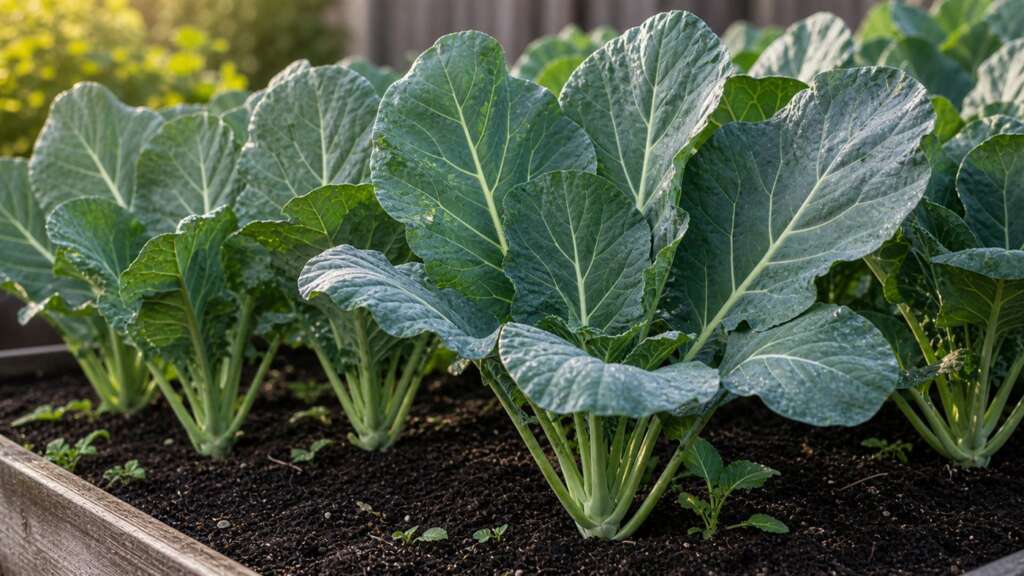
Georgia Southern is a classic heirloom collard prized in southern gardens for broad, blue-green leaves with a mild, cabbage-sweet flavor that deepens after frost. It is a cool-season leafy brassica that handles heat better than most of its relatives, which is exactly what made it a staple long before refrigeration: a plant that holds in the garden through fall, winter where mild, and into a long spring harvest window.
Quick How-to
Sow Georgia Southern collards about 1/4 to 1/2 inch deep, either directly in the garden as soon as soil can be worked in spring or about 10 to 12 weeks before your first expected fall frost. Indoor starts go in 4 to 6 weeks before transplanting. Aim for a soil temperature near 60 to 75 F for steady emergence in roughly 5 to 10 days. Thin or transplant to give each plant 18 to 24 inches of room, water consistently, and harvest the lower leaves once they reach palm-size, working your way up the stalk as new growth appears at the crown.
Quick Guide
| Fact | Recommendation |
|---|---|
| Best method | Direct sow in cool weather or start indoors for an early or fall crop |
| Sowing depth | About 1/4 to 1/2 inch |
| Germination temperature | About 60 to 75 F is ideal; will sprout from roughly 45 to 85 F |
| Days to germination | About 5 to 10 days under good conditions |
| Light for germination | Cover lightly; strong light immediately after sprouting |
| Spacing | Thin or transplant to about 18 to 24 inches apart, with 24 to 36 inches between rows |
| Sun | Full sun; light afternoon shade can extend harvest in hot weather |
| Water | About 1 to 1.5 inches per week; keep moisture even |
| Days to harvest | Commonly about 60 to 75 days from sowing for full-size leaves, with baby leaves ready sooner |
| Plant size | Vigorous upright plants commonly reach about 2 to 3 feet tall and wide when given full spacing |
Before You Sow
Georgia Southern wants steady growth more than anything else. Brassicas slowed down by drought, crowding, or a hot snap rarely catch back up, and stressed plants are exactly the ones that bolt early or attract pests. Aim for a season where days are mild and nights are cool: late winter through spring in cooler regions, or a fall planting timed so the heaviest harvest lands after the first light frost.
Pick a sunny spot with fertile, well-drained soil. Collards are heavy feeders. Work in a couple of inches of finished compost or aged manure before sowing, and aim for a soil pH in the slightly acidic to near-neutral range. If your bed has grown other brassicas in the last two or three seasons, choose a different spot to reduce the carry-over risk for clubroot and other soil-borne issues.
Have row cover on hand before seedlings emerge. Flea beetles, cabbage loopers, and imported cabbageworms find young brassicas quickly, and floating row cover laid at sowing is far more effective than a rescue after damage starts.
Indoor Starting
Indoor starts are useful for an early spring crop or for a precisely timed fall planting when summer heat would punish a direct-sown seedling. Sow into clean cells of moist seed-starting mix, about 1/4 inch deep, and keep the tray in a warm spot until you see sprouts. Bottom heat near 70 F speeds emergence, but pull seedlings off the mat as soon as they break the surface, or they will stretch.
Move trays to strong overhead light immediately. A bright window is almost always not enough for brassica starts; tall, pale, floppy stems are the symptom of weak light, not too little water. Keep seedlings cool and well-spaced, with airflow from a small fan to toughen the stems. Pot up if cells fill with roots before transplant weather arrives, but try not to hold collards indoors for more than about six weeks total. A sturdy, stocky transplant outperforms a tall, rootbound one almost every time.
Direct Sowing
Direct sowing suits collards well because they germinate fast in cool soil and resent root disturbance once they get going. Rake the bed smooth, water it the day before sowing, and place seed thinly along the row. Cover with 1/4 to 1/2 inch of fine soil, firm gently for good contact, and water in with a soft spray so seed does not wash to the surface or down into pockets.
Keep the seedbed evenly moist until you see green. Cool soil dries from the top first, and a thin crust can stop tiny brassica seedlings even when the soil below is damp. A light scatter of straw or a single sheet of floating row cover both help hold surface moisture while still letting sprouts through.
For a steady kitchen supply, succession sow short rows every two to three weeks during the cool window rather than planting the whole packet at once. You will pull tender leaves longer and avoid having every plant peak at the same time.
Thinning and Transplanting
Thin direct-sown rows in two passes. First, thin to about 4 inches when seedlings have two true leaves and eat the thinnings as baby greens. Then thin again to final 18 to 24 inch spacing when plants are 6 to 8 inches tall. Crowded collards make small, tough leaves and a single open stalk instead of the broad, leafy crown the variety is known for.
Transplants go out after hardening off for 7 to 10 days. Start them in dappled shade for short stretches, then increase sun, breeze, and time outside before planting. Set transplants slightly deeper than they grew in the cell so the lowest leaves sit just above the soil, water in well, and consider a temporary collar of cardboard or a cutoff cup pushed an inch into the soil to deter cutworms at the stem. Late afternoon transplanting is gentler than midday.
Soil, Sun, and Water
Full sun produces the largest, most productive plants in cool weather. In late spring or early fall, light afternoon shade can keep leaves tender and slow bolting without costing much yield. Soil should be rich, loose, and well-drained, with enough organic matter to hold moisture between waterings.
Collards prefer steady moisture, generally around 1 to 1.5 inches per week from rain, irrigation, or both. Drip or soaker hose at the soil line keeps leaves dry and reduces disease pressure. A 2 to 3 inch mulch of straw or shredded leaves applied after the soil warms helps moderate temperature swings and conserves water. Side-dress with compost or a balanced organic fertilizer about four to six weeks after sowing, then again if growth slows during a long harvest.
Top Mistakes
- Sowing into the wrong season. Collards launched into rising summer heat tend to bolt or turn tough. Spring sowings should go in early enough to mature before the worst heat; fall sowings should be timed to catch the cool back half of the season.
- Skipping the row cover. Flea beetles can riddle young brassica leaves in a single afternoon. Cover seedlings at sowing rather than waiting to see damage.
- Crowding plants. Closely spaced collards look fine for the first month, then stall, lean, and produce small leaves. Thin on schedule even when it feels wasteful.
- Inconsistent watering. Dry-wet cycles stress the plant, encourage bolting, and can make leaves bitter. Mulch and a regular watering rhythm fix more problems than fertilizer.
- Harvesting from the wrong end of the plant. Pulling leaves from the top kills the growing point. Take from the bottom up so the crown keeps producing.
Troubleshooting by Symptom
| Symptom | Likely causes | What to do next |
|---|---|---|
| No sprouts after 10 to 14 days | Seed buried too deep, soil surface crusted, bed dried out, or soil too cold or too hot | Check moisture in the top inch, resow shallowly if needed, and shade or pre-water the bed before a second attempt |
| Tiny shot-hole punctures across young leaves | Flea beetles | Cover with floating row cover at sowing, refresh mulch, and avoid bare soil between brassicas |
| Ragged chewed leaves, green frass | Cabbage loopers or imported cabbageworms | Inspect under leaves, hand-pick caterpillars, and consider an OMRI-listed Bt product per label directions |
| Plants suddenly send up a tall flower stalk | Heat, lengthening days, transplant shock, or root-binding indoors | Harvest promptly; sow the next succession earlier or shift the planting to a fall window |
| Leaves are tough, bitter, or off-flavor | Heat stress, drought, or over-mature leaves | Water more consistently, mulch, harvest younger leaves, and let a frost sweeten the next pick |
| Outer leaves yellowing on a young plant | Nitrogen shortage, waterlogged roots, or transplant stress | Side-dress with compost or a balanced fertilizer, check drainage, and confirm the plant is not sitting in a low spot |
| Seedlings collapse at the soil line | Overly wet mix, poor airflow, or damping-off conditions | Improve airflow, water from below, use fresh seed-starting mix, and avoid saturated trays |
| Purple cast across older leaves in cold weather | Cold-induced phosphorus uptake slow-down, common and usually cosmetic | Wait for warmer soil; if persistent, check fertility and pH |
Pest and Disease Watch
Brassicas in general attract a small but determined cast of pests. Beyond flea beetles and caterpillars, watch for cabbage aphids clustering on the undersides of leaves and harlequin bugs in warmer regions. A strong stream of water knocks aphids loose; persistent infestations respond to insecticidal soap used per label.
Clubroot, black rot, and downy mildew can show up in beds with a long brassica history or in chronically wet conditions. The defense is rotation, well-drained beds, morning watering at the soil line, and clean tools. Pull and discard, do not compost, plants that show signs of root deformity or systemic disease.
Harvest and Kitchen Use
Begin harvesting Georgia Southern when lower leaves reach about the size of your hand. Cut or snap them at the base of the petiole, working from the bottom of the plant upward and leaving the upper rosette of younger leaves to keep producing. A well-tended plant can be picked over for many weeks.
Flavor is best in cool weather and noticeably sweeter after the first light frost, which converts some starches to sugars. For storage, slip unwashed leaves into a loose bag in the refrigerator crisper; they hold for about a week. For longer storage, blanch chopped leaves for two to three minutes, cool quickly, drain, and freeze in portioned bags.
For the kitchen, Georgia Southern’s broad leaves are forgiving in low slow braises, quick sautes, soups, and rice bowls. The midrib is edible but tougher than the leaf; many cooks strip it out for tender preparations and chop it small to cook a little longer for braises.
Seed Saving
Georgia Southern is an open-pollinated heirloom, so seed saved from healthy plants will generally come true if the plants are isolated from other flowering brassicas. The practical catch is that collards are biennial and need a cool period to vernalize and flower the next spring. In mild-winter regions, leave a few of the best plants in the ground over winter; in colder zones, this becomes a multi-season project that usually involves protected overwintering.
Brassica oleracea varieties cross readily with each other, including cabbage, kale, broccoli, and Brussels sprouts, so isolation by distance or by physical caging with introduced pollinators is necessary to keep seed true to type. For most home gardeners, seed saving from collards is a worthwhile but advanced project rather than a casual one.
Storing Leftover Seed
Keep unused Georgia Southern Collard Greens seed in its labeled packet inside a sealed container in a cool, dry, dark indoor location. Avoid garages, sheds, greenhouses, and sunny windowsills, where temperature and humidity swing sharply. Label home-saved seed with the variety and harvest year before storing it.
FAQ
Can Georgia Southern collards take frost?
Yes, and they prefer it. Light frosts sweeten the leaves, and mature plants tolerate hard frosts in the low 20s F with little damage. Pick the most cold-tender outer leaves first as winter approaches.
Should I direct sow or transplant?
Both work. Direct sowing is simplest in spring or fall when soil is workable and the weather is mild. Transplants are useful for getting a head start in cold regions or for placing a precise number of plants in the fall when summer soil is still warm.
Why did my spring planting bolt before I could harvest much?
Late sowing into rising temperatures is the most common cause, followed by drought stress, root crowding indoors, or rough transplanting. Sow earlier next year, water steadily, and consider shifting the main crop to fall.
Can I harvest leaves more than once from the same plant?
Yes. Take lower leaves first and leave the crown to keep producing. A healthy plant can be harvested over and over for many weeks, sometimes months in mild climates.
How is Georgia Southern different from other collard varieties?
Georgia Southern is an old southern heirloom selected for broad, slightly crumpled blue-green leaves, vigorous growth, and dependable production across a long cool-season harvest. Plants commonly reach 2 to 3 feet when fully spaced, although repeated leaf harvest keeps the working canopy smaller.