
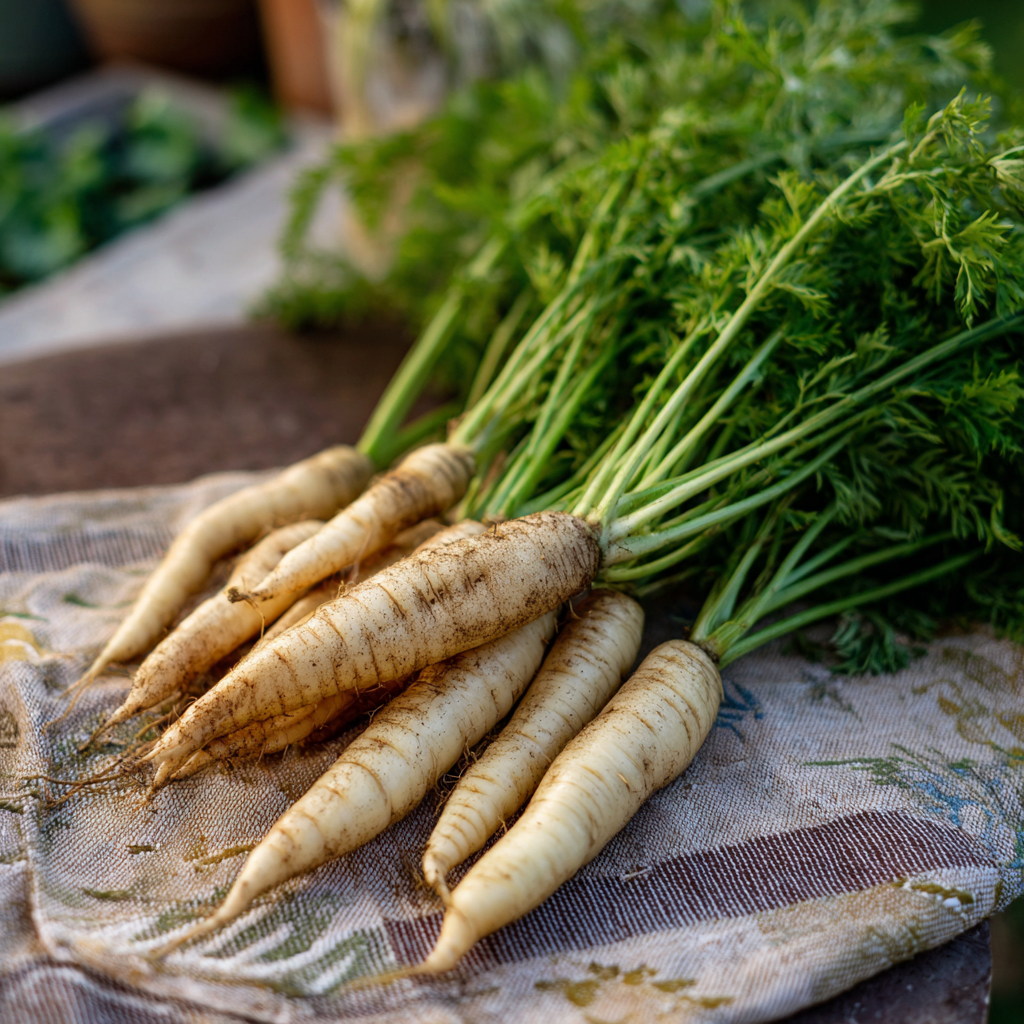
Snow White is a true white carrot cultivar, not an orange carrot that failed to color. It produces crisp, mild-sweet, creamy-white roots that are commonly about 7 to 8 inches long in loose soil. Its color is a normal inherited cultivar trait. Grow it as you would another long carrot: direct sow into a fine, stone-free bed, protect the slow-germinating seed from drying, thin early, and keep moisture steady while roots lengthen.
Quick How-to
Direct sow Snow White carrot seed outdoors as soon as soil is workable and at least about 45 F. Plant roughly 1/4 inch deep, firm the row gently, and keep the top layer continuously moist until seedlings emerge in about 7 to 21 days. Do not transplant. Thin seedlings to 2 to 3 inches apart after they reach 3 to 4 inches tall. Give plants full sun, loose stone-free soil, and even water. Harvest when roots reach a useful size and before prolonged heat or overmaturity makes them coarse.
Quick Guide
| Fact | Recommendation |
|---|---|
| Crop type | Cool-season biennial grown as an annual root vegetable |
| Best method | Direct sow only |
| Sowing depth | About 1/4 inch; up to 1/2 inch in very light soil |
| Germination temperature | Best around 55 to 75 F; seed can begin germinating above about 45 F |
| Days to germination | Usually 7 to 21 days |
| Final spacing | Thin to 2 to 3 inches apart, with rows about 12 to 18 inches apart |
| Sun | Full sun, at least 6 hours daily |
| Soil | Deep, loose, well-drained, stone-free sandy loam |
| Water | Continuous shallow moisture for germination; steady deep moisture during root growth |
| Time to harvest | Commonly about 70 to 80 days, depending on weather and desired root size |
| Mature root | Creamy white, tapered, crisp root commonly around 7 to 8 inches long |
| Succession sowing | Sow small batches every 2 to 3 weeks while cool-season conditions last |
Before You Sow
Choose a bed that has not received fresh manure and is free of rocks, roots, and compacted layers. Snow White makes a long tapered root, so a hard obstruction can split the growing tip into forks. Loosen soil 10 to 12 inches deep and remove debris. Finished compost can improve structure, but break up clumps and blend it evenly rather than leaving coarse pockets.
Carrots are not heavy feeders. A soil test helps prevent unnecessary fertilizer. Too much nitrogen produces lush green tops and hairy or undersized roots. Avoid high-nitrogen lawn fertilizer drifting into the bed. If the soil is heavy clay, use a raised bed filled with a deep, well-drained loam. A container also works when it is opaque, drains freely, and is at least 10 to 12 inches deep.
Rake the top layer to a fine texture. Tiny carrot seed needs close contact with soil and cannot push through a hard crust easily. Water the bed before sowing so the lower seed zone is moist without requiring a forceful watering afterward.
Direct Sowing
Make a shallow furrow about 1/4 inch deep. Sprinkle seed as evenly as possible, cover with fine soil, vermiculite, or screened compost, and firm gently. Seed tape or pelleted seed can simplify spacing, but ordinary seed works when scattered carefully. A small amount of dry sand mixed with seed helps distribute it along the row; it does not change germination.
Use a fine spray to keep the surface damp. Carrot seed may take three weeks to emerge, and the upper quarter inch can dry several times in one day during wind or heat. Lightweight row cover, a narrow board, or a thin layer of clean burlap can slow evaporation. Remove opaque coverings as soon as the first seedlings appear. Row cover that transmits light may remain temporarily for insect protection if it is loose enough for growth and does not overheat.
Radishes can mark the row because they emerge quickly. Sow only a few and harvest them early so their roots do not crowd the carrots. Do not dig around the row to check seed repeatedly; disturbing a newly forming carrot root can cause damage before a seedling is visible.
Thinning and Succession Sowing
When seedlings are about 3 to 4 inches tall, thin them to 2 to 3 inches apart. Cut extras at soil level with small scissors. Pulling a dense cluster can shift the neighboring roots and cause forks. Complete thinning while plants are young; roots that spend weeks crowded do not fully recover simply because space opens later.
Make small sowings every two to three weeks for a longer harvest, stopping when the remaining season is too hot or too short for roots to mature. Spring carrots should develop before the hottest part of summer. For fall carrots, sow early enough that roots approach full size before cold and short days slow growth. Mature carrots tolerate light frost and often become sweeter in cool weather.
Weed early and shallowly. Young carrot leaves are fine and easily shaded. Once the canopy fills, a light mulch between rows keeps soil moisture steady and covers exposed shoulders. Do not mound heavy wet mulch over seedling crowns.
Soil, Sun, and Water
Snow White carrots need full sun for the strongest roots. Six hours is a practical minimum; more is useful in cool weather. Partial shade may keep soil cooler in a hot climate, but deep shade makes weak tops and small roots.
Loose sandy loam produces the cleanest taper. The bed should drain after rain while retaining enough moisture that the root never experiences severe drought. Compaction, stones, clods, and undecomposed organic matter are common causes of misshapen carrots. The white color is not a symptom of poor soil and should not be corrected with extra fertilizer.
During germination, water lightly and often enough to maintain the surface. After establishment, water more deeply and less superficially so the entire root zone is moist. Aim for roughly an inch of water per week from rain and irrigation, adjusting for soil, heat, wind, and containers. Dry soil followed by a heavy soaking can split roots. Constant saturation can suffocate roots and promote decay.
Understanding White Root Color
Snow White roots are creamy white because of cultivar genetics. They do not accumulate the same orange pigment profile as orange carrots, and they should remain white at maturity. Color alone does not tell you whether the plant is healthy. Judge growth by a firm root, vigorous green foliage, expected shape, and freedom from decay.
Keep exposed shoulders lightly covered. Sun can cause discoloration or greening near the crown even on a white cultivar. Soil or a thin mulch shields the shoulder and keeps its appearance uniform. Do not use claims about one carrot color being universally more nutritious than another; different pigments contribute different compounds, while freshness, growing conditions, and the overall diet matter more than a simple color ranking.
Top Mistakes
- Starting carrots indoors: The taproot forms immediately and is easily bent. Direct sow Snow White in the place where roots will mature.
- Letting the surface dry before emergence: Carrot seed takes 7 to 21 days and needs steady shallow moisture throughout that period.
- Planting in rocky or compacted soil: Obstructions make long roots fork, twist, or stop short. Prepare the bed deeply before sowing.
- Waiting too long to thin: Crowded carrots stay narrow and may wrap around one another. Thin to 2 to 3 inches while seedlings are young.
- Using fresh manure or excessive nitrogen: Both can encourage branched, hairy roots and oversized tops rather than smooth carrots.
- Assuming white roots are deficient: Snow White is genetically white. Do not overfertilize or delay harvest in an attempt to make roots orange.
- Alternating drought with heavy watering: Moisture swings contribute to splitting and coarse texture. Keep the root zone even.
Troubleshooting by Symptom
| Symptom | Likely causes | What to do next |
|---|---|---|
| No seedlings after three weeks | Surface dried, seed was buried deeply, soil crusted, or temperature was unsuitable | Soften the surface with mist and resow about 1/4 inch deep while maintaining continuous moisture |
| Seedlings emerge only in patches | Uneven watering, seed washed into low spots, cloddy soil, or variable depth | Smooth and firm the next bed, distribute seed evenly, and irrigate with a fine spray |
| Roots have forks or multiple legs | Stones, compacted layers, undecomposed manure, nematode injury, or disturbance while young | Prepare a clean deep bed, rotate crops, and avoid pulling nearby seedlings during thinning |
| Tops are large but roots are small | Excess nitrogen, crowding, shade, or harvest too early | Stop nitrogen feeding, thin correctly, increase light, and allow the crop to mature |
| Roots are thin and pale but otherwise sound | Plants are crowded, soil is dry, or growth has been slow | Thin to 2 to 3 inches and provide steady deep moisture; white color itself is normal |
| Roots split | Drought followed by heavy rain or irrigation, or roots left overmature | Water consistently and harvest promptly once roots reach useful size |
| Shoulders turn green or discolored | Root crowns are exposed to sunlight | Pull loose soil or mulch lightly over exposed shoulders without burying foliage |
| Tunnels or rusty scars mark roots | Carrot rust fly larvae, wireworms, or other soil pests | Identify the pest, rotate away from Apiaceae crops, remove damaged roots, and use timely row cover where locally appropriate |
| Roots are tough or bitter | Heat, drought, overmaturity, or severe stress | Harvest younger, keep moisture even, and schedule the next crop for cooler weather |
Harvest and Kitchen Use
Brush soil away from one shoulder to check diameter. Snow White carrots can be harvested young for a slender, tender root or left until they approach their typical 7- to 8-inch length. Root length varies with soil depth and weather, so use diameter and texture rather than the calendar alone. Irrigate the day before harvest if the bed is dry.
Loosen soil beside the root with a garden fork before lifting. Pulling straight from hard ground can break a long carrot. Remove tops soon after harvest because leaves continue drawing moisture from the root. Rinse for immediate use, or brush soil away and refrigerate unwashed roots in high humidity for longer storage.
Snow White carrots have a mild-sweet taste and crisp texture. Use them raw, roast them to concentrate sweetness, add them to soups, pickle them, or combine them with orange, yellow, and purple cultivars for color contrast. The white color remains a feature, not a sign that the root is underripe.
Seed Saving
Carrots are biennials. A Snow White root must grow through its first season, experience a long cool period, and flower in the second. Select at least five healthy roots that are creamy white, straight, well formed, and representative of the cultivar. In climates with winters around 15 F or warmer, roots may overwinter under protection. In colder regions, lift roots before severe freezing, trim leaves without cutting the crown, store near 35 F in humid conditions, and replant in spring with the crown at soil level.
Second-year carrots are insect pollinated. Snow White can cross with other cultivated carrots and with wild carrot, or Queen Anne’s lace, because they belong to the same species. Separate flowering varieties by at least 800 feet to one-half mile, remove nearby wild carrot, or use isolation cages with managed pollinators. Space seed plants farther apart than eating roots and stake tall flower stems if needed.
Harvest umbels when they turn tan-brown, crisp, and release mature seed easily. Cut seed heads into a container, dry them under cover for another week or two, then rub and winnow away chaff. Store only fully dry seed labeled Snow White and the harvest year.
Storing Leftover Seed
Keep unused White Carrot (Snow White) seed in its labeled packet inside a sealed container in a cool, dry, dark indoor location. Avoid garages, sheds, greenhouses, and sunny windowsills, where temperature and humidity swing sharply. Label home-saved seed with the variety and harvest year before storing it.
FAQ
Is Snow White carrot supposed to stay white?
Yes. Creamy-white color is a normal inherited trait of the cultivar. Healthy roots do not need to turn orange before harvest.
Can I transplant White Carrot seedlings?
No. Transplanting bends or damages the young taproot and commonly produces forked carrots. Direct sow where the roots will finish.
Can Snow White carrots grow in containers?
Yes. Use an opaque container with drainage that is at least 10 to 12 inches deep and filled with loose, stone-free potting soil. Keep it evenly moist because containers dry quickly.
Why do my carrot tops look healthy while the roots stay tiny?
Crowding is the most common cause. Shade, excess nitrogen, hard soil, and drought can also limit root growth. Thin early, provide sun, and avoid pushing leafy growth with fertilizer.
Do white carrots taste different from orange carrots?
Snow White is generally mild, sweet, and crisp. Flavor varies with soil, moisture, temperature, and harvest age as well as cultivar, so compare roots grown and harvested under similar conditions.