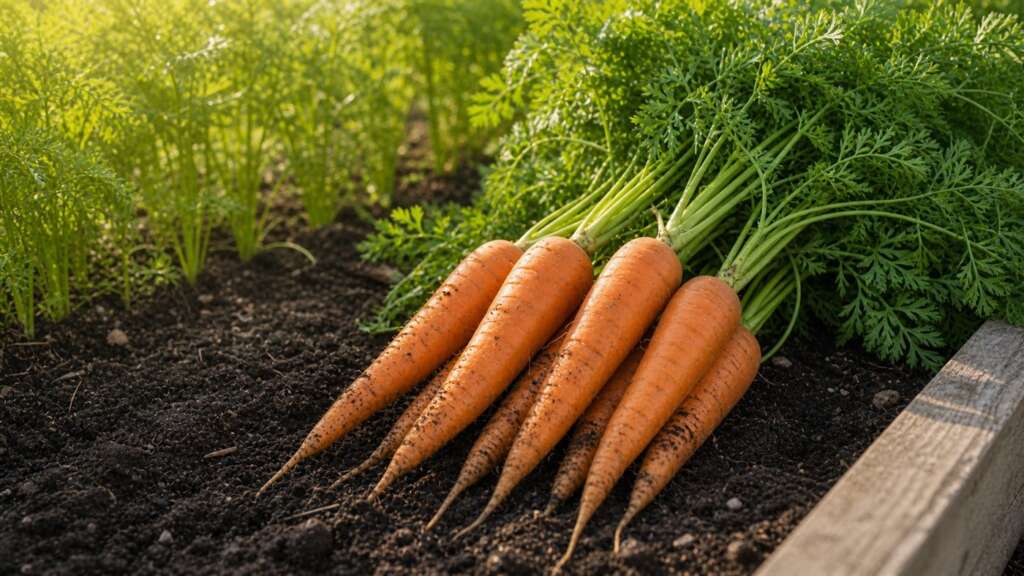
Danvers 126 is a classic American heirloom carrot bred for performance in heavier, less-than-perfect soils where slender varieties tend to twist or break. The roots taper to a blunt point, hold their color well, and store nicely after a fall harvest, which is why this strain has stayed in seed catalogs for so long. Grown well, it is a forgiving, beginner-friendly carrot. The work happens at sowing time: a smooth seedbed, shallow planting, and patient surface watering through germination.
Quick How-to
Direct sow Danvers 126 in loose, stone-free soil where the roots will mature, since carrots do not transplant well. Sow about 1/4 inch deep in cool to mild conditions, roughly 50 to 80 F soil temperature, and keep the surface evenly moist. Germination is slow by garden standards, often 10 to 21 days, so plan for steady watering during that window. Thin seedlings early to about 1 to 3 inches apart so each root has room to size up properly.
Quick Guide
| Fact | Recommendation |
|---|---|
| Best method | Direct sow only; do not start indoors or transplant |
| Sowing depth | About 1/4 inch, lightly covered |
| Germination temperature | About 50 to 80 F soil; cool to mild conditions work best |
| Days to germination | About 10 to 21 days, sometimes longer in cool soil |
| Light for germination | Cover lightly with fine soil or vermiculite; keep surface moist |
| Spacing | Thin to about 1 to 3 inches apart; rows about 12 to 18 inches |
| Sun | Full sun; tolerates light afternoon shade in summer heat |
| Water | Steady, even moisture from sowing through root sizing |
| Days to harvest | Commonly about 75 days from sowing, with weather and spacing affecting timing |
| Plant size | Roots commonly reach 6 to 8 inches, with broad shoulders and a tapered, blunt-tipped shape |
Before You Sow
Carrots reward soil preparation more than fertilizer. Choose a sunny bed and loosen the soil at least as deep as the mature root, ideally a little deeper. Pull out stones, break up clods, and rake the surface smooth so tiny seeds settle at an even depth. Danvers 126 is more forgiving than long, slender carrots in heavier soils, but it still needs a clean root zone to grow straight.
Skip fresh manure and heavy nitrogen feeds before planting. Both can push lush tops at the expense of roots, and fresh manure is a classic cause of forking and hairy side roots. If your soil is genuinely heavy clay, work in finished compost a season ahead when possible, or build a raised row 6 to 8 inches high with loosened soil and compost so roots have somewhere clean to grow down into.
Water the bed before sowing if it is dry. Tiny carrot seed is light and easy to displace, so a pre-moistened seedbed gives more even depth than sowing into dust and watering hard afterward.
Direct Sowing
Mark a shallow furrow about 1/4 inch deep with the edge of a board, a trowel, or your finger. Sow seed thinly. Carrot seed is small and a heavy hand here is the single biggest reason new gardeners end up thinning a crowded jungle later. If you cannot sow thinly by hand, mix the seed with a small amount of dry sand to spread it more evenly along the row.
Cover lightly with fine soil, sifted compost, or vermiculite. Vermiculite is especially helpful for carrots because it holds moisture, resists crusting, and lets weak seedlings push through cleanly. Press the row gently for soil contact and water with a fine spray so seed is not washed into clumps or low spots.
From this point on, the job is simple but unforgiving: keep the surface evenly moist until seedlings emerge. Carrots germinate slowly, and a single hot dry afternoon can dry the seed zone enough to stall the whole row. In hot or windy weather, light shade cloth or a single layer of burlap laid right on the row can keep the surface from drying. Check daily and lift any cover as soon as the first seedlings appear.
Why Indoor Starting Is Not Recommended
Carrots form a single taproot from the start, and that taproot is what becomes the carrot you eat. Pulling and replanting almost always damages or kinks it, which is why transplanted carrots so often come up forked, stubby, or twisted. Indoor starting also wastes the head start, since carrot tops grow slowly compared to the time it takes to sow a fresh row outdoors. Direct sowing is not just preferred for Danvers 126; it is the method the crop is built for.
If you want an earlier crop, sow outdoors as soon as the soil can be worked and warmed slightly, or use a low tunnel, cold frame, or row cover to nudge soil temperatures up a few degrees rather than starting indoors.
Thinning and Spacing
Thinning is where many home rows of carrots quietly fail. Crowded seedlings look healthy for the first few weeks, then quietly compete underground while you assume everything is fine. By the time roots are obviously stunted, it is too late.
Begin thinning as soon as seedlings are large enough to handle, usually when they have two or three true leaves. Pinch or snip extras at soil level rather than yanking them, which can disturb neighbors. Aim for about 1 inch apart at the first pass. Two to three weeks later, thin again to a final spacing of about 2 to 3 inches between plants. The thinnings from the second pass are usually small but edible.
Rows should be far enough apart to weed comfortably, about 12 to 18 inches. Carrot tops are not aggressive, so the limit is your access, not the plant.
Soil, Sun, and Water
Full sun produces the strongest tops and the most reliable sizing. In hot summer climates, light afternoon shade can reduce stress and bitter or woody texture, but heavy shade slows everything down.
Soil should be loose, drain well, and stay evenly moist. Carrots dislike both drought and saturated soil. The most useful watering habit during root sizing is slow, deeper soakings a couple of times a week rather than light daily sprinkles, which only wet the top inch. Once seedlings are established and have true leaves, a light mulch between rows can help hold moisture and slow weed pressure.
Avoid heavy nitrogen feeding during the season. If the patch needs a boost, a balanced or lower-nitrogen amendment is safer than a quick green-up fertilizer, which tends to grow tops at the expense of the root.
Top Mistakes
- Letting the seed row dry out: Carrots can take two to three weeks to germinate. A single dry day during that window can end the row. Cover lightly, mulch with vermiculite or a thin board, and check moisture daily until sprouts appear.
- Skipping or delaying thinning: Crowded carrots stay small and twisted no matter how perfect everything else is. Thin in two passes and accept that you are growing fewer, better roots.
- Planting into rocky or compacted soil: Danvers 126 handles heavier soil better than most, but it still cannot grow straight through buried rocks, clods, or hardpan. Loosen and clear the bed before sowing.
- Adding fresh manure or high-nitrogen fertilizer: Both push leafy growth and are common causes of forking, hairy side roots, and disappointing flavor.
- Sowing too deeply: Carrot seed is small and lacks the energy reserves to push through a thick cover. About 1/4 inch is the maximum; in fine, moist soil even a little less can work.
Troubleshooting by Symptom
| Symptom | Likely causes | What to do next |
|---|---|---|
| No sprouts after 21 days | Dry seed zone, soil crusting, seed buried too deep, or very cold soil | Keep the row consistently moist, soften any crust with a fine mist, and resow shallowly if the row remains empty |
| Patchy, gappy rows | Uneven sowing depth, seed washed by hard watering, or dry spots along the row | Resow thinly into the gaps, water with a fine spray, and consider a board or row cover over the seed zone to even out moisture |
| Forked or split roots | Stones or clods in the root zone, fresh manure, recent transplant disturbance, or compaction | Improve soil prep next time, skip fresh manure, and consider a raised row of loose soil for the next sowing |
| Hairy roots with many side rootlets | Excess nitrogen, irregular moisture, or stress during sizing | Stop nitrogen feeding, water more evenly, and harvest before stress worsens |
| Small, stunted roots | Crowding, drought, or short growing window | Thin earlier and more aggressively, water deeply during sizing, and start fall sowings on time |
| Green shoulders at harvest | Tops of roots exposed to sun | Hill a little soil or mulch over the shoulders mid-season; cosmetic only, still edible |
| Cracked roots | A heavy soaking after a dry stretch, or harvest delayed too long | Even out watering, mulch lightly, and harvest before roots oversize |
| Bitter or woody flavor | Heat stress, drought, or roots left in the ground too long | Sow for spring and fall harvests where possible, water consistently, and pull a test root before assuming the whole row is ready |
Germination Diagnostics
If the row is slow to sprout, work through the seed environment in order before changing seed or starting over. Check depth first by gently scraping a small section. Seed buried much deeper than 1/4 inch can use up its energy before reaching the surface. Next, feel the soil temperature with your hand a few inches down. Cold, soggy spring soil germinates carrots slowly, and very hot summer soil can shut germination down entirely.
Moisture is the most common failure point. The top half inch should feel like a wrung-out sponge, not glossy wet and not dusty dry. A thin crust on the surface, even when soil below is damp, can stop tiny seedlings cold. Break the crust gently with a fingernail or a light watering, and consider covering the next sowing with vermiculite, which never crusts.
Finally, inspect the row for uneven depth and surface crusting. Carrot seed can settle into cracks or be washed into low spots, leaving a patchy stand even when the rest of the row was prepared well. Resow gaps into a smooth surface and water with a fine spray.
Timing and Climate Notes
Danvers 126 is at its best as a cool-window crop. In most climates, spring sowings begin a few weeks before the last frost as soon as the soil can be worked, and fall sowings go in about 10 to 12 weeks before the first expected fall frost. Fall-grown carrots are often sweeter, since cool nights concentrate sugars in the root, and Danvers 126 is a strong candidate for fall harvest because of its solid storage character.
In hot summer regions, skip a midsummer sowing or use shade cloth and consistent watering to carry seedlings through heat. In short-season northern gardens, focus on a strong main sowing in late spring and a smaller fall succession.
Container and Small-Space Notes
Danvers 126 roots commonly reach about 6 to 7 inches, so containers should be at least 10 to 12 inches deep to give roots room without bumping the bottom. A deep window box, half barrel, or fabric grow bag all work. Use a light, well-draining potting mix, not heavy garden soil, and avoid adding gravel at the bottom, which actually worsens drainage.
Containers dry faster than ground beds, especially during the long germination window, so check the surface daily and water gently. Once established, deeper, less frequent watering produces better roots than light daily sprinkles.
Harvest and Storage
Most home gardens can begin pulling Danvers 126 carrots when shoulders are about 3/4 to 1 inch across, often around 75 days from sowing. Cool weather, crowding, and dry soil can extend that window, so loosen the soil beside one test root before harvesting the whole row. In heavy ground, lift beside the root with a fork so the top does not snap off.
For storage, harvest before hard freezes, trim tops to about a half inch, brush off loose soil without washing, and store in a cold, humid spot such as a root cellar, a refrigerator crisper, or damp sand in a cool basement. Danvers 126 is one of the more reliable storage carrots when handled cool and humid.
Seed Saving
Carrots are biennial, so seed saving requires overwintering selected roots and letting them flower in their second year. In mild climates, healthy roots can be left in the ground under mulch; in cold climates, lift the best roots in fall, store cool and humid, and replant in spring. Carrots cross readily with other carrot varieties and with wild carrot (Queen Anne’s lace) growing nearby, which can affect the next generation. For most gardeners, growing Danvers 126 for roots is simpler than maintaining an isolated true-to-type seed line at home.
Storing Leftover Seed
Keep unused Danvers 126 Carrot seed in its labeled packet inside a sealed container in a cool, dry, dark indoor location. Avoid garages, sheds, greenhouses, and sunny windowsills, where temperature and humidity swing sharply. Label home-saved seed with the variety and harvest year before storing it.
FAQ
Why did my carrots fork?
The usual suspects are rocks or clods in the root zone, fresh manure, compacted soil, or root disturbance from transplanting or aggressive cultivation. Danvers 126 handles heavier soil better than slender varieties, but it still needs a clean path down.
Can I start carrots indoors to get a head start?
Direct sowing is strongly preferred. Transplanted carrots almost always fork or twist because the taproot does not recover from being moved. For an earlier outdoor crop, use a row cover or low tunnel to warm the soil instead.
Why did nothing sprout in my carrot row?
The most common reasons are a dry or crusted soil surface during the slow germination window, seed sown too deeply, or a seedbed that became too warm. Keep the surface evenly moist, cover with a thin layer of vermiculite, and resow gaps shallowly during a cooler window.
When should I thin Danvers 126?
Begin as soon as seedlings are large enough to handle, usually at two to three true leaves. Thin in two passes to a final spacing of about 2 to 3 inches. Snip rather than pull to avoid disturbing neighbors.
How do I know when to harvest?
Look for shoulders pushing above the soil at about 3/4 to 1 inch across, usually around 70 to 75 days from sowing. Pull a single test root before harvesting the whole row.