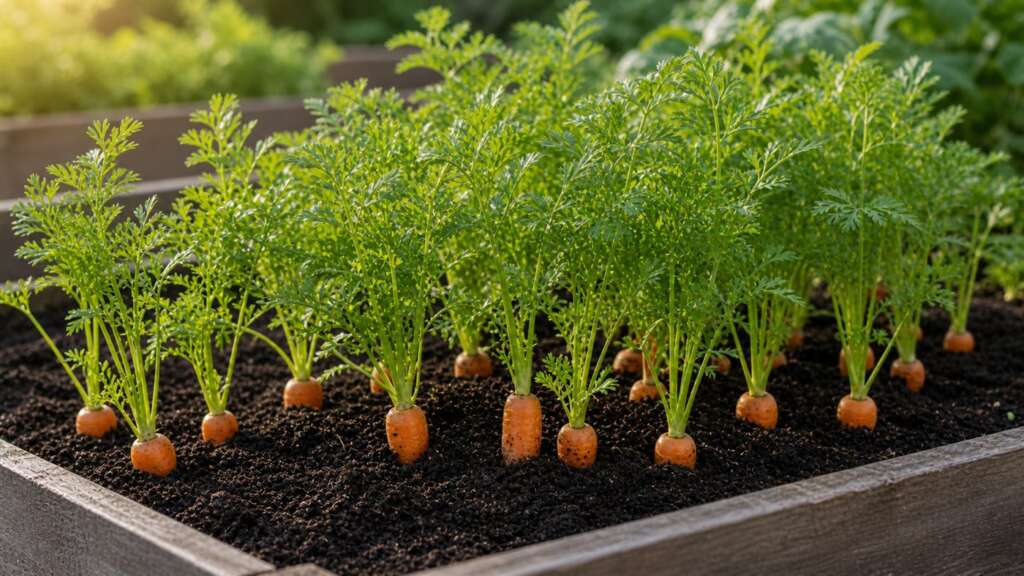
Little Fingers is a small, sweet baby carrot grown for its short, tender roots that mature well before standard carrots are ready. The compact size makes it one of the friendlier carrots for containers, raised beds, shallow soil, and gardeners who do not want to fight rocks for every root. Like all carrots, it is a cool-season crop that should be direct sown where it will mature, kept evenly moist through germination, and thinned early so each root has room to size up.
Quick How-to
Direct sow Little Fingers Carrot in loose, stone-free soil as soon as the bed can be worked in spring, then again in late summer for a fall crop where seasons allow. Cover seed about 1/4 inch deep, firm the soil gently, and keep the surface evenly moist until seedlings appear. Germination usually takes about 10 to 21 days depending on soil temperature, and the row should be thinned to about 1 to 2 inches between plants once seedlings are large enough to handle. Do not transplant; carrots resent root disturbance and tend to fork when moved.
Quick Guide
| Fact | Recommendation |
|---|---|
| Best method | Direct sow where plants will mature; do not transplant |
| Sowing depth | About 1/4 inch, covered lightly with fine soil |
| Germination temperature | Wide range of about 50 to 85 F; steadier in cool to mild soil |
| Days to germination | About 10 to 21 days; cooler soil sprouts more slowly |
| Light for germination | Cover seed lightly; keep the surface moist, not exposed |
| Spacing | Thin to about 1 to 2 inches apart, rows 6 to 12 inches apart |
| Sun | Full sun; light afternoon shade is acceptable in hot weather |
| Water | Steady, even moisture, especially at the surface during germination |
| Days to harvest | Begin checking at about 55 days; most roots are ready in roughly 55 to 70 days |
| Mature root size | A naturally petite baby type, commonly about 3 to 4 inches long |
Before You Sow
Carrots reward soil preparation more than fertilizer. Loosen the bed to at least the depth of the mature root, removing rocks, sticks, and clods as you go. Little Fingers is short enough that 6 inches of well-worked soil is usually enough, but the top few inches matter most: that is where the seedling has to push through and where the early root starts to form.
Avoid fresh manure or heavy nitrogen feeding before sowing. Both can push leafy top growth at the expense of clean roots and are a common cause of forked or hairy carrots. If your soil is heavy clay or full of stones, build up: a raised bed, a deep container, or a wide row mounded with screened compost and coarse sand can give you the smooth, friable surface that small carrot seedlings need.
Rake the bed level and water it lightly the day before sowing. Damp soil holds the seed in place and helps the row stay moist during the first critical days.
Direct Sowing
Sow seed thinly in shallow furrows about 1/4 inch deep, or scatter and rake in gently for a wide row. Carrot seed is tiny and easy to overplant; mixing it with a pinch of dry sand or coffee grounds before sowing makes spacing easier and reduces thinning later. Cover with fine soil, sifted compost, or vermiculite, then firm the surface so the seed is in contact with damp soil rather than air pockets.
Water with a gentle spray rather than a hard stream, which can wash seed into low spots or expose it. The single most important job during germination is keeping that top 1/4 inch from drying out. Carrots can take three weeks to surface, and a single hot, dry afternoon can crust the row and stall the entire planting. A light board, burlap, or floating row cover laid directly on the soil can hold moisture in; just check daily and remove it the moment seedlings appear.
For a steadier supply, sow small successions every two to three weeks until early summer, then resume in late summer for fall harvest. A short crop like Little Fingers is well suited to this rhythm because it matures quickly.
Indoor Starting
Indoor starting is not recommended for carrots. The taproot forms early and dislikes disturbance, so seedlings moved from cells to the garden frequently fork, twist, or stall. If your spring is unusually cold and wet, it is better to delay sowing or warm the soil with a cover than to start carrots in trays.
Thinning Instead of Transplanting
Thinning is not optional with carrots; it is the difference between a row of usable roots and a row of crowded threads. Begin when seedlings are an inch or two tall and you can handle them without crushing the row. Snip extras off at the soil line with small scissors rather than pulling, which can disturb the neighbors you want to keep.
For Little Fingers, final spacing of about 1 to 2 inches is reasonable; the variety stays slim and short, so it does not need the elbow room a long Imperator type would. Tops can be added to salads or stock as you thin, so nothing is wasted.
Soil, Sun, and Water
Give carrots full sun, with light afternoon shade as a tool for hot-summer fall crops rather than a default. The soil should be loose, well drained, and free of fresh organic chunks. A pH near neutral, roughly 6.0 to 6.8, is comfortable for most carrots; verify against local extension guidance if your soil is unusual.
Water deeply and consistently once the row is established. The pattern to avoid is the dry-then-flood cycle: it crusts the soil, stresses young roots, and contributes to splitting and cracking later in the season. A finger pressed into the bed should find moisture within an inch of the surface during active growth. A light mulch of fine compost or shredded leaves between rows can hold that moisture in once seedlings are a few inches tall, but keep mulch off the crowns themselves.
Top Mistakes
- Letting the seed row dry out. This is the leading cause of carrot failure. The seed needs three weeks of patience and consistent surface moisture; a single dry, windy afternoon can end the whole planting.
- Sowing too deep. Tiny carrot seedlings cannot push up through 1/2 inch of crusted soil. Cover lightly with fine material and firm gently.
- Skipping or delaying thinning. Crowded carrots stay small, twisted, or pale. By the time tops look crowded, the roots already are.
- Working in fresh manure or high-nitrogen fertilizer. Both promote forking, hairy roots, and lush tops over clean roots. Feed the bed the season before, not the week of sowing.
- Trying to transplant. Even careful transplanting tends to deform the taproot. Direct sow where the carrots will mature.
- Growing in rocky or compacted soil. Every stone is a potential fork or stub. For Little Fingers, you can get away with shallower soil than a long carrot needs, but the top layer still has to be smooth.
Troubleshooting by Symptom
| Symptom | Likely causes | What to do next |
|---|---|---|
| No sprouts after three weeks | Surface dried or crusted, seed buried too deep, or soil too hot | Keep the row consistently damp under shade or cover, resow shallowly, and favor cool-season timing |
| Patchy, gappy rows | Uneven sowing, seed washed by hard watering, or dry pockets in the row | Sow more thinly with a sand mix next time, water with a gentle spray, and overseed thin spots after the first true leaves appear |
| Seedlings emerge but stall | Cold wet soil, crusted surface, or heavy nitrogen feeding | Loosen the surface gently, hold off feeding, and let warmer days catch them up |
| Forked or twisted roots | Stones or clods in the bed, fresh manure, double-planted seedlings, or any root disturbance | Improve bed prep next round, thin earlier, and avoid disturbing neighbors when weeding |
| Short or stubby roots | Compacted soil, crowding, or harvest too early | Loosen soil deeper next time, thin more aggressively, and test-pull a root before harvesting the row |
| Hairy or fibrous roots | Inconsistent moisture, excess nitrogen, or stress during sizing | Water on a steadier rhythm, mulch lightly, and avoid late nitrogen pushes |
| Green shoulders | Tops of roots exposed to sunlight as they size up | Hill a thin layer of soil or compost over the shoulders during growth |
| Bitter or harsh flavor | Heat stress, drought, or roots left in the ground too long | Harvest promptly, mulch to cool soil, and sow heat-sensitive plantings for spring and fall windows |
| Cracked or split roots | Sudden heavy watering after a dry stretch | Keep moisture even rather than rescue-watering, and harvest mature roots before heavy rains |
Germination Diagnostics
Carrot germination can feel slow even when everything is going well, so resist the urge to dig and check after a few days. Instead, work through the environment in order.
Start with depth. Most carrot failures trace to seed planted too deep or surface crusting that traps seedlings underneath. A pencil-thin layer of vermiculite or sifted compost over the row helps because it stays loose even when watered.
Then check temperature. Carrot seed will sprout across a broad range, but cool to mild soil tends to produce the steadiest stands. Hot, dry weather speeds drying more than it speeds germination, and the row often fails from thirst before it fails from heat directly.
Moisture is the third checkpoint. The seed zone should feel evenly damp, like a wrung-out sponge, every time you check. If the surface is shiny or puddled, you are saturating it; if it is dusty by midday, you are losing the row. A shade cloth, board, or burlap laid right on the soil can buy time between waterings, but lift it the day sprouts appear.
Finally, check light and airflow after emergence. Once the row is up, it does not need pampering; it needs sun, a clean surface, and prompt thinning.
Timing and Climate Notes
Treat Little Fingers as a cool-window crop. Spring sowings made as soon as the soil can be worked, and late-summer sowings timed about 10 to 12 weeks before the first fall frost, tend to be the most forgiving. Midsummer sowings can succeed with shade and steady moisture, but flavor and texture are often best when roots mature in cool weather.
In hot climates, treat fall as the main carrot season and use spring for a smaller, earlier harvest. In short-season northern gardens, an early spring sowing of a quick variety like Little Fingers often beats a long-carrot planting that runs out of season before sizing up.
Container and Small-Space Notes
Little Fingers is one of the easier carrots for containers because the mature root is short. A pot at least 8 inches deep, with drainage holes and a light potting mix, can grow a respectable patch. Wider, shallower planters work better than narrow deep ones because they offer more sowing surface and dry less aggressively at the edges.
Container surfaces dry faster than ground beds, so check moisture daily during germination. Once seedlings are up, water when the top inch begins to dry; thin as you would in the garden, and feed lightly with a balanced fertilizer once tops are a few inches tall if the mix is low in nutrients.
Harvest and Kitchen Use
Begin checking roots when the variety is approaching its expected days-to-maturity window. Brush soil away from the shoulder of a root or pull a test carrot from the end of the row; if shoulders are colored up and the root is firm and full at the expected size, the rest of the row is usually close.
Little Fingers is bred to be sweet and tender at a small size, so harvest on the early side rather than waiting for a long carrot. Twist or lift roots straight up rather than yanking sideways. Trim tops to about half an inch above the crown for storage; leaving full greens attached pulls moisture out of the root quickly.
Roots store well for several weeks in the refrigerator in a sealed bag or container. For longer keeping, cool, humid storage near 32 to 40 F is the traditional target; verify against your local conditions and intended use.
Seed Saving
Saving true carrot seed is more involved than most home gardeners expect because carrots are biennial. Roots have to overwinter in the ground or in cold storage, then be replanted in spring to flower and set seed in their second year. Carrots also cross readily with other carrot varieties and with wild Queen Anne’s lace growing nearby, so isolation or hand pollination is needed to keep a variety true.
For most gardeners, replacing seed every few years from a trusted source is simpler than maintaining a seed line. If you do save, label clearly with variety and year, and expect some variability in the next generation.
Storing Leftover Seed
Keep unused Little Fingers Carrot seed in its labeled packet inside a sealed container in a cool, dry, dark indoor location. Avoid garages, sheds, greenhouses, and sunny windowsills, where temperature and humidity swing sharply. Label home-saved seed with the variety and harvest year before storing it.
FAQ
How long does it really take Little Fingers Carrot to germinate?
Most rows show seedlings within 10 to 21 days. Cool, damp soil at the lower end of the temperature range tends to slow things down without harming the seed; hot, dry surfaces are far more likely to end the planting.
Can I grow Little Fingers Carrot in a container?
Yes, and it is one of the better choices for pots because the root is short. Use a pot at least 8 inches deep with drainage, a light potting mix, and a position in full sun. Watch moisture closely during germination.
Why are my carrots forked or twisted?
The most common causes are stones or hard clods in the bed, fresh manure or chunky compost worked in too close to sowing, double-planted seedlings competing for the same space, and any disturbance to the young taproot. Smoother soil and earlier thinning solve most cases.
Do I really need to thin carrots?
Yes. Crowded carrots stay small and tangle around each other. Snip extras at the soil line rather than pulling, and aim for about 1 to 2 inches between plants for Little Fingers.
When should I harvest Little Fingers Carrot?
Start checking around the expected maturity window on the packet and pull a test root. Because Little Fingers is bred to be small and sweet, it is usually better to harvest on the early side than to leave roots in hot, dry soil hoping for more size.
Can I sow carrots in summer for a fall crop?
In many regions, yes. Time the sowing about 10 to 12 weeks before your first expected fall frost, keep the row shaded and moist during germination, and let cooling weather do the finishing.