
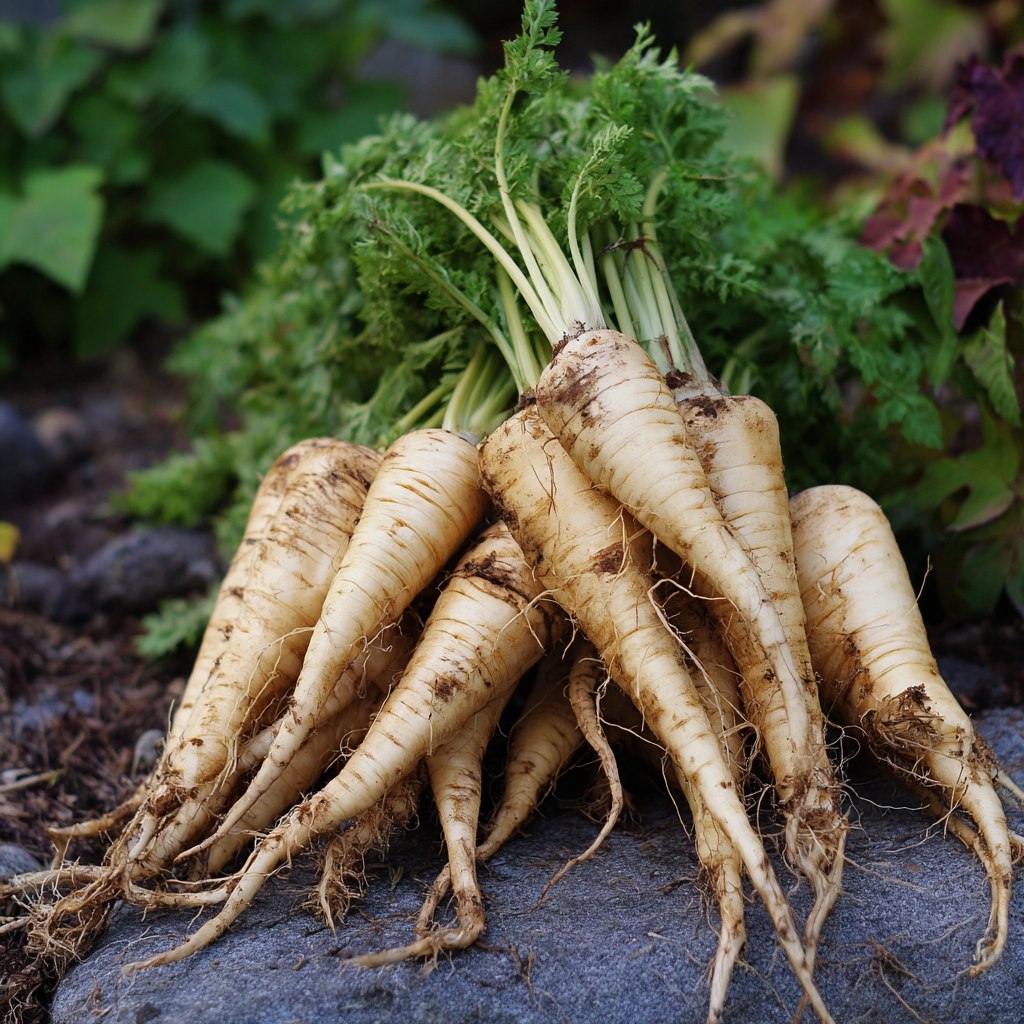
Hollow Crown is a historic parsnip cultivar grown for long, tapered, creamy-white roots with broad shoulders and sweet flavor after cold weather. In deep, stone-free soil, roots commonly reach about 10 to 16 inches. The crop rewards patience: germination is slow, seedlings begin small, and roots need a long cool season to mature. A consistently damp seedbed, even shallow sowing, early thinning, and loose soil are the foundations of a straight, full harvest.
Quick How-to
Direct sow fresh Hollow Crown seed outdoors in early spring as soon as the soil can be worked. Do not transplant. Plant 1/4 to 1/2 inch deep in a smooth, deeply loosened bed and keep the upper soil continuously moist until seedlings emerge, often in 14 to 21 days and sometimes longer in cold soil. Thin seedlings to about 3 to 4 inches apart. Water evenly through the long growing season, avoid fresh manure and excess nitrogen, and harvest after cool weather or frost has improved sweetness.
Quick Guide
| Fact | Recommendation |
|---|---|
| Crop type | Cool-season biennial grown as an annual root vegetable |
| Best method | Direct sow only; transplanting damages the developing taproot |
| Sowing depth | 1/4 to 1/2 inch |
| Germination temperature | Best around 55 to 75 F; parsnips can germinate in cooler soil but more slowly |
| Days to germination | Commonly 14 to 21 days; allow up to 28 days in cool or uneven conditions |
| Surface management | Keep the top layer evenly moist and free of crusting throughout the long germination window |
| Final spacing | Thin to about 3 to 4 inches apart, with rows 18 to 24 inches apart |
| Sun | Full sun; light partial shade is tolerated where summers are hot |
| Soil | Deep, loose, well-drained, stone-free sandy loam |
| Water | Keep the seed zone steadily damp; provide even moisture during root enlargement |
| Time to harvest | Usually about 100 to 120 days or longer, depending on weather and planting date |
| Mature root | Long, tapered, creamy root commonly 10 to 16 inches in suitable soil |
Before You Sow
Begin with the seedbed. Rake it smooth, mark a level furrow, and water before sowing so the seed is not displaced afterward. Because parsnips emerge slowly, plan to keep the top layer evenly damp for several weeks without letting it crust or wash into low spots.
Choose the deepest loose bed you can prepare. Hollow Crown’s long root exposes every buried stone, compacted layer, and clod. Loosen soil at least 12 inches and deeper where practical, removing rocks and woody debris. Raised beds work well if they contain a deep, mineral-based soil rather than a shallow layer over hard ground. Deep containers can work when they provide at least 14 to 18 inches of root depth and reliable drainage.
Use finished compost to improve structure, but do not add fresh manure before planting. Fresh organic matter, high nitrogen, and concentrated fertilizer near the root can encourage branching, hairy roots, or excessive tops. A soil test is the best basis for amendments. Rake the surface fine and level so shallow seed has even contact with moist soil.
Direct Sowing
Sow as soon as the garden can be worked in spring. Hollow Crown needs a long season, and early planting lets roots size during summer before cold weather improves flavor. Make a shallow furrow 1/4 to 1/2 inch deep. Because germination is naturally slow, place seed more generously than the final stand requires. Cover with fine soil, firm gently, and water with a soft spray.
The critical job for the next three weeks is keeping the top layer damp without waterlogging it. A board laid over the row can slow evaporation, but check underneath daily and remove it as soon as the first seedlings appear. An easier visible cover is a thin layer of fine vermiculite beneath lightweight row cover. Heavy rain followed by sun can form a crust that tiny seedlings cannot break. If the surface crusts, soften it with a fine mist rather than digging through the row.
Some gardeners mix a small amount of radish seed into the row. Radishes emerge quickly, mark the line for weeding, and help break the surface. Pull them early so they do not compete with parsnips. This technique does not speed parsnip germination; it simply makes the bed easier to manage while waiting.
Thinning and Early Care
Parsnip seedlings first appear as two narrow seed leaves and can be mistaken for grass. Weed carefully by hand while the plants are small. Once seedlings reach 2 to 3 inches tall, thin them to about 3 to 4 inches apart. Snipping unwanted seedlings at soil level avoids pulling on the roots of the keepers.
Do not postpone thinning in hopes that every seedling can remain. Crowded plants may grow abundant tops but produce thin, twisted, or undersized roots. Hollow Crown needs enough shoulder room to make a broad top and a long taper. After thinning, apply a light mulch between rows to preserve moisture and suppress later weeds, keeping heavy material away from the crowns.
Parsnip foliage contains compounds that can make skin unusually sensitive to sunlight. Wear gloves, long sleeves, and long pants when handling wet or broken foliage, especially on bright days, and wash exposed skin. This is particularly important during thinning, weeding, and harvest when leaves may brush against arms and legs.
Soil, Sun, and Water
Full sun supports the strongest root growth. In very hot areas, brief afternoon shade can reduce stress, but deep shade limits energy available to the root. Hollow Crown grows best in well-drained sandy loam. Heavy clay can be improved over time with finished compost, but do not create a sharply different pocket of fluffy material in a dense bed; roots may branch when they encounter abrupt layers.
Keep moisture consistent from sowing through root enlargement. Drought can make roots woody, fibrous, or undersized. A sudden soaking after a dry period can split roots. Water deeply enough to reach the developing taproot, then allow excess water to drain. Shallow daily sprinkling after establishment encourages surface roots without wetting the full root zone.
Side-dress only when growth and a soil test indicate a need. Too much nitrogen makes a large canopy at the expense of the root. Cultivate shallowly because the shoulders and fine feeder roots are easily injured. As the root tops enlarge, keep them lightly covered with soil or mulch to protect them from exposure and injury.
Growing Through Summer and Cold
Hollow Crown grows leaves and roots through summer but develops its best sweetness after cold conditions begin converting stored starches to sugars. A light frost is beneficial rather than destructive. In regions where the ground remains workable, roots can stay in the bed into winter under a deep mulch and be dug as needed.
Do not leave roots until warm spring growth resumes. Once a vernalized parsnip begins its second-season flower stalk, the eating root becomes fibrous and loses quality. In severe-winter regions, harvest after fall frosts and store roots cold and humid. Mark the row before foliage dies back so buried roots can be found without damage.
Top Mistakes
- Letting the row dry between waterings: Parsnip emergence takes weeks, and the top layer can dry long before the soil below it. Use a fine spray and a light temporary cover to keep surface moisture steady.
- Starting seedlings in pots: The edible taproot begins early and is easily bent or forked. Direct sow Hollow Crown where it will mature.
- Letting the seedbed dry during the long wait: Germination may take three weeks or more. Maintain damp surface soil for the entire period.
- Planting into rocks, clods, or compacted layers: Long Hollow Crown roots fork or stop when the growing tip meets an obstruction.
- Skipping early thinning: Crowding produces narrow roots and makes harvest difficult. Leave about 3 to 4 inches between plants.
- Adding fresh manure or excessive nitrogen: Rich, uneven soil can favor leafy tops, hairy side roots, and branching instead of a clean taper.
- Handling foliage with bare skin in bright sun: Parsnip sap can cause a phototoxic skin reaction. Cover skin and wear gloves.
Troubleshooting by Symptom
| Symptom | Likely causes | What to do next |
|---|---|---|
| No seedlings after 21 to 28 days | Dry seed zone, deep sowing, crusted surface, or very cold soil | Soften the surface with mist, check depth and temperature, and resow at 1/4 to 1/2 inch if the row remains empty |
| Germination appears in scattered clumps | Uneven depth, seed washed by watering, dry pockets, or variable soil texture | Level the next seedbed carefully, firm seed evenly, and water with a fine spray |
| Roots are forked or have several legs | Stones, compacted soil, transplant injury, fresh manure, or damage to the growing tip | Prepare a deeper stone-free bed next season and direct sow without disturbing young roots |
| Roots are long but pencil-thin | Crowding, shade, low fertility, drought, or harvest too early | Thin to 3 to 4 inches, give more sun, correct soil needs, and allow the full season |
| Huge tops but disappointing roots | Excess nitrogen or plants spaced too closely | Stop high-nitrogen feeding and thin correctly in future sowings |
| Roots split lengthwise | A dry period followed by heavy rain or irrigation | Maintain even moisture and mulch after seedlings are established |
| Roots are tough or strongly flavored | Drought, hot-season harvest, overmaturity, or spring regrowth | Water consistently and harvest after cold weather but before second-year growth begins |
| Leaves develop spots or decline early | Leaf disease, poor airflow, prolonged wet foliage, or natural late-season senescence | Water at soil level, keep rows weeded, remove badly diseased tissue with covered skin, and rotate Apiaceae crops |
Harvest and Kitchen Use
Begin harvesting once roots have reached usable diameter, commonly after 100 to 120 days, but flavor is usually best after one or more frosts. Water the bed the day before digging if soil is dry. Insert a garden fork well beside the root and lift the soil before pulling; Hollow Crown roots can extend a foot or more and snap if tugged from firm ground.
Wear gloves and cover skin while removing tops. Trim foliage to about 1/2 inch above the crown for storage. Parsnips can be roasted, mashed, pureed into soup, or added to stews. Their sweet, earthy flavor intensifies with browning. Very small roots can be cooked whole; large roots may have a firmer central core that can be removed if desired.
Store unwashed, sound roots close to 32 F with high humidity, or keep them layered in slightly damp sand in a cold root cellar. Check stored roots and remove any that soften or decay. Where winter soil does not freeze solid, mulching the row and digging roots as needed often preserves quality best.
Seed Saving
Hollow Crown is a biennial. A root grown in the first season must experience an extended cool period before it flowers in the second. Save several straight, healthy roots that show the expected broad shoulder, long taper, cream color, and good flavor. In mild climates they can overwinter in the ground. Where winters are severe, lift them, trim leaves without cutting the crown, store cold and humid, and replant in spring with the crown at soil level.
Parsnips are insect pollinated and can cross with other parsnip cultivars and wild parsnip. Grow only one flowering parsnip cultivar in the area, use substantial isolation, or enclose plants and manage pollination if maintaining true-to-type seed matters. Second-year plants become tall and may need support. Allow umbels to turn tan and dry, then cut them into a paper bag before seed drops. Dry further under cover, rub seed free, and wear protective clothing while handling foliage and stems.
Storing Leftover Seed
Keep unused Hollow Crown Parsnip seed in its labeled packet inside a sealed container in a cool, dry, dark indoor location. Avoid garages, sheds, greenhouses, and sunny windowsills, where temperature and humidity swing sharply. Label home-saved seed with the variety and harvest year before storing it.
FAQ
Why is Hollow Crown called Hollow Crown?
The name refers to the slight depression where the leaf stems meet the broad shoulder of the root. It does not mean the edible root should be hollow inside.
Can I start Hollow Crown parsnips indoors?
No. Starting in cells or pots risks bending or injuring the taproot, which causes forking. Direct sow in the final bed or in a deep permanent container.
Do parsnips need frost before harvest?
They can be eaten before frost, but exposure to cold generally makes the roots sweeter. Harvest after cool weather for best flavor, while digging remaining roots before warm spring regrowth.
Is parsnip foliage dangerous to touch?
Sap from parsnip foliage can make skin sensitive to sunlight and cause blistering. Wear gloves and cover arms and legs, particularly when leaves are wet, cut, or handled in bright sun.