
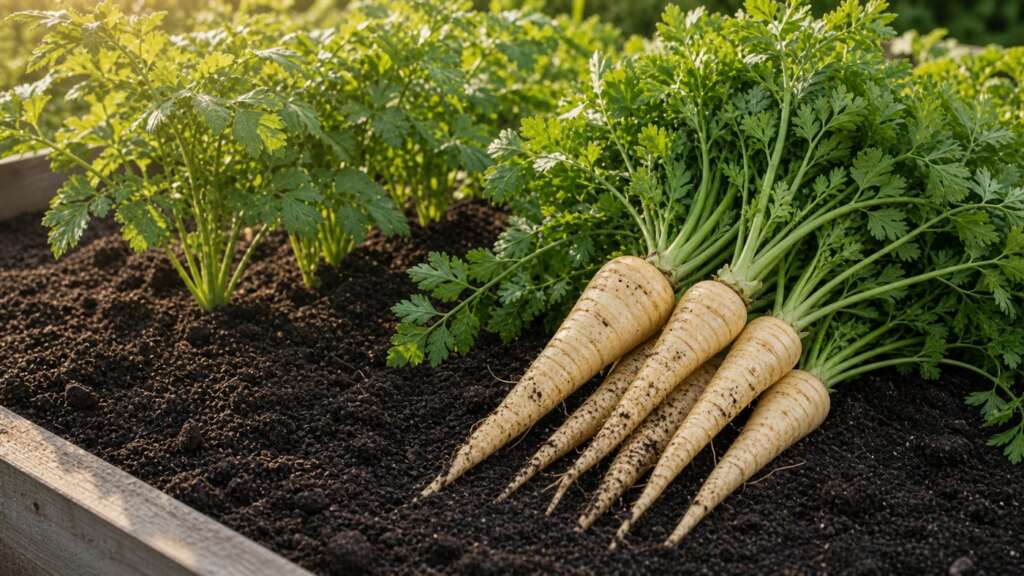
Harris Model is a classic heirloom parsnip grown for long, smooth, ivory-white roots and a sweet, nutty flavor that deepens after a few frosts. Parsnips are slow, patient root crops; the work happens at the seedling stage, when the row needs steady moisture for three or four weeks before anything green appears. Once they are up, they are forgiving.
Quick How-to
Direct sow Harris Model parsnip seed in loose, deep, stone-free soil in early spring once the ground can be worked, or in mild climates again in late summer for a fall and winter harvest. Sow about 1/4 to 1/2 inch deep, water the row gently, and keep the surface evenly moist for the full germination window. Expect sprouts in roughly 14 to 28 days, sometimes longer in cool soil. Thin early and plan on a long season before harvest. Flavor improves once roots have been kissed by cold weather.
Quick Guide
| Fact | Recommendation |
|---|---|
| Best method | Direct sow; do not transplant |
| Sowing depth | About 1/4 to 1/2 inch in fine, loose soil |
| Germination temperature | Steady soil around 50 to 70 F |
| Days to germination | About 14 to 28 days; sometimes longer |
| Light for germination | Cover lightly; keep the row from crusting |
| Spacing | Thin to about 3 to 4 inches in rows 12 to 18 inches apart |
| Sun | Full sun preferred; light afternoon shade tolerated in heat |
| Water | Steady, even moisture during germination and root sizing |
| Days to harvest | Commonly about 100 to 120 days, with the best flavor after cool weather |
| Plant size | Smooth tapered roots average about 10 inches when soil is deep, loose, and stone-free |
Before You Sow
Parsnips reward soil preparation more than almost any other home-garden crop. The taproot wants a deep, loose, open path to grow straight, so the goal before sowing is a friable bed at least 12 inches deep with no buried rocks, clods, or fresh chunks of organic matter to deflect the root. Loosen the bed thoroughly with a fork, rake the surface smooth, and break up any crust.
Avoid fresh manure or heavy nitrogen feeding in the parsnip bed. Both can cause roots to fork, fuzz, or grow lopsided. A finished compost worked in the previous season, or a light dressing of balanced amendment, is usually plenty. If your native soil is rocky or heavy clay, build a raised row or deeper bed; this single change tends to make the difference between forked, stubby roots and the long, clean shoulders Harris Model is known for.
Parsnips reward a carefully managed seedbed. Smooth the row, sow at an even shallow depth, and plan how you will keep the surface damp for several weeks without compacting it. A strip of burlap or lightweight row cover can slow evaporation; lift it as soon as seedlings begin to appear.
A practical caution: parsnip foliage contains compounds that can react with sunlight on skin to cause a rash known as phytophotodermatitis, especially in hot weather. When weeding, thinning, or harvesting in sun, wear long sleeves and gloves, and rinse your arms afterward.
Indoor Starting
Indoor starting is not recommended for parsnips. The long taproot is easily damaged by transplanting, and the disturbance is a leading cause of forked or stunted roots later. Direct sowing into the final spot is the right approach for this crop.
If you absolutely must use cells for a very early start, use deep individual containers and transplant while seedlings are still tiny, with minimal root disturbance. Expect a higher rate of misshapen roots compared with direct sowing.
Direct Sowing
Wait until the soil can be worked and has begun to warm. Parsnip will germinate in cool soil, but germination is steadier once the bed is reliably in the 50 to 70 F range. Mark out a shallow furrow about 1/4 to 1/2 inch deep, sow seed thinly, and cover lightly with fine soil, sifted compost, or vermiculite. Press the row gently for good seed-to-soil contact, then water with a gentle spray so the seed is not washed out of place.
The most useful trick for parsnips is to break the surface crust. A thin top layer of vermiculite or fine compost over the row holds moisture and stays soft, helping tiny seedlings push through. Some gardeners lay a board or piece of burlap over the row to slow evaporation, lifting it daily to check; remove it the moment sprouts appear.
Because parsnips are slow, many growers mark the row by sowing a fast radish every few inches along the line. The radishes germinate in a few days, hold the row’s location, break up the surface for the parsnips behind them, and are pulled before they crowd the slower crop.
Keep the row evenly moist for the full germination window. Drying out for even a day can kill seed that was already starting to swell. In hot or windy weather, water lightly once or twice a day rather than soaking the row.
Thinning and Spacing
Begin thinning as soon as seedlings are large enough to handle, usually when they have one or two true leaves. Snip unwanted seedlings at the soil line with small scissors rather than pulling, which can disturb the neighbors you want to keep. Aim for a final spacing of about 3 to 4 inches between plants, in rows 12 to 18 inches apart.
This step looks brutal but is essential. Crowded parsnips stay small, fork against each other, or grow long and skinny with poor flavor. The plants you remove are not wasted; the row is doing exactly what it should.
Soil, Sun, and Water
Parsnips prefer full sun and a long, even growing season. Light afternoon shade is tolerated in hot regions and can help reduce summer stress on developing roots.
Soil should be loose, deep, and well drained. Sandy loams with finished compost are ideal. Heavy, wet, or compacted soils are the most common cause of forked or short roots, and they also raise the risk of parsnip canker, a soil-borne issue that shows up as dark, sunken lesions on the shoulders of the root.
Water deeply and consistently. The goal is steady moisture down where the root is growing, not frequent shallow sprinkles. After seedlings establish, a layer of mulch helps hold moisture, moderate soil temperature, and reduce weed pressure between rows. Avoid sudden swings from bone-dry to soaked; uneven watering during root sizing can cause splitting and rough skin.
Top Mistakes
- Allowing the seedbed to crust: A hardened surface can block small seedlings before they emerge. Water with a fine spray and soften any crust gently rather than breaking the row apart.
- Letting the row dry during germination: Three or four weeks is a long time to keep a row evenly moist, but it is the single most important habit for parsnips. A surface crust or one dry day can end the planting.
- Rocky, compacted, or freshly manured soil: Each of these causes forked, hairy, or stubby roots. Prepare the bed thoroughly before sowing rather than trying to correct things later.
- Skipping the thin: Crowded parsnips look fine for weeks, then size up disappointing roots. Thin early and on schedule, even when it feels harsh.
- Harvesting too early: Parsnip flavor genuinely improves after cold weather, when starches convert to sugars. Pulling everything in early fall misses the best of the crop.
Troubleshooting by Symptom
| Symptom | Likely causes | What to do next |
|---|---|---|
| No sprouts after 3 to 4 weeks | Dry surface, crusting, uneven depth, or soil too cold | Keep the row evenly moist, soften any surface crust gently, check depth, and resow if needed |
| Patchy or thin germination | Uneven watering, seed washed out, deep or uneven covering, or hot dry spells | Smooth the bed before sowing, water gently with a fine spray, and consider a vermiculite topdressing |
| Forked or twisted roots | Rocks, clods, fresh manure, compacted soil, or transplant disturbance | Prepare deeper, looser, stone-free soil next season and always direct sow |
| Short, stubby roots | Shallow soil, compaction, or crowding | Loosen the bed deeper, thin earlier, and avoid hardpan layers under the row |
| Hairy or rough-skinned roots | Excess nitrogen, fresh manure, or inconsistent moisture | Skip nitrogen feeding, use only well-finished compost, and water consistently |
| Cracked or split roots | Heavy rain or watering after a dry stretch | Maintain even moisture and mulch to buffer rainfall and irrigation cycles |
| Dark sunken lesions on shoulders | Likely parsnip canker in wet, heavy, or low spots | Improve drainage, hill soil over shoulders, rotate beds, and harvest affected roots first |
| Yellowing or stalled tops in summer | Heat stress, drought, or compacted crust | Water deeply, mulch the row, and provide light afternoon shade in extreme heat |
Germination Diagnostics
When a parsnip row stays bare past two weeks, work through the variables in order rather than digging up the seed. First, confirm the date you sowed and what the soil has been doing since. Cool, damp weather can stretch germination to four weeks or more; that is normal for this crop.
Next, check moisture. Gently press a finger into the soil next to (not on) the seed row. The top half-inch should feel evenly damp, like a wrung-out sponge. Dry and crumbly means the row has been losing seed for days; muddy and shiny means the seed may be sitting in a saturated pocket. Adjust your watering accordingly.
Then check for crust. A thin, hard layer on the surface can stop tiny parsnip seedlings cold, even when seed underneath has started to grow. Mist the row, then break any crust gently with the back of a rake or your fingertips.
Finally, inspect the row itself. Check several points for actual sowing depth, crusting, and dry pockets, then compare the soil temperature with the recommended range. Correct the condition you find before resowing; there is usually still time, especially for a fall harvest.
Climate and Timing Notes
In most of the country, parsnips are sown in spring for harvest in late fall and through winter. In mild-winter regions, a late summer sowing produces beautiful roots ready to pull from late winter into early spring. Parsnip roots can stay in the ground through frost and even hard freezes, and many gardeners mulch the row heavily with straw to dig roots all winter as needed.
Hot summers are not the parsnip’s favorite. If you garden in a long, hot summer climate, plan the season so the bulk of root sizing happens in cooler months, and use mulch generously to buffer mid-summer heat.
Container and Small-Space Notes
Parsnips can grow in containers if you commit to depth. Choose a container at least 14 to 18 inches deep with good drainage, and fill it with a light, loose mix free of stones or chunks. Surface moisture is harder to hold in containers, so check daily during germination and consider a vermiculite topdressing. Expect slightly smaller roots than in a well-prepared in-ground bed.
Harvest and Kitchen Use
Begin harvesting when shoulders look usable, often about 100 to 120 days from sowing, though flavor is markedly better after the first hard frosts. Loosen the soil deeply alongside the root with a fork before pulling; trying to yank a long parsnip out of firm ground often snaps it.
Harris Model roots roast, mash, glaze, and store beautifully. Trim the tops to about an inch above the crown and store roots in cool, humid conditions, or leave them in the ground under heavy mulch and dig as needed.
Seed Saving
Parsnips are biennials. Roots must overwinter in the ground or in cold storage and replant in their second season to flower and set seed. The plants then send up tall umbels of yellow flowers that attract a wide range of pollinators. Cultivated parsnip will cross with wild parsnip and with other parsnip varieties grown nearby, so seed saving for true type usually requires isolation distance and only one variety flowering at a time.
A safety note for seed savers: wild parsnip is widespread and looks similar to a flowering cultivated parsnip. Both can cause skin reactions in sun. Wear long sleeves and gloves when working with seed stalks.
Storing Leftover Seed
Keep unused Harris Model Parsnip seed in its labeled packet inside a sealed container in a cool, dry, dark indoor location. Avoid garages, sheds, greenhouses, and sunny windowsills, where temperature and humidity swing sharply. Label home-saved seed with the variety and harvest year before storing it.
FAQ
Why are parsnips so slow to germinate?
Parsnip germination is naturally slow, often taking three to four weeks under cool conditions. Steady moisture and a fine, shallow seedbed matter more than extra warmth; rushing the soil with heat does not speed the row up much.
Can I start parsnips indoors and transplant them?
It is not recommended. The long taproot is easily disturbed, and transplanted parsnips often fork or stunt. Direct sowing into a well-prepared bed gives much better roots.
When should I harvest Harris Model parsnip?
You can begin pulling roots once they have sized up, but flavor improves noticeably after a few frosts. Many growers leave the row in the ground through winter under mulch and dig roots as needed.
Do I need to peel parsnips before cooking?
A scrub is enough for young, smooth roots. Older or thicker-skinned roots are usually peeled. The cores of large roots can be woody and are sometimes trimmed out.