
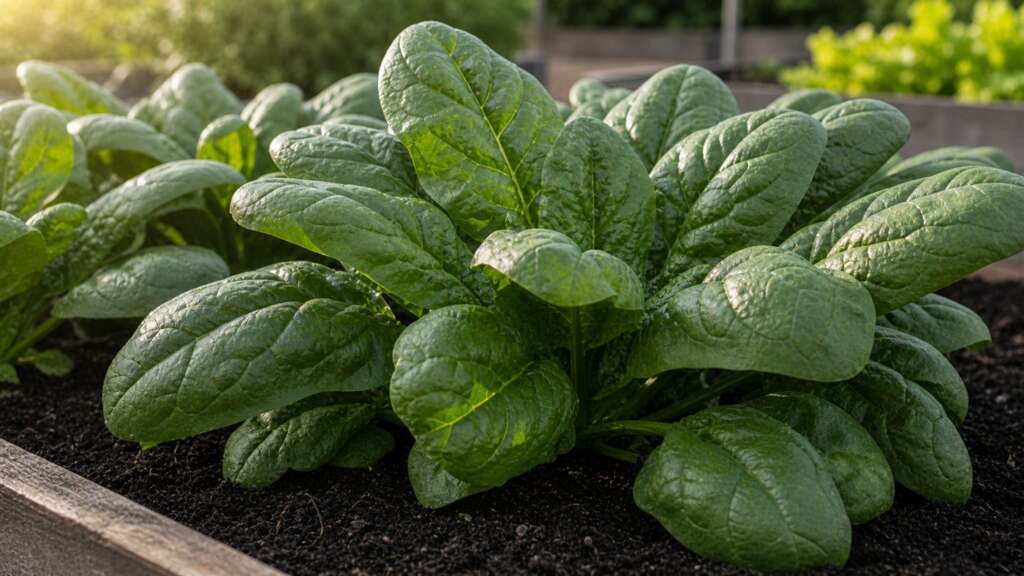
Viroflay Spinach is a French heirloom prized for unusually large, smooth, dark green leaves and a fast-growing upright habit. Like all spinach, it is a cool-season crop: it germinates best in cool soil, produces the sweetest leaves under mild days, and tends to bolt once heat and long days arrive. The reliable pattern is to sow directly in the garden during spring and fall windows, keep the seedbed steadily moist, and harvest generously before warm weather changes the flavor.
Quick How-to
Direct sow Viroflay Spinach as soon as the soil can be worked in spring, and again in late summer or early fall for a second crop. Sow seed about 1/2 inch deep, keep the surface evenly moist, and expect emergence in roughly 5 to 14 days when soil sits in the 45 to 70 F range. Thin gradually as plants grow, harvest outer leaves often, and stop sowing once daytime highs stay consistently above the mid-70s.
Quick Guide
| Fact | Recommendation |
|---|---|
| Best method | Direct sow; spinach resents root disturbance |
| Sowing depth | About 1/2 inch |
| Germination temperature | About 45 to 70 F; cool soil is preferred |
| Days to germination | About 5 to 14 days, faster in mild soil |
| Light for germination | Cover seed; light is not required to sprout |
| Spacing | Thin to about 3 to 4 inches for baby leaves, 6 to 8 inches for full-size plants |
| Sun | Full sun in cool weather; afternoon shade as temperatures climb |
| Water | Steady, even moisture; avoid drying out |
| Harvest | Baby leaves in about 25 to 30 days; full-size leaves in roughly 40 to 50 days |
| Plant size | Upright habit, often 10 to 20 inches tall with broad, smooth leaves |
Before You Sow
Pick a sunny spring or fall bed with loose, well-drained soil and a near-neutral pH. Spinach feeds quickly and rewards a bed worked with finished compost a week or two before sowing. Rake the surface smooth, remove clods and stones, and water the bed lightly the day before planting so small seed lands on settled soil rather than washing into pockets.
Viroflay grows tall and leafy, so give it more room than baby-leaf varieties if you want full-size plants. If you are sowing into a container, choose a wide pot at least 6 to 8 inches deep with drainage holes, and use a light vegetable potting mix. Heavy garden soil in pots tends to stay too wet during cool weather and too hot during sunny afternoons, both of which spinach dislikes.
Plan the timing around your conditions, not the calendar. Spinach is a daylight-sensitive crop; once spring days lengthen past about 14 hours and soil warms, plants shift energy from leaf production to flowering. Early spring and late summer plantings sidestep that pressure.
Direct Sowing
Direct sowing is the most reliable method for Viroflay. Spinach forms a taproot early and dislikes being moved, so seeds set directly in the garden almost always outperform transplants of the same age. Open a shallow furrow about 1/2 inch deep, drop seed every inch or two, and cover lightly with fine soil or seed-starting mix. Press the row gently for good soil contact and water with a soft spray.
Keep the top half-inch of soil consistently moist until seedlings appear. A light row cover or a single layer of burlap can hold moisture in dry spring winds; remove it the moment sprouts emerge. Once seedlings show their first true leaves, thin in stages. Pull or snip every other plant first, then come back a week later and thin to final spacing. The thinnings are excellent in salads, so nothing is wasted.
For a steady supply, sow short rows every 10 to 14 days through the spring cool window and again starting about 6 to 8 weeks before your first expected fall frost. Small successions almost always outproduce one large planting because not every row hits the same heat wave.
Indoor Starting and Transplanting
Indoor starting is optional and usually not necessary for spinach, but it can buy a small head start where springs are short. If you do start indoors, sow 2 to 3 weeks before transplanting into individual cells or soil blocks so roots are disturbed as little as possible. Keep seedlings cool and brightly lit; spinach started warm and dim stretches quickly and rarely catches up.
Harden off over 5 to 7 days and transplant while plants are still small, ideally at the two-to-four true leaf stage. Water the cells well before moving plants, settle them at the same depth they grew, and water in immediately. Expect a brief pause before new growth resumes, especially if any root disturbance occurred.
Soil, Sun, and Water
Spinach performs best in fertile, moisture-retentive soil with good drainage. A balanced application of compost at planting is usually enough; heavy nitrogen feeding produces fast leaves but can make plants more prone to bolting under stress. Full sun is ideal during cool months, but as temperatures rise, dappled afternoon shade from a trellised crop or a light shade cloth helps extend the harvest window.
Water is the lever you control most often. Aim for steady, even moisture in the top few inches of soil. Spinach roots are relatively shallow, and short dry spells trigger bolting and bitterness almost immediately. A light mulch of straw or shredded leaves once seedlings are established helps buffer soil temperature and moisture without smothering young plants.
Hydroponic Growing
Viroflay Spinach can produce broad, smooth leaves hydroponically, but spinach needs a cooler and more oxygen-rich root zone than lettuce. Deep-water culture, NFT, and flood-and-drain systems work when circulation is dependable. Germinate in a clean inert plug under cool conditions and transfer after true leaves appear and roots reach the plug edge. Keep the crown above the solution.
Use a complete leafy-green nutrient at about EC 1.8 to 2.3 mS/cm and pH 6.0 to 7.0. Check EC before pH and refresh the reservoir periodically. Keep the solution shaded, aerated, and preferably in the 60s F; sustained temperatures in the low 70s and above reduce oxygen and increase Pythium risk. Do not place spinach in the same small reservoir as lettuce if their nutrient strengths cannot be managed separately.
Viroflay makes a large spreading rosette, so allow roughly 8 inches between mature plants and provide bright, even light. Harvest outside leaves while leaving the center intact, or cut the whole rosette before a flower stalk forms. Cool air and a dark period help preserve tender growth; intense heat and long days still cause bolting indoors.
Wilting despite wet roots, brown slime, or a sour reservoir smell is a root-zone emergency: lower temperature, restore aeration, clean the equipment, and remove badly affected plants. Pale leaves can result from high pH locking out nutrients, while stretched leaves point to weak light. Test the system before adding more fertilizer.
Top Mistakes
- Sowing into warm soil: Spinach germination drops sharply once soil pushes past about 75 F. Late spring sowings often disappoint because heat is already pressing on the seed, not because anything was wrong with the planting.
- Letting the seedbed crust over: A dry, baked surface can stop seedlings just as they reach for light. Water lightly and often during germination rather than soaking once and walking away.
- Crowding plants: Viroflay grows larger than baby-leaf types. Skipping the thinning step produces a flush of small leaves that bolt early instead of a long harvest of large, tender ones.
- Feeding heavily near the bolt window: Pushing growth with extra nitrogen as days lengthen often accelerates flowering rather than extending the harvest. Steady moisture matters more than extra fertilizer at that stage.
- Treating spinach like lettuce: They share a season but behave differently. Spinach hates root disturbance, bolts faster under long days, and prefers slightly cooler conditions overall.
Troubleshooting by Symptom
| Symptom | Likely causes | What to do next |
|---|---|---|
| No sprouts after 14 days | Soil too warm, seed buried too deep, or surface dried | Resow shallowly in a cooler window, keep the surface evenly moist, and consider pre-chilling the packet in the refrigerator for a week before sowing |
| Patchy germination | Uneven watering, seed washed into low spots, or cloddy soil | Smooth the bed before sowing, water with a gentle spray, and cover seed with a thin, even layer |
| Seedlings are tall and pale | Weak light indoors, too much warmth, or crowded trays | Move under stronger overhead light, lower the temperature, and thin to one plant per cell |
| Seedlings collapse at the soil line | Overly wet mix, poor airflow, or damping-off conditions | Improve airflow, water less often, use fresh mix for restarts, and avoid saturated trays |
| Leaves taste bitter | Heat stress, drought, or older outer leaves left too long | Harvest more frequently, water steadily, and provide afternoon shade during warm spells |
| Plants suddenly send up a tall stalk | Bolting from long days, heat, or root stress | Harvest the entire plant promptly, then shift to a fall sowing once temperatures cool |
| Yellow lower leaves on otherwise healthy plants | Nitrogen running low, especially in containers, or natural aging of the oldest leaves | Side-dress with compost or a balanced liquid feed, and pick the oldest leaves first |
| Pale tunnels winding through leaves | Leaf miner activity | Remove and destroy affected leaves promptly, and consider a lightweight row cover at the next sowing |
Timing and Climate Notes
Treat Viroflay as a cool-window crop in nearly every climate. In most of the United States, the productive windows are early spring through late spring and late summer through fall. In mild-winter regions, fall sowings can carry plants through winter for an early spring harvest. In short, hot summers, skip a midsummer planting entirely; the seed and your effort are better saved for a generous fall crop, which often produces sweeter leaves than spring.
If a warm spell threatens an established planting, harvest aggressively rather than waiting. Spinach picked just before stress holds its quality in the refrigerator far better than spinach left on plants pushing toward flower.
Container and Small-Space Notes
Viroflay adapts well to containers, deep window boxes, and raised-bed corners, provided the pot holds enough soil to buffer moisture and temperature. A wide, shallow planter at least 8 inches deep gives roots room while making it easy to thin and harvest. Containers dry out faster than open ground, so check moisture daily once seedlings are up, and move pots into afternoon shade as the season warms.
For a steady supply in a small space, sow half a container, wait two weeks, and sow the other half. By the time the first sowing finishes, the second is hitting peak harvest.
Harvest and Kitchen Use
Begin harvesting baby leaves once plants have several true leaves, typically 25 to 30 days from sowing. Snip outer leaves at the base and leave the central crown intact so the plant keeps producing. For larger Viroflay leaves, wait another two to three weeks and pick generously; the variety is famous for tender leaves that hold their texture even at full size.
Spinach is at its best within hours of picking. Rinse in cold water, spin dry, and refrigerate in a loose bag with a paper towel to absorb excess moisture. Viroflay’s broad, smooth leaves are excellent raw in salads, lightly wilted with garlic and olive oil, or folded into pasta, frittatas, and savory pies.
Seed Saving
Spinach is wind-pollinated and produces separate male and female plants, so saving true-to-type seed requires letting several plants flower together and isolating them from other spinach varieties by a meaningful distance. For most home gardeners, growing Viroflay for leaves is simpler than maintaining an isolated seed crop. If you do save seed, allow selected plants to bolt fully, dry the stalks on the plant, and finish drying indoors before threshing. Label clearly with the variety and year.
Storing Leftover Seed
Keep unused Viroflay Spinach seed in its labeled packet inside a sealed container in a cool, dry, dark indoor location. Avoid garages, sheds, greenhouses, and sunny windowsills, where temperature and humidity swing sharply. Label home-saved seed with the variety and harvest year before storing it.
FAQ
Why didn’t my spinach germinate?
The most common reasons are soil that was already too warm, seed buried deeper than about a half inch, or a seedbed that dried out during the germination window. Sow shallowly into cool, moist soil, and water lightly and often until sprouts appear.
Can Viroflay Spinach be fall planted?
Yes, and fall is often the more rewarding season. Start about 6 to 8 weeks before your first expected frost and continue picking through the first light freezes. Cool nights concentrate sugars and produce notably sweeter leaves than spring crops.
How do I keep cutting baby spinach without killing the plant?
Snip outer leaves about an inch above the crown and leave the smaller inner leaves intact. The growing point at the center will keep pushing new leaves for several cuttings, especially during cool weather.
Why did my spinach bolt so quickly?
Lengthening days are the main trigger, with heat and drought stress accelerating it. There is no way to stop a determined bolt mid-season, but successional sowings, steady moisture, and a switch to fall planting all extend the practical harvest window.
Does Viroflay really get that large?
Under good conditions, individual leaves can reach 8 to 10 inches long, and plants can stand a foot or more tall before bolting. Crowded or stressed plants will stay much smaller, which is one more reason to thin generously and water steadily.