
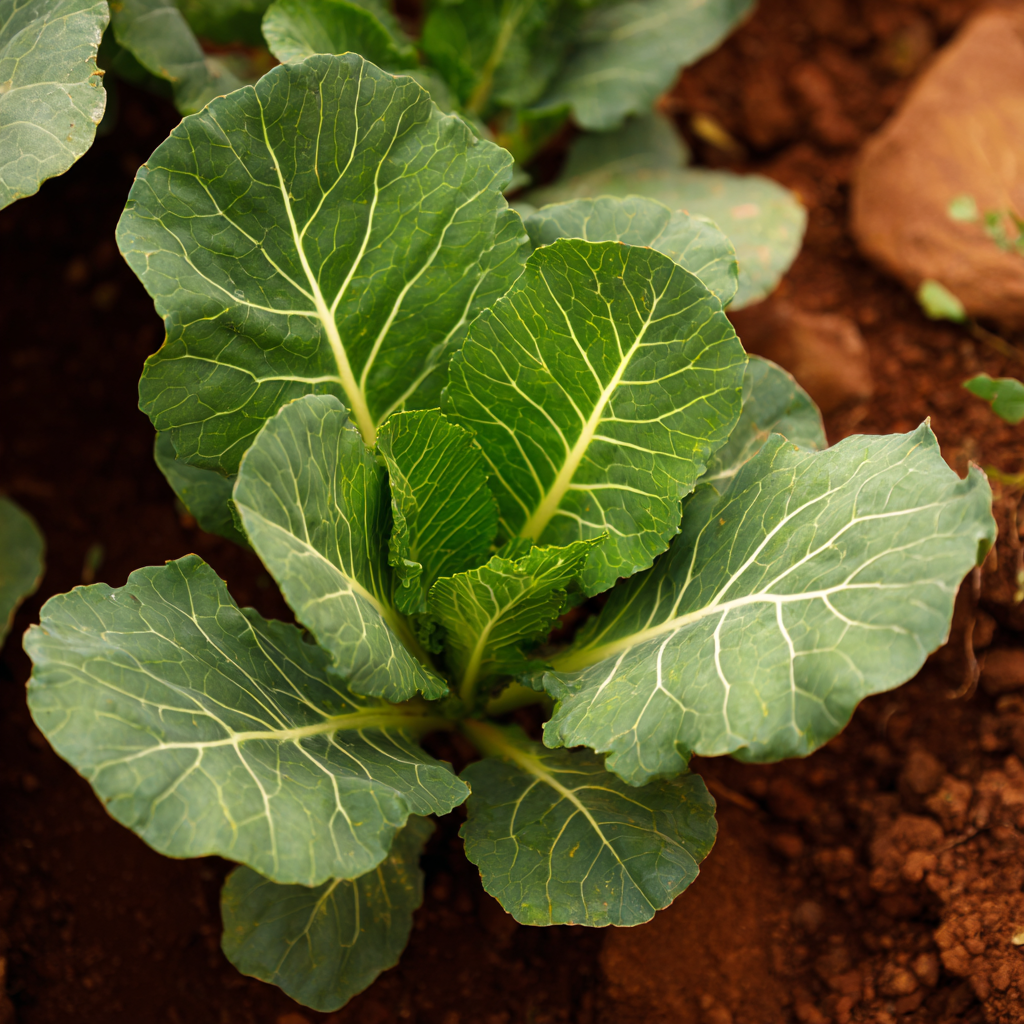
Vates is a compact, open-pollinated collard variety selected for its slow-to-bolt habit, good cold hardiness, and dark green crinkled leaves that hold their color and quality well into cold weather. Where standard collard varieties can run to seed quickly in warming spring conditions, Vates holds on longer before bolting — a meaningful advantage for gardeners trying to extend the harvest into late spring or through mild winters. It is a productive, reliable variety that suits both spring and fall growing windows and thrives in the Southeast and mid-Atlantic climates where collards are a staple cool-season green.
Quick How-to
Direct sow Vates collard seed in early spring or in late summer for a fall crop. Sow about 1/2 inch deep and keep the seedbed consistently moist until germination. For transplants, start indoors 4 to 6 weeks before the outdoor planting date. Thin or space transplants 12 to 18 inches apart to allow full development. Harvest outer leaves from the bottom of the plant upward, leaving the central growing point intact so the plant continues producing. Fall-harvested collards typically have the sweetest, mildest flavor.
Quick Guide
| Fact | Recommendation |
|---|---|
| Best method | Direct sow or transplant |
| Sowing depth | 1/2 inch (no deeper than 1 inch) |
| Germination temperature | 50 to 85 F; fastest above 65 F, but germinates at cooler temps |
| Days to germination | Usually 5 to 10 days in warm soil |
| Light for germination | Cover seed; seedlings need full light after sprouting |
| Spacing | 12 to 18 inches apart; rows 18 to 36 inches apart |
| Sun | Full sun preferred |
| Water | Deep, consistent moisture; water to at least 6 inches soil depth |
| Harvest timing | Outer leaves ready around 70 to 80 days from direct seeding |
| Plant size | Medium-compact; typically 2 to 3 feet at maturity |
Before You Sow
Collards are one of the most cold-tolerant leafy greens in the brassica family and grow as an annual in most climates. They tolerate summer heat better than kale or many other brassicas, which makes them particularly valuable in southern gardens where the cool season extends from fall through early spring.
Choose a planting site with full sun and well-drained soil. Work compost into the top several inches of soil before sowing or transplanting, especially if your soil is sandy or low in organic matter. Collards prefer a soil pH of 6.0 to 6.5. Avoid planting in areas where other brassicas grew the previous season to reduce carryover of soil-dwelling pests and diseases.
Direct Sowing
Sow seed about 1/2 inch deep. Deeper planting (beyond 1 inch) significantly reduces germination. Plant 3 to 4 seeds every 12 inches and thin to one plant per group once seedlings are 3 to 4 inches tall. Keep the top 3/4 inch of soil consistently moist during germination — if the surface dries and crusts, emergence becomes uneven.
For a spring crop, direct sow 4 to 6 weeks before the last expected frost when soil has begun to warm. For fall, count back 80 to 90 days from your first expected hard frost. In the Southeast, late summer planting for a fall-through-winter harvest is the most productive approach.
Indoor Starting
Start seed indoors 4 to 6 weeks before the intended transplanting date. Sow about 1/4 inch deep in seed-starting mix. Keep the mix warm and evenly moist until germination (usually 5 to 10 days). After sprouting, provide bright light at cool temperatures — 60 to 70 F is ideal for growing on strong seedlings. Weak light causes seedlings to stretch and produce fragile stems.
Harden off transplants over 7 to 10 days before setting them out. Transplant at the same depth as the root ball, water in thoroughly, and mulch around the base to retain moisture and moderate soil temperature.
Thinning
Whether direct-sown or transplanted, Vates collard needs room to develop. Crowded plants compete for light, nutrients, and airflow, which increases disease pressure and reduces leaf size and quality. Thin decisively to 12 to 18 inches between plants. In hot climates, spacing toward the wider end allows better airflow, which helps manage heat and reduces fungal disease risk.
Soil, Sun, and Water
Full sun gives the strongest plants and highest yields, though collards tolerate partial shade better than many warm-season crops. In the South, some afternoon shade during peak summer helps protect spring-planted collards from heat stress.
Water deeply enough to moisten the soil to at least 6 inches. Shallow watering encourages surface roots that are vulnerable to both drought and temperature extremes. After the initial establishment period, allow the top inch of soil to guide watering — water when it begins to dry, not on a fixed schedule. Consistent moisture during the main growth period produces the most tender leaves.
Side-dress with a balanced fertilizer or compost at mid-season to sustain the long production window collards offer. Collards are moderate nitrogen feeders, and on light or nutrient-poor soils, plants without a fertility boost often plateau at a smaller size than their potential.
Top Mistakes
- Planting too deep: Collard seed planted beyond 1 inch has significantly reduced germination. Keep sowing depth to 1/2 inch for direct sowing and 1/4 inch for indoor starts.
- Letting the seedbed dry out during germination: Collard seed germinates unevenly when the soil surface dries and crusts before emergence. Keep the top 3/4 inch consistently moist until seedlings are visible.
- Skipping the fall planting: Like all collards, Vates is at its best in cool fall and winter weather. Fall-planted collards that are touched by frost develop distinctly sweeter, more complex flavor. Missing the fall window means missing the best of what collards offer.
- Harvesting from the center top: Removing the central growing point ends the plant’s ability to produce new leaves. Always harvest the oldest outer leaves from the bottom of the plant, and leave the crown intact.
- Ignoring caterpillar pressure in late summer: Cabbage loopers and imported cabbageworms are particularly active during late summer when collard seedlings for fall crops are young. Check undersides of leaves and act early before damage becomes severe.
Troubleshooting by Symptom
| Symptom | Likely causes | What to do next |
|---|---|---|
| Poor or patchy germination | Seed planted too deep, soil surface dried out, or soil too cold | Keep planting depth to 1/2 inch, maintain moist surface, and wait for soil to warm above 60 F |
| Seedlings are pale yellow | Nitrogen deficiency, overwatering, or damping-off conditions | Check drainage, allow soil to dry slightly between waterings, and apply balanced fertilizer if growth remains stunted |
| Large irregular holes in leaves | Caterpillar feeding (cabbageworm or cabbage looper) | Inspect undersides of leaves carefully; remove caterpillars by hand or apply caterpillar control if pressure is high |
| Sticky leaves with distorted growth | Aphid infestation — check undersides of leaves and growing tips | Knock aphids off with firm water spray; repeat as needed; beneficial insects naturally manage light infestations over time |
| Plants bolt (send up flower stalk) in spring | Warming days and lengthening daylight | Harvest aggressively as soon as a stalk forms — upper leaves and flower buds are still edible; Vates holds longer than most collards before bolting |
| Leaves are tough and bitter | Heat stress, leaving leaves on the plant too long, or late summer harvest | Harvest younger outer leaves rather than waiting for them to become large and thick; prioritize fall harvests for the best flavor |
Harvest and Kitchen Use
Begin harvesting once outer leaves reach 8 to 12 inches long and are still smooth and dark green, before they become large, thick, and fibrous. Break or cut individual leaves cleanly at the base, starting from the lowest leaves and working upward. A plant handled this way can produce continuously for many weeks.
Collard greens are traditionally braised low and slow with smoked pork, but they also hold up well to stir-frying, steaming, and adding to bean soups. The large, sturdy leaves can also be used as wraps in place of tortillas. Collards store well in a sealed plastic bag in the refrigerator for up to two weeks, longer than many salad greens.
Seed Saving
Like kale and other members of Brassica oleracea (Acephala Group), collards are biennials that flower in their second year after vernalization. They cross-pollinate readily with all other B. oleracea crops including kale, cabbage, broccoli, Brussels sprouts, and cauliflower. To save seed that reliably produces collard-type offspring, grow only one B. oleracea variety for seed in a season, or isolate by at least half a mile. Save from the most vigorous, true-to-type plants.
Storing Leftover Seed
Keep unused Vates Collard seed in its labeled packet inside a sealed container in a cool, dry, dark indoor location. Avoid garages, sheds, greenhouses, and sunny windowsills, where temperature and humidity swing sharply. Label home-saved seed with the variety and harvest year before storing it.
FAQ
What makes Vates different from other collard varieties?
Vates is selected for compactness and a notably slow-to-bolt habit compared with taller, more vigorous standard collard varieties. It also holds good leaf color and quality in cold weather, making it especially suited for fall and overwinter harvests. These traits have made it a consistent performer in university extension variety trials across the Southeast.
Can Vates collard survive frost?
Yes. Mature Vates collard plants withstand frosts and light to moderate freezes. Repeated exposure to temperatures in the mid-20s F may damage outer leaves, but established plants typically recover from light freezes when the central growing point is undamaged.
Do collards need a lot of water?
They need deep, consistent moisture rather than frequent surface watering. Water enough to wet the soil at least 6 inches down, then let the top inch dry before watering again. Mulching around established plants helps maintain even soil moisture and reduces the frequency of watering needed during dry stretches.
Can I grow Vates collard in containers?
Collards are large plants that do best in the ground, but a deep container (at least 12 to 14 inches) can work for one plant if watered consistently. Collards in containers dry out faster than in-ground plants and may need more frequent fertilizing over a long season.