
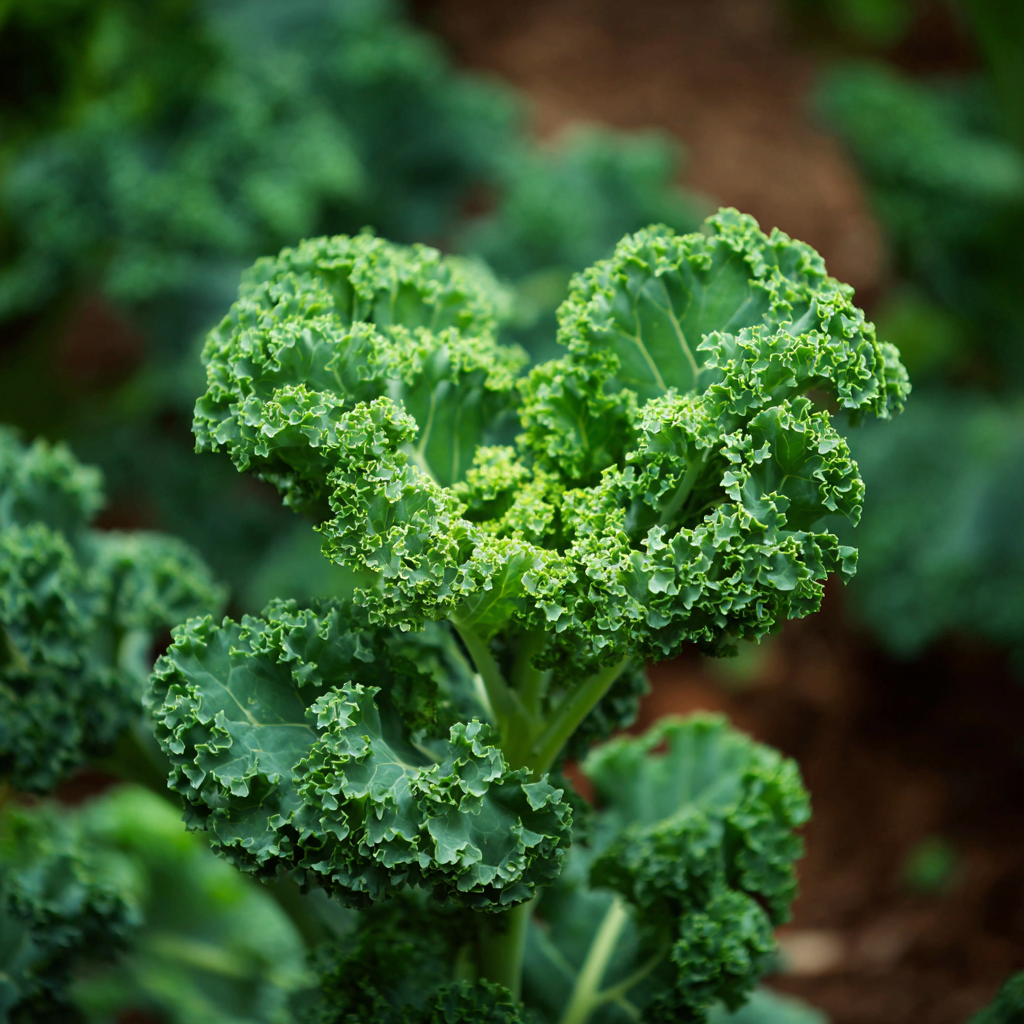
Dwarf Blue Curled Scotch Kale is a compact, tightly curled kale prized for its dense blue-green leaves and exceptional cold hardiness. One of the oldest curled kale varieties in cultivation, it stays lower-growing than many standard kales while producing a heavy harvest of tender, frilly leaves. Flavor deepens and sweetens noticeably after the plant is touched by frost, making it a favorite for autumn and winter gardens in zones 3 through 9.
Quick How-to
Start Dwarf Blue Curled Scotch Kale indoors 4 to 6 weeks before your last expected frost for a spring crop, or direct sow in mid to late summer for a fall harvest that carries well into cold weather. Sow seeds about 1/4 inch deep, keep the starting mix evenly moist, and provide cool temperatures after germination – around 60 to 70 F. Transplant outdoors once seedlings have 4 to 6 true leaves and harden off for a week before setting them out. Harvest outer leaves from the bottom up as the plant grows.
Quick Guide
| Fact | Recommendation |
|---|---|
| Best method | Indoor start (spring); direct sow or transplant (fall) |
| Sowing depth | About 1/4 inch indoors; 1/2 inch for direct sowing |
| Germination temperature | 45 to 85 F; fastest between 65 and 75 F; grow-on at 60 to 70 F |
| Days to germination | Typically 5 to 10 days in warm soil |
| Light for germination | Cover seed; move seedlings into bright light immediately after sprouting |
| Spacing | Transplants 12 to 18 inches apart in rows 18 to 36 inches apart |
| Sun | Full sun preferred; tolerates light afternoon shade in hot climates |
| Water | Even moisture throughout; do not let soil dry deeply between waterings |
| Harvest timing | Outer leaves ready roughly 55 to 65 days from transplant; harvest can continue for months |
| Plant size | Dwarf and compact compared with standard kales; often 12 to 18 inches tall |
Before You Sow
Kale is a cool-season crop that does its best work when planted with temperature in mind. For a spring planting, work backward from your last frost date and start seeds indoors 4 to 6 weeks ahead. For a fall planting – which many growers consider kale’s best season – count back about 70 to 80 days from your first expected hard frost to determine when to direct sow or start transplants.
Choose a site with well-drained, fertile soil. If soil is heavy or compacted, work in compost before planting. Kale prefers a soil pH between 6.0 and 6.8. A basic soil test can guide amendments and help avoid persistent nutrient issues later in the season.
Indoor Starting
Sow seed about 1/4 inch deep in a quality seed-starting mix. Keep the mix evenly moist; kale germinates over a wide range but sprouts fastest when soil is between 65 and 75 F. Once sprouts appear (usually within a week), move seedlings to a cooler, well-lit location. Kale seedlings grow best at air temperatures of 60 to 70 F and do not need extra heat after they emerge. Overly warm indoor conditions cause seedlings to stretch toward the light.
Provide strong overhead light for 14 to 16 hours per day if using grow lights. Pot up seedlings when roots fill their cells, and aim to transplant well-established plants with 4 to 6 true leaves.
Transplanting and Thinning
Harden off seedlings over 7 to 10 days before transplanting. Begin with an hour or two of outdoor exposure in a sheltered location, gradually increasing time and sun over the week. Plant at the same depth as the root ball, water in well, and mulch around the base to retain moisture and moderate soil temperature.
If direct sowing, sow 3 to 4 seeds every 12 inches and thin to one strong plant per group once seedlings reach a few inches tall. Thinning promptly prevents competition for light and nutrients that can weaken the young plants you intend to keep.
Soil, Sun, and Water
Dwarf Blue Curled Scotch Kale grows well in full sun and tolerates partial shade, though yields are best with at least six hours of direct sun. Well-drained soil rich in organic matter gives the best results. Work compost into the planting area if your soil is sandy or low in nutrients.
Consistent moisture is important throughout the growing season. Allow the top inch of soil to guide you – water when it begins to dry, not on a fixed schedule. Deep, infrequent watering encourages roots to grow downward, which helps plants handle brief dry spells. Mulch is useful after plants are established to hold soil moisture, reduce weeds, and moderate soil temperature as weather shifts.
Kale is a moderate feeder. A side-dressing of balanced fertilizer or compost midway through the season helps sustain productivity on sandy or nutrient-poor soils. Avoid excessive nitrogen late in the season, which pushes soft growth that is more vulnerable to cold damage.
Hydroponic Growing
Dwarf Blue Curled Scotch Kale fits hydroponic systems better than many full-size kales because its compact habit needs less headroom. Deep-water culture and wide NFT channels both work. Start one seed per plug and transplant after two true leaves appear, keeping the stem base above the solution. Give the root system room; kale remains in the system longer than baby lettuce.
Use a complete leafy-green formula near EC 1.4 to 2.0 mS/cm and pH 5.8 to 6.2. Begin gently with young plants and raise nutrient strength only as the canopy develops. A shaded, aerated reservoir and moderate temperatures support steady leaves; hot solution encourages root disease even though mature kale tolerates cool air well.
Space plants about 8 to 10 inches apart for repeated harvest. The tightly curled leaves hold moisture, so airflow matters more than the dwarf name suggests. Pick lower leaves as they reach useful size and leave the central growing point intact. Strong light keeps the plant dense; weak light creates long petioles and a loose crown.
Brown, dry leaf margins can come from high EC or interrupted water flow. Pale new leaves may reflect pH drift. Speckling or gray growth in the curls usually starts where leaves stay wet and crowded, so remove damaged foliage, improve air movement, and avoid splashing the canopy.
Top Mistakes
- Planting too late for a spring crop: Kale prefers growing in cool weather. Starting seeds too late puts transplants in the ground right when summer heat arrives, which can stress plants before they establish. Aim to transplant in early spring while nights are still cool.
- Skipping the fall planting: Many growers only attempt a spring crop and miss kale at its best. Fall-sown kale that matures into cold weather has firmer texture and sweeter flavor – especially after the first frosts – than spring plants harvested in summer heat.
- Crowding plants: At the dwarf end of the kale spectrum, it can be tempting to space plants closely. Crowding reduces airflow, increases disease pressure, and results in smaller leaves. Stick to 12 to 18 inches between plants.
- Harvesting incorrectly: Pulling leaves from the top center of the plant removes the growing point and ends productivity. Always harvest the oldest, outermost leaves first, working from the bottom up, and leave the central crown intact to keep the plant producing.
- Neglecting caterpillar scouting in late summer: Imported cabbageworm and cabbage looper are common on fall brassica plantings. Check the undersides of leaves regularly during warm stretches and remove caterpillars by hand before a small infestation becomes severe.
Troubleshooting by Symptom
| Symptom | Likely causes | What to do next |
|---|---|---|
| No sprouts after 10 to 14 days | Soil too cold, seed buried too deep, or surface dried out | Check soil temperature, confirm seed was sown about 1/4 inch deep, and keep the surface evenly moist |
| Seedlings are tall and spindly | Insufficient light after germination, or too much warmth indoors | Move closer to a light source, reduce heat, and thin to one seedling per cell |
| Yellow lower leaves | Normal aging of outer leaves, or nitrogen deficiency on poor soils | Remove yellowing leaves; if new growth is also pale, side-dress with a balanced fertilizer |
| Ragged holes in leaves | Caterpillar feeding (cabbageworm or cabbage looper) | Check undersides of leaves for small caterpillars or eggs; remove by hand or use an appropriate caterpillar control if pressure is heavy |
| Leaves are tough and bitter | Heat stress, water stress, or harvesting leaves that are too mature | Increase watering during warm stretches; harvest leaves while they are still young and tender, before they become large and thick |
| Wilting despite moist soil | Root damage from overwatering, poor drainage, or root maggot activity | Check drainage and root condition; avoid saturating soil; if root maggots are present, use row cover at planting for future crops |
Harvest and Kitchen Use
Harvest outer leaves as soon as they reach a useful size, typically when individual leaves are 6 to 10 inches long. The tightly curled texture of Dwarf Blue Curled Scotch Kale holds sauces and dressings well in salads and is excellent for sauteing, braising, or adding to soups. Flavor becomes noticeably sweeter and more complex after the plants have experienced temperatures below 28 F, which causes the plant to convert stored starches to sugars.
For the longest season, keep harvesting outer leaves rather than cutting the whole plant, and the central crown will continue producing through multiple frosts in zones 6 and warmer. In colder zones, plants can be protected with row cover to extend the harvest several additional weeks.
Seed Saving
Kale is a biennial – it completes its seed cycle in its second year after vernalization (exposure to cold). In zones with cold winters, overwintered plants will flower and set seed the following spring. Kale cross-pollinates freely with other Brassica oleracea crops (cabbage, broccoli, Brussels sprouts, cauliflower, collards) within pollinating range. For true-to-type seed, isolate from other B. oleracea crops by at least half a mile, or use cage isolation with hand pollination. Save seed from the healthiest, most vigorous plants that best represent the compact, tightly curled leaf type.
Storing Leftover Seed
Keep unused Dwarf Blue Curled Scotch Kale seed in its labeled packet inside a sealed container in a cool, dry, dark indoor location. Avoid garages, sheds, greenhouses, and sunny windowsills, where temperature and humidity swing sharply. Label home-saved seed with the variety and harvest year before storing it.
FAQ
Can Dwarf Blue Curled Scotch Kale survive hard freezes?
Established plants are remarkably cold hardy and can survive temperatures well below freezing. Plants in the ground often survive light to moderate frosts without protection. In colder zones, a layer of row cover or straw mulch can extend the harvest several weeks into winter.
What makes this kale “dwarf” compared to other kales?
Dwarf Blue Curled Scotch Kale stays more compact than taller kale varieties, typically reaching 12 to 18 inches in height rather than the 2 to 3 feet common in some heirloom curled varieties. This makes it well suited to smaller garden beds and containers with adequate depth.
Can I grow this kale in containers?
Yes. Use a container at least 12 inches deep and wide with good drainage. One plant per 12-inch container works well; larger containers can accommodate two plants at 12 inches apart. Containers may need more frequent watering than in-ground plantings, especially in warm weather.
When is the best time to plant kale for flavor?
A fall crop sown in mid to late summer and harvested after frosts is widely considered the most flavorful. The cold triggers starch-to-sugar conversion in the leaves. Spring plantings are productive but summer heat can make leaves tougher and more bitter before the end of the season.