
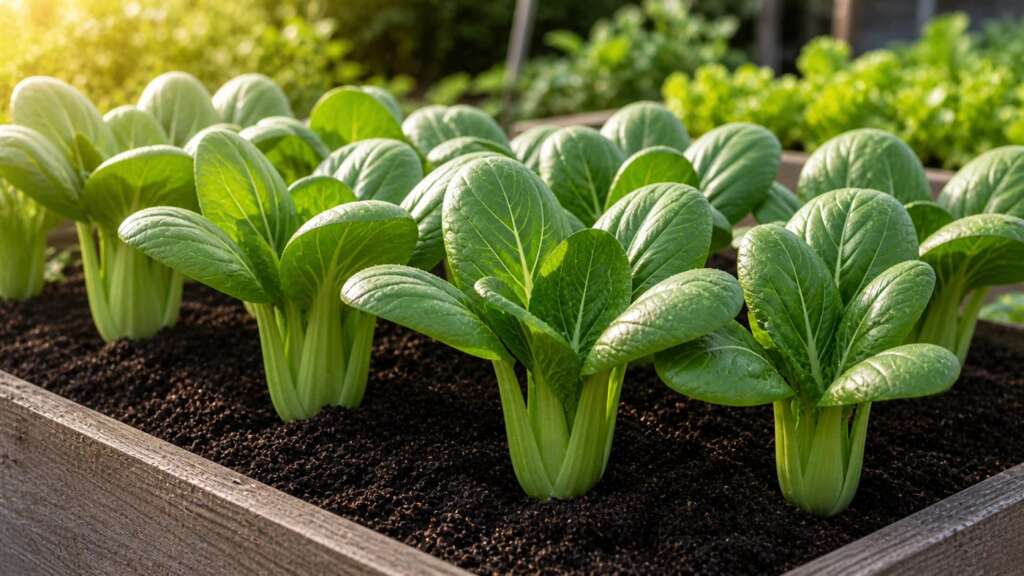
Shanghai Green Stem Baby Bok Choy is a quick-maturing Asian green grown for tender, spoon-shaped leaves and crisp pale-green stems. Unlike white-stemmed pak choi, the Shanghai type carries a soft jade-green color from the base of the stem to the leaf, which gives harvested heads a clean, uniform look in stir-fries, soups, and quick sautés. It is a cool-season crop that rewards steady moisture, prompt thinning, and harvest before summer heat triggers bolting.
Quick How-to
Sow Shanghai Green Stem Baby Bok Choy in early spring or late summer for a fall crop, when daytime temperatures are mild and nights are cool. Cover seed about 1/4 inch deep, keep the surface evenly moist, and expect emergence in about 4 to 10 days at soil temperatures around 60 to 75 F. Thin baby heads to roughly 4 to 6 inches apart, water consistently, and cut the whole head at the soil line while it is still small and tender, usually about 30 to 45 days from sowing.
Quick Guide
| Fact | Recommendation |
|---|---|
| Best method | Direct sow preferred; a brief indoor start works for early spring or late summer plantings |
| Sowing depth | About 1/4 inch |
| Germination temperature | About 60 to 75 F for steady emergence |
| Days to germination | About 4 to 10 days |
| Light for germination | Cover lightly; strong light is needed immediately after sprouting |
| Spacing | About 4 to 6 inches for compact baby heads, with rows 8 to 12 inches apart |
| Sun | Full sun in cool weather; light afternoon shade where summers are hot |
| Water | Even, consistent moisture; avoid dry-wet swings |
| Harvest | About 30 to 45 days from sowing for compact baby heads |
| Plant size | Compact upright rosette, typically 6 to 9 inches tall at the baby stage |
Before You Sow
Bok choy grows fastest when nothing interrupts it. Prepare a bed in full sun with loose, fertile, well-drained soil. Work in finished compost if the soil is heavy or low in organic matter, and rake the surface smooth so tiny seed sits at an even depth. Pre-watering the bed the day before sowing helps prevent seed from being washed too deep on its first irrigation.
Plan the planting window carefully. Shanghai bok choy is happiest with mild days, cool nights, and shortening or stable day lengths. Long, hot days push the plant to flower instead of forming a tender head. In most climates that means early-spring sowings as soon as the bed can be worked, and a second round in late summer for fall harvest. Where summers stay cool, you can sometimes sow through the season; where they are hot, plan a clear pause from late spring until the weather breaks.
Have row cover ready before you sow. Flea beetles can find young brassica seedlings within days, and a lightweight floating cover laid loosely over the bed at planting is the most reliable defense for the first few weeks.
Direct Sowing
Direct sowing is the most natural method for Shanghai bok choy because the plant grows quickly and dislikes root disturbance. Open a shallow furrow about 1/4 inch deep, place seed every inch or two along the row, and cover lightly with fine soil. Press the surface gently for soil contact and water with a soft spray so the seed is not floated or washed sideways.
Keep the top layer consistently moist until emergence. The seedbed can look damp underneath while the surface dries and crusts, which can keep tiny brassica seedlings from breaking through cleanly. In dry or breezy weather, a light dusting of vermiculite or a single layer of floating row cover laid right on the soil helps hold moisture at the surface.
Once seedlings have their first true leaves, thin to about 4 to 6 inches between plants for baby heads. Resist the urge to leave a thicker stand “just in case.” Bok choy is one of the crops where prompt thinning makes the biggest difference between firm, upright heads and a thin, leaning row that bolts at the first warm spell. Thinnings are perfectly edible in salads or stir-fries.
For a steady supply, succession sow a short row every 10 to 14 days through the cool window rather than planting one large block at once.
Indoor Starting
A brief indoor start is useful when spring weather is unpredictable or when you want a tidy, evenly spaced fall planting set into a freshly cleared bed. Sow into individual cells about 1/4 inch deep, two to three seeds per cell, and thin to one seedling once true leaves appear. Three to four weeks of indoor growth is usually plenty; bok choy held in a cell longer than that often checks growth after transplanting and may bolt earlier than direct-sown plants.
Keep the mix evenly moist and give seedlings strong overhead light as soon as they emerge. Warm, dim conditions are the most common cause of stretched, pale bok choy seedlings. Cool, bright conditions produce short, sturdy plants that transplant cleanly.
Transplanting and Spacing
Harden off seedlings over about 5 to 7 days. Start with a few hours in sheltered shade, then gradually increase sun, breeze, and time outdoors. Transplant on a cool, overcast day or in late afternoon, and water in immediately so roots make firm contact with the surrounding soil.
Set plants at the same depth they grew in the cell. Burying the crown encourages rot in this crop; planting too shallow leaves the rosette wobbling on its stem. Space baby heads about 4 to 6 inches apart in the row, with rows about 8 to 12 inches apart. Drop a length of row cover over the bed right after planting to keep flea beetles off the new transplants.
Soil, Sun, and Water
Shanghai bok choy needs even moisture and steady nitrogen to grow quickly without becoming stringy or bitter. Aim for soil that stays consistently damp a few inches down, especially during the first three weeks. Mulching after seedlings establish helps buffer surface moisture and keeps soil temperatures from spiking on warm afternoons.
Full sun gives the strongest plants during cool weather. Where late-season heat is unavoidable, an hour or two of afternoon shade can extend the harvest window before bolting. A balanced compost-rich bed is usually enough; if leaves yellow during fast growth, a light side-dressing of a balanced fertilizer can keep production steady. Avoid heavy nitrogen pushes that produce soft, pest-vulnerable leaves.
Hydroponic Growing
Shanghai Green Stem Baby Bok Choy grows efficiently in NFT or deep-water culture because its green petioles and compact upright habit fit moderate spacing. Start one seedling per clean plug and transplant before roots circle. Hold the plug high enough that the crown is dry while roots reach the solution.
Use a leafy-green nutrient around EC 1.5 to 2.0 mS/cm with pH near 6.5 to 7.0. Keep the reservoir dark, aerated, and cool to moderate. Check nutrient strength before changing pH, and replace the solution periodically so repeated top-ups do not create an unknown salt balance.
Allow about 6 to 8 inches per plant. Strong even light keeps the green stems thick and the head symmetrical; side lighting alone can produce leaning plants. Harvest whole baby heads when the petioles are crisp, or remove a few outer leaves without injuring the center.
Elongated stems and a rising center indicate heat, weak light, or bolting stress. Brown patches where petioles meet can result from a wet crown and poor airflow. If a plant wilts while its roots are submerged, inspect roots and circulation immediately rather than adding water or fertilizer.
Top Mistakes
- Sowing into hot weather: Bok choy planted into long, warm days often bolts before it forms a usable head. Stay inside the cool window for spring and fall plantings.
- Skipping early thinning: Crowded seedlings produce thin, leaning plants that bolt early. Thin to final spacing while seedlings are still small.
- Letting the bed dry out: Irregular moisture is the leading cause of bitter flavor, stringy stems, and premature flowering. Water before the bed looks dry.
- Ignoring flea beetles: Tiny pinholes in young leaves can quickly become lacework. Cover the bed at sowing rather than waiting to see damage.
- Holding transplants too long: Indoor bok choy that sits in cells for five or six weeks often stalls or bolts after planting out. Move seedlings into the ground while they are still small.
Troubleshooting by Symptom
| Symptom | Likely causes | What to do next |
|---|---|---|
| No sprouts after 10 to 14 days | Seed buried too deep, surface crusted, soil too warm, or bed dried out | Resow shallowly, keep the surface evenly moist, and shade in hot weather |
| Tiny pinholes across young leaves | Flea beetles | Cover the bed with floating row cover and inspect plants daily; seal cover edges with soil so beetles cannot crawl under |
| Ragged holes and chewed leaf edges | Cabbage worms, loopers, or slugs | Hand-pick caterpillars, set out slug traps, and keep row cover in place |
| Seedlings collapse at the soil line | Damping-off from overly wet mix or poor airflow | Improve airflow, water from below, and use fresh seed-starting mix for indoor restarts |
| Plants stretch tall instead of forming a head | Crowding, low light, or warm temperatures | Thin promptly, move indoor seedlings under stronger light, and plant in the cool window |
| Plants flower (bolt) before harvest | Heat, long days, drought stress, or transplant shock | Sow earlier in spring or later in summer, water consistently, and harvest at the first sign of a flower stalk |
| Bitter or stringy stems | Drought stress, heat, or over-mature plants | Maintain even moisture and harvest younger; cool-weather plantings usually taste sweeter |
| Yellow lower leaves on otherwise healthy plants | Nitrogen running low during fast growth | Side-dress lightly with a balanced fertilizer and water in |
Timing and Climate Notes
Treat Shanghai Green Stem Baby Bok Choy as a cool-window crop in nearly every climate. In most temperate regions, the most reliable harvests come from sowings made two to four weeks before the last spring frost and again about six to eight weeks before the first fall frost. Fall plantings often produce the sweetest, firmest heads because growth finishes as days are shortening and temperatures are dropping.
In mild-winter regions, bok choy can be grown right through the cool months, with summer the off-season rather than winter. In hot-summer climates, expect a clear pause from late spring through early fall, and use shade cloth or row cover to extend either end of the season by a week or two.
Container and Small-Space Notes
Shanghai bok choy is well suited to containers and small raised beds because the heads are compact and the crop finishes quickly. Use a pot at least 6 inches deep with drainage holes and a quality potting mix that holds moisture without staying soggy. A 10- to 12-inch wide pot comfortably grows three to four baby heads.
Container plants dry out faster than ground beds, so check moisture daily once plants are growing actively. A light feeding with a balanced liquid fertilizer every two weeks helps keep growth steady in the limited soil volume of a pot.
Harvest
Harvest baby bok choy when heads are roughly 4 to 6 inches tall and the stems are firm but still tender. Cut the entire head at the soil line with a sharp knife for the cleanest result. You can also pick a few outer leaves at a time and let the center keep growing, although whole-head cutting is more typical for the Shanghai type and gives a more uniform crop.
Plan to clear the bed within a week or two once heads reach size, especially as temperatures begin to climb. A short flower stalk emerging from the center is the signal to harvest immediately; heads are still edible at the first sign of bolting, but quality declines quickly after.
After harvest, rinse heads in cold water and store dry in a perforated bag in the refrigerator. Fresh bok choy keeps well for about a week.
Seed Saving
Saving true seed from Shanghai bok choy is an advanced project. The plant is biennial and usually needs a cool period to trigger flowering, and it cross-pollinates readily with other Brassica rapa varieties such as turnips, mizuna, and other bok choy types growing nearby or in neighboring gardens. For home seed saving, you would need to overwinter selected plants, isolate them from other B. rapa flowers by distance or caging, and let pods dry on the plant before threshing.
Most home gardeners are better served by growing Shanghai Green Stem for tender heads rather than managing the isolation and second-season work required for controlled seed production.
Storing Leftover Seed
Keep unused Shanghai Green Stem Baby Bok Choy seed in its labeled packet inside a sealed container in a cool, dry, dark indoor location. Avoid garages, sheds, greenhouses, and sunny windowsills, where temperature and humidity swing sharply. Label home-saved seed with the variety and harvest year before storing it.
FAQ
Can I grow Shanghai bok choy in summer?
In most climates, no. Long, warm days push bok choy to bolt before it forms a usable head. Wait for the cool window of spring or fall, or use shade and steady moisture to stretch the shoulder seasons.
Why are my plants bolting so quickly?
The most common causes are heat, long day length, irregular watering, and transplant stress. Plants started indoors and held too long in their cells often bolt within days of being set out. Sow on time, water consistently, and harvest at the first sign of a flower stalk.
Do I need to start bok choy indoors?
Not usually. Direct sowing into cool soil is the most reliable approach for baby bok choy because the plant grows quickly and dislikes root disturbance. A brief indoor start is mainly useful for very early spring or late summer plantings.
How do I tell Shanghai bok choy from regular pak choi?
Shanghai types have pale, jade-green, spoon-shaped stems all the way to the base. Traditional pak choi has bright white stems contrasting against darker green leaves. Flavor and use are similar; the visual difference is the main reason to choose one over the other.
Can I harvest leaves more than once?
Yes. Many growers pick a few outer leaves at a time and let the center keep growing, especially with younger plants. For uniform heads, most prefer to cut the whole plant at the soil line in a single harvest.