
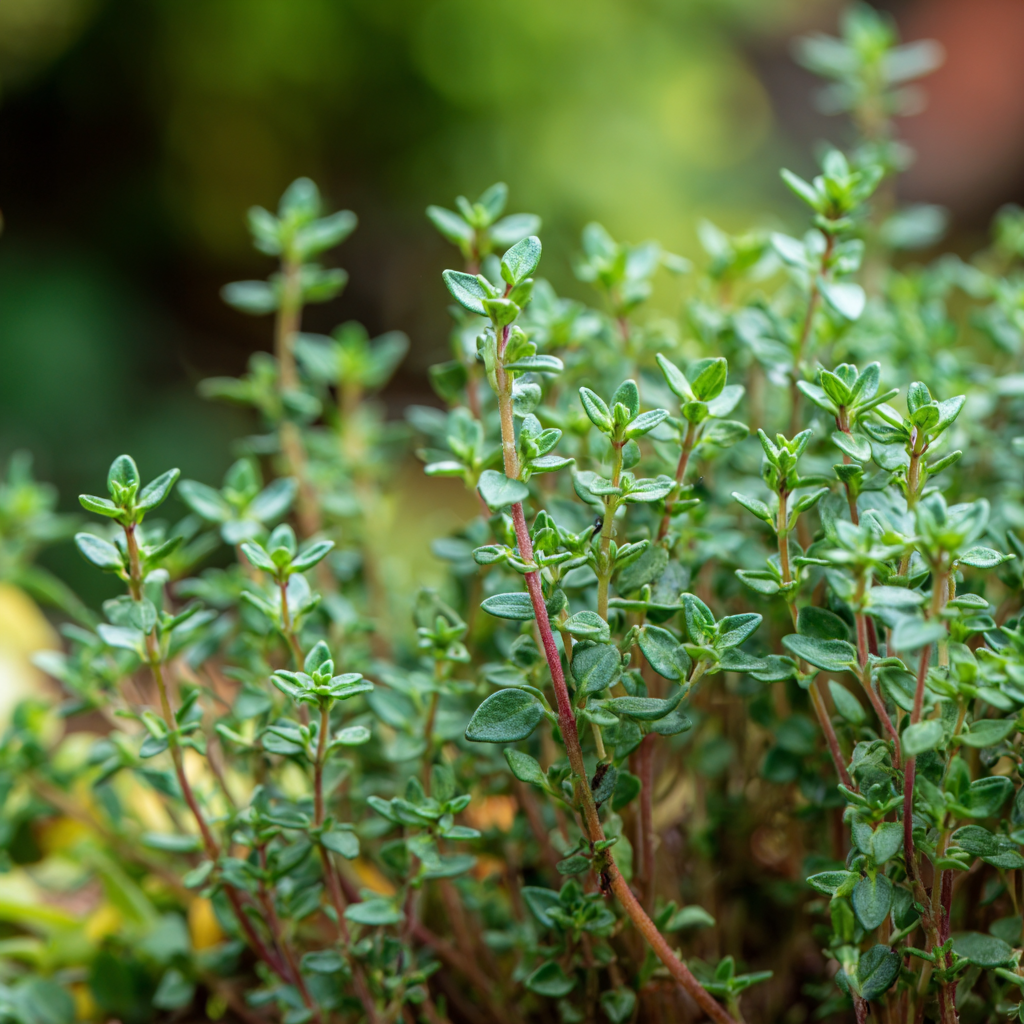
Common thyme (Thymus vulgaris) is a Mediterranean perennial subshrub with tiny aromatic leaves and an outsized role in the kitchen. It is hardy, drought tolerant once established, and productive for years in the right conditions. Starting from seed requires some patience: thyme seed is very small, must be surface-sown or barely covered, and germinates slowly and unevenly compared with faster herbs. The reward is a long-lived, increasingly productive plant that fills a container or herb bed with minimal fuss.
Quick How-to
Start thyme seeds indoors 8 to 10 weeks before the last expected frost. Surface-sow seeds on moist seed-starting mix – do not bury them, as light improves germination. Keep the surface evenly moist and warm (around 65 to 75 F). Germination is slow and irregular, often 14 to 28 days. Once seedlings have true leaves and outdoor temperatures are consistently warm, transplant after hardening off. Thyme can also be direct sown into warm, well-drained soil once frost risk has passed.
Quick Guide
| Fact | Recommendation |
|---|---|
| Best method | Start indoors 8 to 10 weeks before last frost; direct sow into warm soil after frost |
| Sowing depth | Surface sow or barely press into mix – do not cover; seeds need light |
| Germination temperature | 65 to 75 F; consistent warmth improves uniformity |
| Days to germination | 14 to 28 days; uneven emergence is normal |
| Light for germination | Light-dependent; surface-sow and provide light from day one |
| Spacing | 9 to 12 inches apart for individual plants; 12 to 18 inches if grown as a low subshrub |
| Sun | Full sun; at least 6 to 8 hours daily |
| Water | Allow top inch to dry between waterings once established; lean toward drier |
| Harvest timing | Begin light harvest once plants are 6 inches tall; heaviest production in year 2 onward |
| Plant size | Typically 8 to 12 inches tall, spreading 12 to 18 inches when mature |
Before You Sow
Thyme seed is tiny, and surface sowing requires a fine, smooth, moist starting medium. Pre-moisten the seed-starting mix before sowing so you do not disturb the tiny seeds with a heavy watering afterward. Use a shallow tray or individual cells and level the surface. A spray bottle is useful for keeping the surface moist without dislodging seeds.
Common thyme does not require a cold-treatment step for routine seed starting. Its seed is naturally slow and uneven, so the useful controls are a warm mix near 70 F, surface sowing, steady moisture, strong light, and patience. Sow more seeds than the number of plants you need, then thin after the seedlings establish.
Indoor Starting
Scatter thyme seeds very thinly across the moist surface and press them gently into the mix with a flat board or your fingers. Do not cover. If using a humidity dome, remove it promptly once the first seedlings appear to prevent damping off and to allow the seeds-to-air drying cycle that thyme naturally prefers.
Place the tray in a warm, well-lit location or under grow lights immediately. Thyme seedlings are small and slow in their early weeks; resist the urge to overwater. The surface should feel barely moist, not saturated. Thin seedlings to one per cell once they have true leaves.
The slow, irregular nature of thyme germination is normal. Some cells may sprout in 14 days; others in 25 days. Maintain conditions patiently and do not discard the tray too soon.
Direct Sowing
Thyme can be direct sown into a prepared bed once soil is warm and all frost risk has passed. Choose a site with full sun and excellent drainage. Scratch the surface lightly, scatter seed very thinly, and press into contact with the soil. Keep the seedbed lightly moist until germination. Thin seedlings to proper spacing once they show true leaves.
Direct sowing works well in warm climates with long growing seasons. In short-season areas, indoor starting gives plants a valuable head start.
Transplanting
Harden off indoor-started thyme seedlings for 7 to 10 days before planting outdoors. Thyme tolerates heat and drought but can be set back by the transition from sheltered indoor conditions to full outdoor sun and wind. Start with partial outdoor exposure in a sheltered spot and gradually increase.
Plant thyme at the same depth as the cell. Avoid planting in wet, heavy soil – poorly drained soil is the most common cause of thyme failure. Space plants 9 to 12 inches apart to allow good airflow and room for the spreading habit of the subshrub.
Soil, Sun, and Water
Thyme is a Mediterranean native and performs best in full sun with lean, sharp-draining soil. It does not need rich compost-amended beds; in fact, overly fertile or heavy soil produces soft, less aromatic growth that is more susceptible to root rot. Sandy or gravelly soil, slightly alkaline to neutral in pH, suits thyme well.
Water newly transplanted thyme regularly until it shows new growth and establishes roots. After establishment, allow the soil to dry somewhat between waterings. Thyme is genuinely drought tolerant once the root system is developed and resents sitting in wet soil, especially over winter in cold climates. In containers, ensure drainage holes are clear and never allow pots to sit in standing water.
Thyme is hardy in USDA zones 5 through 9 as a perennial. In colder zones, bring container plants indoors for winter or protect with mulch after the ground freezes.
Top Mistakes
- Covering thyme seeds with soil: Thyme is a light-dependent germinator. Burying the seed, even shallowly, significantly reduces germination rates. Surface sow and press gently for contact without covering.
- Overwatering seedlings and established plants: Thyme is highly susceptible to root rot in wet, poorly drained conditions. Wet soil causes more thyme failures than any other factor. Keep seedlings barely moist and established plants on the dry side.
- Planting in heavy or clay soil without amendment: Heavy, moisture-retaining soil is the opposite of what thyme needs. Either improve drainage significantly with grit or coarse sand, or grow thyme in containers or raised beds where drainage can be controlled.
- Expecting fast germination: Impatience leads many gardeners to discard trays too soon. Thyme germinates unevenly over 14 to 28 days. Label trays clearly and maintain conditions for the full window before assuming the sowing failed.
- Pruning too hard in the first season: First-year thyme plants from seed are small. Cutting them back too heavily reduces the leaf area needed for photosynthesis and can stall growth. Harvest lightly in year one; cut more freely from year two onward.
Troubleshooting by Symptom
| Symptom | Likely causes | What to do next |
|---|---|---|
| No sprouts after 3 weeks | Seed buried, surface dried repeatedly, or temperatures too cool | Re-moisten carefully, confirm that seed is on the surface, hold the mix around 65 to 75 F, and resow if needed |
| Seedlings collapse at soil line | Damping off from excess moisture or poor airflow | Remove affected seedlings, reduce watering, increase airflow, and avoid humidity domes after emergence |
| Very patchy germination over many weeks | Normal for thyme; slow and uneven emergence is characteristic | Maintain the tray for at least 4 weeks; later-sprouting seedlings can still establish normally |
| Established plants turn woody with few leaves | Normal aging of perennial subshrub; also caused by lack of pruning | Prune lightly each spring after new growth begins to keep plants productive |
| Leaves yellow and drop | Overwatering or waterlogged roots | Improve drainage immediately; check that container drainage holes are clear; reduce watering frequency |
| Stunted, pale growth in established plants | Poor sun, overly rich soil, or compacted wet conditions | Move or transplant to a sunnier, leaner-soil location; reduce organic matter in the planting area |
Harvest and Use
Begin harvesting thyme lightly once plants reach about 6 inches tall. Cut stem tips, removing no more than one-third of the plant’s growth at a time. Thyme is most aromatic just before or during flowering, which typically occurs in late spring to early summer in established plants.
For kitchen use, strip leaves from the stems or use whole sprigs in cooking. Thyme dries exceptionally well: hang bunches upside down in a warm, airy spot for 1 to 2 weeks and store dried leaves in a sealed container away from heat and light.
In subsequent years, give plants a light shaping in early spring – cutting back by one-third after new growth begins – to prevent the plant from becoming overly woody and to maintain dense, productive foliage.
Seed Saving
Common thyme is open-pollinated in its standard forms, but varieties and nearby thyme plants can cross-pollinate by insects. To save seed with a degree of reliability, grow one variety at a time or allow significant distance between them. Let selected stems go to flower and full seed development; the tiny seeds ripen inside the spent flower calyxes. Clip stems before seeds begin to fall, dry indoors on a paper bag or screen, and thresh gently. Label with variety and year.
Storing Leftover Seed
Keep unused Common Thyme seed in its labeled packet inside a sealed container in a cool, dry, dark indoor location. Avoid garages, sheds, greenhouses, and sunny windowsills, where temperature and humidity swing sharply. Label home-saved seed with the variety and harvest year before storing it.
FAQ
Why is thyme seed germination so slow and uneven?
Thyme seed is naturally slow – it is a hardy Mediterranean perennial adapted to sporadic rainfall and variable spring temperatures. Uneven germination is characteristic, not a sign of poor conditions. Maintain a moist, warm, well-lit surface for the full 4-week window before drawing conclusions.
Can I grow common thyme from seed in a container?
Yes. A container at least 8 inches deep with excellent drainage and placed in full sun works well. Use a lean potting mix or add coarse perlite to standard mix for better drainage. Avoid letting water pool in saucers.
Does thyme need to be stratified before sowing?
No cold stratification is needed for normal common-thyme seed starting. Surface sow in warm mix and expect emergence to be slow and somewhat uneven. If a tray stays bare, check temperature, moisture, light exposure, and sowing depth before changing the method.
How long does common thyme live?
In well-drained soil and a suitable climate (USDA zones 5 to 9), common thyme can live for many years. Most gardeners find plants remain productive for 3 to 5 years with regular light pruning, then gradually become woodier. Propagate younger plants from cuttings or by sowing another tray when you want to renew the planting.