
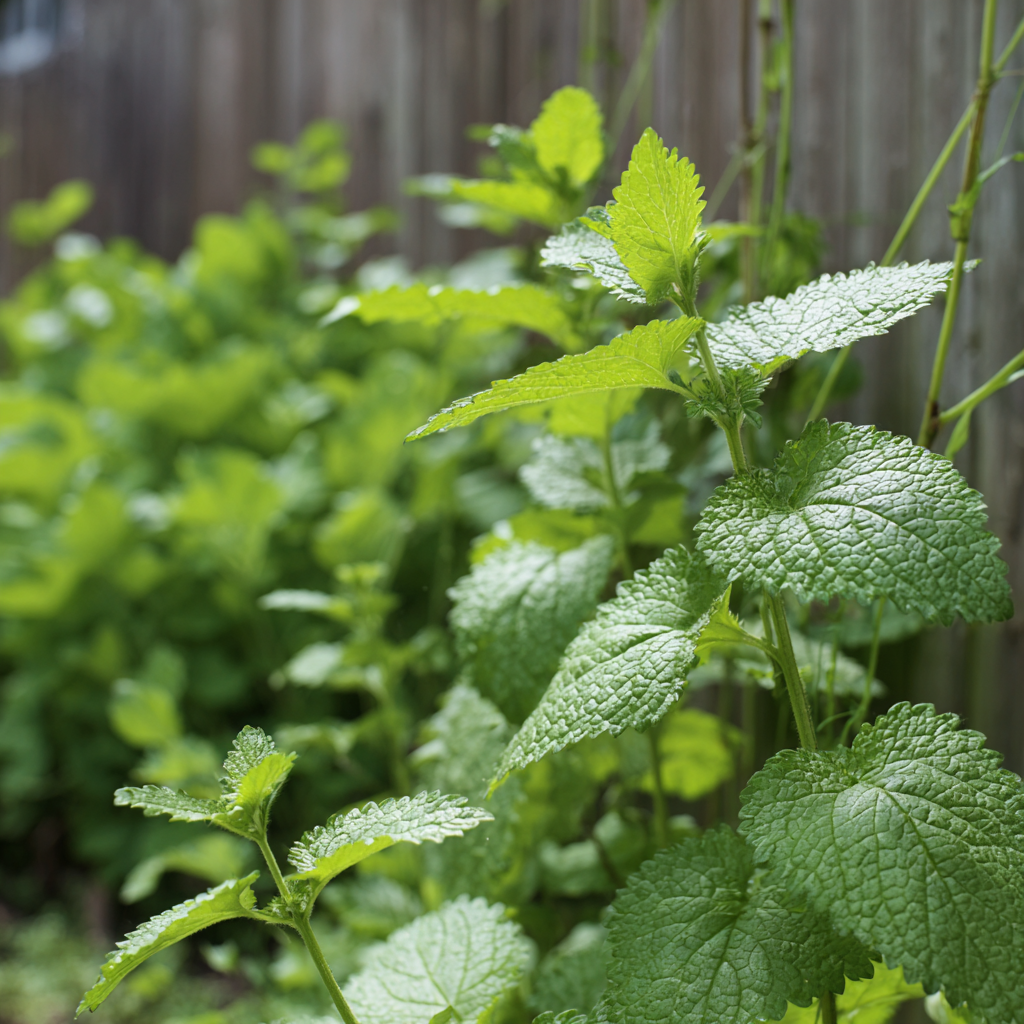
Lemon balm is a hardy perennial herb in the mint family, grown for soft green leaves that release a clean lemon fragrance when brushed or crushed. The plants are slow and unremarkable as young seedlings, then become vigorous, bushy, and remarkably forgiving once established. Most home gardeners get the strongest results by starting seed indoors under bright light, then moving sturdy young plants into a sunny or part-shade spot with steady moisture.
Quick How-to
Start lemon balm indoors about 6 to 8 weeks before your last expected spring frost, or direct sow into prepared ground after frost when you can reliably keep the surface moist. The seed is small and germinates better with light reaching it, so press it gently onto the mix and barely cover, if at all. Hold soil temperature around 65 to 70 F and expect uneven germination over about 10 to 21 days. Thin or transplant to 18 to 24 inches apart. Harvest leafy stems before flower buds open for the cleanest lemon flavor.
Quick Guide
| Fact | Recommendation |
|---|---|
| Best method | Start indoors for control; direct sowing after frost works where surface moisture can be maintained |
| Sowing depth | Surface sow or barely cover; do not bury |
| Light for germination | Seed germinates better with light reaching it; do not block the surface |
| Soil temperature | About 65 to 70 F for steady germination |
| Days to germination | About 10 to 21 days; expect uneven emergence |
| Spacing | 18 to 24 inches between plants |
| Sun | Full sun in mild summers; afternoon shade helps in hot regions |
| Water | Even moisture for young plants; established plants are notably tougher |
| Harvest | Cut leafy stems before flowering for best fragrance and flavor |
| Plant size | Commonly 24 to 36 inches tall and 18 to 36 inches wide |
| Lifecycle | Hardy perennial in many gardens; treated as a single-season herb in pots or harsh winters |
Before You Sow
Lemon balm is a perennial that wants to stay. Choose its spot with that in mind: a corner of a bed where a 2-foot bushy clump is welcome, a dedicated herb area, or a sturdy container with drainage. Unlike running mints, lemon balm does not spread by underground stolons, but it self-sows generously if flowers are allowed to mature. Plan for that habit by either welcoming volunteers or planning to deadhead.
The seed itself is tiny and easy to lose track of. Pre-moisten your mix so the surface is damp but not glossy-wet, smooth it level, and have your label written before you open the packet. A small, light-colored saucer to tip seed from helps you see what you are sowing. Avoid sowing on a windy porch or directly under a fan; even a soft breeze can scatter the seed in seconds.
If you are planning a kitchen herb area, lemon balm pairs naturally with parsley, chives, and milder mint relatives, but give it its own footprint so neighbors are not crowded out once it fills in.
Indoor Starting
Indoor sowing gives you the most control over moisture, light, and emergence timing, all of which matter with a slow, small-seeded herb. Fill clean cells or a shallow tray with fresh seed-starting mix and firm the surface lightly. Sprinkle seed thinly across the surface and press it down with a fingertip or the back of a spoon so each seed makes solid contact with the mix. Either leave seed uncovered or sift the very thinnest dusting of fine mix or vermiculite over the top.
Water from below where possible, or mist gently from above so seed does not float into corners or disappear into cracks. Keep the surface visibly moist until you see green. A clear humidity dome or loose plastic cover helps, as long as you ventilate it daily and remove it as soon as sprouts appear.
Hold mix temperature in the mid-60s to low 70s F. A heat mat set on the low side can help, but lemon balm does not need the high warmth a tomato seed wants, and excess heat under weak light is a fast path to thin, stretched seedlings. Germination is typically uneven across about 10 to 21 days, sometimes longer. Resist the urge to dump the tray before three weeks; late sprouts are normal.
Once seedlings show, give them strong overhead light immediately. Lemon balm seedlings stay small for several weeks, and weak light at this stage is a common reason new growers feel like their plants are stalled. When true leaves appear and roots begin to fill the cell, pot up to a slightly larger container so the young plant has room to bulk up before going outside.
Direct Sowing
Direct sowing can work well once frost danger has passed and the surface can be kept consistently moist. Prepare a smooth, weed-free patch of fertile, well-drained soil. Sow seed thinly on the surface, press it in for contact, and cover with only a whisper of fine soil or sifted compost.
Tiny seed is vulnerable to drying out and to being washed into clumps by hard watering. Use the gentlest spray setting available, water more frequently rather than more heavily during establishment, and consider laying a single layer of light row cover loosely over the bed to slow evaporation. Lift the cover as soon as seedlings stand up on their own so they get full light.
Expect direct-sown stands to come up unevenly. Thin gradually as you can tell seedlings apart from weeds, settling on plants spaced 18 to 24 inches apart for full-sized clumps.
Transplanting and Spacing
Harden off indoor-started lemon balm over about 7 to 10 days before planting out. Begin with a sheltered, mostly shaded spot and short outdoor sessions, then add direct sun, breeze, and time outside in small increments. Skipping this step is a frequent cause of sun-scorched or wilted transplants.
Plant out after the last spring frost, into soil that has had a chance to warm. Set each plant at the same depth it grew in its cell, firm the soil gently, and water in well to settle roots. Space plants 18 to 24 inches apart so air can move through the planting once they bush out; crowded lemon balm is more prone to mildew and to going woody in the middle of the clump.
Soil, Sun, and Water
Lemon balm is not fussy about soil, but it does best in moderately fertile ground that drains well. Heavy, soggy soil discourages strong roots and increases disease risk; bone-dry, lean sand pushes plants to flower early and lose flavor. A simple bed amended with finished compost is usually enough.
Sun preference depends on climate. In cool and mild summers, full sun produces compact, leafy plants. In hot regions, lemon balm appreciates morning sun with afternoon shade; under intense midday sun and dry conditions, leaf edges can scorch and the aroma turns sharper and less sweet. A spot on the east side of taller plants or a low fence often works well.
Water young plants evenly. Once established, lemon balm tolerates occasional dryness, but flavor and leaf quality stay highest when the plant is not pushed into stress cycles. A light mulch of fine compost or shredded leaves keeps the soil even and reduces splash during watering.
Feed lightly. A spring topdress of compost is usually plenty. Heavy nitrogen pushes soft, watery growth that smells weaker and bruises easily.
Top Mistakes
- Burying the seed. Lemon balm seed needs light contact with the surface, not depth. Anything more than the thinnest dusting reduces germination.
- Letting the surface dry between waterings during germination. A single dry afternoon can stop a tray that was sprouting well.
- Giving up at two weeks. Germination is uneven and often stretches past day 14. Hold the tray for at least 21 days before resowing.
- Weak indoor light. Slow seedlings often get blamed on the packet when the real cause is a window that simply is not bright enough. Use a grow light close to the canopy.
- Letting plants flower unchecked. Once flowering takes over, leaf flavor weakens and the plant invests in seed instead of fresh leaves.
Troubleshooting by Symptom
| Symptom | Likely causes | What to do next |
|---|---|---|
| Nothing visible after 14 days | Seed buried too deeply, surface dried out between waterings, or temperature swings between warm days and cold nights | Mist the surface gently, hold the tray for the full 21 days, and resow on the surface if it stays bare past 28 days |
| Sparse, scattered sprouts | Seed clumped together during sowing or washed into low spots by heavy watering | Thin emerging seedlings to the strongest, water more gently, and overseed sparse zones lightly |
| Seedlings stay tiny and slow for weeks | Normal early habit for lemon balm, weak light, or cold roots in unheated rooms | Give bright overhead light, keep the mix in the mid-60s F, and pot up once true leaves are well developed |
| Seedlings flop or rot at the soil line | Wet, stagnant mix and poor airflow leading to damping-off | Improve airflow, water from below, remove affected seedlings, and start any restarts in fresh sterile mix |
| Lower leaves yellow on a healthy-looking plant | Inconsistent watering, low fertility in lean soil, or aging leaves at the base of a maturing clump | Top up with finished compost, water more evenly, and trim the worst lower leaves to encourage fresh growth |
| White powdery film on leaves | Powdery mildew in humid, low-airflow conditions | Thin crowded stems, improve spacing and airflow, water at the soil level rather than overhead, and remove badly affected leaves |
| Plant becomes open, woody, and sprawling in midseason | Flowering taking over, lack of trimming, or shade from neighboring plants | Cut the plant back by about a third, remove flower stalks, and expect a flush of fresh leafy growth |
| Sudden patch of unwanted seedlings around the parent | Flowers were allowed to mature and drop seed | Deadhead earlier next year, hoe out volunteers while small, or pot up the best ones to share |
| Leaves taste flat or grassy | Heat stress, flowering, or harvest after flowers opened | Cut the plant back hard, water steadily, and harvest the new flush before buds reappear |
Harvest and Kitchen Use
Begin harvesting once a young plant has several pairs of true leaves and is putting on visible new growth. Cut whole stems just above a pair of leaves rather than plucking individual leaves; the plant will branch from that point and stay bushier.
The best leaves come before the plant flowers. Watch for the small whorls of buds forming at the leaf axils near the top of the stems, and cut those stems off at a lower leaf node to delay flowering. A confident hard cutback around midsummer ΓÇö taking the plant down by roughly a third ΓÇö usually produces a clean second flush of fragrant leaves.
Use lemon balm fresh whenever possible: torn into salads, steeped briefly in hot water for a calming tea, stirred into yogurt, or added to fruit. Dried leaves keep some character but lose much of the bright lemon top note, so dry quickly in a warm, shaded, well-ventilated spot rather than in direct sun, and store in a sealed jar away from light.
Container and Small-Space Notes
A medium to large pot with drainage holes is often the simplest way to grow lemon balm, especially if you do not want it self-sowing into a mixed bed. Use a well-draining potting mix, water more often than you would for an in-ground plant, and trim regularly. A topdress of compost in spring or a diluted balanced feed during peak growth is usually enough.
In cold-winter climates, perennials in pots are more vulnerable to root freezing than the same plant in the ground. Sink the pot into the soil for winter, move it to a sheltered spot against the house, or treat it as a single-season planting and start fresh in spring.
Pollinators and Companion Notes
Lemon balm flowers are small but rich in nectar and very attractive to bees; the genus name Melissa comes from the Greek word for honeybee. If you can spare a corner of the planting to flower late in the season, it earns its place as a pollinator support plant. Otherwise, deadhead promptly to keep flavor up and volunteers down.
Seed Saving
Lemon balm seed is small and ripens unevenly along the stem. To save seed, let a few healthy plants flower, then watch the spent whorls dry on the stem. Once the calyces turn brown and brittle, snip whole stems into a paper bag and let them finish drying indoors for a week or two. Rub the dried whorls between your fingers over a fine sieve to separate seed from chaff.
Dry the cleaned seed thoroughly for several more days, then store in a labeled, sealed container with the variety and year. Saved seed from open garden plantings will generally come true to the basic species, but unusual selections, such as variegated or lemon-scented improved forms, may not always pass their character to seedlings.
Storing Leftover Seed
Keep unused Lemon Balm seed in its labeled packet inside a sealed container in a cool, dry, dark indoor location. Avoid garages, sheds, greenhouses, and sunny windowsills, where temperature and humidity swing sharply. Label home-saved seed with the variety and harvest year before storing it.
FAQ
Is lemon balm hard to grow from seed?
Not difficult, but slow and a little fussy at the start. The seed is tiny, germinates better with light, and emerges unevenly. Once seedlings get past the first month, plants become much more vigorous and forgiving.
Does lemon balm spread like mint?
It does not run underground the way true mints do, but it self-sows freely if flowers are allowed to ripen. Containers, regular cutting, and prompt deadheading keep it contained.
Sun or shade?
Full sun in mild climates produces the most compact, leafy plant. In hot regions, partial shade ΓÇö especially afternoon shade ΓÇö preserves leaf quality and reduces edge scorch.
Why does my lemon balm lose its smell after midsummer?
Flavor is strongest in young leaves before flowering. Once the plant flowers, leaves can taste flat or grassy. A hard cutback after the first flowering usually produces a fresh, fragrant flush.
Can I overwinter lemon balm?
In most home gardens with cold but not extreme winters, established lemon balm dies back to the ground and returns from the crown in spring. In containers or very cold zones, give the pot winter protection or treat the planting as a single-season herb.