
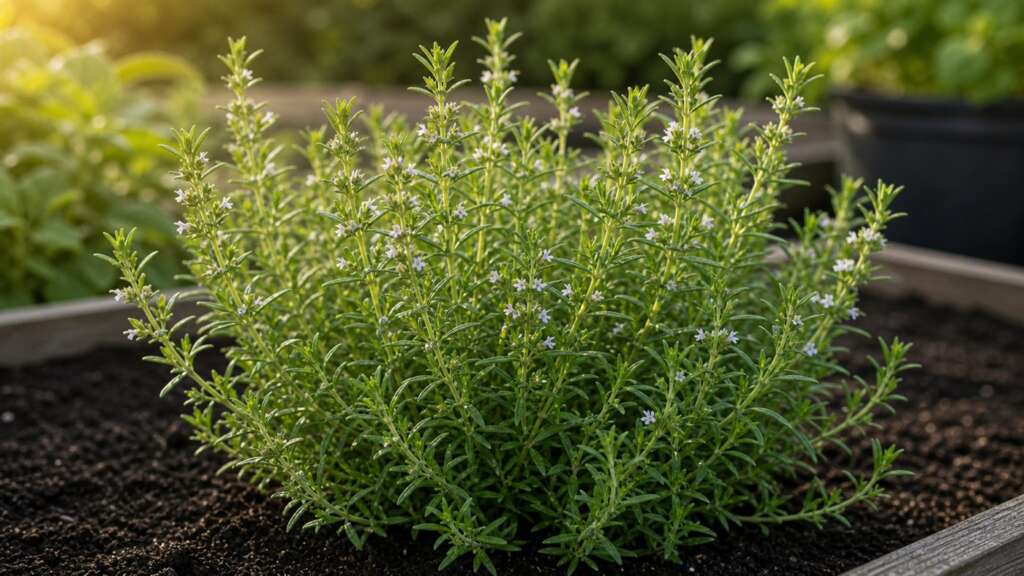
Summer Savory is a warm-season annual herb in the mint family, grown for its peppery, lightly sweet leaves. It is a classic component of herbes de Provence and a traditional kitchen partner for beans, lentils, and roasted vegetables. The plant is compact and easygoing once it gets going, but it does need real warmth, shallow sowing, and bright light to start cleanly from seed.
Quick How-to
Sow Summer Savory after your last spring frost, once the soil has warmed and nights are mild. Place seed shallowly, about 1/8 to 1/4 inch deep, and barely cover with fine soil or seed-starting mix. Keep the surface evenly moist and aim for soil around 65 to 75 F. Expect germination in roughly 7 to 14 days. Thin or transplant to about 6 to 10 inches apart, give the plants full sun, and pinch growing tips early to encourage a bushy, well-branched habit.
Quick Guide
| Fact | Recommendation |
|---|---|
| Best method | Direct sow after frost; a short indoor start 4 to 6 weeks before transplanting also works |
| Sowing depth | About 1/8 to 1/4 inch; the seed is small, so cover lightly |
| Germination temperature | Around 65 to 75 F for steady emergence |
| Days to germination | About 7 to 14 days |
| Light for germination | Cover lightly; provide strong light immediately after sprouting |
| Spacing | Thin or transplant to about 6 to 10 inches apart |
| Sun | Full sun |
| Water | Even moisture during establishment; tolerates lean conditions once mature |
| Harvest timing | Begin taking stem tips as plants branch; harvest larger cuts at bud stage, often within about 60 days |
| Plant size | Compact annual, commonly about 12 to 18 inches tall and similar in spread |
Before You Sow
Summer Savory rewards a calm, deliberate start. Choose a sunny spot with good drainage and ordinary garden soil. Rich, heavily amended beds are not necessary; this herb evolved in lean Mediterranean conditions and can become floppy and less flavorful in over-fertilized ground. If your soil is heavy or slow to warm, build a small raised area or grow in containers so the root zone heats up sooner in spring.
Rake the seedbed smooth, break up clods, and pre-water before sowing. The seed is small and easy to wash too deep with a heavy first watering. Label rows clearly. Young savory seedlings have narrow, slightly succulent first leaves that can be mistaken for thyme or other small Mediterranean herbs, especially if you grow several at once.
If you are working in containers, choose a pot at least 6 to 8 inches across with drainage holes and a light, well-draining mix. Plants in small pots dry out quickly in summer, so plan a watering routine you can actually keep up with.
Direct Sowing
Direct sowing is the simplest path for most home gardens. Wait until the last frost has passed and soil feels warm to the touch a couple of inches down. A reliable signal is when warm-season crops like beans and basil are also safe to sow.
Scatter or place seed thinly in a shallow furrow or across a prepared patch. Cover with just a sift of fine soil or seed-starting mix; some growers barely cover the seed at all. Press the surface gently so seed makes good contact, then water with a fine spray rather than a heavy stream.
Keep the top layer consistently moist until you see sprouts. If the surface dries and crusts, tiny seedlings can stall just below ground. A light row cover or shade cloth during hot, sunny afternoons can hold moisture without baking the surface. Once true leaves appear, thin to about 6 to 10 inches apart. Crowded savory tends to stretch, flop, and bloom early.
Indoor Starting
A short indoor start is useful in short-season areas or when spring weather is unpredictable. Sow about 4 to 6 weeks before your expected transplant date. Use clean cells, fresh seed-starting mix, and pre-moistened media. Sow one to three seeds per cell at roughly 1/8 to 1/4 inch deep.
A heat mat helps move germination along, but reduce or remove bottom heat as soon as sprouts appear. Strong overhead light, run for long days, matters more than warmth after emergence. Tomato-style legginess is a frequent problem with indoor herb seedlings, and the cause is almost always weak light combined with too much heat.
Pot up only if roots truly fill the cell. Savory does not love sitting indoors for long stretches, and a small, sturdy seedling almost always outperforms a tall, crowded one after transplanting.
Transplanting and Spacing
Harden off seedlings over 7 to 10 days before planting out. Begin with an hour or two in sheltered shade, then gradually increase sun, breeze, and time outdoors. Transplant after frost danger has passed and nights are reliably mild. Cold soil and chilly nights can stall savory even when daytime air feels pleasant.
Set plants at the same depth they grew in their cells and water in well. Space about 6 to 10 inches apart, depending on whether you want individual mounded plants or a denser drift for kitchen harvest. Mulch lightly once the soil has warmed to conserve moisture and keep weeds down, but keep mulch pulled back slightly from the stems.
Soil, Sun, and Water
Full sun is essential for the best flavor and the tidiest plant habit. Six to eight hours minimum is a reasonable target, with more being better in cool or cloudy climates. In very hot, dry regions, a little afternoon relief during the worst of summer can keep plants from going to seed too quickly.
Soil should drain freely. Heavy clay that stays wet in spring is the most common reason savory sulks early in the season. Compost worked in before planting is helpful, but avoid pushing nitrogen-heavy feeds; lush leafy growth tends to be soft, prone to flopping, and less aromatic.
Water seedlings often enough to keep the surface evenly moist, then taper off as plants establish. Mature savory is fairly drought tolerant and prefers a soak-and-dry rhythm rather than constant moisture. Water at the soil line when possible to keep foliage dry, which reduces fungal issues in humid weather.
Top Mistakes
- Sowing into cold soil: Summer Savory is genuinely warm-season. Seed that sits in cool wet ground often germinates poorly or unevenly. Wait for stable warmth rather than rushing the calendar.
- Burying the seed too deep: This is small seed. A heavy cover layer can prevent emergence even when everything else is right. A sift of fine soil, or barely a press into the surface, is usually enough.
- Skipping the pinch: Without an early pinch above the first set of true leaves, plants often grow up as a single leggy stem and bloom too soon. A simple tip pinch encourages branching and extends the leafy harvest window.
- Overfeeding: Rich soil and frequent fertilizer produce soft growth with milder flavor. Treat savory as a lean-soil herb and let the natural oils develop.
Troubleshooting by Symptom
| Symptom | Likely causes | What to do next |
|---|---|---|
| No sprouts after 14 days | Soil too cool, seed buried too deep, surface dried out, or media stayed saturated | Confirm soil warmth, resow shallowly, and keep the surface evenly moist without flooding |
| Patchy germination | Uneven watering, seed washed into low spots, cloddy soil, or inconsistent depth | Smooth the bed, water with a fine spray, and cover seed with a thin, even layer |
| Seedlings tall and pale | Weak light after germination, too much warmth, or crowded cells | Move under stronger overhead light, lower temperatures, and thin to one seedling per cell |
| Seedlings collapse at the soil line | Overly wet mix, poor airflow, or damping-off conditions | Increase airflow, water less often, use fresh seed-starting mix, and avoid saturated trays |
| Plants flop or sprawl outdoors | Too little sun, rich soil, or skipped pinching | Move to full sun if possible, ease off feeding, and pinch growing tips to rebuild structure |
| Early heavy flowering | Heat stress, dry soil, or crowding | Pinch off flower buds, water more consistently, and harvest stems regularly to delay bolting |
| Faded, low-aroma leaves | Excess nitrogen, too much shade, or harvesting in the heat of the day | Stop feeding, give more sun, and harvest in the morning after dew has dried |
Germination Diagnostics
When Summer Savory is slow to start, work through the seed environment in order rather than changing everything at once. Begin with depth. Because the seed is small, a cover that feels modest to you can still be too deep for the seedling to push through. If in doubt, resow with a barely-there layer and press for contact.
Next, check temperature. Cool, damp soil is the most common reason warm-season seed sits without moving. A simple soil thermometer is worth the small investment; if readings drift below the mid-60s F, give it another week or use a heat mat indoors.
Moisture is the next checkpoint. The seed zone should feel evenly damp, like a wrung-out sponge, not shiny wet or dusty dry. A crusted surface can defeat tiny seedlings even when seed below has begun to grow. Mist gently or cover briefly with a board or damp burlap to hold moisture, removing it as soon as sprouts appear.
Finally, look at light and airflow after emergence. Seedlings that come up well but stretch, pale, or fall over usually need stronger overhead light, better airflow, less crowding, or a less saturated mix.
Container and Small-Space Notes
Summer Savory does well in pots, window boxes, and herb planters, and it pairs nicely with rosemary, thyme, and oregano in mixed Mediterranean arrangements. Choose a container with drainage holes and at least 6 to 8 inches of soil depth. Light potting mix amended with a little sand or perlite mimics the lean, fast-draining soils savory prefers.
Container plants depend entirely on you for water, so check moisture daily in warm weather. At the same time, do not leave saucers full of standing water. A consistent, light watering rhythm is better than alternating drought and flood.
Harvest and Kitchen Use
Begin harvesting once plants are about 6 inches tall and well branched. Snip sprigs about an inch above a leaf pair, which encourages new side shoots. Regular light harvest keeps plants tidy and productive, often for many weeks.
The strongest flavor is typically just before flowering. For drying, cut whole stems on a dry morning after the dew has lifted but before midday heat. Bundle loosely and hang in a warm, dark, well-ventilated spot, or lay sprigs flat on a screen. Once leaves crumble easily between your fingers, strip them from the stems and store in a sealed jar away from light and heat.
In the kitchen, Summer Savory is a natural fit with beans, lentils, peas, roasted root vegetables, sausages, soups, and bread stuffings. The flavor is softer and slightly sweeter than its cousin winter savory, with a peppery thyme-like edge.
Seed Saving
Summer Savory will set seed readily if you let some stems flower and mature on the plant. Choose healthy, well-shaped plants and stop harvesting from them once flowering begins. As the small flowers fade, tiny seed develops in the dried calyx.
Collect when the seed heads are fully dry and brittle, ideally on a dry day. Rub heads gently over a bowl or paper bag and winnow lightly to remove chaff. Finish drying indoors for a few days before storing. Label seed clearly with variety and harvest year. If other Satureja species grow nearby, future seedlings may not be identical to the parent.
Storing Leftover Seed
Keep unused Summer Savory seed in its labeled packet inside a sealed container in a cool, dry, dark indoor location. Avoid garages, sheds, greenhouses, and sunny windowsills, where temperature and humidity swing sharply. Label home-saved seed with the variety and harvest year before storing it.
FAQ
Can I grow Summer Savory indoors year-round?
Yes, with strong light and steady warmth. A sunny south-facing window helps, but a small grow light usually produces sturdier plants. Keep pots on the dry side and pinch regularly to maintain bushy growth.
Should I pinch Summer Savory?
Yes. An early pinch above the first set of true leaves, followed by regular light harvest, keeps plants compact and delays flowering. Unpinched plants often grow as a single stem and bolt sooner.
How is Summer Savory different from winter savory?
Summer Savory is an annual with softer leaves and a milder, sweeter flavor. Winter savory is a small perennial shrub with a sharper, more resinous bite. Both work in similar dishes, but Summer Savory is the traditional choice for fresh cooking and herbes de Provence blends.
Can Summer Savory be grown with vegetables?
Yes. It has a long-standing reputation as a good neighbor for beans and is often planted nearby for that reason. It also fits comfortably into mixed herb beds and pollinator strips.