
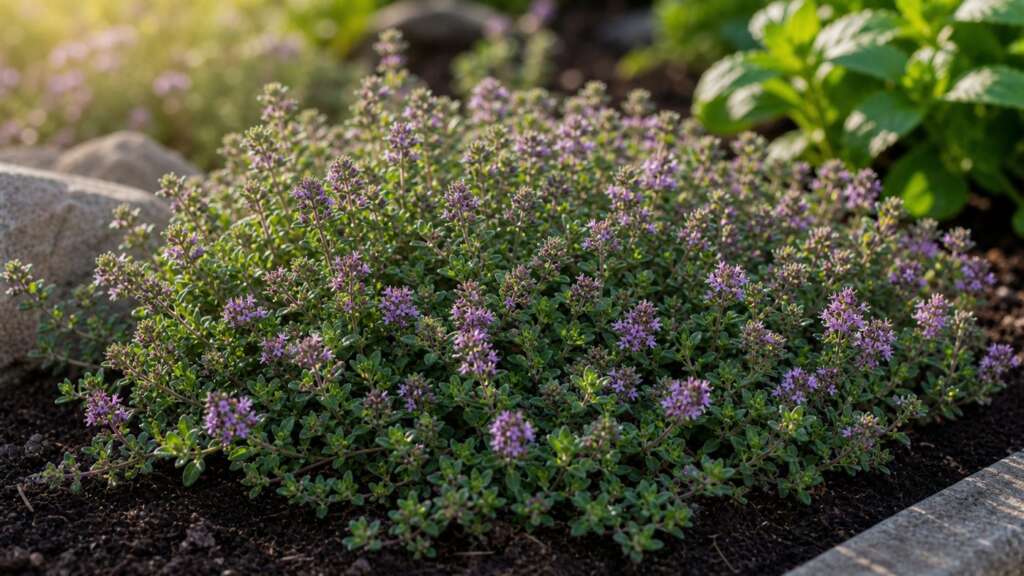
Creeping Thyme, also called Breckland thyme, wild thyme, or mother of thyme, is a low-growing perennial herb grown as a fragrant groundcover, lawn alternative, pollinator planting, and the soft edge of stepping-stone paths. The seed is tiny and slow to start, so the work up front is mostly about patience, light coverage, and steady surface moisture. Once plants are established, creeping thyme rewards lean soil and good drainage rather than rich feeding.
Quick How-to
Start creeping thyme seed in spring after the worst cold has passed, either indoors 6 to 10 weeks before transplanting or directly into a prepared, weed-free bed once soil has warmed. The seed is very small. Surface sow or press it lightly into the mix without burying it, and keep the top of the soil consistently damp until germination. Expect uneven sprouts in about 14 to 28 days at roughly 65 to 70 F. Give seedlings strong light as soon as they appear, thin or space young plants generously, and shift to leaner, drier conditions once the planting is established.
Quick Guide
| Fact | Recommendation |
|---|---|
| Best method | Indoor start preferred for control; direct sowing possible into warm, weed-free soil |
| Sowing depth | Surface sow or barely press into the mix; do not bury |
| Germination temperature | About 65 to 70 F is a reliable target |
| Days to germination | About 14 to 28 days, often uneven |
| Light for germination | Light helps; leave seed at or very near the surface |
| Spacing | About 8 to 12 inches apart for groundcover fill |
| Sun | Full sun preferred; tolerates light shade |
| Water | Steady surface moisture until established; lean and well-drained afterward |
| Bloom timing | Typically blooms in the second season once established |
| Plant size | Low mat-forming perennial, generally only a few inches tall |
Before You Sow
Creeping thyme is a small-seeded perennial, which means the first few weeks set the tone for the whole planting. Two things matter more than anything else: keeping the seed at the surface, and keeping that surface evenly moist without drowning it. A flat of clean seed-starting mix, gentle bottom watering, and bright light beat any clever shortcut.
Plan your site before you plant. Creeping thyme is happiest in full sun with sharp drainage, which is the opposite of what most lawns and shrub beds provide. Pockets between flagstones, gravel borders, sunny slopes, rock gardens, and raised mounds all suit it. Heavy clay or chronically wet spots are the most common reason an otherwise healthy stand thins out in its second or third year.
If you are seeding into the ground, take the time to clear weeds first. Creeping thyme grows close to the soil and competes poorly with grasses or fast annual weeds while it is young. A clean seedbed up front saves hours of weeding later.
Indoor Starting
Indoor starting is the more controlled path and is often the easiest way to establish a uniform planting. Sow 6 to 10 weeks before you plan to transplant. Pre-moisten a light seed-starting mix, fill clean cells or a shallow tray, and tap the surface flat. Sprinkle a small pinch of seed across each cell or across the row; the seed is fine, so a little goes a long way.
Either leave seed uncovered or press it lightly into the surface with the back of a spoon. A dusting of fine vermiculite is fine as long as it does not bury the seed. Mist gently, cover the tray with a clear lid or plastic to hold humidity, and place it somewhere warm. A heat mat set near 70 F helps even germination. Provide bright overhead light from the start so emerging seedlings have what they need the moment they break the surface.
Vent the cover daily and remove it as soon as sprouts appear. Bottom water whenever possible so you do not dislodge tiny seedlings. When plants have a few sets of true leaves and a small root system holding the cell together, pot up if you need to hold them longer, or begin hardening off if outdoor conditions are mild.
Direct Sowing
Direct sowing works in the right conditions, but the margin for error is smaller because tiny seed on open soil dries out quickly. Wait until soil has warmed and frost risk has passed. Rake the bed level, remove clods and stones, and water it the day before sowing so the seed is not washed deep when you water it in.
Scatter seed thinly across the surface, then press it in with a board or the back of a rake. Do not bury it. Water with a very fine spray, and plan on light, frequent watering, sometimes twice a day in sun and wind, to keep the surface from drying during the germination window. A thin floating row cover can hold humidity and protect seed from birds while still letting light through.
Once seedlings are up and have a few true leaves, thin to give each young plant room to spread. Crowded thyme seedlings shade each other and stay weak; spaced plants fill in faster and look better in the end.
Transplanting and Spacing
Harden off indoor-started thyme over 7 to 10 days before planting out. Start with a sheltered, partly shaded spot and short outdoor visits, then build up to full sun, breeze, and longer days. Transplant after nights are reliably mild and the soil feels warm to the touch.
Set plants at the same depth they grew in their cells; planting too deep can rot the crown. Space roughly 6 to 12 inches apart for groundcover fill, closer for faster coverage and wider for a more sculpted look between stones. Water in gently, then ease off as new growth begins. Mulch is optional and best kept thin or made of grit so it does not trap moisture against the stems.
Soil, Sun, and Water
Creeping thyme is a Mediterranean-style plant at heart. It prefers full sun, lean soil, and excellent drainage. Sandy or gravelly soils that would frustrate a vegetable gardener often grow thyme beautifully. Skip rich compost and high-nitrogen fertilizer; lush, soft growth pushed by feeding tends to flop and rot.
During establishment, water often enough to keep the surface from drying. After the planting fills in, water deeply but infrequently, and let the top inch of soil dry between waterings. Persistent wet feet, especially in winter, is the most common cause of decline. If your site holds water, build a low mound or amend with grit to raise the crown of the plant out of standing moisture.
Top Mistakes
- Burying the seed: Creeping thyme seed is very small and benefits from light. Pressing it into the surface is enough; covering it with soil delays or prevents emergence.
- Letting the surface dry during germination: The seed zone can swing from damp to bone-dry in a single sunny afternoon. Light, frequent surface watering during the first few weeks matters more than volume.
- Planting into heavy, wet soil: Creeping thyme tolerates poor and rocky ground far better than it tolerates clay that stays soggy. Site selection and drainage are non-negotiable for long-term success.
- Giving up too early: Germination is often slow and uneven. A flat that looks empty at day 10 may have a respectable stand by day 21. Hold steady on moisture and warmth before resowing.
- Letting weeds win year one: Young thyme cannot outpace grass or vigorous annual weeds. Keep the bed weeded by hand while the planting fills in.
Troubleshooting by Symptom
| Symptom | Likely causes | What to do next |
|---|---|---|
| No sprouts after 3 to 4 weeks | Seed buried too deep, surface dried out, or mix too cold | Resow on the surface, keep the mix evenly damp, and provide steady warmth around 65 to 70 F |
| Patchy or thin germination | Uneven sowing, dry pockets in the tray, or seed washed into low spots | Sow thinly and evenly, bottom water, and consider a humidity cover during early germination |
| Seedlings stretch and pale | Not enough light after sprouting, or too much warmth without strong light | Move lights closer, lengthen the light period, and reduce or remove the heat mat after emergence |
| Seedlings collapse at the soil line | Saturated mix, poor airflow, or damping-off conditions | Water less often, improve airflow, water from below, and start fresh with clean mix for any restarts |
| Established plants thin out over winter | Wet, heavy soil; poor drainage; or a crown that sat in mulch | Improve drainage, replant on a low mound or grit-amended bed, and keep mulch away from crowns |
| Plants flop or look leggy | Too much shade, overly rich soil, or excess water | Move to a sunnier spot, hold off on fertilizer, and trim lightly to encourage compact regrowth |
| Few flowers in year one | Young plants often focus on establishment first | Be patient; many stands bloom more heavily in their second season |
Germination Diagnostics
When creeping thyme is slow to sprout, work through the seed environment in order: surface moisture, sowing depth, light exposure, and seed-zone temperature.
Check depth first. If you can see no seed on the surface and you tucked everything in well, you may have covered it too thoroughly. Tiny seed simply does not have the reserves to push up through soil.
Next, check temperature. Cool, damp mix sitting at 55 F will hold seed in limbo. A heat mat or a warmer indoor spot can turn a stalled flat around within days.
Then check moisture. The surface should feel evenly damp, like a wrung-out sponge, not shiny wet and not dusty dry. A crusted surface can stop sprouts from breaking through even when seed below has started to grow. Misting or bottom watering keeps the seedbed honest.
Finally, check light and airflow once seedlings appear. Thin, pale, leaning seedlings almost always mean weak light or too much heat. Strong overhead light, gentle air movement, and prompt thinning fix most early seedling problems before they become collapse.
Timing and Climate Notes
Creeping thyme is hardy across a wide range and behaves as a perennial in most of the continental United States. The trick is matching seed-starting timing to your spring, not the calendar. Sow indoors when you would normally start tomatoes or peppers, and plan to set plants out a little after your last frost when nights are mild and soil feels warm.
In hot southern climates, very early spring or fall sowings often outperform summer plantings, because cooler soil is gentler on seedlings than peak July heat. In short-season northern gardens, indoor starting is almost always the more reliable path because direct-sown seedlings may not have time to establish before fall.
Container and Small-Space Notes
Creeping thyme grows well in shallow, wide containers and looks especially good spilling over the edges of stone troughs, strawberry pots, and rock-garden bowls. Use a gritty mix or amend a standard potting soil with coarse sand or small gravel to mimic the lean, sharp drainage it prefers in the ground.
Container plants need slightly more attention to watering than in-ground plantings because pots dry faster, but resist the urge to keep the soil constantly wet. Water deeply when the top inch is dry, then let it breathe. In cold-winter regions, sink the pot into the ground or move it to a sheltered spot for winter so the roots are not subjected to repeated freeze-and-thaw.
Harvest, Bloom, and Use Notes
Creeping thyme is grown more for its mat and flowers than for the kitchen, though the leaves are aromatic and lightly culinary. After the planting establishes, trim lightly with shears to keep growth tidy and encourage fresh stems. Avoid cutting hard into older woody growth, which is slow to regrow.
Bloom is usually strongest after the perennial mat is established. Species plants commonly carry pink-to-purple summer flowers that attract bees, while named selections may flower white, red, pink, or purple. This guide is specifically for Thymus serpyllum, the low mat-forming species also called wild thyme, Breckland thyme, and mother of thyme.
Seed Saving
Let a few flower heads mature and dry on the plant rather than trimming everything off after bloom. Once the seed heads feel dry and crumble easily, snip them on a dry day, rub the heads gently over a bowl, and let the seed finish drying indoors before storage. Sift out chaff with a fine screen and label seed with the variety and year.
Note that named selections may not come true from saved seed, especially if more than one thyme grows nearby. For a uniform groundcover from saved seed, expect some variation in habit and flower color.
Storing Leftover Seed
Keep unused Creeping Thyme seed in its labeled packet inside a sealed container in a cool, dry, dark indoor location. Avoid garages, sheds, greenhouses, and sunny windowsills, where temperature and humidity swing sharply. Label home-saved seed with the variety and harvest year before storing it.
FAQ
Why is creeping thyme so slow to germinate?
Slow, uneven germination is normal for this species. The seed is tiny, prefers warmth, and benefits from light, so it can take 2 to 4 weeks even under good conditions. Keep the surface damp and the mix warm, and resist the urge to dig around in the tray.
Should I cover the seed with soil?
Barely, if at all. Press the seed into the surface of pre-moistened mix or dust it with a very thin layer of fine vermiculite. Burying creeping thyme seed is one of the most common reasons it fails to come up.
Can I use creeping thyme as a lawn alternative?
Yes, in the right spot. It works best as a low-traffic groundcover or between stepping stones in a sunny, well-drained area. It tolerates occasional foot traffic but is not a replacement for turf in a busy play area.
Will it bloom the first year?
Sometimes lightly, but heavier bloom usually comes in the second season once plants have established a strong mat.
Why did my seedlings disappear after sprouting?
The most common causes are a dried surface, damping-off in overly wet trays, or competition from weeds in a direct-sown bed. Steady but gentle moisture, good airflow, and a clean seedbed prevent most early losses.