
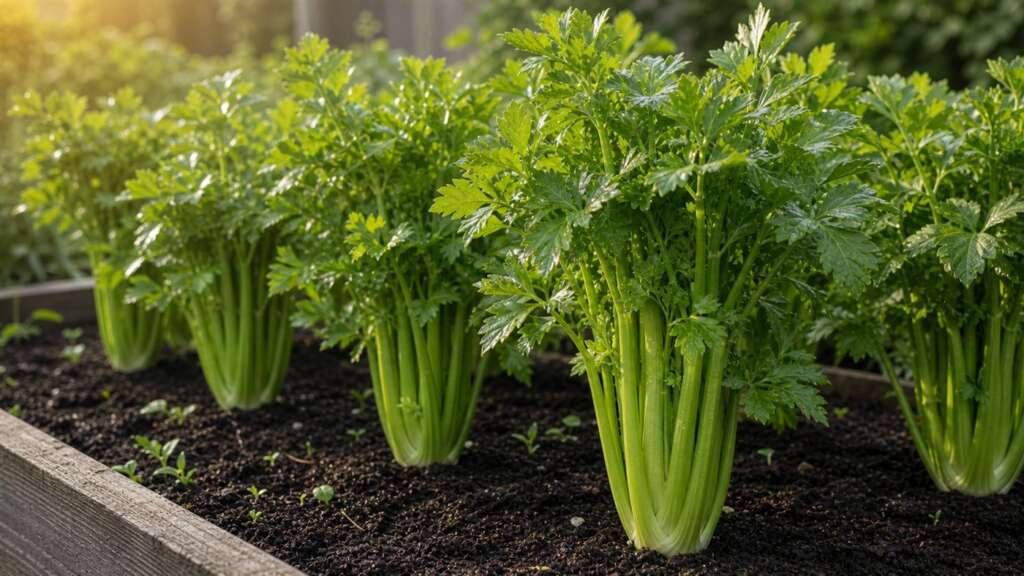
Tall Utah 52-70 is a classic heirloom celery grown for tall, upright bunches of dark green stalks with mild, crisp interior ribs. Like all garden celery (Apium graveolens var. dulce), it is a cool-season vegetable that rewards a long, steady growing window: an early indoor start, careful transplanting into rich moist soil, and consistent water from sowing all the way through harvest. It is biennial by nature but is grown as a single-season annual crop for the stalks.
Quick How-to
Start Tall Utah 52-70 indoors about 10 to 12 weeks before your last expected spring frost, or roughly the same window before a mild fall planting date. Press the tiny seed onto the surface of a damp seed-starting mix and barely cover, or leave it uncovered; light helps germination. Keep the mix consistently moist at around 70 F. Sprouts usually appear in 14 to 21 days, sometimes longer. Transplant out after hardening off, once nights are reliably above the upper 40s F and the soil has warmed but the air is still cool. Plant into rich, moisture-retentive soil, space 8 to 10 inches apart, and never let the bed dry out.
Quick Guide
| Fact | Recommendation |
|---|---|
| Best method | Start indoors 10 to 12 weeks before transplanting |
| Sowing depth | Surface sow or barely cover, about 1/16 inch |
| Germination temperature | About 70 F mix temperature, with cooler nights tolerated |
| Days to germination | About 14 to 21 days, occasionally longer |
| Light for germination | Light aids germination; do not bury the seed |
| Transplant timing | After hardening off, when nights are mild and frost risk has passed |
| Spacing | About 8 to 10 inches in row, with 18 to 24 inches between rows |
| Sun | Full sun in cool weather; afternoon shade in hot regions |
| Water | Even, generous moisture from sowing through harvest |
| Soil | Rich, deep, moisture-retentive, with steady fertility |
| Days to harvest | About 90 to 110 days from transplant for full bunches, with cool weather slowing growth |
| Plant size | Upright, self-blanching habit with tall green stalks |
Before You Sow
Celery is one of the slower vegetables to start from seed, and that is normal. The combination of tiny seed, slow germination, and a long season means a little extra planning at the front end pays off. Choose a clean shallow tray or a flat of small cells, fill with fresh seed-starting mix, and pre-moisten the mix until it feels like a wrung-out sponge before you ever open the seed packet. Pre-moistening matters here because trying to water in surface-sown celery seed afterward can wash it out of place or push it too deep.
Plan backward from your transplant date. In most regions, that means sowing around late winter for spring planting, or mid to late summer for a fall crop. A heat mat set to about 70 F under the tray helps germination stay even, especially in a cool basement or laundry room. Remove the mat once seedlings emerge so they grow sturdy rather than stretched.
Indoor Starting
Sprinkle the seed thinly across the surface of the mix and either leave it exposed or sift the lightest dusting of fine vermiculite or mix over the top. Tall Utah 52-70 seed is small enough that any real burial cuts germination. Light helps the seed wake up, so a clear humidity dome is useful: it holds moisture in without blocking light.
Mist the surface whenever it starts to look dry. Do not flood it. The surface should stay evenly damp for the full germination window, which is often two to three weeks and occasionally longer. It is common for celery to look like nothing is happening for ten or twelve days and then suddenly fill in. Resist the urge to dig around and check; disturbing the seed bed slows things further.
As soon as sprouts show, take the dome off, lower the temperature into the 60s F if you can, and give them strong overhead light for long days. A bright window is rarely enough. A simple grow light a few inches above the seedlings prevents the thin, stretched growth that celery is prone to. Keep the mix evenly moist throughout. Celery has shallow roots and does not recover well from drying out at any stage.
When seedlings have a few true leaves and start to crowd, prick them out into individual cells or small pots. Handle them by a leaf rather than the stem, and bury them at the same depth they were growing. Continue under strong light, in cool conditions, with steady water.
Direct Sowing
Direct sowing is possible in mild climates with long, cool growing windows, but it is harder than indoor starting for most gardeners. The seed is small, slow, and unforgiving about dry surfaces, and weed seedlings often overtake the bed before celery is visible. If you do try it, pre-soak the bed, sow on the surface, cover with a thin layer of vermiculite, and keep the surface damp with a fine mist or shade cloth until seedlings establish. Then thin to final spacing.
For most home gardens, an indoor start gives a noticeably better stand and earlier harvest.
Hardening Off and Transplanting
Harden seedlings off gradually over 7 to 10 days before planting out. Start with an hour or two of dappled outdoor shade and build up to a full day of sun and breeze. Celery does not love sudden weather changes, and a hardened plant transitions far more smoothly into the garden.
Transplant once frost danger has passed but while the weather is still cool. Steady exposure to temperatures below about 55 F for a couple of weeks after transplanting can trick celery into thinking it has completed a winter and trigger early bolting, so wait for mild nights rather than rushing plants into cold soil. On the other end, avoid setting out plants into a heat wave.
Set transplants at the same depth they grew in their cell, water them in well, and keep the bed moist for the first two weeks while roots take hold. Space plants about 8 to 10 inches apart in the row, with 18 to 24 inches between rows. Closer in-row spacing encourages the self-blanching habit by shading the lower stalks; wider spacing produces fuller plants with greener exteriors.
Soil, Sun, and Water
Celery is a heavy feeder with a small root system, which is an unforgiving combination. The fix is rich soil and steady inputs. Work several inches of compost or well-aged manure into the bed before planting. A balanced organic fertilizer at planting and a light side dressing partway through the season help keep growth steady. Avoid pushing high-nitrogen fertilizer late in the season; it can encourage soft, hollow stalks.
Full sun produces the strongest plants where summers are cool. In hot regions, a spot with morning sun and afternoon shade reduces stress and helps prevent bolting. The most important variable, though, is water. Celery descends from wetland plants and needs the soil moisture of a wetland to produce tender stalks. Aim for consistently moist soil throughout the season, not soggy and not dry. A thick mulch of straw or shredded leaves once plants are established conserves moisture, keeps the soil cool, and reduces weeding around shallow roots.
If you want paler, milder hearts, you can blanch the plants in the last two to three weeks before harvest by wrapping the outer stalks loosely with cardboard, newspaper, or a tall collar of soil hilled around the base. Tall Utah 52-70 is described as self-blanching and produces a usable pale interior without this step, so blanching is optional and a matter of personal taste.
Top Mistakes
- Burying the seed. Tall Utah 52-70 seed needs light and air to germinate well. Sow on the surface or barely cover. Deep planting is the single most common reason a tray looks empty after three weeks.
- Letting the seedling tray dry out. Even a single dry afternoon can cost a germinating celery tray most of its stand. Use a dome until sprouts appear and check moisture daily.
- Transplanting into cold soil. Repeated cold snaps after transplant can lock celery into making a flower stalk instead of usable bunches. Wait for mild nights.
- Inconsistent water through the season. Celery responds to drought stress with stringy, tough, bitter stalks. Steady moisture is the difference between mediocre and excellent celery.
- Skimping on fertility. Tall Utah 52-70 builds a lot of plant in a short root zone. Thin soil produces thin plants. Compost-rich beds and periodic feeding pay off in stalk weight and flavor.
Troubleshooting by Symptom
| Symptom | Likely causes | What to do next |
|---|---|---|
| Tray still empty after 21 days | Seed buried too deep, surface dried out, or mix too cold | Resow on the surface, hold the mix at about 70 F under a humidity dome, and mist gently to keep the top evenly moist |
| Sprouts emerge but seedlings stretch and pale | Weak light, too much warmth indoors after germination, or overcrowded tray | Move under stronger light, lower the temperature, and prick out into cells to give each seedling its own space |
| Seedlings collapse at the soil line | Overly wet mix and poor airflow encouraging damping-off | Remove affected seedlings, bottom water rather than overhead water, increase airflow, and use fresh seed-starting mix for any restarts |
| Transplants stall after planting out | Cold soil, weather swings, dry root ball, or insufficient hardening off | Protect from cold nights with row cover, water deeply, and give plants a couple of weeks to settle once weather steadies |
| Plants send up a tall flower stalk early | Extended cold spell after transplant, heat stress, or long-day signaling | Harvest while still usable; for the next planting, wait for warmer nights at transplant and keep moisture steady |
| Stalks are stringy, tough, or bitter | Drought stress, irregular watering, slow growth, or harvest too late | Increase watering frequency, mulch deeply, side dress with a balanced feed, and harvest sooner |
| Hollow or pithy stalks | Inconsistent water, heat stress, or excess nitrogen late in the season | Keep moisture steady, ease off high-nitrogen feeding, and avoid letting plants sit overlong before harvest |
| Cracked stalks running with brown streaks (boron deficiency symptoms) | Low available boron, common in light or alkaline soils | Have soil tested; correct deficiencies based on test results rather than guessing |
| Plants look pale and slow despite watering | Low fertility or cool, waterlogged soil limiting roots | Side dress with compost or a balanced fertilizer and check drainage |
Harvest and Kitchen Use
You can begin pulling outer stalks as soon as they reach usable size, working from the outside in and leaving the heart to keep producing. For full bunches, cut the entire plant at the soil line once it has reached a satisfying size, typically around 100 to 120 days from transplant for Tall Utah 52-70, though packet timing should be confirmed.
Stalks store best wrapped in foil or a damp cloth in the refrigerator, where they keep crispness longer than in a plastic bag. Trimmed leaves are useful in soups and stocks and freeze well. Cool autumn nights tend to deepen flavor, and a light frost on mature plants often sweetens the stalks. Lift plants before a hard freeze, which will damage the tissue.
Seed Saving
Celery is biennial, so producing your own seed means overwintering selected plants and letting them flower in their second season. In mild-winter areas, plants can be left in the ground with mulch protection; in cold regions, healthy roots can be lifted, stored cool and barely damp through winter, and replanted in spring. Flowering plants are insect-pollinated and cross readily with other celery, celeriac, and some wild relatives, so isolation matters if seed purity is the goal. Let seed heads dry on the plant, then finish drying indoors and store labeled with the variety and year.
For most gardeners, growing Tall Utah 52-70 as a single-season crop for stalks is simpler than carrying selected plants through a second season for seed production.
Storing Leftover Seed
Keep unused Tall Utah 52-70 Celery seed in its labeled packet inside a sealed container in a cool, dry, dark indoor location. Avoid garages, sheds, greenhouses, and sunny windowsills, where temperature and humidity swing sharply. Label home-saved seed with the variety and harvest year before storing it.
FAQ
Why does celery germinate so slowly?
Slow germination is normal for celery, not a sign of trouble. Two to three weeks is typical when the mix stays at about 70 F and the surface stays evenly moist. Steady conditions matter more than speed.
Do I need to soak celery seed before sowing?
Soaking is not required. Surface sowing onto pre-moistened mix, with light reaching the seed and consistent surface moisture, gives reliable germination without any pre-treatment.
Can I grow Tall Utah 52-70 Celery in a container?
Yes, with a large pot. Choose a container at least 8 to 10 inches deep, use a rich potting mix with added compost, and be prepared to water more often than you would in the ground. Container celery is especially sensitive to drying out.
Does this variety need to be blanched?
Tall Utah 52-70 is described as self-blanching and produces a pale, milder interior on its own when grown at standard spacing. Blanching with collars or paper wraps in the last few weeks before harvest is optional and a matter of preference.
When is the best time to plant celery?
Aim for harvest during cool weather. In most regions that means transplanting in spring once nights are mild and frost risk has passed, or transplanting in mid to late summer for a fall harvest. Cool nights through the finishing stage produce the best flavor and texture.