
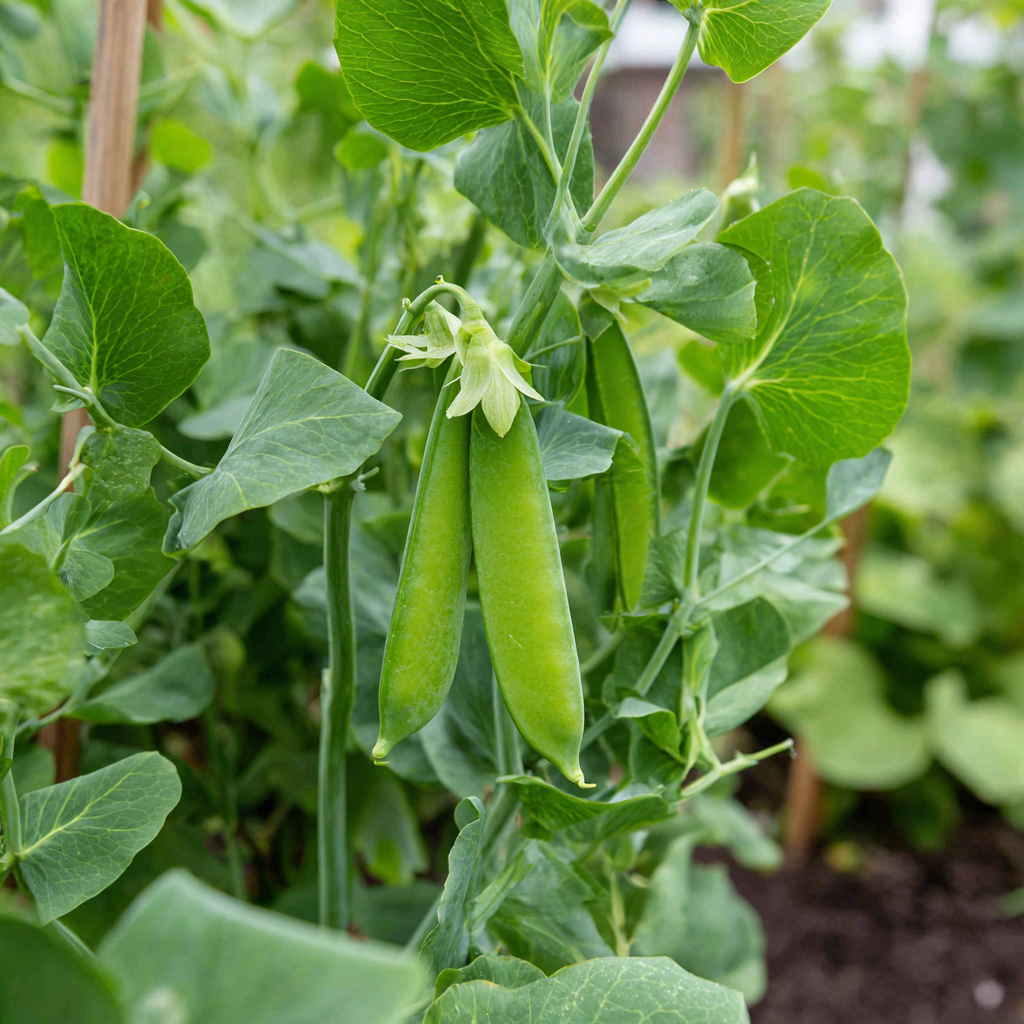
Super Sugar Snap is a vigorous, tall-climbing snap pea grown for plump, crisp pods that are eaten whole. The vines commonly reach about 5 to 6 feet and need a strong trellis from the beginning. It is a distinct cultivar from compact Sugar Ann, short Sugar Daddy, and the original Sugar Snap. Its longer vines can provide an extended picking wall when they are established early, watered evenly, and allowed to flower before summer heat.
Quick How-to
Direct sow Super Sugar Snap outdoors as soon as the soil is workable and at least 40 F. Plant peas about 1 inch deep and 2 inches apart along a sturdy 5-to-6-foot trellis. Keep the row evenly moist while seed hydrates. Emergence usually takes 7 to 10 days in soil around 55 to 65 F and may take closer to two weeks in colder ground. Guide the first tendrils onto the support, water deeply during flowering and pod fill, and begin checking for harvest around 60 to 65 days. Pick bright green pods when they are rounded and crisp but before the peas become hard.
Quick Guide
| Fact | Recommendation |
|---|---|
| Best method | Direct sow at the base of a permanent trellis |
| Sowing depth | About 1 inch; 1/2 to 3/4 inch in heavy, cold soil |
| Minimum soil temperature | About 40 F for germination |
| Best emergence range | About 55 to 65 F |
| Days to germination | Commonly 7 to 10 days; allow up to 14 in cold soil |
| Seed spacing | About 2 inches apart; do not thin a sound stand |
| Row spacing | 18 to 24 inches for one trellised row; leave working space between parallel trellises |
| Sun | Full sun; light afternoon shade can help where spring turns hot quickly |
| Water | Even moisture, especially from first flower through pod fill |
| Support | Strong netting, wire, or strings at least 5 feet tall |
| Plant size | Tall climbing vines, commonly about 5 to 6 feet |
| Harvest timing | Usually about 60 to 65 days from direct sowing, depending on weather |
Before You Sow
Build the support before planting. Super Sugar Snap vines become heavy after rain and again when loaded with pods. Use posts anchored deeply enough to hold taut pea netting, welded wire, or horizontal strings. Chicken wire works if its lower edge is only an inch or two above the soil so young tendrils can reach it. A loose support installed after plants emerge risks root damage and tangled stems.
Choose an open bed in full sun with well-drained soil. Peas tolerate cold air and young plants survive light frost, but seed sitting in saturated, oxygen-poor soil may rot. Wait until a squeezed handful of soil breaks apart instead of forming a wet ribbon. If your spring soil stays soggy, use a raised bed rather than sowing deeper.
Peas fix nitrogen only when compatible Rhizobium bacteria colonize the roots. In a new garden, coating dampened seed with a pea-and-vetch inoculant can support nodulation. Inoculant is optional and does not rescue poor drainage. Avoid high-nitrogen fertilizer, which produces luxurious vines without improving pod set.
Handle the large seed gently. Cracks in the seed coat and embryo may not be visible, but damaged peas are more likely to decay. Soaking is unnecessary; sow intact dry peas into a moist bed.
Direct Sowing
Open a uniform furrow along the trellis. Plant about 1 inch deep and 2 inches apart, cover, and firm the row gently. A consistent depth produces a more even stand. In heavy, cold soil, 1/2 to 3/4 inch is enough; in loose soil that dries quickly, use the full inch.
Water once after sowing if rainfall has not already moistened the bed. Then maintain steady moisture without daily saturation. Peas can begin germinating near 40 F, but they emerge more uniformly from soil around 55 to 65 F. Cold rows may need 14 days. If no seedlings appear, inspect a seed: firm swollen peas need more time, hollow seed coats suggest feeding, and soft peas indicate rot.
As seedlings reach the lowest support, tuck the tendrils toward it. Do not tie tender stems tightly. Once several vines grip the trellis, they form a shared climbing surface. Keep weeds controlled while plants are small, using shallow cultivation so you do not cut the pea roots.
In short-spring climates, one early planting may outperform several later ones because sustained temperatures above 80 F interfere with flowering. Where spring remains cool, make a second sowing 7 to 14 days later for a staggered harvest. For fall, sow roughly 9 to 11 weeks before a hard frost; the tall cultivar needs more calendar room than very early Sugar Ann.
Trellising and Training
A mature Super Sugar Snap row can reach eye level. Use a support at least 5 feet high, with 6 feet preferable in cool, productive conditions. Net openings should be large enough to pick through but small enough for tendrils to catch. Tie the top securely so the trellis does not sag into a dense mass.
Wind can peel a young row away from flat netting. Guide stray shoots back every few days while plants are below knee height. Once intertwined, the vines usually need little training. If a stem falls, lift it gently and support it at several points rather than bending it sharply.
Leave a path wide enough to harvest both faces of the row. A trellis pressed against a solid fence limits airflow and hides pods. If space allows, orient the row so both sides receive light and moving air. Better access matters because frequent picking is essential to pod quality.
Soil, Sun, and Water
Super Sugar Snap performs best in full sun, deep soil with organic matter, and a pH suitable for ordinary vegetables. Drainage is more important than rich feeding. Use a soil test before adding fertilizer, and avoid heavy nitrogen applications.
Keep the soil uniformly moist from flowering through harvest. Hot, dry conditions at bloom cause flower drop, while uneven water can make pods tough and vines finish early. About one inch of water per week is a starting point, adjusted for rain and soil texture. Water deeply at the soil line, not over the foliage. Sandy beds need more frequent checks than loam.
Apply a 2-to-3-inch organic mulch once seedlings are established and soil has begun warming. Mulch keeps the shallow root zone cool and reduces splashing. Leave a narrow gap around stems during rainy weather. Do not cultivate deeply under established vines; pea roots are easily injured.
Top Mistakes
- Using a short or flimsy trellis: Super Sugar Snap is a tall vine. A 3-foot support creates a folded, humid canopy that is difficult to harvest.
- Installing support after emergence: Driving posts beside growing peas can sever roots, and untangling vines causes breakage. Build first and sow second.
- Planting early into mud: Peas tolerate cold, not suffocation. Wait until the bed is workable and drains after rain.
- Feeding for more vine growth: Excess nitrogen makes an already vigorous cultivar even leafier and can delay flowering.
- Allowing bloom-stage drought: Flowers and young pods abort quickly when roots dry or heat rises.
- Missing pods behind the trellis: One mature pod can be hard to see and signals the vine to invest in seed. Pick both sides every day or two.
Troubleshooting by Symptom
| Symptom | Likely causes | What to do next |
|---|---|---|
| The row does not emerge | Cold saturated soil, cracked seed, deep sowing, drought, or animal feeding | Inspect a seed, correct moisture or protection, and resow about 1 inch deep when the bed is workable |
| Seedlings emerge but never catch the trellis | Support begins too high, wind pushes shoots away, or the row is shaded | Add low horizontal string, guide tendrils gently, and remove obstacles to light |
| Tall vines collapse as a sheet | Posts are loose, netting sags, or pod weight increased after rain | Brace posts, retension the top line, and lift vines gradually at several points |
| Plants flower but set few pods | Temperatures above 80 F, dry soil, late frost, or excess nitrogen | Restore deep watering, stop feeding, protect from frost, and wait for milder weather if the season allows |
| Lower foliage yellows and vines wilt despite wet soil | Compaction, root rot, or Fusarium wilt | Improve drainage, avoid moving contaminated soil, remove badly affected vines, and rotate legumes in future seasons |
| White powder coats leaves late in the crop | Powdery mildew favored by aging foliage, crowding, and late planting | Improve airflow, water at soil level, remove residue after harvest, and sow earlier or choose resistant seed next time |
| New growth curls or looks mottled | Aphids feeding and possible pea-virus transmission | Inspect shoot tips and leaf undersides, manage aphids promptly, and remove severely distorted plants |
| Pods are flat and remain small | Flowers were poorly set, vines lack moisture, or harvest began too early | Keep soil evenly moist and wait for pods to become rounded before picking |
| Pods are fibrous or peas taste starchy | Harvest was late or plants endured heat and drought | Pick younger pods every day or two and cool them immediately after harvest |
Harvest and Kitchen Use
Start checking around 60 days from sowing, but use the pod rather than the calendar as the final test. Super Sugar Snap is ready when the pod is bright green, crisp, and rounded with developing peas. The entire pod should still snap cleanly. A flat pod is immature; a dull, very swollen pod is moving toward dry seed and may be fibrous.
Harvest from both sides of the trellis every day or two. Hold the vine with one hand and pull with the other so the tender growing tip is not torn loose. Regular picking keeps younger flowers and pods developing. Leave one or two overlooked mature pods only on plants chosen for seed saving.
Cool peas promptly after harvest to slow conversion of sugar to starch. Eat the pods raw, steam them briefly, saute, or add them late in a stir-fry so they stay crisp. Even cultivars sold as stringless can develop a fiber along the seam when a pod is old, so remove it if necessary.
Seed Saving
Peas are mainly self-pollinating, and Super Sugar Snap can be saved true to type when managed carefully. Separate flowering pea varieties by 10 to 20 feet and save seed from at least 5 to 10 healthy plants. Select vines that match the expected tall habit, pod quality, vigor, and harvest timing.
Stop picking food pods from the selected vines. Let pods mature until they turn brown, brittle, and tight around hard seeds. This stage arrives roughly four weeks after the fresh-eating stage. If autumn rain or frost threatens before pods dry, pull the vines and hang them in a dry, ventilated location.
Shell fully dry pods and remove discolored, insect-damaged, or shriveled peas. Air-dry the seed for about six weeks before sealing it. Label the container specifically as Super Sugar Snap. Its tall habit is not interchangeable with Sugar Ann or Sugar Daddy, and a mixed seed jar would make next year’s support planning unreliable.
Storing Leftover Seed
Keep unused Super Sugar Snap Pea seed in its labeled packet inside a sealed container in a cool, dry, dark indoor location. Avoid garages, sheds, greenhouses, and sunny windowsills, where temperature and humidity swing sharply. Label home-saved seed with the variety and harvest year before storing it.
FAQ
Is Super Sugar Snap the same as Sugar Ann?
No. Super Sugar Snap is a tall climbing cultivar, commonly 5 to 6 feet, while Sugar Ann is an early compact snap pea around 18 to 30 inches. They need different support and mature on different schedules.
How tall should the trellis be?
Use at least 5 feet of climbable support, with 6 feet preferable in cool climates. Anchor it firmly before sowing so roots and vines are not disturbed later.
Can I grow Super Sugar Snap in a container?
Yes, but use a large, stable container at least 12 to 16 inches deep and secure a tall trellis independently. A small pot can tip once 5-foot vines catch wind.
Can I start the seed indoors?
A very short start in individual cells is possible, but direct sowing is usually better. Peas tolerate cool soil, grow quickly, and dislike root disturbance. Indoor starts also require immediate support.
Why did my plants stop flowering when they looked healthy?
Pea flowers are sensitive to heat. Sustained temperatures near or above 80 F can stop pod set even when vines remain green. Maintain moisture, provide root-zone mulch, and plant earlier in the next cool season.