
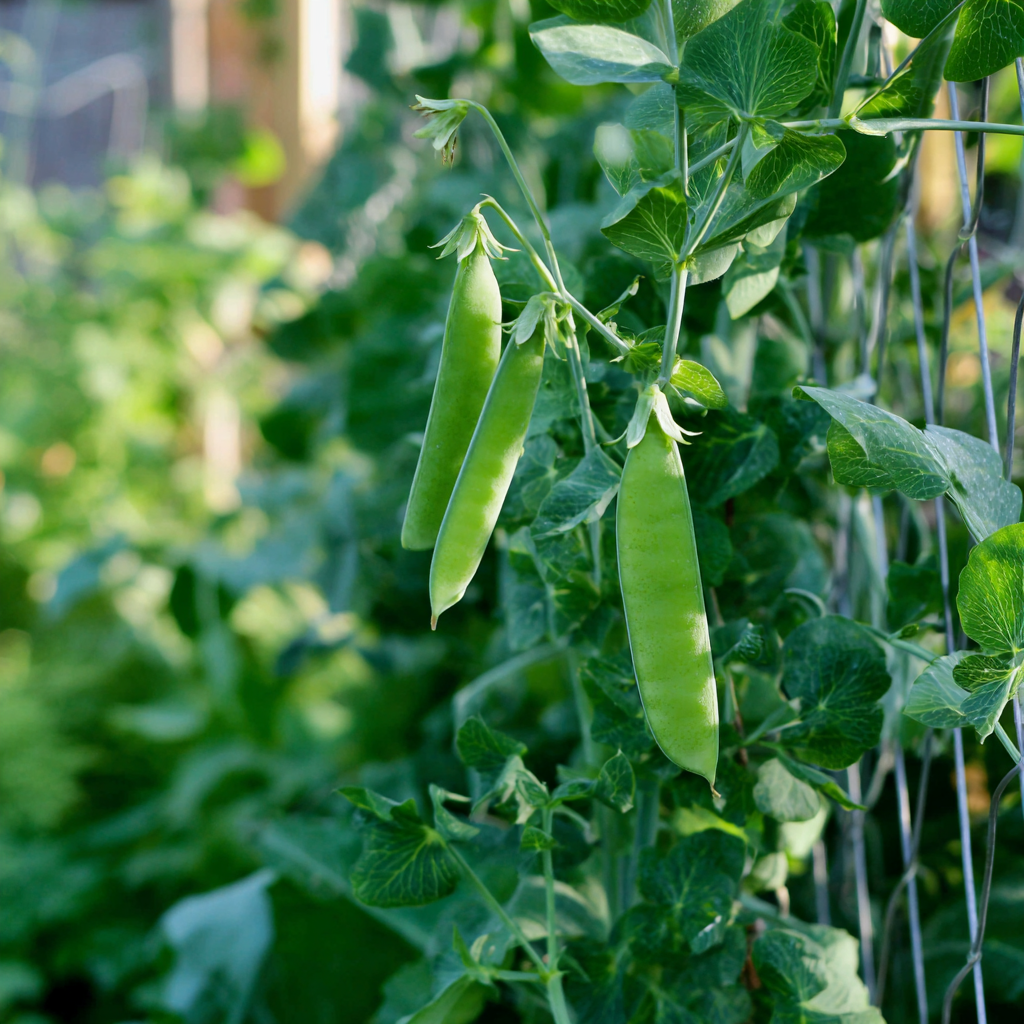
Sugar Ann is an early, compact sugar snap pea bred for gardeners who want sweet edible pods without a tall wall of vines. It commonly reaches about 18 to 30 inches, begins producing around 51 to 56 days from direct sowing, and fits raised beds and large containers especially well. It is a distinct named cultivar, not another label for full-height Sugar Snap or Super Sugar Snap.
Quick How-to
Direct sow Sugar Ann outdoors as soon as the soil is workable in spring and has reached at least 40 F. Plant seed about 1 inch deep and 2 inches apart in a wide row or narrow double row. Firm the soil gently and keep it evenly moist. Seedlings often emerge in 7 to 10 days when soil is 55 to 65 F, but cold soil can make them slower. Sugar Ann’s short vines can lean on one another, yet a 2-to-3-foot twiggy support or low net keeps pods clean and makes picking easier. Harvest when the rounded pods are crisp and nearly filled, before the peas become starchy.
Quick Guide
| Fact | Recommendation |
|---|---|
| Best method | Direct sow outdoors; transplanting offers little advantage |
| Sowing depth | About 1 inch; slightly shallower in cold, heavy soil |
| Minimum soil temperature | About 40 F for germination |
| Best emergence range | About 55 to 65 F |
| Days to germination | Commonly 7 to 10 days in favorable soil; allow up to 14 days when cold |
| Seed spacing | About 2 inches apart; thinning usually is not needed |
| Row spacing | 12 to 24 inches, depending on bed and support layout |
| Sun | Full sun; light afternoon shade can extend the crop where spring heats quickly |
| Water | About 1 inch per week when rain is lacking, especially at bloom and pod fill |
| Support | Optional but useful; a low 2-to-3-foot support keeps compact vines upright |
| Plant size | Compact vines, usually about 18 to 30 inches tall |
| Harvest timing | Approximately 51 to 56 days from direct sowing under suitable conditions |
Before You Sow
Peas have a short productive window between cold, waterlogged spring soil and summer heat. Prepare the bed early so you can sow as soon as the soil crumbles instead of smearing when squeezed. Choose a sunny, well-drained location and loosen compaction without creating a rich, heavily fertilized bed.
Sugar Ann is a legume. With compatible Rhizobium bacteria, nodules on its roots help supply nitrogen. In a garden where peas or beans have never grown, a pea-and-vetch inoculant can improve nodulation. It is optional rather than a substitute for good soil. Avoid high-nitrogen fertilizer, which encourages leaves and delays the pods you are growing the crop to harvest.
Set low support before sowing if you plan to use it. Sugar Ann is often described as no-trellis or self-supporting because it is much shorter than standard snap peas. In a windy bed, a container, or a humid climate, low netting still improves airflow and access. The useful distinction is that it does not require a 5-to-6-foot trellis.
Inspect the seed as you plant. Discard cracked or badly damaged peas, which are prone to rot in cold soil. Soaking is unnecessary and can cause seed coats to split. Dry seed planted into evenly moist soil hydrates more predictably.
Direct Sowing
Make a flat-bottomed furrow about 1 inch deep. Place seed about 2 inches apart, cover uniformly, and firm the soil with the back of a rake. Uniform depth matters because shallow peas can dry out while deeply buried peas emerge late. In heavy, wet soil, stay near 1/2 to 3/4 inch; in light soil that drains quickly, a full inch is appropriate.
Water gently after sowing if the bed is not already moist. Keep the soil damp but never saturated. Peas can germinate at about 40 F, but emergence is steadier around 55 to 65 F. In cold conditions, wait a full two weeks before deciding a row failed. Dig up one seed at the end of the row: a firm swollen seed is progressing, while a soft, foul seed points to rot.
For a longer spring harvest, sow a second small block 7 to 14 days later. Sugar Ann is particularly useful for succession sowing because it matures early. Stop when the likely bloom period will collide with sustained temperatures above 80 F; pea flowers shed and pod quality declines in heat.
In regions with a long, mild autumn, sow again roughly 8 to 10 weeks before the first expected hard frost. Fall timing is less forgiving because days shorten. Give the crop enough time to flower before cold arrives, and choose a bed that receives all available sun.
Containers and Low Support
Use a container at least 12 inches deep with generous drainage holes. A wide box or half-barrel is more useful than a narrow pot because several plants can support one another. Sow approximately 2 inches apart and install short brushy twigs, a small tomato cage, or 2-to-3-foot netting at planting.
Containers dry faster than garden soil, particularly once pods begin filling. Check moisture daily in bright weather and water thoroughly when the top inch starts to dry. Do not leave the container standing in a saucer of water. Peas dislike hot roots, so a light-colored pot or afternoon shade can extend production in warm climates.
Sugar Ann can technically stand without support in a close row, but fallen vines shade their own leaves and hide pods. A low support is a small effort that usually gives cleaner, straighter growth and reduces breakage during harvest.
Soil, Sun, and Water
Give Sugar Ann full sun and fertile, well-drained soil with organic matter. Peas tolerate many soil textures as long as air can reach their roots. Compacted or saturated beds invite root rot. A soil test is the best guide for fertilizer; peas usually need little supplemental nitrogen.
Keep moisture even through germination. Once established, water deeply enough to moisten the root zone rather than sprinkling the leaves every day. About an inch of water per week from rain and irrigation is a practical baseline, with sandy soil needing more frequent checks. Flowering and pod fill are the stages least able to tolerate drought.
Mulch after seedlings are several inches tall to keep roots cool and slow moisture loss. Keep mulch away from the stem bases in a wet spring. Water the soil rather than the vines where possible, and work around plants only when foliage is dry to limit disease spread.
Top Mistakes
- Treating Sugar Ann like a tall snap pea: A towering trellis wastes space and obscures the cultivar’s main advantage. Use low support suited to its compact 18-to-30-inch habit.
- Planting into sticky, saturated soil: Early does not mean muddy. Cold seed may wait, but cold seed deprived of oxygen often rots.
- Adding too much nitrogen: Rich nitrogen feeding builds leafy vines and can delay flowering. Base amendments on a soil test.
- Letting the bed dry at bloom: Moisture stress as flowers open can cause blossom drop and empty pods.
- Waiting for very fat pods: Snap peas are sweetest while pods are crisp and tender. Overmature Sugar Ann pods become fibrous and the peas inside turn starchy.
- Sowing too late for cool weather: Sugar Ann is early, not heat tolerant. It still needs flowering and pod set before sustained heat.
Troubleshooting by Symptom
| Symptom | Likely causes | What to do next |
|---|---|---|
| No seedlings after 14 days | Soil below the useful range, rotten seed, deep planting, dry soil, or animal feeding | Check one seed, restore even moisture, protect the row, and resow at uniform 1-inch depth when soil is workable |
| Seedlings appear in scattered gaps | Cracked seed, puddled sections, uneven depth, or birds and rodents | Replace only the gaps, firm the row, and use lightweight row cover until seedlings emerge |
| Short vines make many leaves but few flowers | Excess nitrogen, shade, or temperatures already too warm | Stop feeding, improve light, maintain moisture, and plan an earlier sowing next season |
| Flowers fall without pods | Heat above about 80 F, dry roots, or frost during bloom | Water deeply, shade roots with mulch, protect from frost, and let newly opening flowers set when weather moderates |
| Lower leaves yellow and roots look brown | Compaction, saturated soil, or root-rot organisms | Reduce watering, improve drainage, avoid cultivating roots, and rotate peas out of the bed next year |
| White powder spreads across leaves | Powdery mildew favored by late-season conditions and poor airflow | Water at soil level, remove badly affected vines after harvest, improve spacing, and plant earlier next season |
| Vines curl, mottle, or become distorted | Aphids and possible virus transmission | Inspect growing tips, control aphids with an appropriate low-impact method, and remove severely distorted plants |
| Pods are tough or stringy | Pods were left too long, or plants experienced heat and drought | Pick younger pods every day or two and keep the root zone evenly moist |
Harvest and Kitchen Use
Begin checking Sugar Ann around 51 days after sowing. Days to maturity are a planning estimate, not a deadline; cool weather can slow the crop. A ready snap pod is bright green, crisp, and rounded enough that peas are visible without becoming hard. Taste one. The correct stage is sweet and juicy, with a tender pod wall.
Pick with two hands so you do not tear a short vine from its support. Hold the stem and pull the pod gently. Harvest every day or two during peak production. Regular picking directs energy toward younger pods, while hidden mature pods signal the plant to finish seed.
Cool the harvest promptly. Sugar in peas begins converting to starch after picking, so Sugar Ann is best eaten or refrigerated soon. Use the whole pod raw, lightly steamed, sauteed, or added near the end of a stir-fry. Remove any string that has developed on an older pod.
Seed Saving
Sugar Ann is an open-pollinated pea and peas are primarily self-pollinating, so home seed saving is straightforward. To keep the named cultivar distinct, separate it 10 to 20 feet from other flowering pea varieties and save from at least 5 to 10 healthy plants.
Choose true-to-type compact plants with early, tender pods. Stop harvesting food pods from the selected vines and let them mature fully. Seed pods are ready when they are brown and brittle and the peas inside are hard. If wet weather threatens, pull the vines and hang them under cover until the pods finish drying.
Shell the dry peas and discard stained, insect-damaged, or shriveled seed. Air-dry the cleaned seed for about six weeks before sealing it. Label it clearly as Sugar Ann; mixing it with tall Sugar Snap seed would erase the compact trait gardeners expect.
Storing Leftover Seed
Keep unused Sugar Ann Pea seed in its labeled packet inside a sealed container in a cool, dry, dark indoor location. Avoid garages, sheds, greenhouses, and sunny windowsills, where temperature and humidity swing sharply. Label home-saved seed with the variety and harvest year before storing it.
FAQ
Does Sugar Ann need a trellis?
It can grow without one because the vines are short, but a low 2-to-3-foot support keeps pods off the soil and simplifies picking. It does not need the tall trellis required by Super Sugar Snap.
Is Sugar Ann the same as Sugar Snap pea?
No. Both are edible-podded snap peas, but Sugar Ann is a distinct early, compact cultivar. Standard Sugar Snap cultivars make much taller vines and mature later.
Can I start Sugar Ann indoors?
You can start it briefly in individual biodegradable cells, but direct sowing is usually easier and avoids root disturbance. Peas germinate in cool soil and gain little from a long indoor start.
Can Sugar Ann grow in a container?
Yes. Its compact habit is especially suitable for a wide container at least 12 inches deep. Provide drainage, full sun, even water, and a small support.
Should I soak the seed before planting?
No soaking is required. Damaged, over-soaked peas can split and rot. Plant intact dry seed into evenly moist soil and water gently.