
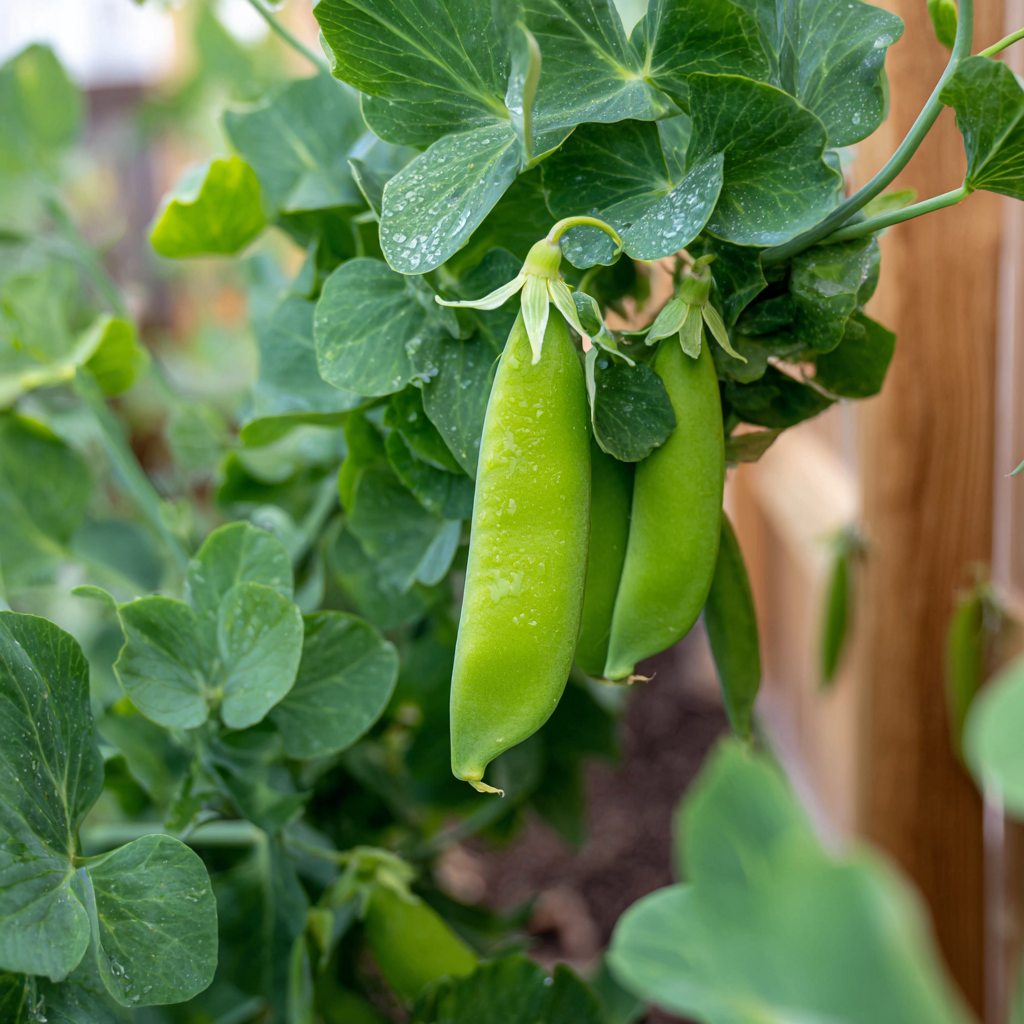
Alaska Pea is an early-maturing shelling pea grown for the sweet, smooth round seeds inside its pods. It is one of the most cold-tolerant garden peas available, a quality that traces back to its smooth seed coat (wrinkle-seeded varieties are generally more cold-sensitive), and it matures in about 55 to 60 days from direct sowing. The vines reach roughly 24 to 36 inches, making them manageable with minimal support, and the plants can produce heavily when sown in cool weather. Alaska is grown as a shelling pea: you harvest the pods, shell out the plump, round peas inside, and use the pod itself as compost. It is not an edible-pod crop.
Quick How-to
Sow Alaska Pea directly in the garden as early as the ground can be worked in spring, even with some frost still expected. Cover seed about 1 inch deep, space plants 1 to 2 inches apart in the row, and provide light support such as a short trellis, twiggy branches, or netting. Begin checking pods at around 55 days; the peas inside should feel round and full when you squeeze the pod. Shell and use fresh, or allow pods to dry on the vine for a soup pea harvest at around 80 days.
Quick Guide
| Fact | Recommendation |
|---|---|
| Best method | Direct sow in cool soil; does not transplant well |
| Sowing depth | About 1 inch |
| Germination temperature | 45 to 65 F ideal; tolerates soil as cool as 40 F but germinates slowly |
| Days to germination | About 7 to 14 days in cool soil |
| Light for germination | Cover seed; no light needed underground |
| Spacing | 1 to 2 inches apart in row; rows 18 to 24 inches apart |
| Sun | Full sun to light partial shade in very hot climates |
| Water | Even moisture throughout the season; critical during flowering and pod fill |
| Harvest | About 55 to 60 days for fresh shelling; about 80 days for dry soup peas |
| Vine height | Approximately 24 to 36 inches; light support helpful |
Before You Sow
Peas do best in soil that drains well but does not dry out rapidly. Till or loosen the bed lightly, remove any large clods or debris, and confirm that drainage is adequate. Waterlogged soil around germinating pea seed causes rot before the seedling has a chance to emerge.
Alaska Pea is a legume and can fix atmospheric nitrogen in cooperation with soil bacteria. In most home garden soils, inoculating seed with Rhizobium leguminosarum (a common pea/bean inoculant powder available at garden centers) before sowing can help, particularly if peas have not been grown in that bed recently. This is optional but can improve nitrogen fixation.
Avoid adding heavy nitrogen fertilizer. Peas in reasonably fertile soil do not need it, and excess nitrogen pushes leafy growth without improving pod production.
Direct Sowing
Alaska Pea is nearly always direct sown. The roots are sensitive to disturbance, and transplanting usually sets the plant back more than it gains from an indoor head start.
Sow seed about 1 inch deep, 1 to 2 inches apart in the row. Firm the soil over the seed and water in. Thin to 2 to 3 inches apart once seedlings are a few inches tall if stands are very dense, but Alaska Pea tolerates closer spacing than many tall-vine varieties.
Peas can be sown in early spring as soon as the ground is workable, even if frost is still expected. The smooth seed coat of Alaska Pea gives it better cold tolerance at germination than wrinkle-seeded varieties. In warmer climates, a fall planting timed so that pods mature before hard frost is also possible. Pea plants stop flowering and producing in heat; aim to have the crop done before sustained daytime temperatures above 80 F.
Supporting the Vines
At 24 to 36 inches, Alaska Pea vines are short enough that many gardeners grow them without any support. However, a short trellis, a few stakes with horizontal twine, or simply some twiggy branches pushed into the soil keeps vines off the ground, improves airflow, and makes pods easier to find at harvest. Vines left sprawling on wet soil are more prone to mold and slug damage.
Soil, Sun, and Water
Peas prefer cool, moist growing conditions. Full sun is ideal, though in hot climates a site with light afternoon relief can extend the crop by a few days as temperatures climb. Soil should drain well but not dry out; peas wilt quickly in drought and rarely recover fully once stressed during flowering.
Water consistently, especially as the plants begin to flower and pods start filling. Uneven moisture during that window can cause pods to set poorly or seeds to be small and starchy rather than full and sweet. Avoid wetting foliage in the evening if possible, as damp leaves overnight encourage powdery mildew, a common late-season issue with garden peas.
Peas do not require heavy fertilization. A light top-dressing of balanced fertilizer or compost before sowing is usually sufficient.
Top Mistakes
- Sowing too late in the season: Pea quality declines sharply in heat. Alaska’s cold tolerance is valuable for getting an early start; use it. Sowing in late spring when temperatures are already warm wastes the variety’s best attribute.
- Skipping support: Even short vines sprawl and tangle without some structure. Sprawling plants are harder to harvest, and pods near the soil surface are more likely to rot or be eaten by slugs.
- Harvesting pods too late: Peas left on the vine too long become starchy and lose sweetness quickly. Check daily once pods feel plump and round. At that stage, pick within a day or two for the best flavor.
- Overwatering before germination then underwatering during pod fill: The most common watering error with peas is inconsistency. Even moisture throughout, not feast and famine, produces the best pods.
- Pulling plants rather than cutting at harvest: When thinning or removing finished plants, cutting at the soil line leaves the nitrogen-fixing root nodules in the soil to benefit the next crop. Pulling removes them.
Troubleshooting by Symptom
| Symptom | Likely causes | What to do next |
|---|---|---|
| Seed rotted in soil without sprouting | Cold, waterlogged soil; sowing too deep; soil drainage inadequate | Wait for soil to warm slightly; confirm drainage; resow at 1 inch depth in looser, drier conditions |
| Seedlings yellowing early | Poor drainage, nitrogen deficiency, or insufficient light | Check drainage; consider pea inoculant at next sowing; ensure full sun |
| Powdery white coating on leaves and stems | Powdery mildew, encouraged by warm days, cool nights, and damp foliage | Improve airflow by not overcrowding; water at soil level; harvest remaining pods promptly |
| Pods flat with few peas inside | Heat or drought disrupted flowering and seed development, or plants were stressed by waterlogged roots | Keep moisture even and drainage open; peas self-pollinate, so poor pod fill usually points to weather or plant stress rather than a shortage of pollinators |
| Vines wilting despite adequate watering | Root rot from prolonged waterlogged soil, or fusarium wilt | Confirm drainage; if wilt persists with good drainage, rotate peas to a different bed next year |
| Pods tough and starchy at harvest | Harvested too late; peas overripe | Begin checking 3 to 5 days before expected maturity; pick when pods feel plump but before seeds begin to press hard against the pod wall |
Harvesting and Using Alaska Pea
Pick pods when the peas inside feel round and full. Shell immediately for the best flavor; pea sugar converts to starch quickly after harvest, so fresh peas eaten or cooked the same day they are picked are noticeably sweeter than those left sitting. Refrigerate unwashed, unshelled pods and use within 1 to 2 days if you cannot shell immediately.
For soup peas: leave selected pods on the vine until they are papery and begin to rattle, then pull the whole plant and hang it upside down in a dry, ventilated place until fully dry. Shell out the peas and store in a cool, dry container.
Seed Saving
Alaska Pea is open-pollinated and self-pollinating, with flowers that typically fertilize themselves before fully opening. Cross-pollination between pea varieties in a home garden is uncommon, making Alaska Pea a relatively straightforward variety for seed saving. Select pods from vigorous, early-bearing plants. Allow those pods to dry completely on the vine before collecting. Finish drying indoors before storing in a cool, dry, sealed container.
Storing Leftover Seed
Keep unused Alaska Pea seed in its labeled packet inside a sealed container in a cool, dry, dark indoor location. Avoid garages, sheds, greenhouses, and sunny windowsills, where temperature and humidity swing sharply. Label home-saved seed with the variety and harvest year before storing it.
FAQ
Is Alaska Pea an edible-pod pea?
No. Alaska Pea is a shelling pea: the pods are tough and fibrous, and the goal is to harvest the round peas inside. If you want to eat the entire pod, look for a snow pea or snap pea variety. The Dwarf Sugar Grey Pea guide covers a flat edible-pod variety with a very different harvest style.
Can Alaska Pea handle a light frost after planting?
Yes. Alaska Pea’s smooth seed coat makes it more cold-tolerant at germination than wrinkle-seeded varieties. Young seedlings can tolerate light frost. However, open flowers and developing pods are more frost-sensitive; a hard freeze at that stage can damage the crop. The early maturity of Alaska means it is often harvested before the main summer heat arrives.
Do I need to inoculate Alaska Pea seed?
Inoculation with Rhizobium leguminosarum is not required but can help in soil where peas have not been grown recently. If peas have been grown in the same bed in the last few years, functional soil bacteria are likely already present. Inoculant is inexpensive and simple to apply at sowing.
Can I sow Alaska Pea in fall?
In climates with mild winters (roughly zones 7 and warmer), a fall planting timed to mature before hard frost is practical. Sow 55 to 60 days before the first expected hard frost. In colder climates, focus on the early spring window where Alaska’s cold tolerance gives it a head start over other varieties.