
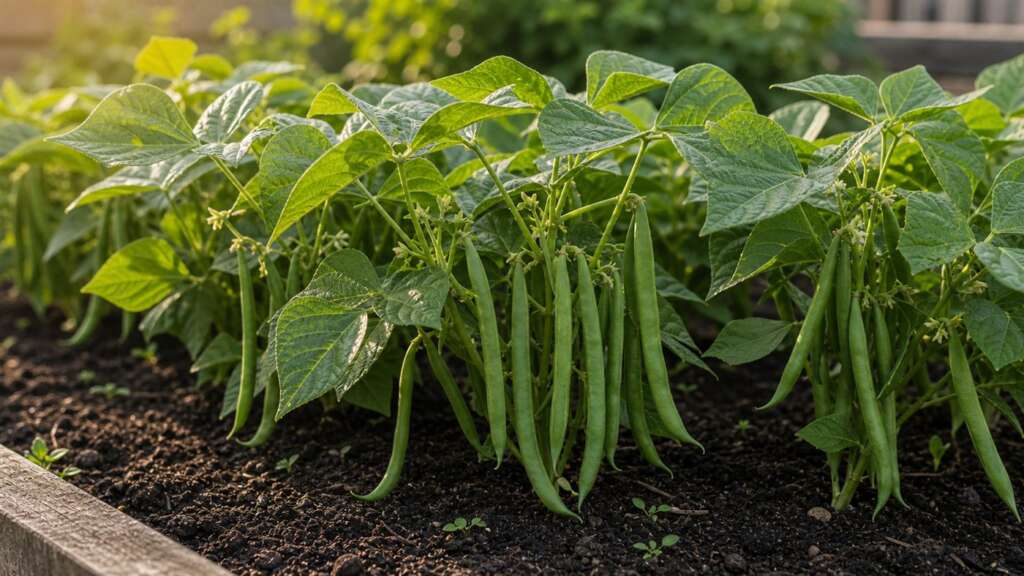
Blue Lake 274 is a compact bush snap bean grown for tender, stringless, round green pods that hold their quality well for fresh eating, canning, and freezing. Unlike its pole-bean cousins, it stays low and self-supporting, sets a concentrated crop, and finishes quickly. It is a warm-season vegetable that rewards patience: wait for warm soil, sow directly into the garden, and let the plants do most of the work.
Quick How-to
Direct sow Blue Lake 274 once frost danger has passed and the soil has warmed. Plant seeds about 1 inch deep, space them roughly 2 to 4 inches apart in rows about 18 to 24 inches apart, and water gently. Expect sprouts in about 6 to 10 days when soil is in the 70 to 85 F range. Avoid starting indoors when possible; beans dislike root disturbance and tend to take off faster from a single, well-timed outdoor sowing than from a transplant.
Quick Guide
| Fact | Recommendation |
|---|---|
| Best method | Direct sow after frost and once soil is warm |
| Sowing depth | About 1 inch |
| Germination temperature | Best around 70 to 85 F; minimum about 60 F |
| Days to germination | About 6 to 10 days in warm soil |
| Light for germination | Cover seed; light is not required until sprouts emerge |
| Spacing | About 2 to 4 inches apart in rows 18 to 24 inches apart |
| Sun | Full sun |
| Water | Even moisture, especially from flowering through pod fill |
| Harvest timing | About 55 days from sowing for the first tender pods |
| Plant size | Compact bush habit, commonly about 15 to 20 inches tall |
Before You Sow
Pick the sunniest part of the garden you have. Beans want full sun, loose well-drained soil, and warmth at the root zone. A bed amended with finished compost is plenty; do not load the area with high-nitrogen fertilizer. Beans fix some of their own nitrogen and respond to excess feeding by producing lush foliage and fewer pods.
Test your timing before you reach for the seed packet. The single biggest cause of disappointing bean crops is sowing into cold, wet ground. Daytime air can feel warm in late spring while the soil six inches down is still chilly. If you can comfortably press your hand into the bed and the soil feels neutral or warm rather than cold, you are close. A simple soil thermometer in the morning is more reliable than a guess.
Rake the bed smooth, break up clods, and remove rocks that would deflect emerging sprouts. If your soil tends to crust after rain, mixing a thin layer of compost or fine seed-starting mix into the top inch can help seedlings break through cleanly.
Direct Sowing
Direct sowing is the standard method for Blue Lake 274. Make a shallow furrow about 1 inch deep, drop seeds along it, and cover with loose soil. Press the row gently to ensure soil contact, then water with a soft spray so seeds are not washed out of place. Keep the surface evenly moist until sprouts appear; the seed needs to take up water steadily, but it also needs oxygen, so avoid leaving the bed muddy or pooled.
For a longer harvest window, plan succession sowings every two to three weeks until about 8 to 10 weeks before your first expected fall frost. Bush beans tend to set most of their crop within a short window, so a second or third planting keeps fresh pods coming rather than arriving all at once.
If your spring is cool and unpredictable, hold off another week rather than gamble. A sowing made into 60 F soil that climbs into the 70s usually outruns one made a week earlier into a cold, soggy bed.
Indoor Starting
Indoor starting is rarely worth it for bush beans. They germinate and grow quickly in warm soil, and their roots resent disturbance. If a very short season forces an early start, use deep individual cells or biodegradable pots, sow only one to two weeks ahead of your intended transplant date, and move plants out before roots circle. Handle the root ball gently when planting; broken taproots can stall a young bean for days.
For most gardeners, a single well-timed direct sowing produces a stronger plant than any indoor head start.
Transplanting and Spacing
If you do transplant, water seedlings well before moving them, dig a hole only as deep as the root ball, and set the plant at the same depth it grew indoors. Water in immediately. In the garden, final spacing of about 2 to 4 inches between plants in rows 18 to 24 inches apart gives Blue Lake 274 room to branch, hold pods off the ground, and dry quickly after rain.
If sprouts come up thicker than planned, thin with scissors rather than pulling, which can disturb the roots of neighbors. Crowded plants can still produce, but they tend to trap humidity in the canopy and invite leaf disease.
Soil, Sun, and Water
Full sun is non-negotiable for good pod set. Six hours is a minimum; eight or more is better. Soil should drain freely, with a pH near neutral suiting beans well. Beans dislike soggy ground; raised rows or beds help in heavy soils.
Watering is most important during flowering and pod fill. Aim for steady, deep moisture rather than light daily sprinkles. A 1- to 2-inch layer of mulch applied after the soil warms helps even out moisture and keeps pods cleaner. Water at the soil level when you can; wet foliage that stays wet overnight is one of the easier ways to invite leaf spot and rust onto otherwise healthy plants.
Avoid walking among or handling bean plants while leaves are wet. Several common bean diseases spread more readily from plant to plant when foliage is damp.
Top Mistakes
- Planting too early into cold, wet soil: Bean seed sitting in chilly damp ground is the most common cause of poor stands. Wait for warmth rather than the calendar.
- Sowing too deep or too shallow: About 1 inch is right for most soils. Deeper sowings can exhaust the seed before it reaches light; surface sowings dry out and may be eaten by birds.
- Overwatering after sowing: Seeds need oxygen as well as moisture. Keep the seed zone evenly damp, not saturated.
- Heavy nitrogen feeding: Beans fix some of their own nitrogen. Extra nitrogen pushes leaves at the expense of pods.
- Harvesting late: Pods left too long become tough and stringy, and the plant slows new flowering. Pick young and often.
- Working among wet plants: Handling damp foliage spreads disease. Wait until the canopy dries before picking or weeding.
Troubleshooting by Symptom
| Symptom | Likely causes | What to do next |
|---|---|---|
| Seeds rot before sprouting | Cold, wet soil; saturated bed; sowing too deep | Wait for warmer soil, avoid heavy watering after sowing, and resow at about 1 inch depth |
| Patchy or uneven stand | Inconsistent depth, dry pockets, crusted surface, or seed washed out of place | Smooth the bed before sowing, water gently, and lightly cover seed with even soil |
| Seedlings emerge but collapse at the soil line | Soggy soil, poor airflow, or damping-off conditions | Improve drainage, water less often, and avoid sowing into compacted beds |
| Plenty of leaves but few pods | Excess nitrogen, too much shade, or extreme heat at flowering | Skip nitrogen feeding, ensure full sun, and water consistently through hot spells |
| Blossoms drop before setting pods | Heat stress, drought, or sudden cold nights | Keep moisture even and wait for temperatures to settle |
| Pods are tough or stringy at harvest | Picked past the tender stage | Pick younger and check the plants every one to two days during peak production |
| Yellowing leaves with poor growth | Cold soil, waterlogging, or root stress | Improve drainage, hold off watering until topsoil dries slightly, and wait for warm weather |
| Spots, rust, or mildew on leaves | Wet foliage, crowded plants, or handling wet plants | Water at the soil level, improve airflow with proper spacing, and avoid working among wet leaves |
Germination Diagnostics
If a planting is slow to come up, work through the likely causes in order rather than changing everything at once. Start with soil temperature; warm-season seed in cool ground will sit without moving even when moisture and depth are correct. A simple morning soil reading tells you more than the air temperature does.
Next check depth. Carefully scrape back a small section of the row to confirm seeds are at about 1 inch, not buried at two or three. If they are deeper than intended, the simplest fix is to resow shallowly nearby rather than dig everything up.
Then check moisture. The seed zone should feel evenly damp, like a wrung-out sponge. If the surface has crusted after a hard rain, a light raking or a thin compost topdressing can help sprouts break through. Finally, look at airflow and crowding after emergence. Sprouts that come up well but stretch, pale, or fold over usually need more light, better spacing, or drier conditions at the soil surface.
Container and Small-Space Notes
Bush beans grow well in containers when the pot matches the plant. Use a container at least 8 to 10 inches deep with drainage holes, and plan for about three to five plants per square foot of surface area. Use a quality potting mix rather than dense garden soil. Water more often than you would in the ground; containers dry out faster, and uneven moisture during pod fill is one of the easier ways to lose quality.
A sunny balcony, deck, or patio can produce a respectable picking from a single large planter. The bush habit means you do not need a trellis, which makes Blue Lake 274 a good fit for small-space growers.
Harvest and Kitchen Use
Begin checking for pods about seven to eight weeks after sowing. Pick when pods are firm, smooth, and snap cleanly, before the seeds inside swell and outline the pod. Harvest every one to two days during the main flush; regular picking encourages the plant to keep flowering. Use two hands when picking, one to steady the stem and one to remove the pod, so you do not tear branches off the plant.
Blue Lake 274 is widely valued for its stringless texture and clean flavor. Pods hold up well for fresh use, blanching and freezing, and water-bath or pressure canning. For best texture in storage, process or refrigerate the harvest as soon as possible after picking.
Seed Saving
Blue Lake 274 is commonly treated as open-pollinated. To save seed, choose strong plants and leave a portion of the pods on the plant until they fully dry and rattle. Pick before fall rains start, then finish drying indoors in a single layer until the seeds are hard enough that they cannot be dented with a fingernail. Shell, label with the variety and year, and store cool and dry.
Beans are largely self-pollinating, so casual crossing between varieties is uncommon but possible. If you grow several bean varieties for seed, separate them or grow only one variety for seed in a given year to keep stock true.
Storing Leftover Seed
Keep unused Blue Lake 274 Bush Bean seed in its labeled packet inside a sealed container in a cool, dry, dark indoor location. Avoid garages, sheds, greenhouses, and sunny windowsills, where temperature and humidity swing sharply. Label home-saved seed with the variety and harvest year before storing it.
FAQ
Should I soak bean seed before planting?
Usually no. Warm, evenly moist soil is enough, and soaked beans are more prone to rotting if a cold spell arrives after sowing.
Do bush beans need a trellis?
No. Blue Lake 274 has a bush habit and supports itself. Pole-type Blue Lake varieties do need a trellis, so check that you have the bush form before planting.
Why did my seed rot in the ground?
Almost always cold, wet soil. Bean seed needs warmth and oxygen, and a chilly soggy bed gives it neither. Wait for soil to warm before sowing again.
Can I plant a second round for fall?
Yes. Succession sowings every two to three weeks work well, with the last sowing about 8 to 10 weeks before your first expected fall frost.
How often should I pick?
Every one to two days during peak production. Frequent picking keeps pods tender and encourages continued flowering.