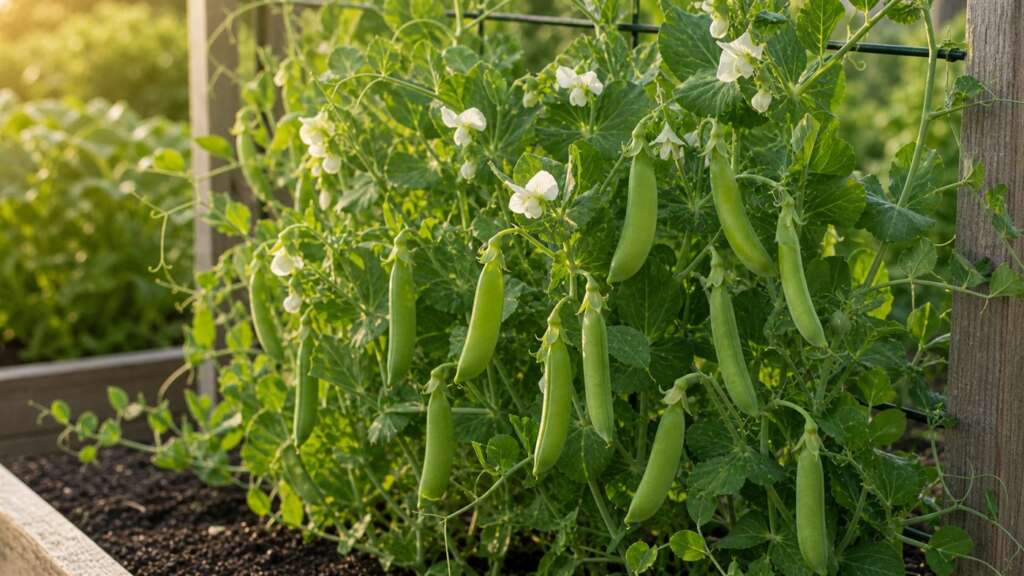
Sugar Daddy Snap Pea is a compact, bush-type snap pea grown for sweet, stringless edible pods. Unlike most snap peas, it carries its crop on short, self-supporting vines that usually need little to no trellising, which makes it one of the friendlier peas for raised beds, containers, and small plots. Like all peas, it is a cool-season crop that establishes best in early spring or fall, when soil temperatures are mild and the air has not yet turned hot.
Quick How-to
Direct sow Sugar Daddy Snap Pea outdoors as soon as the soil can be worked in spring, or in late summer for a fall crop. Plant seeds about 1 inch deep, 2 to 3 inches apart in the row, and keep the soil evenly moist until sprouts appear. Expect germination in roughly 7 to 14 days, faster as soil warms toward the mid-60s F. The plants stay compact, usually around 24 to 30 inches tall, and produce sweet, stringless pods that are best harvested young and crisp. Begin checking pods at about 60 days and pick frequently to keep plants producing.
Quick Guide
| Fact | Recommendation |
|---|---|
| Best method | Direct sow outdoors in cool weather |
| Sowing depth | About 1 inch |
| Germination temperature | Sprouts from about 40 F upward; steadier in the 55 to 75 F range |
| Days to germination | About 7 to 14 days; longer in cold soil |
| Light for germination | Cover seed; light not required to germinate |
| Spacing | About 2 to 3 inches apart in the row, rows about 18 to 24 inches |
| Sun | Full sun, with some tolerance for light afternoon shade in warm regions |
| Water | Even moisture, especially through flowering and pod fill |
| Harvest | Begin around 60 to 70 days from sowing; pick pods while crisp and stringless |
| Plant size | Bush habit, commonly 24 to 30 inches; trellis optional |
| Pod style | Plump, sweet, and stringless when picked young |
Before You Sow
Peas reward early planting more than almost any other vegetable. The seed will germinate in cool soil that would rot a bean, and the plants flower best before summer heat sets in. Choose a sunny spot with loose, well-drained soil. Heavy, compacted ground that stays soggy in spring is the single biggest cause of poor pea stands.
If your soil is heavy clay, plant into a slightly raised bed or mound the row to help drainage. Work in finished compost if needed, but skip heavy nitrogen feeding. Peas are legumes; they fix their own nitrogen with help from soil bacteria, and extra nitrogen tends to push leafy growth at the expense of pods. A handful of garden inoculant tilled into the row at sowing can be helpful in new beds where peas have not grown recently, though it is not strictly required.
Smooth the surface and water the bed lightly before sowing so seed sits in even contact with moist soil. Label the row clearly. Pea seedlings look much alike across varieties, and Sugar Daddy is easy to confuse with shelling or snow types until pods form.
Direct Sowing
Direct sowing is the right approach for this crop. Open a furrow about 1 inch deep, drop seeds 2 to 3 inches apart, cover, and firm the soil gently for good contact. A double row spaced a few inches apart along a short support, or a single thicker band, both work well because the plants lean on each other as they grow.
Water with a gentle spray. A hard stream can wash seed into low spots and produce a patchy stand. Keep the seedbed evenly moist, not saturated, until you see green hooks pushing through. Birds and rodents sometimes pull up pea seedlings; a layer of light row cover during germination is good insurance in vulnerable spots.
In spring, sow as soon as the ground is workable, even if a few cool nights are still expected. For a fall crop, count back from your first expected fall frost by roughly the days-to-harvest on the packet plus another 10 to 14 days for cooling weather, and sow accordingly. Fall pea stands often appreciate a thin mulch and a little shade during the hottest end of summer to help establishment.
Indoor Starting
Indoor starting is generally not needed for snap peas and can do more harm than good. Pea roots dislike disturbance, and tray-grown seedlings often stall after transplant. If you want to bridge a few weeks of difficult outdoor conditions, sow in deep cells or biodegradable pots, grow under strong light for no more than two weeks, and transplant while seedlings are still small with minimal root disruption. For most gardeners, simply waiting until the soil is workable and direct sowing produces a stronger plant.
Support: Bush Habit, Trellis Optional
Sugar Daddy is bred as a bush-type snap pea. The vines are short, fairly self-supporting, and tend to lean against each other in a thick row rather than climbing tall. In a tight double row or a raised bed, many gardeners grow Sugar Daddy with no trellis at all.
That said, a low support of about 24 to 30 inches keeps the planting tidier, improves airflow, and makes picking easier. Twiggy brush stuck into the row at sowing, a short length of pea netting, or a simple string-and-stake fence all work. Add support early, before the plants begin to flop. Trying to lift tangled vines later disturbs roots and breaks stems.
Soil, Sun, and Water
Full sun gives the best yields. In hot or southern gardens, a little afternoon shade can extend the cool-season window and slow heat stress. The soil should drain freely after rain, hold steady moisture between waterings, and stay close to neutral in pH if possible. Compost-amended garden soil is usually enough; lush, heavily fertilized soil is not the goal.
Water needs are modest while plants are young, then rise sharply once flowering starts. Uneven moisture during pod fill is the most common cause of small, flat, or fibrous pods. Water at the soil line when you can, and try to keep foliage dry in the evening. Mulching once plants are a few inches tall helps even out moisture and keeps roots cool as days lengthen.
Top Mistakes
- Waiting too long to sow. Sugar Daddy is a cool-weather crop. Spring sowings that go in late often start flowering just as heat arrives, which shortens the harvest and produces tougher pods.
- Planting into cold, wet ground. Peas tolerate cool soil, but soggy soil is different. Seed sitting in waterlogged ground can rot before it sprouts. Wait for the bed to drain, not for it to warm up.
- Skipping early support. Even bush peas appreciate something to lean on once pods begin to swell. Adding support at sowing time is far easier than threading it through tangled vines later.
- Letting pods get oversized. Snap peas peak when pods are plump but still bright, crisp, and sweet. Pods left on the plant too long turn starchy and fibrous, and the plant slows down new pod production.
- Overfeeding with nitrogen. Tall, leafy, lush plants with few flowers usually mean too much nitrogen. Trust the legume to feed itself and focus on steady water instead.
Troubleshooting by Symptom
| Symptom | Likely causes | What to do next |
|---|---|---|
| Seed does not come up | Soil too cold and wet, seed planted too deep, surface crusting, or birds and rodents disturbing the row | Confirm depth at about 1 inch, wait through heavy rain, soften any crust gently, and protect the row with light cover |
| Patchy stand | Uneven depth, soil crusting after heavy watering, or seed washed out of the furrow | Smooth the row before sowing, water with a gentle spray, and lightly break any crust before sprouts push through |
| Seedlings yellow and stunted | Cold, soggy soil, root rot pressure, or compacted ground | Improve drainage for future sowings, avoid working wet soil, and side-dress lightly with finished compost rather than fertilizer |
| Vines tall and leafy with few pods | Too much nitrogen, too much shade, or weather still too cool for setting | Cut back on feeding, ensure full sun, and give plants time as temperatures settle |
| Blossoms drop without forming pods | Heat stress, drought stress, or sudden swings in moisture | Keep watering even, mulch the bed, and accept that very hot weeks will reduce set |
| Pods small, flat, or fibrous | Picked too late, water stress during fill, or end-of-season decline | Pick more often, water deeply and evenly, and start a fall sowing if spring is winding down |
| White or gray powder on leaves | Powdery mildew, common as nights cool and humidity rises | Improve airflow, water at the soil level, harvest promptly, and remove the planting when production drops |
Harvest and Kitchen Use
Sugar Daddy pods are at their best when they are bright green, plump, and snap cleanly when bent. The pod walls should still be tender, and the peas inside should fill the pod without bulging hard. Because the variety is bred to be stringless, you can usually eat the entire pod without pulling a string from the seam, though older pods may develop a slight string as they pass peak quality.
Pick frequently, ideally every one to two days during peak production. Regular picking is the single most effective way to keep a snap pea plant producing. Use two hands when harvesting: one to steady the vine, one to pinch or snap the pod off. Yanking with one hand can tear the brittle stems.
In the kitchen, Sugar Daddy is excellent raw, lightly steamed, stir-fried, or quickly blanched and tossed into salads. Cooked briefly, the pods stay sweet and crisp; cooked too long, they go limp and lose their character.
Seed Saving
Peas are largely self-pollinating, which makes them friendly for home seed saving. To save Sugar Daddy seed, leave some of the best, healthiest pods on the plants past eating stage. Let them swell, dry, and turn papery on the vine. Pull when pods are crisp-dry, then shell, finish drying indoors on a tray for a few days, and store the seed in a labeled, sealed container. Note the variety and year. Saved seed from healthy plants usually grows true to type because pea flowers self-pollinate before they fully open.
Storing Leftover Seed
Keep unused Sugar Daddy Snap Pea seed in its labeled packet inside a sealed container in a cool, dry, dark indoor location. Avoid garages, sheds, greenhouses, and sunny windowsills, where temperature and humidity swing sharply. Label home-saved seed with the variety and harvest year before storing it.
FAQ
Does Sugar Daddy really not need a trellis?
It really is bred as a bush snap pea, so most gardeners grow it without a tall trellis. A short fence, twiggy brush, or low netting around 24 to 30 inches keeps the row neater and makes picking easier, but it is optional rather than required.
How cold can pea seedlings handle?
Young pea plants tolerate light frost and chilly nights without much trouble. Hard freezes, especially after the plants have started flowering, can damage tender growth. A light row cover on cold nights is good insurance for early sowings.
Can I grow Sugar Daddy in a container?
Yes. Choose a container that is at least 8 to 10 inches deep and wide enough to hold a short row, use a quality potting mix with good drainage, and plan to water more often than you would in the ground. The compact habit makes this variety one of the better snap peas for pots.
When should I sow for a fall crop?
In most regions, sow snap peas in late summer so that pods mature as nights cool. Count back roughly 65 to 75 days from your first expected frost and add about two extra weeks to account for shorter, cooler days slowing growth.
Should I inoculate the seed?
A pea and bean inoculant can help, especially in new beds or in soil where peas have not grown recently. In long-established gardens with healthy soil life, peas will usually fix nitrogen without added inoculant.