
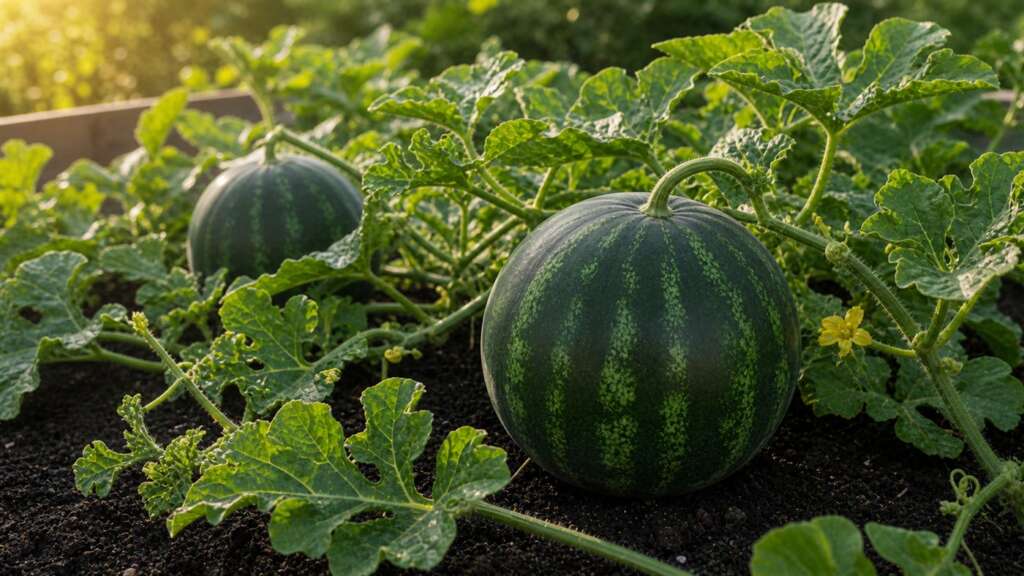
Sugar Baby is a compact “icebox” watermelon prized for round, dark green fruit that finishes earlier and smaller than the giant picnic types. It is still a true vining watermelon, so it asks for the same things every watermelon does: warm soil, full sun, steady moisture, and time. The advantage of Sugar Baby is that it makes those demands on a shorter calendar and in a more manageable footprint, which is why it suits home gardens, shorter seasons, and refrigerator-friendly harvests.
Quick How-to
Start Sugar Baby Watermelon indoors about 3 to 4 weeks before your transplant date in short-season gardens, or direct sow after the soil is reliably warm and frost is well past. Sow 1/2 to 1 inch deep into warm, evenly moist soil or seed-starting mix. Aim for soil temperatures around 75 to 90 F and expect germination in roughly 4 to 10 days. Give seedlings strong light right away, transplant carefully without breaking the root ball, and keep moisture even as vines run and fruit sizes up.
Quick Guide
| Fact | Recommendation |
|---|---|
| Best method | Direct sow when soil is thoroughly warm; short-season gardens benefit from a brief indoor start |
| Sowing depth | About 1/2 to 1 inch |
| Germination temperature | Best around 75 to 90 F |
| Days to germination | Often 4 to 10 days under warm conditions |
| Light for germination | Cover seed; strong light is needed immediately after sprouting |
| Spacing | Roughly 3 to 4 feet between plants, with 5 to 6 feet between rows |
| Sun | Full sun, ideally 8 or more hours |
| Water | Deep, even moisture through vine growth and fruit sizing |
| Harvest timing | About 75 to 80 days from sowing under consistently warm conditions |
| Fruit size | Compact icebox melons typically weighing about 8 to 10 pounds |
| Plant size | Compact vining habit, shorter runners than full-size watermelons but still spreading |
Before You Sow
Sugar Baby is a heat-loving crop, and almost every common failure traces back to ignoring that. Choose the warmest, sunniest bed you have, with loose, well-drained soil and room for vines to run. Work in compost before planting if your soil is heavy or low in organic matter, but avoid pushing high-nitrogen fertilizer at planting time. Watermelons that grow lush leaf without flower and fruit balance are almost always overfed.
If your spring is unpredictable, warm the bed with black plastic, dark landscape fabric, or a low tunnel for one to two weeks before sowing. This is a small step that makes a big difference for cucurbits because seedling growth and root function depend on soil warmth, not just air temperature.
Plan the layout before you sow. Vines need room to spread, and crowded watermelons compete badly with each other and shade out their own developing fruit. Sketch out hills or rows so you do not end up thinning healthy plants you have grown attached to.
Indoor Starting
If your last frost is late or your summer is short, start Sugar Baby indoors about 3 to 4 weeks before your intended transplant date. Tomatoes can sit in a tray for two months; watermelons cannot. The goal is a small, vigorous plant with one or two true leaves and a root system that has just begun to fill the cell.
Use individual cells or small pots rather than open trays. Watermelon roots resent disturbance, and transplant shock from a torn root ball can stall a plant for weeks. Pre-moisten fresh seed-starting mix, then sow one or two seeds per cell, 1/2 to 1 inch deep, and cover lightly. A heat mat held around 80 to 85 F speeds germination noticeably; remove it once sprouts appear so seedlings do not stretch.
As soon as seedlings break the surface, give them strong overhead light for long days. A bright window is usually not enough by itself, and watermelon seedlings that germinate in warmth without immediate strong light tend to bolt upward into thin, weak stems. Thin to the strongest seedling per cell with scissors rather than pulling.
Harden off over 7 to 10 days. Start with a couple of hours in shelter and gradually build up to full sun, breeze, and outdoor nights. Transplant before roots circle the cell.
Direct Sowing
Direct sowing is the most natural fit for Sugar Baby in regions with reliably warm springs and long summers. Wait until frost danger is well past, daytime soil temperatures are in the 70s F or higher, and nighttime temperatures are mild. Direct-sown watermelons often catch up to indoor starts because they never experience transplant disturbance.
Form low hills about 3 to 4 feet apart, or sow into rows with the same in-row spacing. Sow 2 to 3 seeds per spot, 1/2 to 1 inch deep, and water gently so the seed is not washed out of place. Cover with a thin layer of fine soil and press lightly for good contact. Protect young seedlings from cool nights with row cover if needed, and watch for cucumber beetles and slugs in the first two weeks.
When seedlings have a true leaf or two, thin to the strongest plant per hill. Leaving extras in place feels generous, but the strongest plant alone almost always produces more and better fruit than two competing ones.
Transplanting and Spacing
Move indoor starts into the garden after hardening off and after soil is warm. Water cells thoroughly an hour before transplanting so the root ball holds together. Dig a hole the same depth as the cell, set the plant in without burying the stem deeper than it was, and firm the soil gently around the roots. Water in well to settle the soil.
Plan for roughly 3 to 4 feet between plants, with 5 to 6 feet between rows. Sugar Baby vines commonly run about 6 feet, shorter than many full-size watermelons but still large enough to need open ground or a strong trellis with fruit slings.
If late cold nights are still possible, cover newly transplanted seedlings with row cover or cloches. Remove covers once flowering begins so bees and other pollinators can reach the blossoms.
Soil, Sun, and Water
Sugar Baby asks for full sun, fertile well-drained soil, and consistent moisture. Sandy loam that warms quickly and drains freely is ideal; heavy clay is workable but benefits from raised beds, hills, or amendment with compost.
Water deeply rather than frequently. The goal is even soil moisture during the long stretch of vine growth and fruit sizing, not constant surface wetness. Drip irrigation or soaker hoses work better than overhead sprinklers for melons because dry foliage helps reduce mildew pressure. If you water from above, do it early in the day so leaves have time to dry.
As fruit approaches maturity, many growers cut back slightly on water to concentrate sugars. Avoid abrupt swings from dry to soaking, which can split nearly ripe fruit overnight.
Mulch once the soil is fully warm. A layer of straw or shredded leaves keeps moisture even, suppresses weeds, and gives developing melons a clean, dry surface to rest on.
Top Mistakes
- Planting into cool soil: This is the single biggest reason Sugar Baby disappoints. Cold soil slows enzyme activity inside the seed, invites rot, and stunts the first roots even when sprouts do appear. Wait for genuine warmth rather than racing the calendar.
- Letting indoor starts outgrow their cells: Watermelon seedlings dislike root disturbance, so a tray held too long indoors often transplants worse than a younger one. Keep the indoor window short.
- Overfeeding nitrogen: Heavy nitrogen produces large vines with few female flowers and disappointing fruit. Compost at planting is usually enough; save side-dressing for after fruit has set.
- Irregular watering during fruit sizing: Dry-to-wet swings contribute to cracking, blossom end rot symptoms, and uneven ripening. Steady moisture beats heavy episodic watering.
- Crowding vines: Sugar Baby is compact, not tiny. Plants placed too close shade each other, reduce airflow, and produce fewer well-finished melons.
Troubleshooting by Symptom
| Symptom | Likely causes | What to do next |
|---|---|---|
| No sprouts after 10 days | Soil too cool, seed buried too deep, surface crusted, or mix dried out | Wait for warmer soil, resow at 1/2 to 1 inch, and keep the seed zone evenly moist; consider a heat mat for indoor starts |
| Seedlings collapse at the soil line | Overly wet mix, poor airflow, or damping-off conditions | Improve airflow, water less often, use fresh seed-starting mix for restarts, and avoid saturated trays |
| Seedlings stall after transplant | Cold soil, root disturbance, or insufficient hardening off | Protect from cold nights, water deeply, and give plants time once soil warms |
| Plenty of flowers, no fruit | Early male blooms only, poor pollinator activity, or temperature stress | Wait for female flowers (those with a small swollen ovary at the base), avoid spraying anything that harms bees, and consider hand-pollinating in the early morning |
| Small or misshapen fruit | Poor pollination, drought during sizing, or crowding | Improve pollination, water deeply and evenly, and reduce competition between vines |
| Cracked fruit near ripeness | Heavy watering or rain after a dry stretch | Keep moisture more even through the season and harvest promptly after big rains |
| Powdery white film on leaves | Powdery mildew from crowding, humidity, or wet foliage | Improve spacing and airflow, water at the soil level, and remove the worst-affected leaves |
| Sunken dark spot on fruit underside | Blossom end rot symptoms tied to uneven moisture and calcium uptake | Maintain even soil moisture, mulch after warming, and avoid root damage from late cultivation |
Germination Diagnostics
When Sugar Baby is slow to sprout, work through the seed environment in order before changing everything at once. Start with temperature. Watermelon seed needs warmth that home gardeners often underestimate; soil in the low 60s F may feel mild to a hand but reads as cold to a watermelon seed. A soil thermometer is the cheapest insurance you can buy.
Next check depth. Seed planted too deep may have plenty of moisture but not enough stored energy to push to the surface. Reseeding shallower into the same warm bed is often all it takes.
Then check moisture. The seed zone should feel like a wrung-out sponge: evenly damp, never shiny wet, never dusty dry. A crusted surface after a hard rain or overhead watering can trap sprouts below; break crusts gently with a fork or rake.
Finally, after emergence, check light and airflow. Seedlings that germinate well but stretch, pale, or topple over almost always need stronger overhead light, more airflow, fewer crowding neighbors, or a less saturated mix.
Container and Small-Space Notes
Sugar Baby is a reasonable candidate for large containers compared with full-size watermelons, but it is still a vining crop with real demands. Use a container of at least 15 to 20 gallons per plant, with excellent drainage and high-quality potting mix. Plan a trellis or sturdy support so vines can climb upward; mature fruit on a trellis usually needs slings made from old t-shirts, mesh produce bags, or stretchy fabric to support the weight without choking the stem.
Container melons dry out faster than in-ground plants and need consistent watering, sometimes daily in peak summer. Feed lightly through the season rather than heavily at any one moment, and protect the container from heat-absorbing surfaces that can cook the roots.
Harvest and Ripeness Cues
Watermelons do not continue to ripen meaningfully after picking, so reading ripeness is the most important skill. Use several cues together rather than trusting just one:
- The tendril (the curly green thread) closest to the fruit stem dries and browns.
- The rind dulls from a glossy finish to a matte one.
- The underside, where the melon rests on the ground, turns from white to a creamy yellow or buttery color.
- The melon feels heavy for its size and has reached the size expected for the variety.
- A thump produces a deeper, hollower sound rather than a high, tight ring.
No single cue is foolproof. The dried tendril and yellowing belly together are usually the most reliable pair for Sugar Baby. When in doubt, give it another two or three days; an under-ripe watermelon cannot be rescued, but a slightly over-ripe one is still edible.
Cut fruit from the vine with pruners, leaving a short stem attached. Whole melons keep best in a cool, shaded spot for one to two weeks; cut melon belongs in the refrigerator.
Seed Saving
Sugar Baby is commonly sold as an open-pollinated variety, which makes saved seed worth keeping if you have grown only one watermelon variety nearby. Cucurbits cross readily by insect pollination, so isolation distance matters if true-to-type seed is the goal.
Let chosen fruit fully ripen on the vine. Scoop the seeds out, rinse off the pulp, and spread them in a single layer to dry thoroughly on a plate or screen for one to two weeks. Label with variety and year, then store cool, dry, dark, and sealed.
Storing Leftover Seed
Keep unused Sugar Baby Watermelon seed in its labeled packet inside a sealed container in a cool, dry, dark indoor location. Avoid garages, sheds, greenhouses, and sunny windowsills, where temperature and humidity swing sharply. Label home-saved seed with the variety and harvest year before storing it.
FAQ
Should I start Sugar Baby indoors or direct sow?
Both work. Direct sowing is simpler and avoids transplant shock when your soil warms reliably in time. A short indoor start of 3 to 4 weeks helps in short-season gardens or cool springs, as long as seedlings move outdoors before roots circle the cell.
Why do my plants have plenty of flowers but no fruit?
Watermelons produce male flowers first, sometimes for a week or more before female flowers appear. Female flowers have a small swollen ovary at the base; once they open and pollinators visit, fruit usually follows. Hot or cold weather and low pollinator activity can also delay fruit set.
Can I grow Sugar Baby in a container?
Yes, in a container of at least 15 to 20 gallons with full sun, consistent watering, and a sturdy trellis. Plan to support developing fruit with fabric slings so the weight does not snap stems.
How do I know when a Sugar Baby is ripe?
Use several cues together: the tendril nearest the stem dries and browns, the rind dulls from glossy to matte, the underside turns creamy yellow, and the melon feels heavy. A hollower thump is supportive but not decisive on its own.
Do I need more than one plant for pollination?
Sugar Baby has separate male and female flowers on the same plant, so one plant can produce fruit, but pollination tends to be better with more than one plant and active bee traffic in the garden.