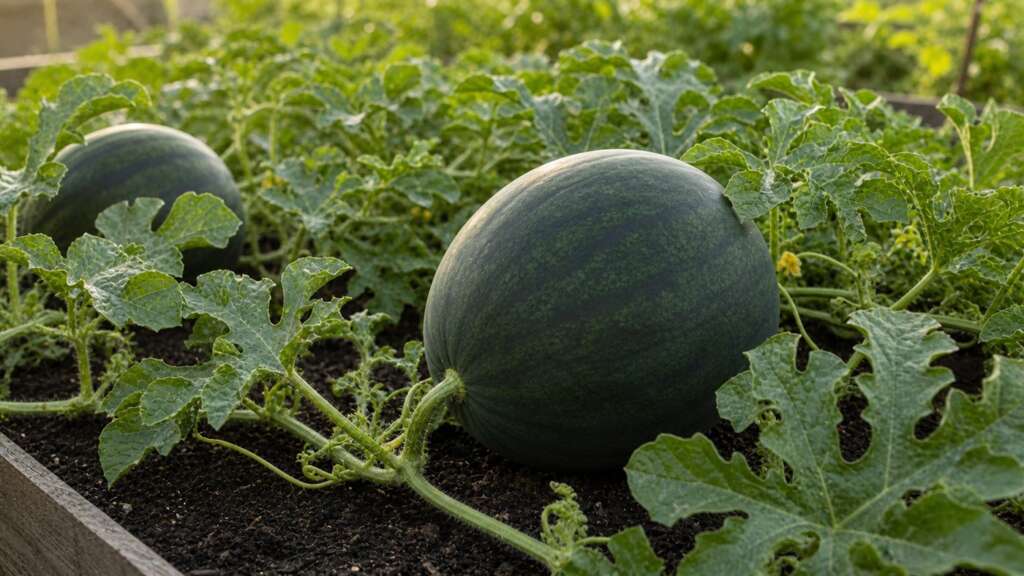
Black Diamond is a classic heirloom watermelon grown for size, a deep green to nearly black rind, and sweet red flesh. It is a true warm-season crop that rewards patience: give it hot soil, long days, generous space, and steady water, and a healthy vine can carry one or two large melons through a full summer to ripeness.
Quick How-to
Start Black Diamond watermelon after the soil is genuinely warm. In short-season gardens, sow indoors in individual cells about 3 to 4 weeks before your transplant date, then move plants out only after frost risk has passed and the ground has warmed. In long, hot summers, direct sowing in hills works well once soil temperatures are dependably in the mid-70s F. Sow about 1/2 to 1 inch deep, keep the seed zone evenly moist and warm, and expect germination in roughly 4 to 10 days. Give each plant several feet of room to run.
Quick Guide
| Fact | Recommendation |
|---|---|
| Best method | Direct sow in warm soil where summers are long; indoor start 3 to 4 weeks before transplant in short seasons |
| Sowing depth | About 1/2 to 1 inch |
| Germination temperature | Best around 75 to 90 F soil temperature |
| Days to germination | Often 4 to 10 days under warm conditions |
| Light for germination | Cover seed; strong overhead light needed immediately after sprouting |
| Spacing | Roughly 3 to 6 feet between plants, with rows 6 to 8 feet apart |
| Sun | Full sun, ideally 8 or more hours |
| Water | Deep, even moisture during vine growth and fruit sizing |
| Days to harvest | Commonly about 85 to 95 days from sowing or planting |
| Fruit size | Large heirloom melons, often cited around 30 to 50 pounds at maturity; weight varies with season and care |
| Plant habit | Sprawling vines; allow generous room to run |
Before You Sow
Black Diamond is a long-season, heat-loving plant. The single biggest mistake home gardeners make with watermelon is rushing seed or transplants into cold soil. Cool wet ground stalls roots and gives soil-borne issues a head start before the plant can grow away from them. It is almost always better to wait a week or two than to plant on the calendar alone.
Pick the warmest, sunniest spot in the garden. Watermelon dislikes shade, competing roots, and standing water. If you are working in a cool or short-season climate, choose a south-facing bed against a wall or fence, raised beds that warm earlier, or a sheet of black plastic mulch laid down a couple of weeks ahead to pre-warm the soil. In containers, only large volumes (15-gallon or more per plant) come close to giving these vines what they want, and even then the harvest is usually smaller and later than in the ground.
Plan for space before you sow. A single Black Diamond plant can throw vines 6 to 10 feet in several directions. Crowding them does not make the bed more productive; it usually means more leaves, more mildew, and fewer well-sized melons.
Indoor Starting
For short-season gardens, sow indoors about 3 to 4 weeks before your expected transplant date. Use fresh seed-starting mix, individual 3 to 4 inch cells or pots, and pre-moisten the mix before sowing so seed placement stays even. Watermelon dislikes root disturbance, so individual cells are far better than a shared tray.
Place one or two seeds per cell about 1/2 to 1 inch deep, cover lightly, and press for soil contact. Keep the mix evenly moist, like a wrung-out sponge, and warm. A heat mat that holds soil temperature in the mid-70s to mid-80s F gives the steadiest germination. Cover the tray with a humidity dome until sprouts emerge, then remove the dome to keep airflow strong.
As soon as seedlings appear, give them strong overhead light for long days. A south window alone is usually not enough; this is the most common reason indoor watermelon seedlings stretch and lean. Once the strongest seedling in each cell has its first true leaves, snip the weaker one at the soil line rather than pulling, so the keeper’s roots stay undisturbed.
Do not let indoor plants get too big before transplant. A young, sturdy seedling with two or three true leaves outperforms a root-bound, leggy plant that has been waiting in the tray.
Direct Sowing
Where summers are long and the soil warms early, direct sowing is the simplest approach. Wait until soil temperatures are reliably in the mid-70s F at planting depth, not just on a warm afternoon. Form low hills 6 to 8 feet apart, or sow along rows with similar spacing, and place 2 to 3 seeds per spot about 1/2 to 1 inch deep. Water gently so seed is not washed out, and keep the surface evenly moist until sprouts emerge.
After plants have a true leaf or two, thin to the strongest seedling in each hill. Floating row cover at this stage can warm air around young plants and protect them from cucumber beetles and other early pests; open or remove the cover once flowers appear so pollinators can reach the blossoms.
Hardening Off and Transplanting
Harden off indoor seedlings for 7 to 10 days before planting out. Begin with an hour or two of sheltered outdoor time and gradually build up exposure to sun and breeze. Transplant when nights are mild and soil is genuinely warm. Cool soil is the most common reason transplanted melons look stalled even though daytime weather seems fine.
When you transplant, disturb the root ball as little as possible. Set plants at the same depth they grew in the cell, water in well, and avoid stepping near the roots. A light mulch after soil has warmed helps hold moisture and steady the root zone. In cooler climates, dark-colored mulch or plastic helps maintain warmth around the plant.
Spacing, Vines, and Layout
Black Diamond is a sprawling, vining plant. Plan for 3 to 6 feet between plants and 6 to 8 feet between rows, or train vines into an open corner of the garden where they can ramble. Vines can be redirected gently while young, but try not to flip or move them once flowers and small fruit are forming.
Trellising is possible for smaller-fruited types but is generally not practical for Black Diamond, because mature fruit weight can break stems and slings. Ground culture on clean straw or fabric mulch keeps the rind clean and reduces pest pressure underneath.
Soil, Sun, and Water
Full sun is non-negotiable. Aim for fertile, well-drained soil enriched with compost before planting. Watermelon appreciates moderate fertility — enough to support a large plant — without an excess of nitrogen, which pushes leafy growth at the cost of fruit set and flavor.
Water deeply and evenly throughout vine growth and the fruit-sizing window. Inconsistent watering, where the soil swings from dry to soaked, is a frequent cause of cracking and uneven sizing. Drip irrigation or soaker hoses work better than overhead sprinklers because they keep the foliage dry, which reduces leaf disease. As fruit approaches ripeness, many growers ease back slightly on water to concentrate sugars; this is a judgment call rather than a hard cutoff, and you should never let the vines wilt.
Pollination and Fruit Set
Watermelon carries separate male and female flowers on the same plant. Male blossoms usually appear first and for several days before any female blossoms open, which is normal. Female flowers can be identified by the small, marble-sized swelling at the base of the bloom; this is the future fruit.
Pollination depends on bees and other insects moving between blossoms. If your garden has limited pollinator activity or you are growing under cover, you can hand-pollinate by gently brushing the inside of a freshly opened male flower against the center of a female flower in the morning, when blossoms are most receptive. Extreme heat, prolonged rain, and cold snaps can all reduce fruit set; usually the plant catches up once conditions settle.
Top Mistakes
- Planting into cold soil. This is the single most common cause of disappointing watermelon. Wait for steady warmth in the soil, not just in the air.
- Crowding vines. Black Diamond needs room. Tight spacing reduces airflow, increases mildew risk, and produces smaller fruit.
- Inconsistent watering. Cycles of bone-dry and saturated soil contribute to cracking, uneven shapes, and stalled growth during fruit fill.
- Heavy nitrogen feeding. A lush, leafy plant with little fruit usually means too much nitrogen, not too little.
- Rough transplanting. Watermelon roots dislike disturbance. Move seedlings young, keep the root ball intact, and plant into warm soil.
- Picking too early. Watermelons do not continue to ripen meaningfully off the vine. Patience at harvest matters as much as patience at planting.
Troubleshooting by Symptom
| Symptom | Likely causes | What to do next |
|---|---|---|
| No sprouts after 10 to 14 days | Soil too cool, seed buried too deep, or seed zone too wet or too dry | Confirm soil warmth, resow at 1/2 to 1 inch, and keep the seedbed evenly moist |
| Seedlings stretch and lean | Weak light after germination, too much warmth, or crowded cells | Move under stronger overhead light, reduce extra heat once sprouted, and thin to one plant per cell |
| Transplants stall after planting out | Cold soil, root disturbance, or sudden exposure without hardening off | Protect with row cover, water gently, and give plants time once soil warms |
| Lots of flowers but no fruit | Male flowers appearing first, low pollinator activity, or temperature stress | Wait for female blooms, encourage pollinators, and hand-pollinate if needed |
| Small or misshapen fruit | Crowding, inconsistent water, low pollination, or poor fertility | Ensure spacing, water evenly, and feed lightly with a balanced amendment |
| Cracked fruit near ripeness | Sudden heavy water after a dry stretch | Keep moisture even and avoid deep watering right at peak ripeness |
| White or gray powder on leaves | Powdery mildew encouraged by crowding, wet foliage, or humid still air | Improve airflow, water at the soil level, and remove the worst affected leaves |
| Vines wilt during the day even with moist soil | Stem borers, bacterial wilt vectored by cucumber beetles, or root damage | Inspect stems for entry holes, manage beetles early, and remove severely affected plants to protect the rest |
Harvest
Ripeness in watermelon is a judgment call made from several cues together rather than from any single one. For Black Diamond, look for:
- The curly tendril nearest the fruit stem drying and turning brown.
- The rind shifting from glossy to a duller, slightly waxy finish.
- The ground spot (the underside resting on the soil) turning from white or pale green to a creamy yellow.
- Overall size that looks right for the variety, and a deep, hollow sound when the melon is tapped with the knuckles.
No single sign is reliable on its own, so look for several together. Cut the stem cleanly with shears rather than twisting the fruit off, which can damage the vine. Watermelon does not ripen further off the vine, so it is worth waiting until you are confident the fruit is ready.
Seed Saving
Black Diamond is an open-pollinated heirloom, which means seed saved from healthy, fully ripe fruit can grow true to type — provided no other watermelon variety was flowering nearby, since cucurbits cross readily by insect pollination. If you want true-to-type seed, isolate by distance, by timing, or by hand-pollinating and bagging female flowers.
To save seed, choose ripe fruit from a strong, healthy plant. Scoop out the seeds, rinse off the pulp, spread them in a single layer on a screen or paper, and dry thoroughly in a well-ventilated spot away from direct heat. Label with the variety name and the year before storing.
Storing Leftover Seed
Keep unused Black Diamond Watermelon seed in its labeled packet inside a sealed container in a cool, dry, dark indoor location. Avoid garages, sheds, greenhouses, and sunny windowsills, where temperature and humidity swing sharply. Label home-saved seed with the variety and harvest year before storing it.
FAQ
How big do Black Diamond watermelons really get?
Black Diamond is a large-fruited heirloom commonly listed in the 30 to 50 pound range, although garden-grown melons may be smaller in short or cool seasons. Real-world weight depends on heat, water, soil fertility, and how many fruits each plant carries.
Should I start indoors or direct sow?
Both can work. In short-season climates, an indoor start of 3 to 4 weeks gives you a head start without the plant becoming root-bound. In long, hot summers, direct sowing into warm soil is simpler and avoids transplant stress.
Why are there flowers but no melons?
Male flowers usually open first, sometimes for a week or more before female flowers appear. Female blossoms have a small swelling at the base. Fruit set also depends on pollinators visiting both flower types, so encourage bees and avoid spraying open blossoms.
Can I grow Black Diamond in a container?
It is possible only with a very large container, generally 15 gallons or more, and you should expect smaller melons and a more demanding watering schedule. Smaller icebox-type watermelons are usually a better fit for container culture.
Do I need more than one plant for pollination?
Watermelon flowers are insect-pollinated and a single plant can produce fruit, but growing two or more plants near one another generally improves pollination and fruit set.
How do I keep melons clean as they size up?
A layer of clean straw, dry mulch, or a piece of fabric or cardboard under the developing fruit keeps the rind clean and reduces ground rot, especially during damp weeks.